





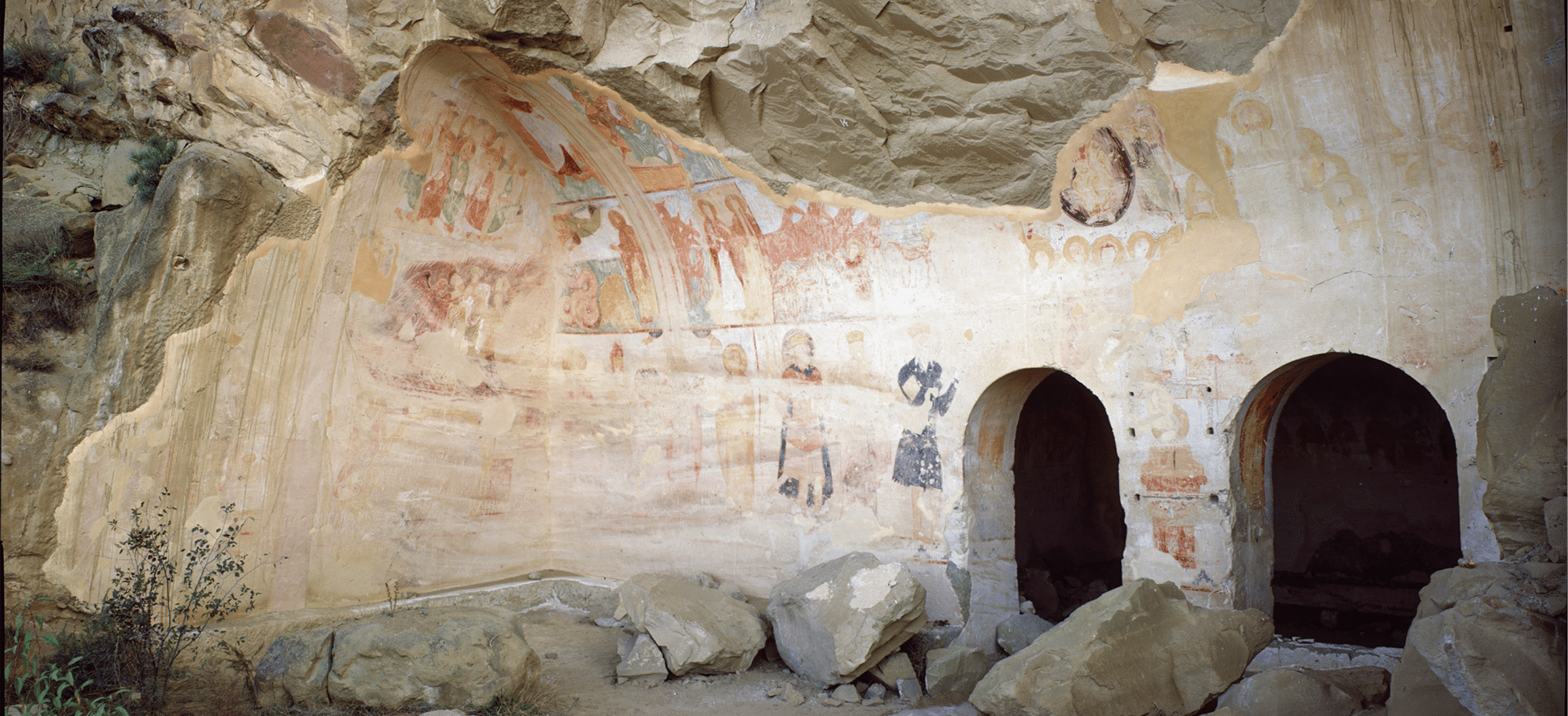
Opposite the ridge which boasts the oldest monastery in the Gareji Desert - the Lavra of St. David of Gareji, founded in the 6th century, is a rock-hewn monastery commonly known as Udabno (said to have been called Tsamebuli until the 19th century). Emerging at the turn of the 10th- 11th centuries, and active until the 14th century, Udabno comprises several dozen caves that house large and small churches, chapels, hermit cells, and utility chambers.
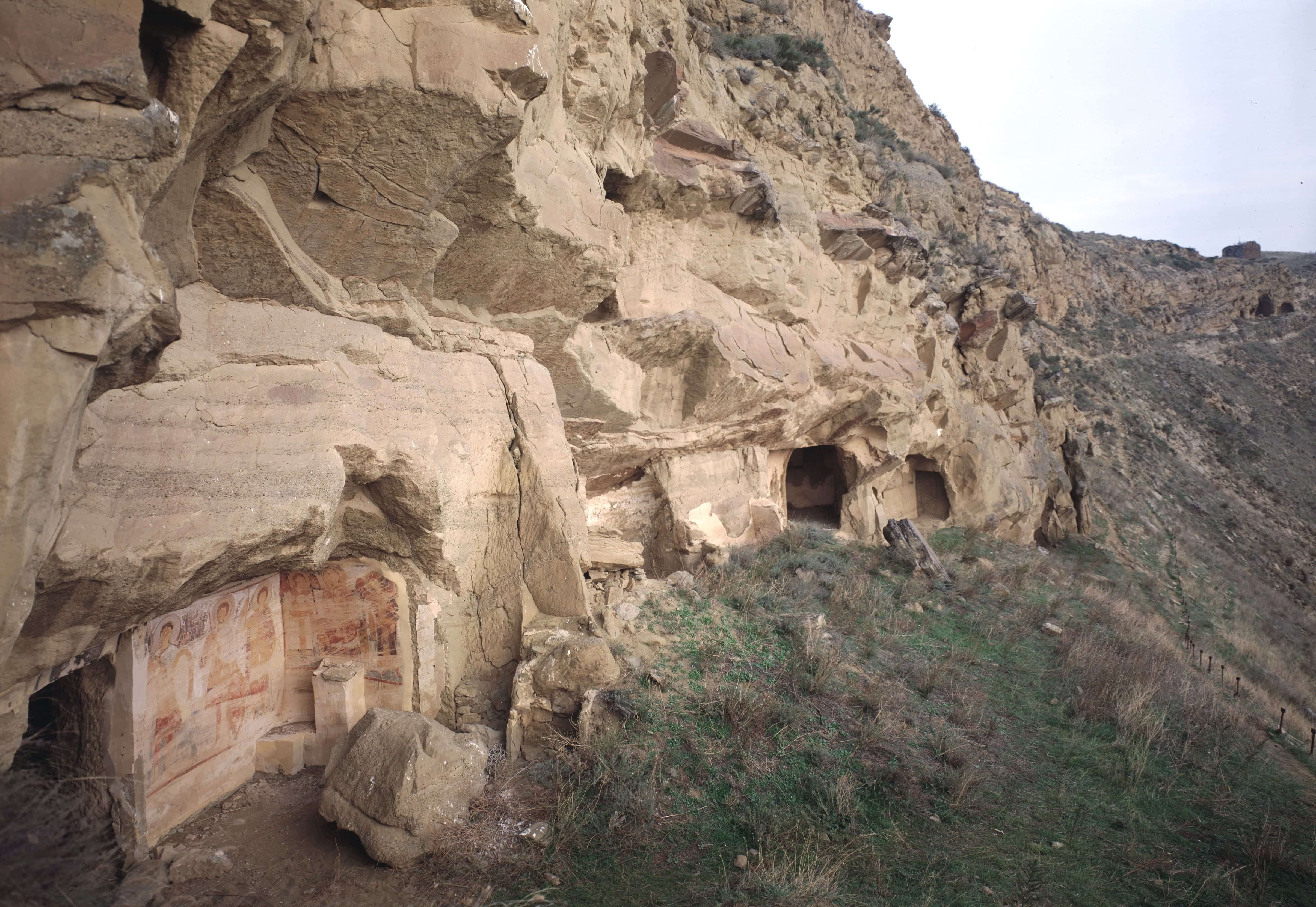
Udabno Monastery, 10th - 14th century
Having preserved the greatest number of murals dating from the 10th to the 13th century, a period characterized by strong creative upheaval in the Gareji monasteries, Udabno best describes the Gareji school of painting in general, as well as the features characteristic of this particular monastery.
Many of its paintings, especially those in the small ossuary church of Motsameta (Church of the Martyrs), the main church and the refectory, present the cult of the monastery's founder, St. David of Gareji. Great veneration of the saint appears to have been established here, alongside his burial place at the Lavra.
In the high, single-nave vaulted space of the main church, which is now over half destroyed, the mural includes scenes of the Great Feasts, a vast composition of the Last Judgment (one of the earliest in medieval wall painting), a multi-figure donor portrait of major Kakhetian feudal lords, and the hagiographic cycle of St. David of Gareji.
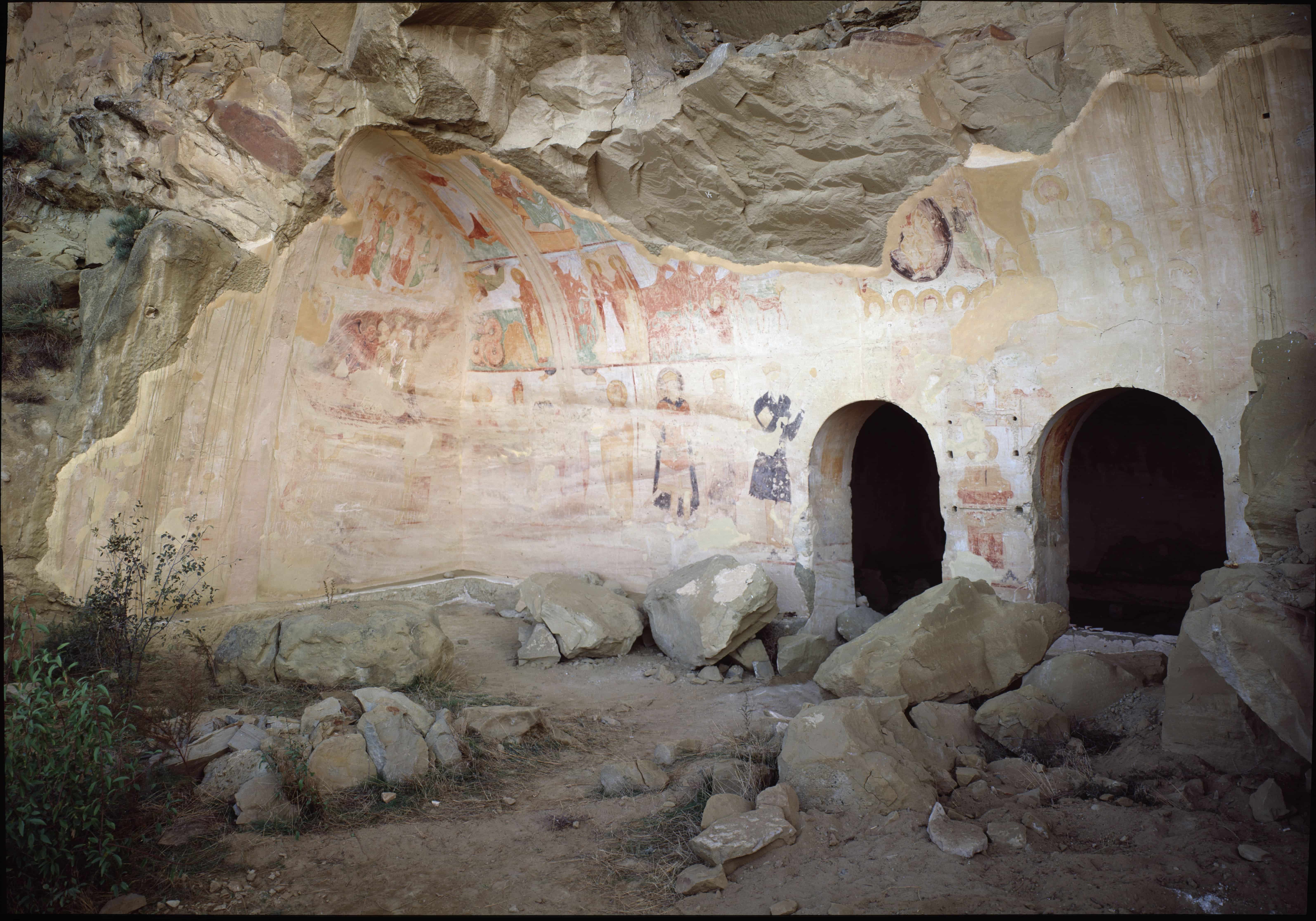
The Main Church of the Mother of God, early 11th century
The diaconicon of the church features 10th century scenes of the founding of the monasteries by St. David and his disciples, later partially repainted with the hagiographic cycle of Saint Nino, the Enlightener of Georgia. The main nave, painted slightly later, depicts miracles associated with St. David, such as deer seeking his protection from a dragon, the milking of the deer by St. Lucian (a disciple of St. David), and the dragon being punished by an angel. These monumental scenes vividly convey the narrative of the saint's life. The large figures are strict and calm, but at the same time emotional. This is achieved through clear, strong drawing, which changes its character in accordance with the scene's content, becoming either calm and harmonious, or animated and tense.
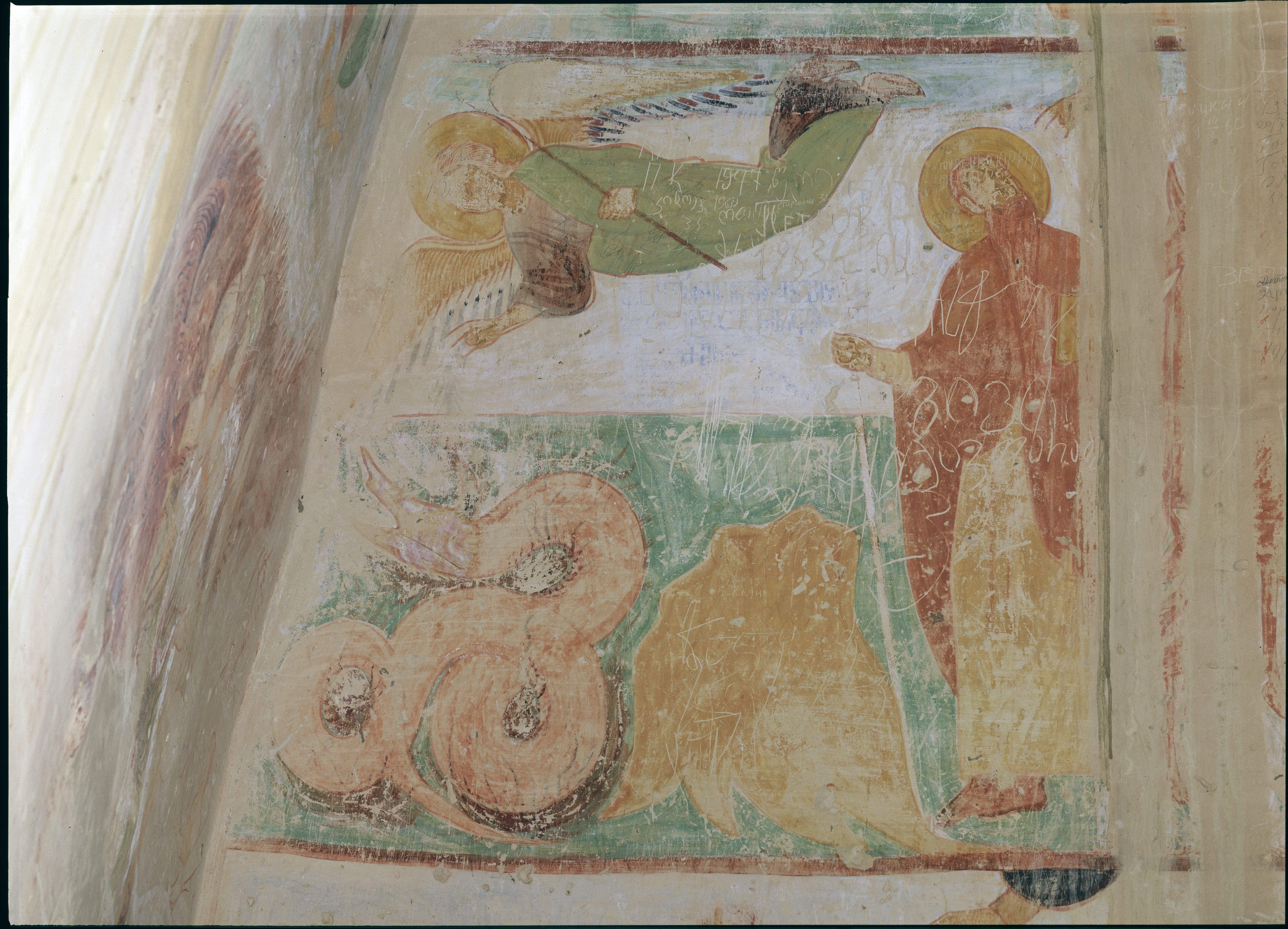
Painting in the Main Church of the Mother of God, the Burning of the Dragon by an Angel, early 11th century
The story of the life and asceticism of St. David presented in the main church is complemented by scenes of the Christian conversion of the pagan ruler, Bubakar, depicted in the Motsameta ossuary church (the date of the painting varies between the 11th and the 13th centuries). The rare, dramatic scene of the martyrdom of the Gareji monks, likely inspired by historical events, is also presented here.
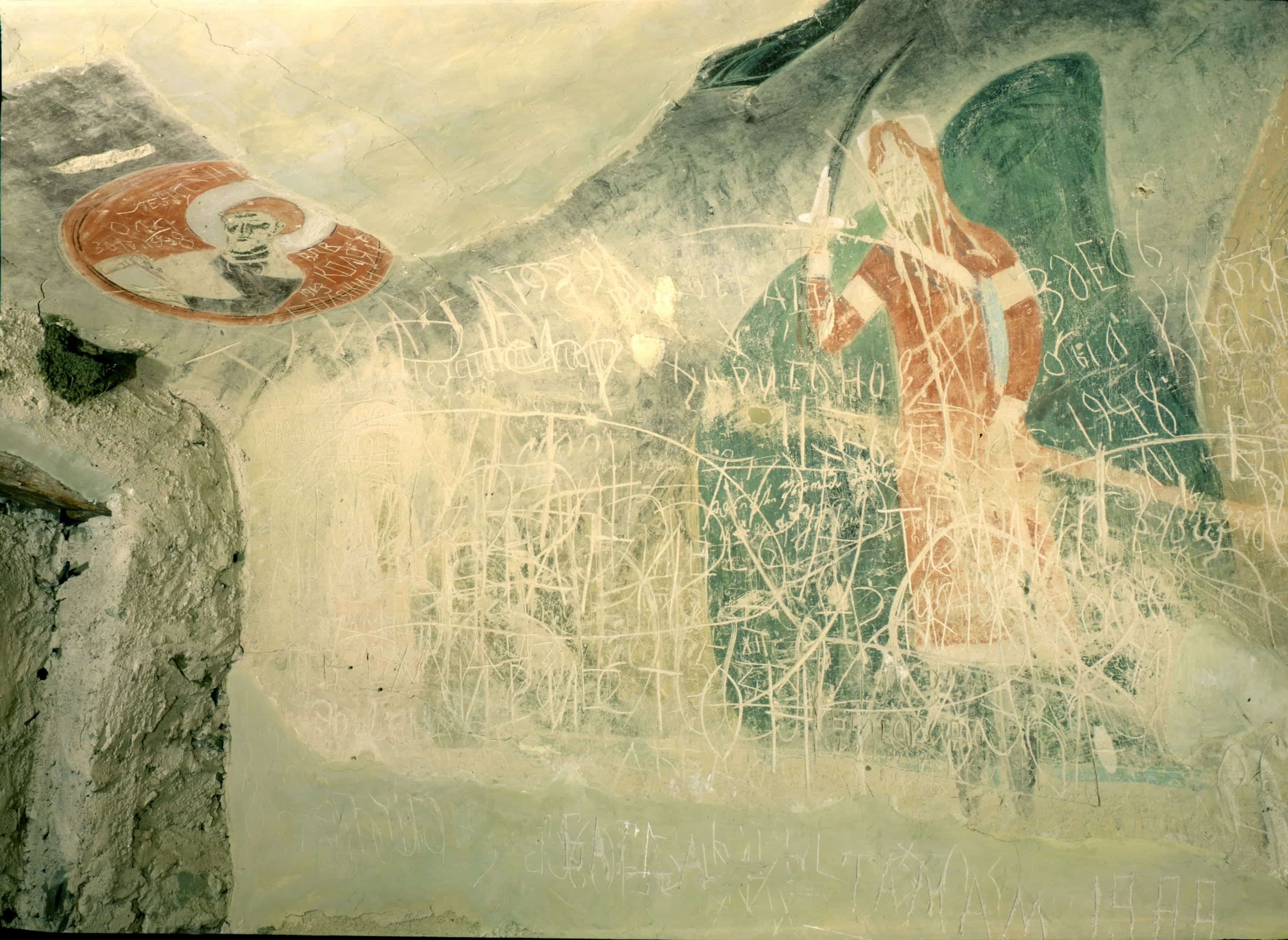
Painting in the Church of Motsameta, the Meeting of St Davit and the Pagan Ruler Bubakar, 11th or 13thcentury
The refectory mural, created in the early 11th century and partially renewed at the end of the 13th century, is in harmony with the style of the main church. Its iconographic program emphasizes the function of the chamber.
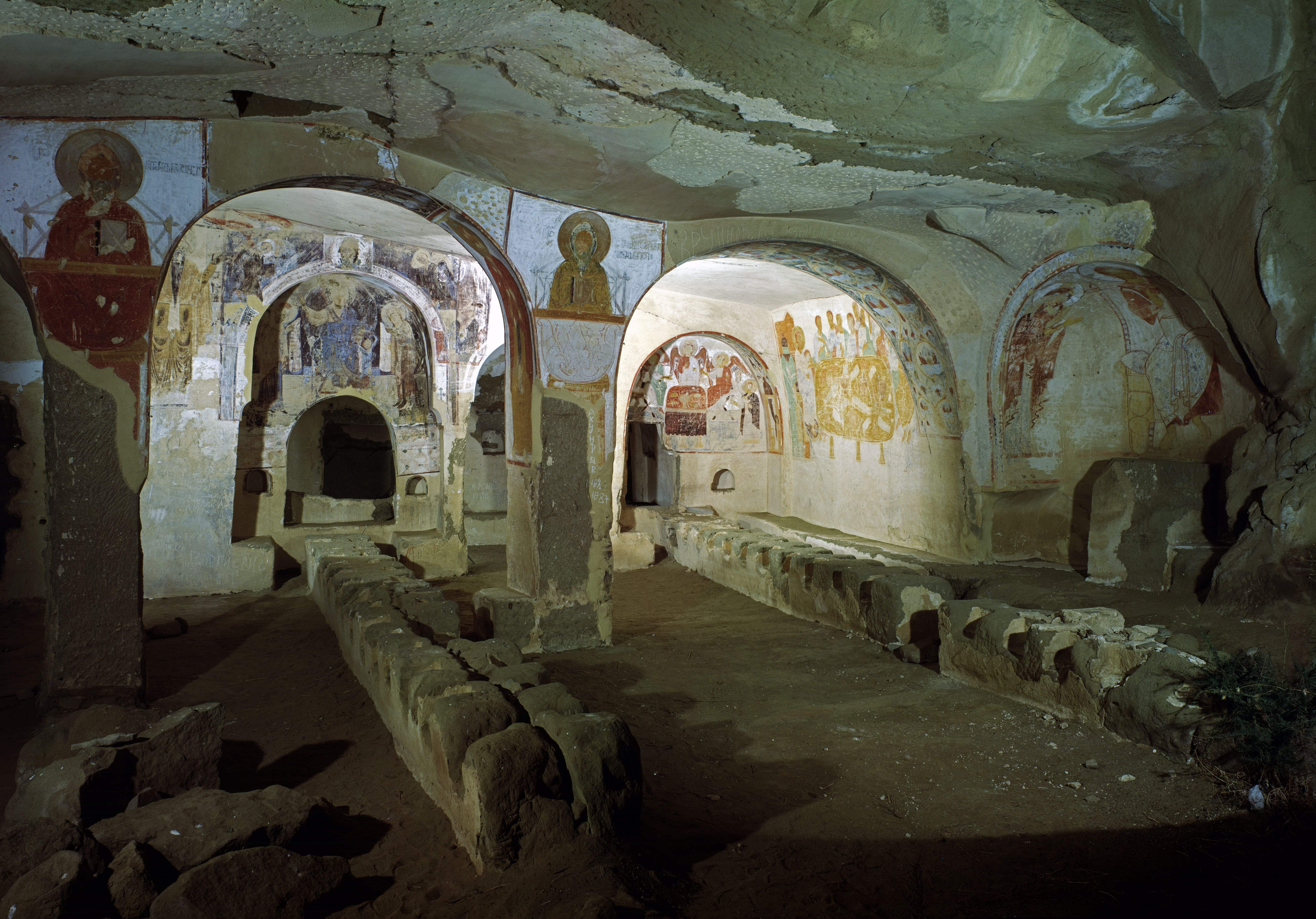
The refectory, early 11th century
Old Testament and Gospel scenes related to the Last Supper (the Hospitality of Abraham) display the sacrament of the Eucharist, figures of the Holy Stylites, and St. David himself, emphasizing the monastic asceticism. The twice depicted Deesis (in the prayer apse and in the Father Superior’s niche) reminded the monks of the imminent approach of the Last Judgment.
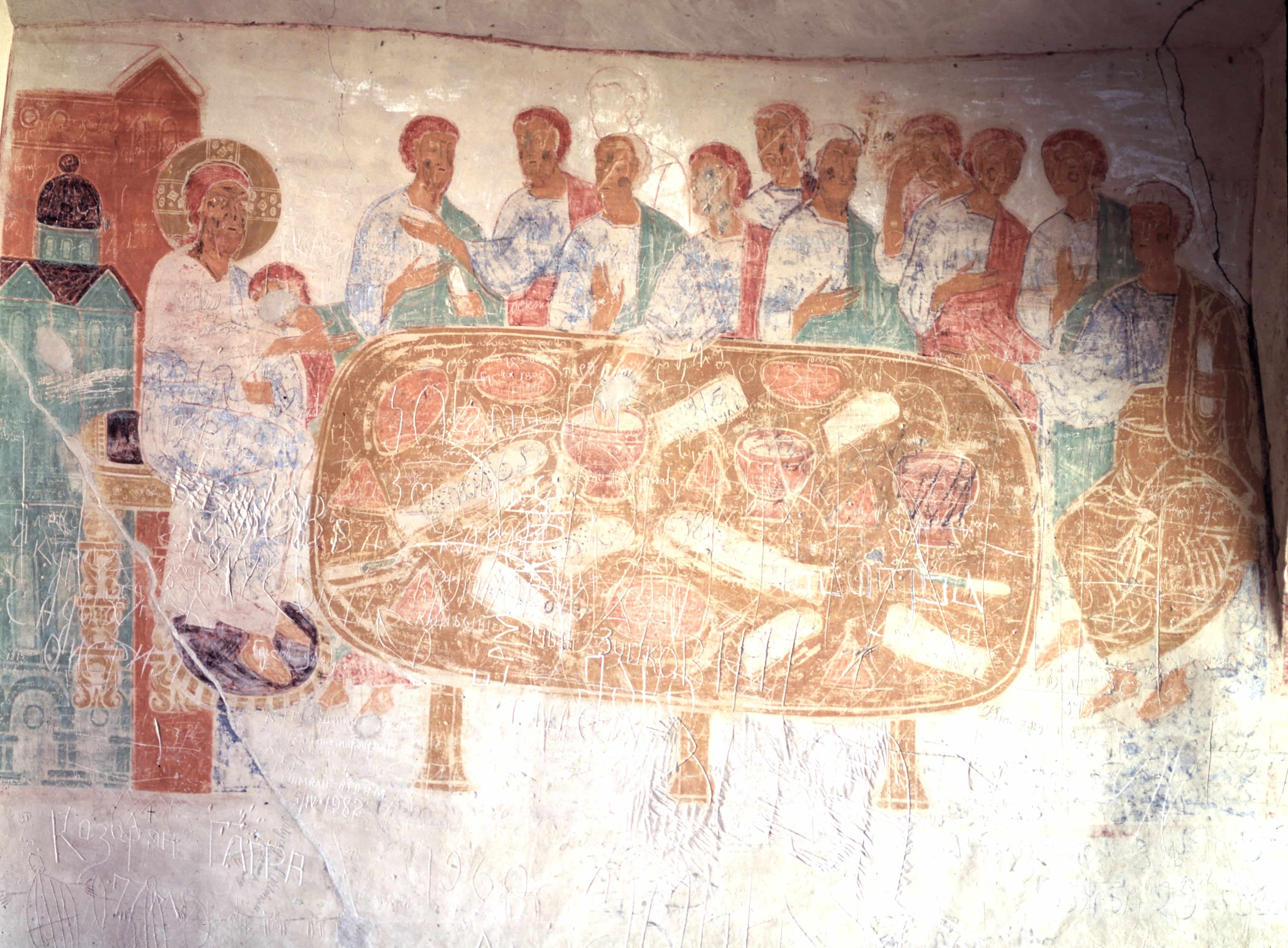
Painting in the refectory, the Last Supper, early 11th century
Despite their individuality, the paintings of the main church, refectory, and Motsameta church, form a cohesive ensemble. This is thanks to a color scheme that matches the Gareji landscape, as well as the themes of St. David of Gareji. Both hagiographic scenes and icon-like images of the saint, representing him as the intercessor and patron of the Desert, reflect the development and formation of the cult and iconography of Georgian saints, giving the Udabno murals a special national tone.
Later paintings, from the 12th-13th centuries (in the Church of St. Nicholas, private chapels, and the Church of the Ascension), seamlessly integrate into the early murals' general ensemble - the same color palette and light backgrounds are used and adapted to the stylistic tendencies of the period. The scenes become smaller, the figures more elegant and slender, their movements more dynamic, and the forms outlined by a thin, plastic drawing that was more voluminous.
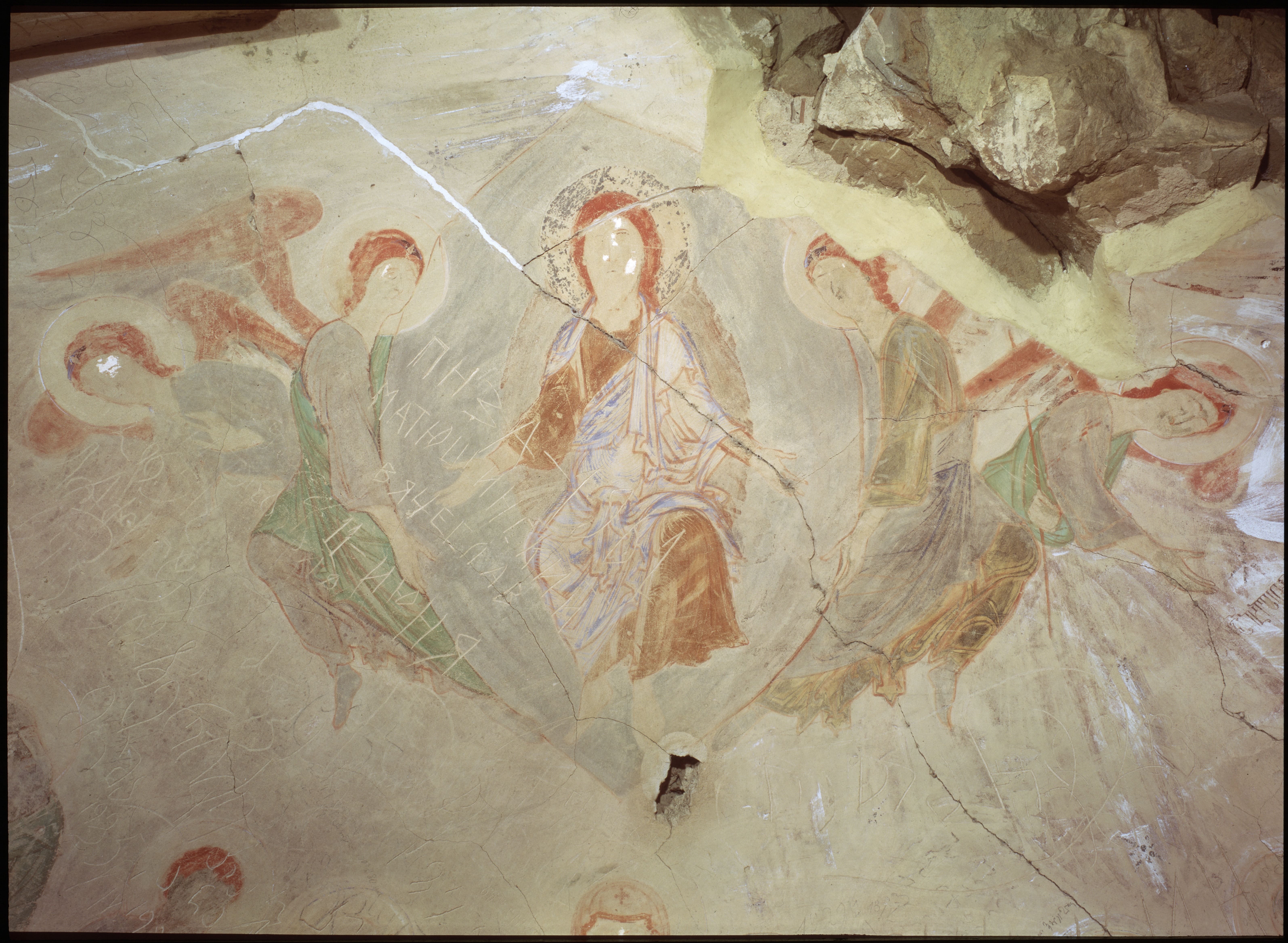
Painting in the Church of the Ascension, 13th century
The late 13th century murals in the small single-nave Church of the Annunciation, thought to be a commemorative chapel for King Demetre II the Self-Sacrificer, were commissioned by the father confessor of the king, John, Bishop of Ancha. The figure of the martyred king and of his father confessor dominate the entire scheme in terms of subject matter and artistry. The main idea of Sacrifice and Resurrection, which is revealed in the traditional representation of the Great Feasts and the martyrs, echoes the martyrdom of the king. Each representation is miniature-like, and is executed with a touch of decorative treatment, such as only artists illustrating manuscripts employ. This is also true of the embellished arches, marking off tiny scenes, diverse ornaments, thin, calligraphic drawing - even ornamental in some places – and, most importantly, an unusually sharp color gamut dominated by gold, lapis lazuli and almost unique lemon hues - orpiment.
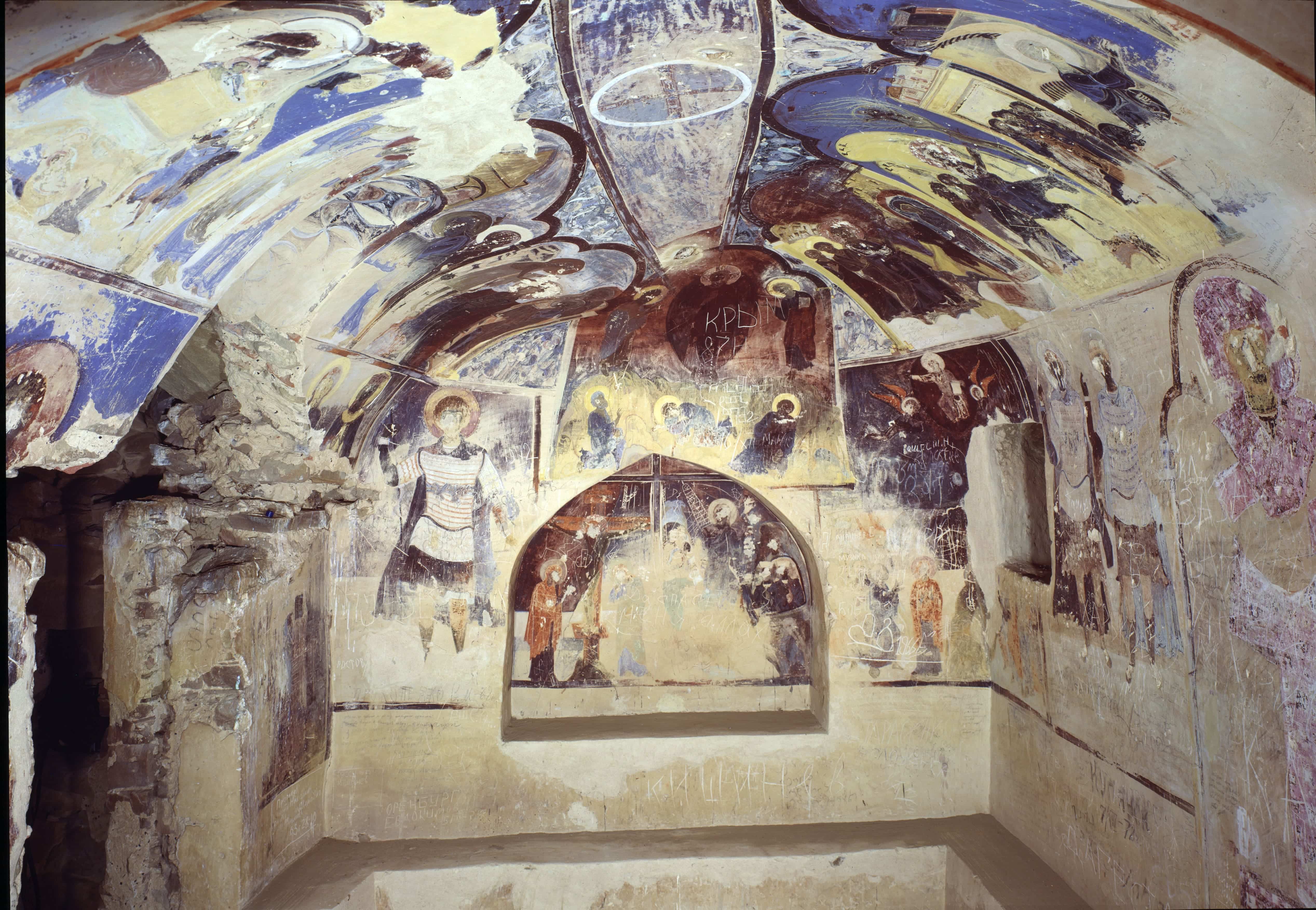
Painting of the Church of the Annunciation, late 13th century
The Church of the Annunciation actually marks the final phase of the Udabno murals and the entire development of the David Gareji school of painting. Following the Mongol invasion, the artistic life of the monasteries gradually declined and eventually ceased altogether.