




 Share this article
Omar Durmishidze (1949–1994) was a painter and graphic artist of the 1970s generation - a group of artists that rejected academic and socialist realist methods in favor of developing their own unique visual “grammar.”
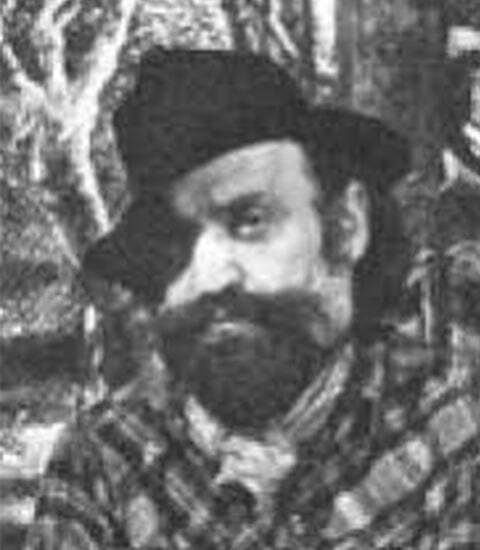
Durmishidze and his circle shared the same attitude: they completely rejected state commissions. For them, painting was a vital necessity: as natural as thinking or breathing; a form of spiritual “oxygen.” Durmishidze maintained close friendships with Albert Dilbarian and Lev Boyakhchev, artists slightly older than he was. Inevitably, the art of Avto Varazi left a significant mark on each of their creative visions. Together, they became one of the most prominent groups in Tbilisi's bohemian and creative life. The bohemia of 1970s Tbilisi was far more than mere “urban romance.” It represented a form of escape from Soviet officialdom; a mode of inner emigration. These artists were not just friends, but kindred spirits, united by their love of the city and their shared exploration of the aesthetics of the “Tbilisi Painting School”: a deep, dark palette and an affection for old streets, courtyards, and nocturnal cityscapes. Their canvases often evoke Tbilisi’s melancholic yet intimate and comforting atmosphere at night. Because of their shared thematic and visual language, art critics frequently evaluate them within the same artistic framework. Durmishidze’s career serves as proof that the need to break free from imposed constraints can ultimately gives rise to creative freedom and rich diversity.
After studying at the Iakob Nikoladze Art School from 1964 to 1968, Omar Durmishidze continued his education at the Apollon Kutateladze Tbilisi State Academy of Arts, graduating in 1973. He began exhibiting his works both in Georgia and internationally in 1974. Over the years, his solo exhibitions were held in Tbilisi (1974, 1978, 1984, 1999, 2006, 2009), the Federal Republic of Germany (1977), Moscow (1979), and Italy (1980). He also frequently participated in group exhibitions.
“Sometimes, even lighting the fireplace couldn't warm me as much as creating a still life did. Either I poured life into it, or it filled me with a deep spiritual aspiration. When I create something, I am speaking to it...” the artist once remarked.
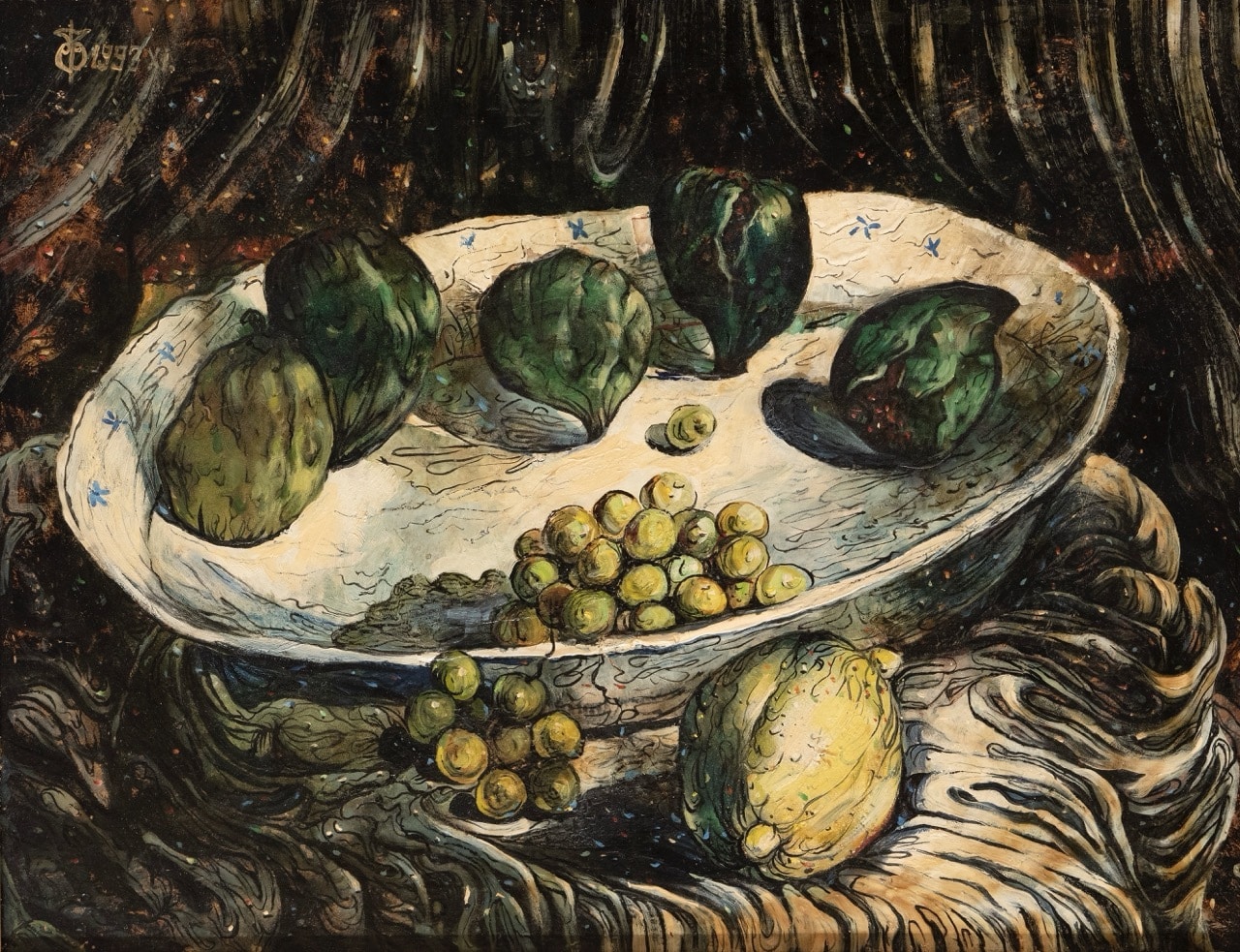
The artist found his “warmth” in still lifes, portraits, and urban landscapes depicting Tbilisi at night. His characteristically dark palette even earned him the moniker “The Night Painter.” From his canvases, a poignant, bittersweet, human warmth shines through the subtle glow of greenish and silvery hues. Omar Durmishidze’s works reveal a compelling, highly expressive, and deeply individualistic style. Although he focused primarily on classical genres like still lifes and everyday objects, his creative vision goes far beyond mere decorativeness.
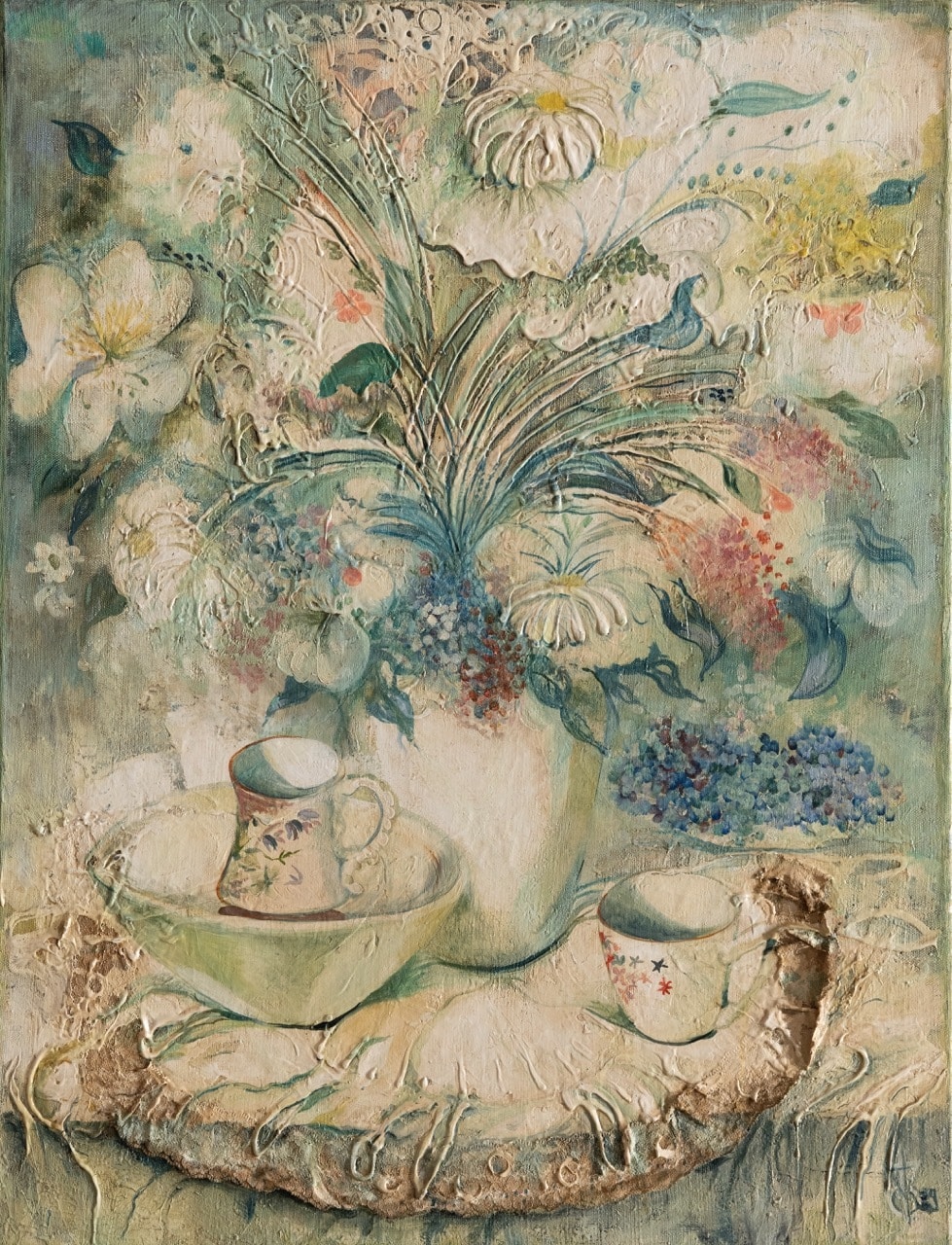
One of the defining features of Omar Durmishidze’s art is visual texture. The surface of his canvases appears to vibrate. His thick, heavy brushstrokes are dynamic and multi-layered, while the contours remain large, fluid, and plastic. Chiaroscuro fills the compositions with dramatic contrast. The artist treats the background with the same intensity as the main subject, be it a copper pitcher, flowers, fruit, or draped fabric. He erases the boundary between objects and space, transforming the canvas into a single, restless, living creature. The objects depicted on his canvases are never static; they possess an inner weight and character, exuding a sense of melancholy, philosophical calm, or quiet excitement.
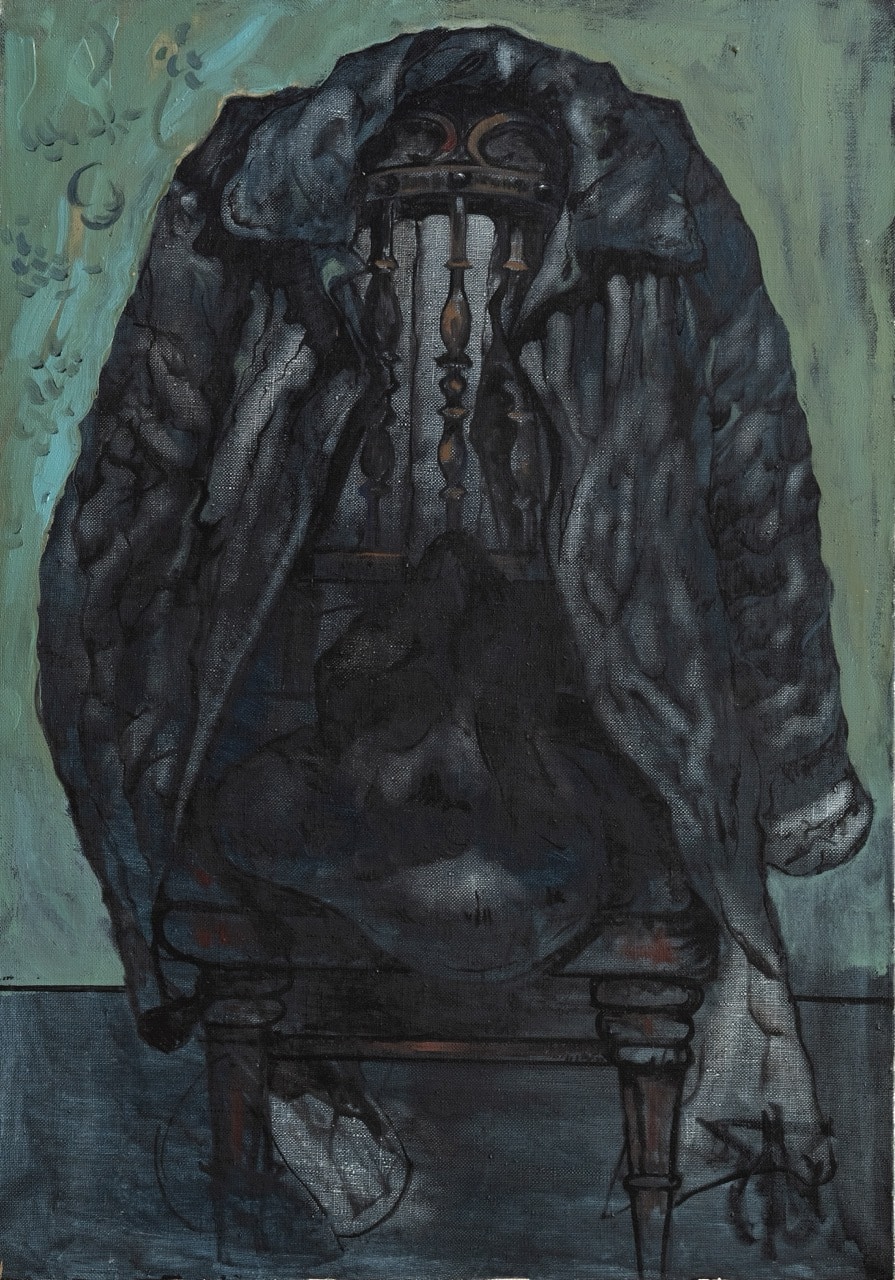
The artist titled a time-worn jacket draped over a chair Self-Portrait. Here, the forms are heavy and sculpted. Durmishidze often imbued everyday objects with a monumental and almost dramatic presence. The dark, earthy palette and heavy folds of the garment highlight the expressive power of the absent figure; this object is not simply discarded clothing; it seems to preserve a silent history and a profound sense of solitude. Like Vincent van Gogh’s Shoes, this crumpled jacket reveals something about the artist’s life that he might never have been able to express directly. The object effectively replaces the subject, becoming an existential “footprint” that functions as a portrait. On closer inspection, however, a faint, melancholic face with a mustache can vaguely be discerned in the lower part of the composition.
Paul Cézanne also created a watercolor depicting a jacket draped over a chair. In his work, the arrangement of the fabric and the interplay of light and shadow create an ambiguous image in which the viewer can simultaneously perceive a human form, a mountainous landscape, and a still life setting all at once. By blurring the boundaries between genres, Cézanne paved the way for modernist exploration. Whether Durmishidze was familiar with this particular artwork for it to have served as a source of inspiration remains unknown. However, the fact that Cézannism endured far longer in Georgia than in Europe, expanding past the chronological boundaries of modernism, is evident in the work of an entire generation of Georgian artists in the 1970s. In Omar Durmishidze's still lifes, the influence of Cézanne is felt in the materiality of objects, yet it is expressed with a greater emotional intensity and expressiveness.
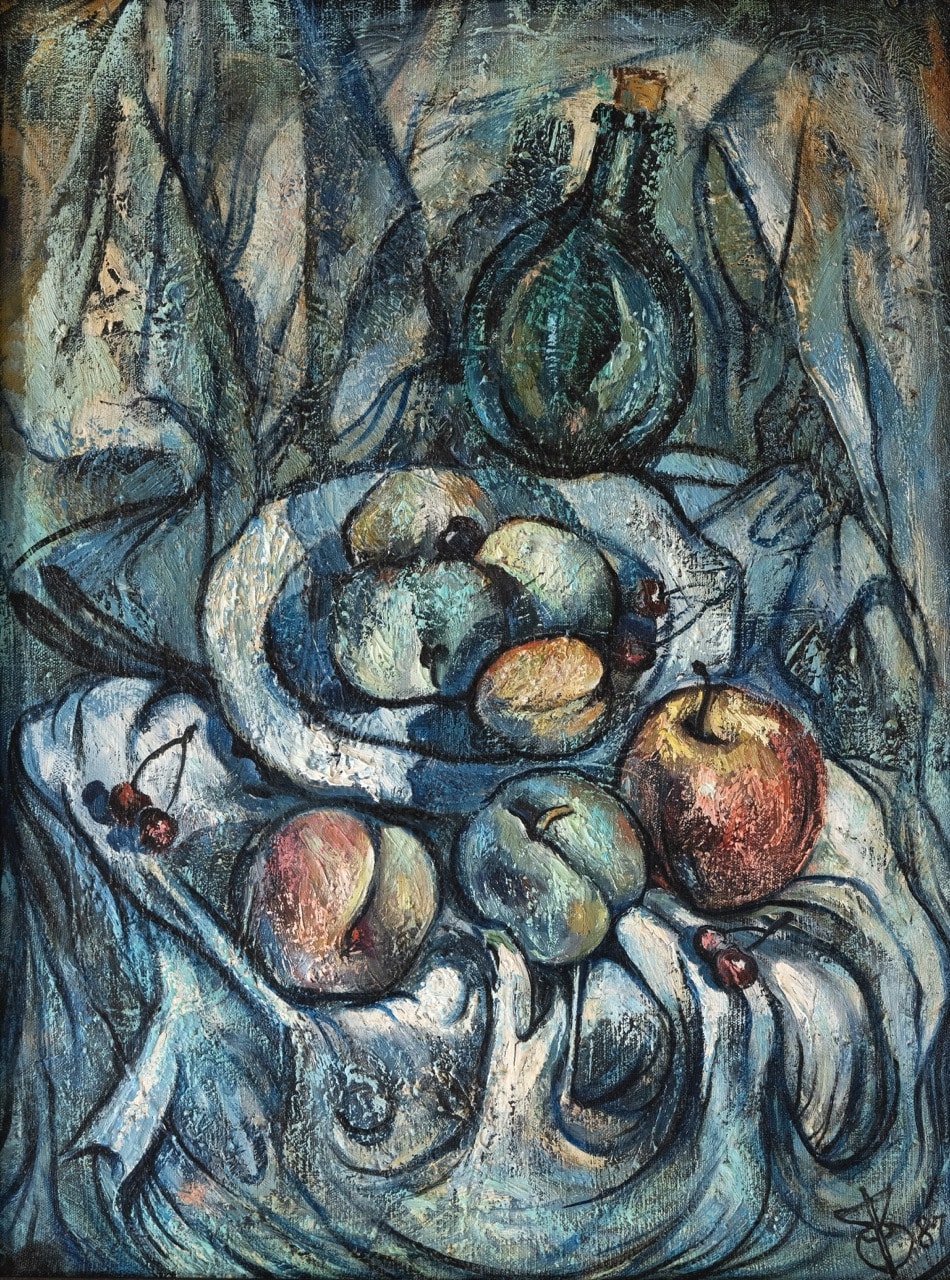
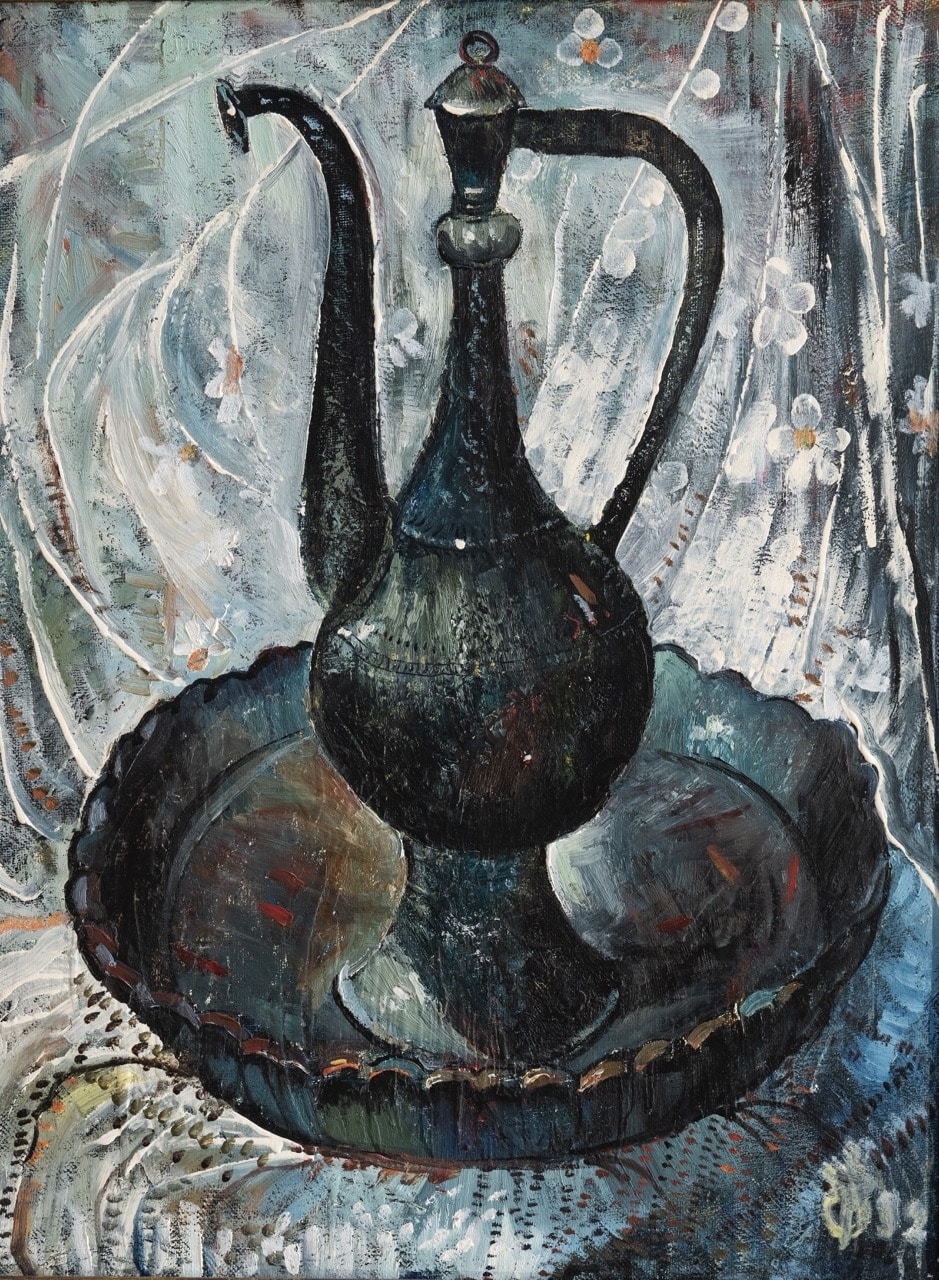
Durmishidze found the true allure of painting in the mastery of light. In his still lifes, he had an insatiable appetite for the challenge of playing with light, driving him to experiment continuously. He created works featuring a bouquet of white flowers arranged identically, but differing in color - one was softened by bright light, glowing with an almost watercolor transparency, while the other was more vibrant in tone. In both instances, the diffuse illumination shimmers with silver undertones, making the objects appear lit from within. The resulting forms are light and airy, infusing these still lifes with a profound tenderness and poetic grace.
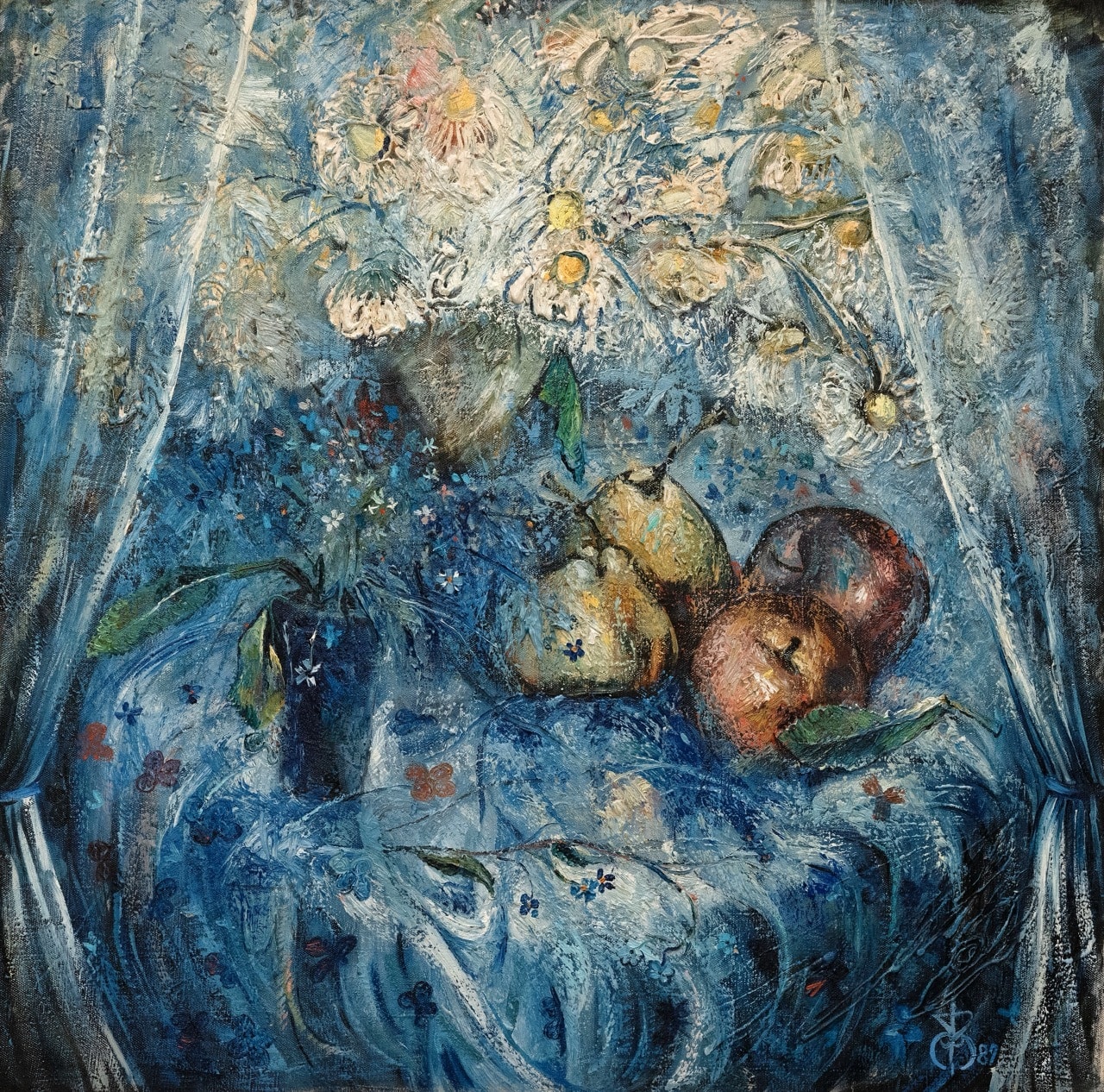
Omar Durmishidze's work exemplifies a blend of tradition and modernism, showcasing the vibrant culture of color and materiality that defines the Georgian school of painting. Simultaneously, it reflects Western modernist influences. His style remains as one of the most genuine, expressive, and independent voices in Georgian art of the 1970s.