.jpg)





 Share this article
In the 19th century, Germans living and working in Georgia played a significant role in shaping the country's contemporary cultural identity. Due to a combination of historical and political circumstances, a number of German colonies were established in Georgia. Together with other cultural influences, these settlements contributed significantly to the spread of European artistic trends in the region. This influence persisted until almost the onset of World War II. Over the course of almost a century, the work of German artists residing in Georgia, including Helene and Paul Franken, Theodor Horschelt, Franz Sim, Marie Meyer, Max Tilke, and Karl Sommer, established a distinct direction within Georgian culture. A stand-out among these artists was Alexander Salzmann, the son of the renowned architect Albert Salzmann.
Alexander Salzmann received his professional education in Moscow, Russia, at the art school of Leonid Pasternak, the father of the renowned Russian writer and poet Boris Pasternak. He later continued his studies in Germany at the Royal Academy of Fine Arts in Munich, in the workshop of Franz von Stuck. It was during this time that he met Wassily Kandinsky, a pioneer of abstract art, and became a member of "Phalanx," an artist group established by Kandinsky. In 1901-1904, Phalanx hosted more than ten exhibitions in Munich that showcased works by Salzmann.
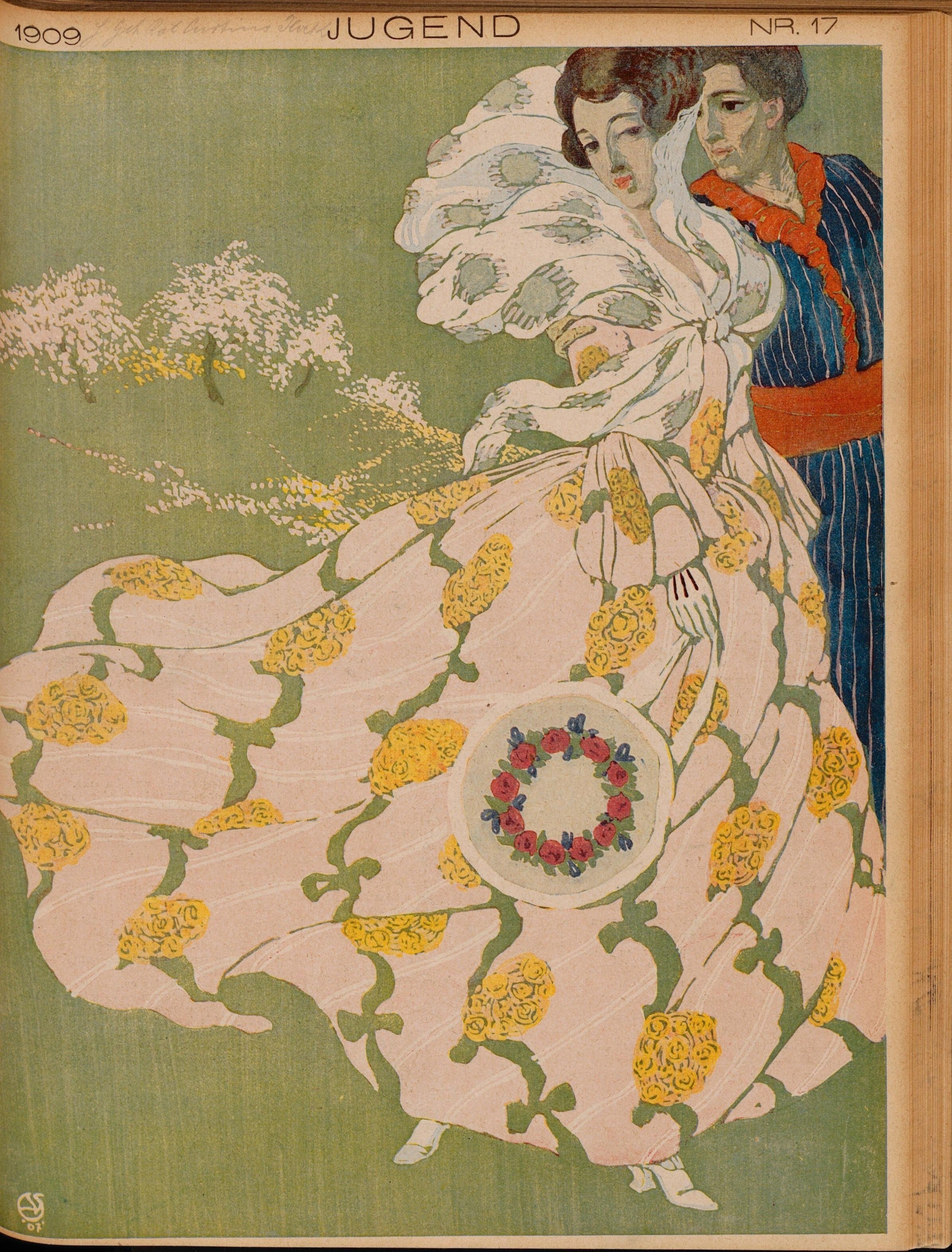
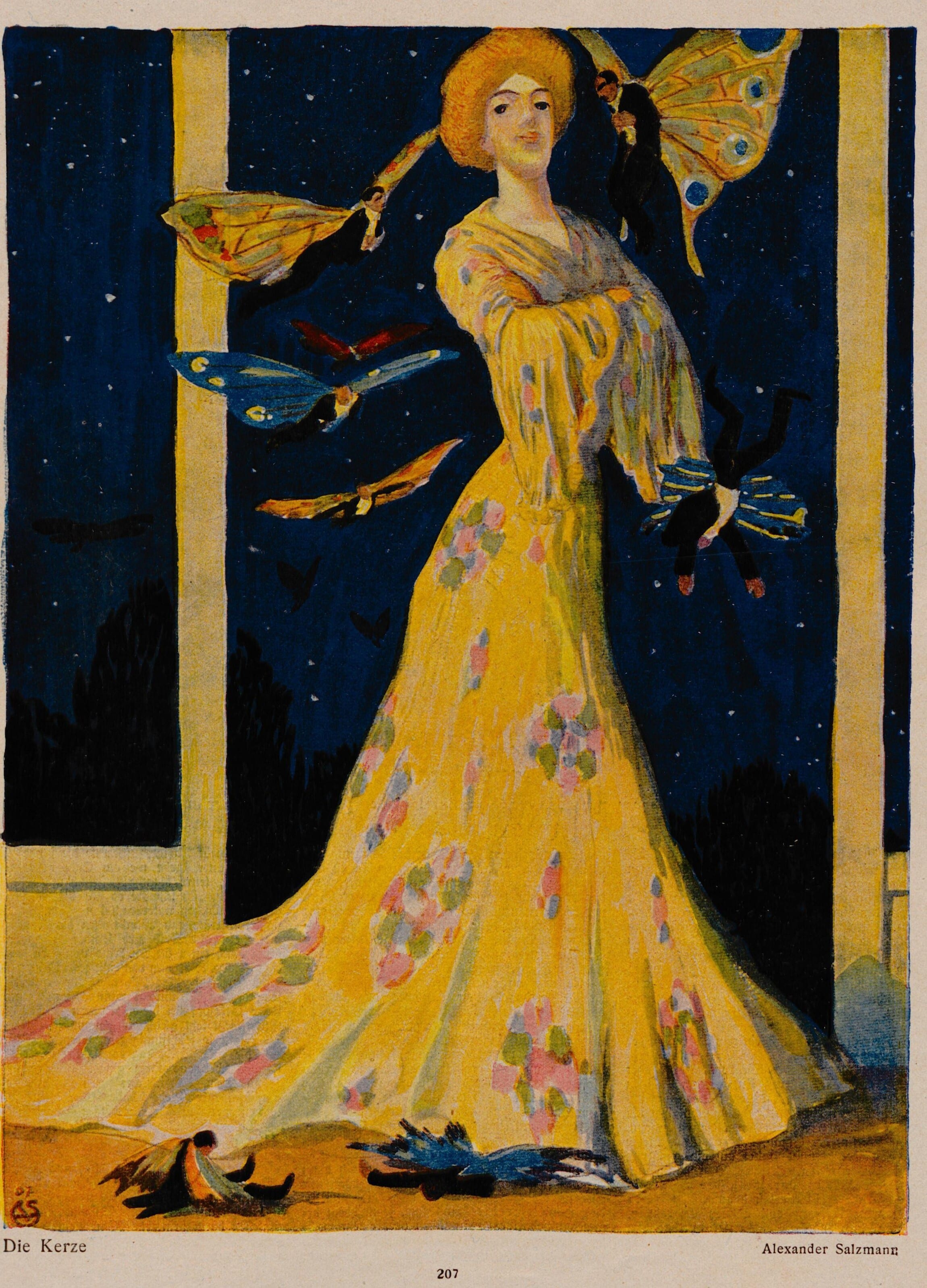
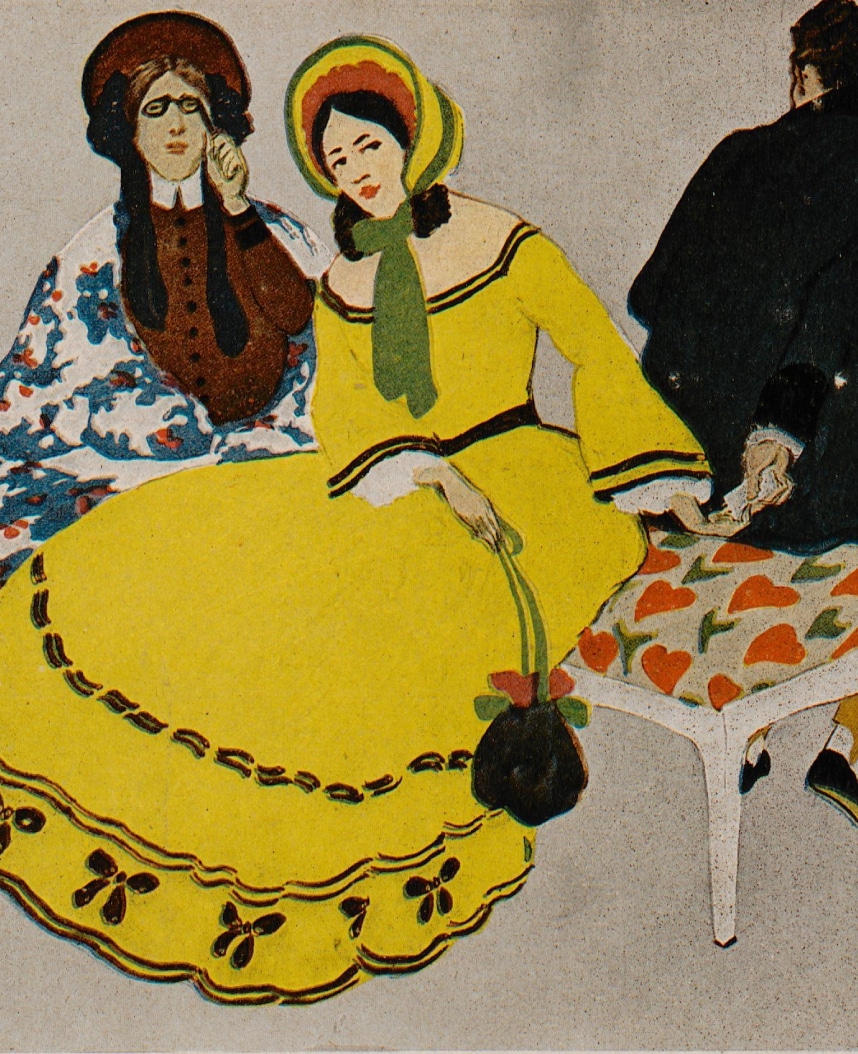
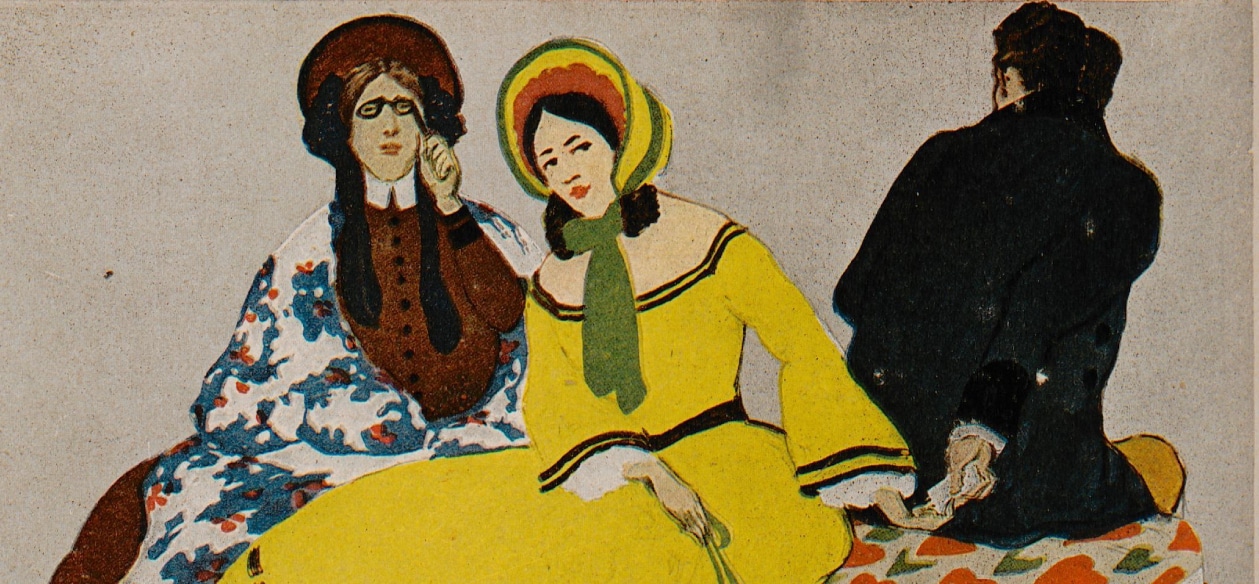
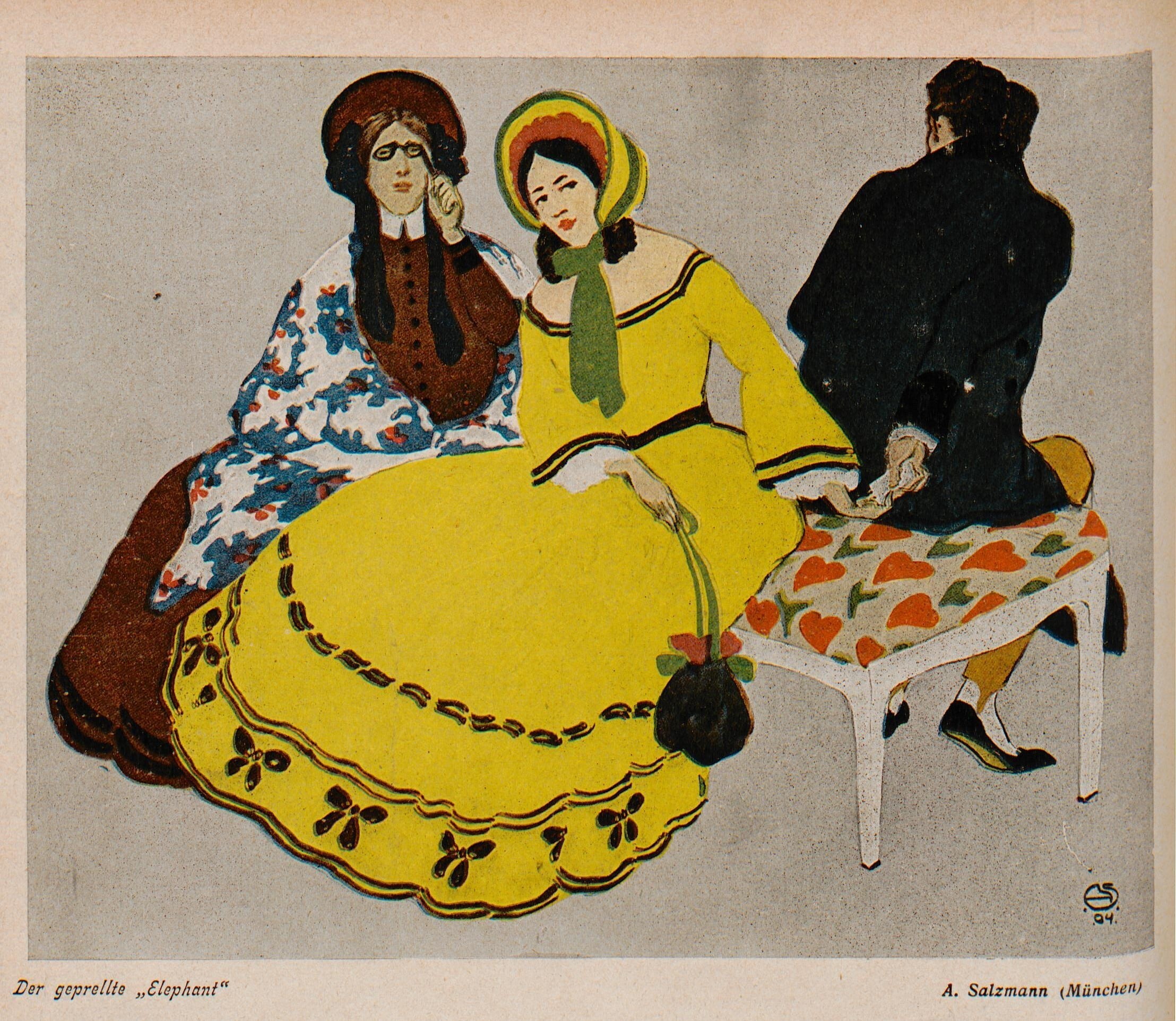
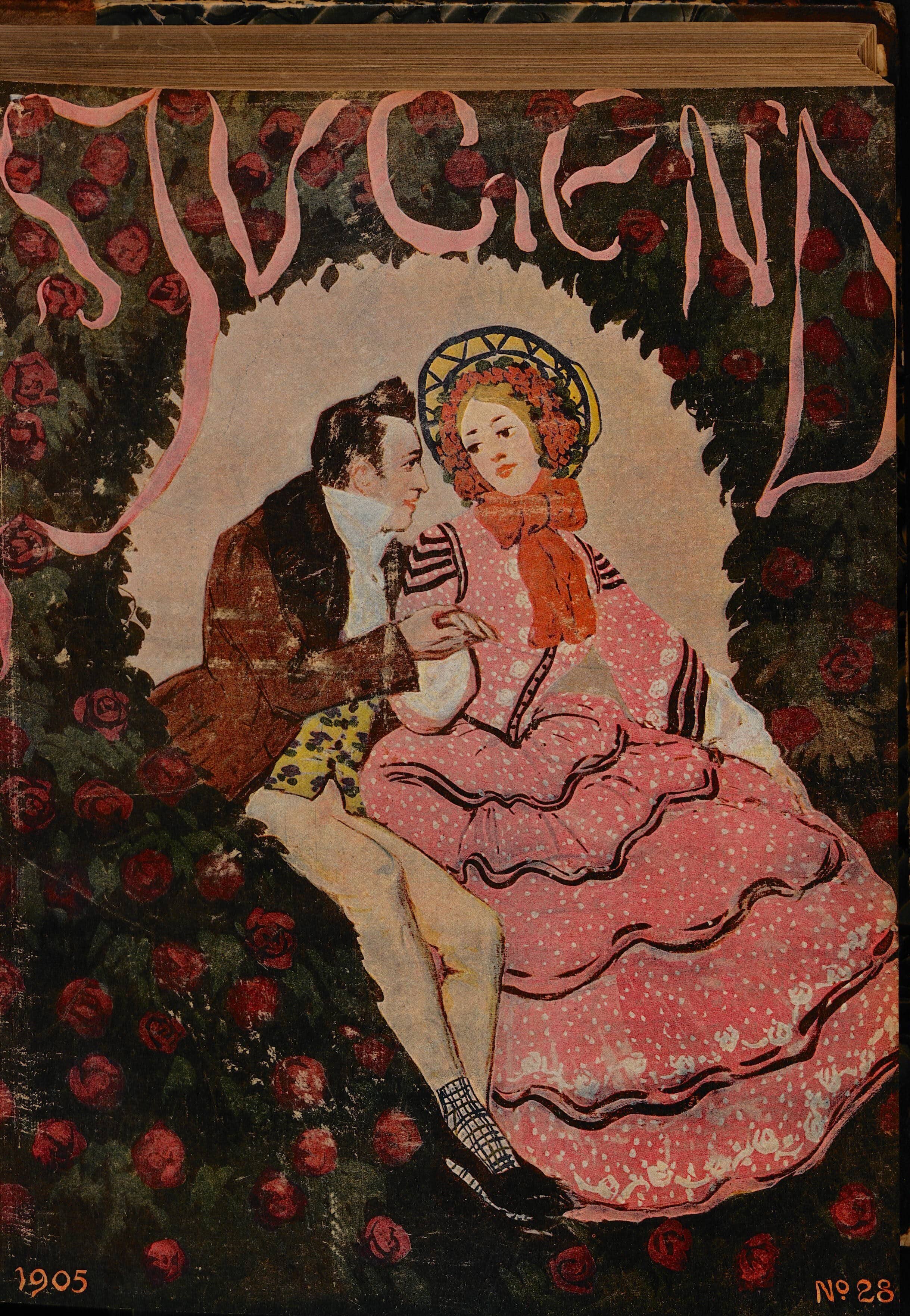
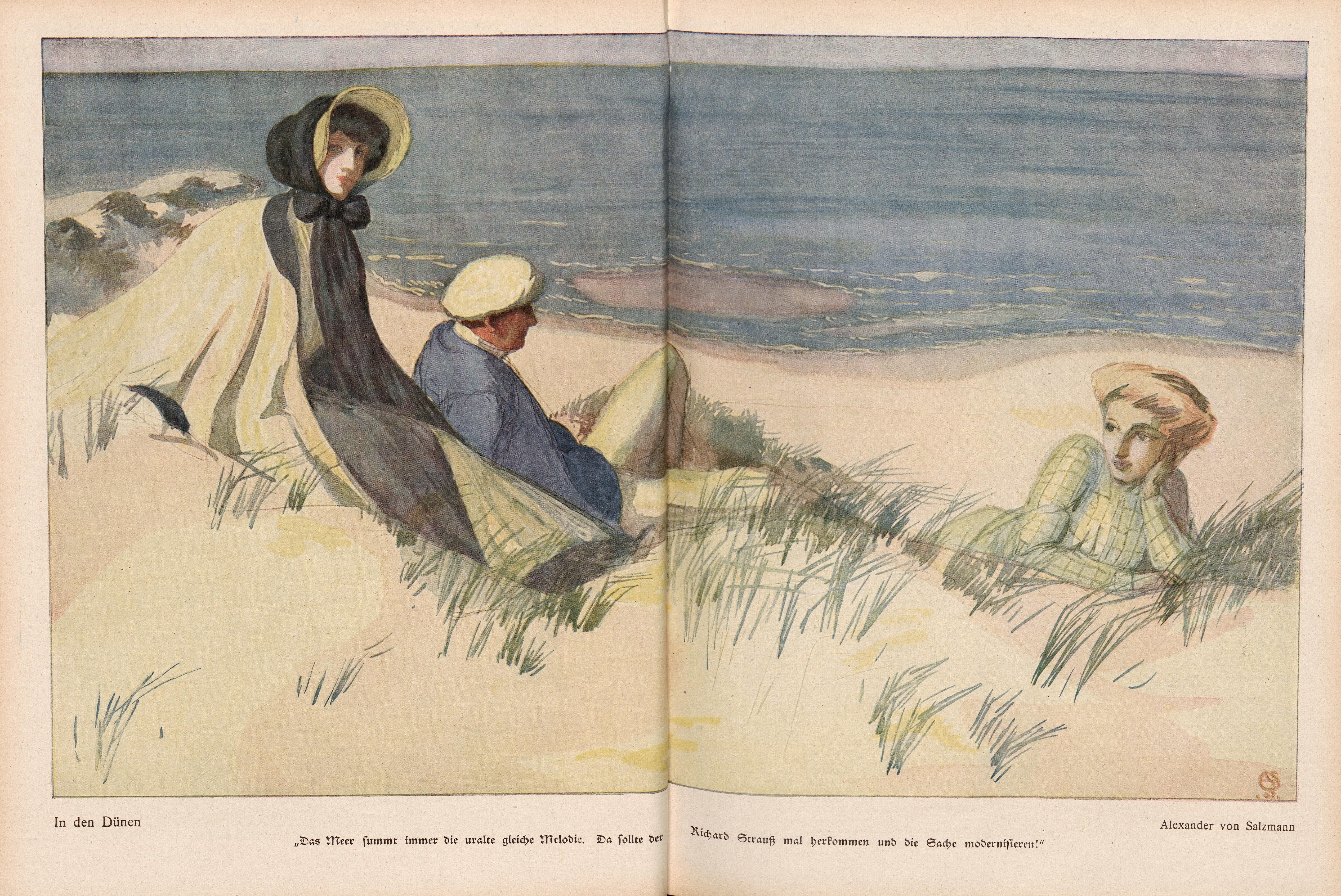
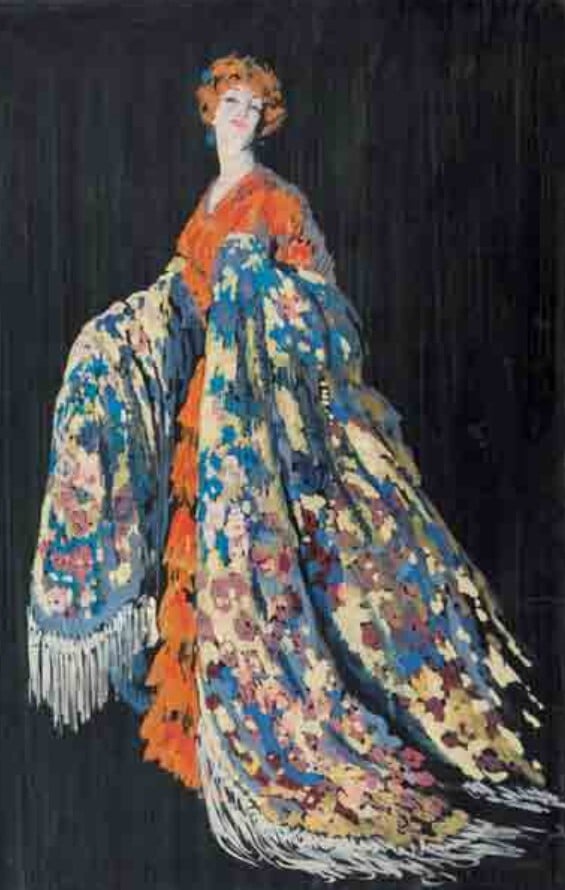
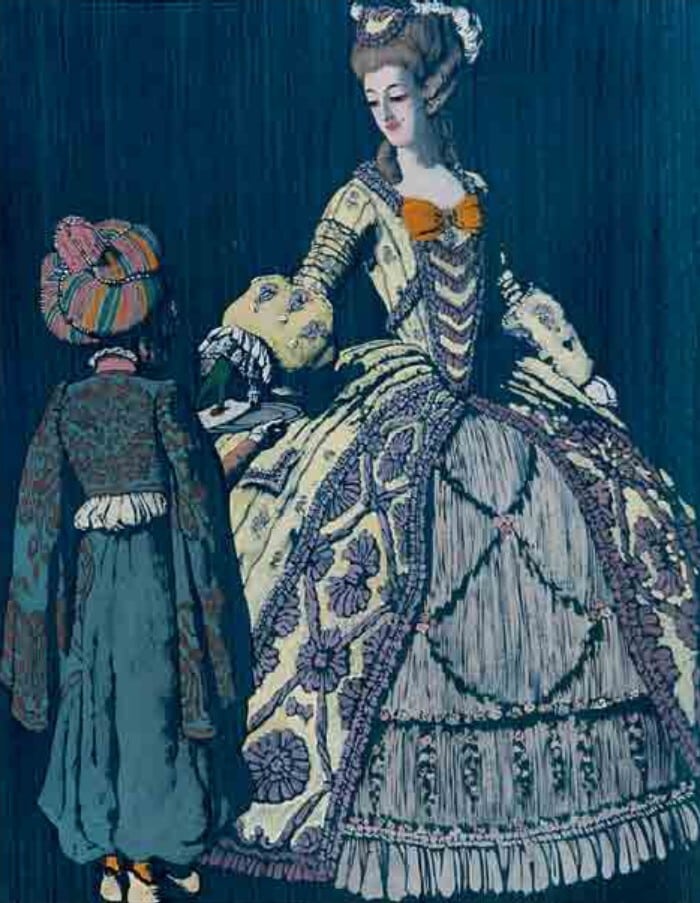
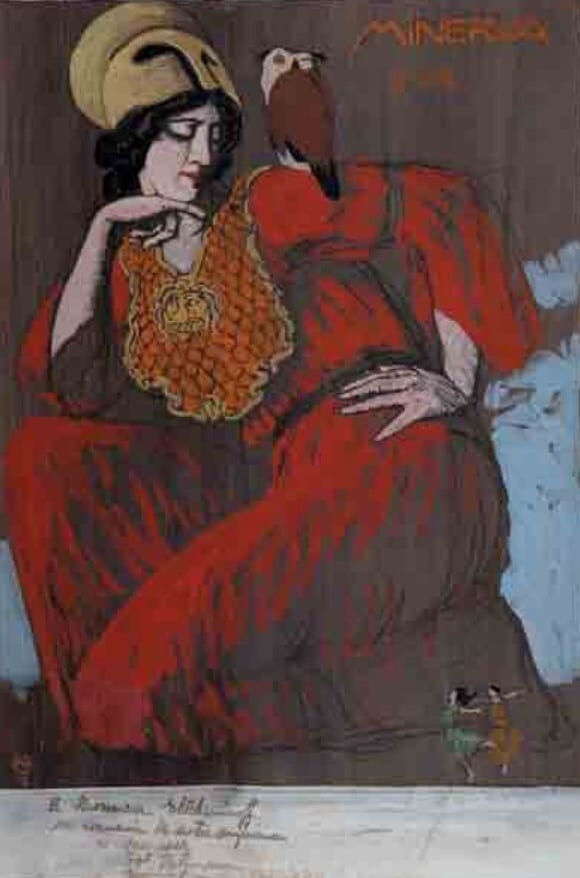
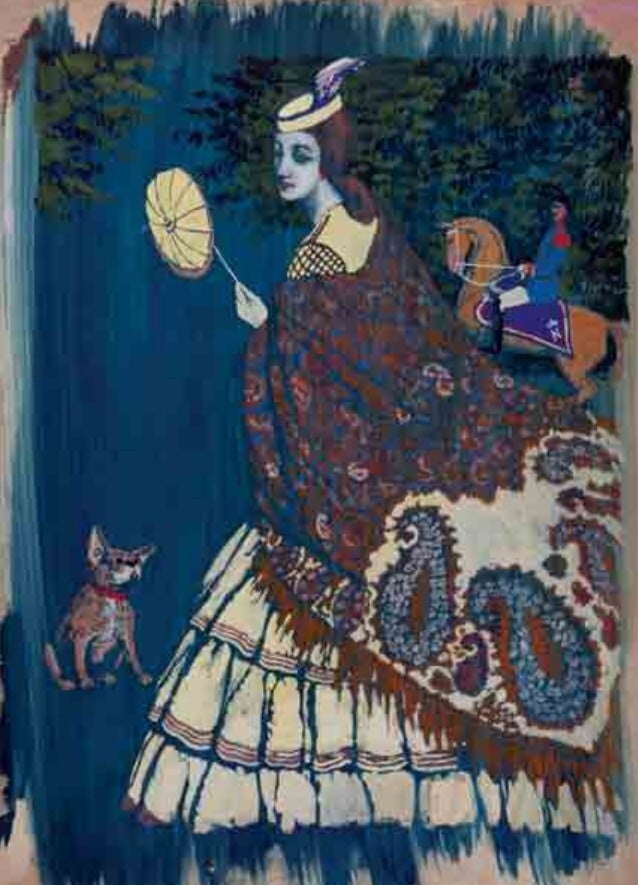
The most comprehensive view of the artist's German period is derived from his compositions created for the magazine Jugend. This highly popular weekly publication featured Salzmann's illustrations, independent easel graphics, and caricatures. In 1918, a selection of these original works was presented to the Georgian public at the Small Circle artists' exhibition held in Tbilisi, which also included artists Boris Vogel, Florensky, and Kirill Zdanevich. The press lauded Salzmann's works as "colorful stylization." Compositions like Phaedra, Orpheus, Minerva, and the series The Seasons clearly demonstrate the artist's fascination with mythological themes, Jugendstil-like aesthetics, and antiquity as a whole.
.jpg)
Grotesqueness and eccentricity, combined with a strong sense of decorativeness, a distinct, recognizable contour, and perfect drawing ability, give his expressiveness a unique intensity and clarity of form. His background in caricature work appears to have contributed a unique set of perceptive elements to the artist's handwriting. He is distinguished by an increased sensitivity to the decorativeness of color. Alexander Salzmann's grasp of contemporary art movements is clearly organic and innate, much like the features of Art Nouveau, and more specifically Jugendstil. In this way, he stands among those artists who can be credited with bringing European creative styles to Georgia.
Shortly after the First World War
began, Salzmann returned to Georgia.
In 1918-1919, he was appointed principal designer of the Tbilisi
Opera Theater. He
also
actively collaborated
with numerous journals and newspapers, and at the same time worked in the field of
scenography.
During the 1918–1919 theatrical season, a series
of performances designed by Salzmann were staged at the Tbilisi Opera Theater: Jacques Offenbach’s The Tales of Hoffmann, Pyotr Tchaikovsky’s The Queen of Spades, and Eduard Napravnik’s Dubrovsky.
Salzmann also designed the earliest Georgian
operas, including Zakaria Paliashvili’s Abesalom and Eteri and Dmitri Arakishvili’s Tale of Shota Rustaveli, both of which were presented in 1919).
Salzmann’s theater art is characterized by its minimalism, experimental character, new interpretation of space, and rich Jugendstil-like decorativeness. As such, it is no surprise that the audience's reaction was varied.
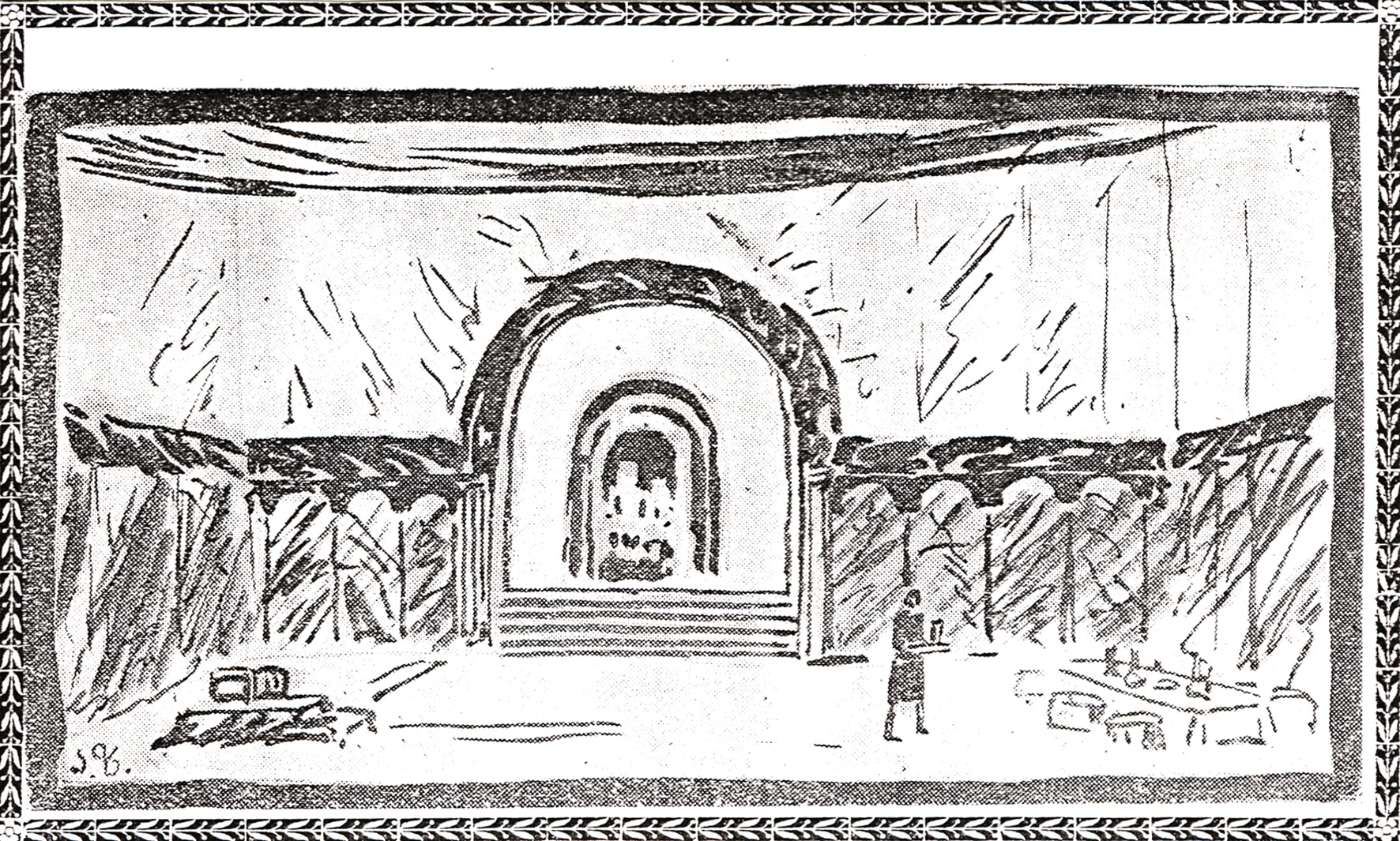
The artist’s first contact with the theatrical space dates back to his childhood, when he dressed the puppets made by his mother in costumes representing different historical periods, and created corresponding stage sets for the family's home puppet theater. Later, while in Germany, the artist began to investigate the many possibilities of employing light on stage. In 1919, he published an article on the subject in the magazine Theater and Music, No. 1. In it, he speaks about the need to change the technical equipment of the contemporary stage. He highlights one of the key principles of theatrical space as the “dark box and the cut-out, illuminated area,” referring to the rigid practice of illuminating only the area of the stage, inside gloomy surroundings. He claims that the impression of this contrast is anachronistic, and notes his support of its modernization (a subject that was only to become more widely discussed in the theater in the late 20th century).
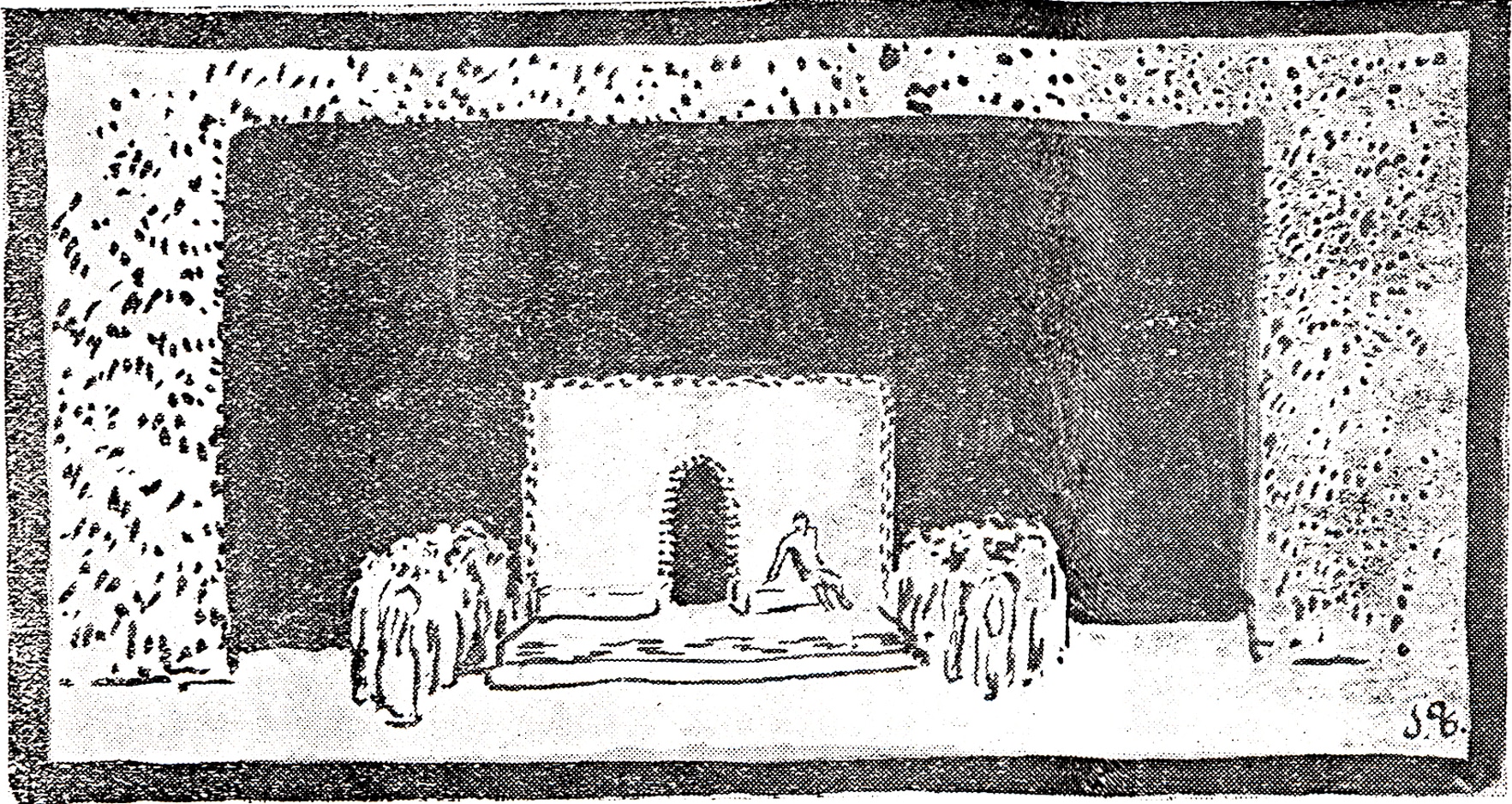
Even this article alone is enough to expose the extraordinary range of Alexander
Salzmann's artistic and
intellectual vision, as well
as his modernist
approach to stage design.
As a scenographer, Salzmann was also interested in the revolving stage, which he had already seen in Germany. Conversely, he was also fascinated by a new tendency that rejected technical development altogether, opting instead for extreme simplicity in the staging area, like ancient Greek shows, removing equipment from the stage entirely during the performance. He was intensely interested in the theater of Adolphe Appia, who he called “the peerless specialist of Wagner and a Swiss dreamer,” and the theatrical innovations of Edward Gordon Craig.
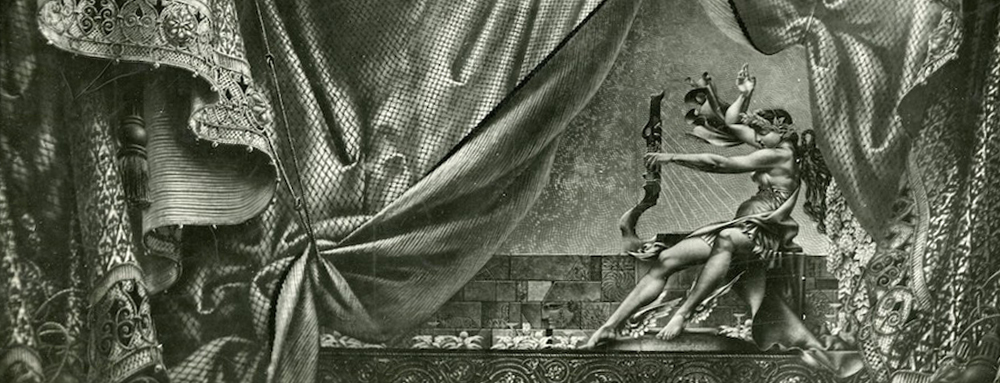
He collaborated with the painter Zygmunt Waliszewski in 1919 to design the curtain for the State Theater. Referring to this work, I. Kamsky wrote in the newspaper Gruzia (19 September 1919): “The first thing that catches the eye of theater-goers is the new curtain designed by the artists Alexander Salzmann and Waliszewski. It depicts the motif of a steed racing towards the sun. The work was executed in the bold color palette characteristic of the artist.”
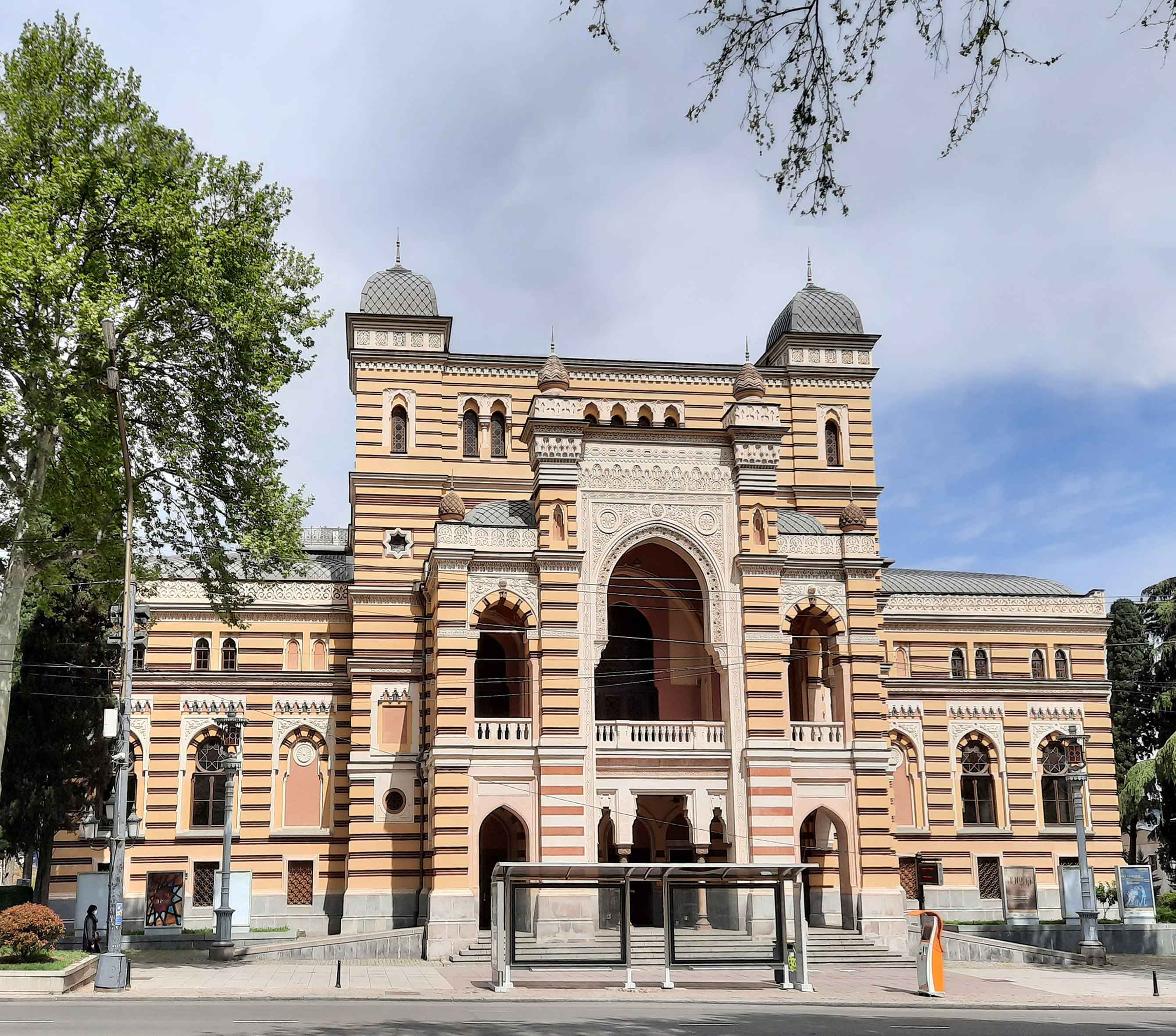
The same article also describes the theater’s previous curtain. According to the author, it featured two views: the snow-covered Kremlin in Moscow and the banks of the Mtkvari River. This earlier curtain had been painted by the artist Derbez based on sketches by Grigory Gagarin, following the destruction of Gagarin’s original version in a fire that consumed Tbilisi’s first Opera House (designed by Giovanni Scudieri) in 1874. Audiences, long accustomed to the old curtain, struggled to accept Salzmann’s radically different artistic language. As one spectator remarked after the performance, “The curtain hurts the eyes. It contains too much light.” The curtain premiered during a performance of Richard Wagner’s opera Tannhäuser. The production was also notable because it was attended, for the first time, as part of an official visit by representatives of the government of the independent Democratic Republic of Georgia.
As the article further reveals,
Salzmann also designed the stage sets for the opera. Contemporary criticism
once again emphasized the powerful lighting effects and the “symphony of colors”
he created on stage.
In the same year, however, an article published in the journal ARS identified Waliszewski as the only author of the theater curtain, mentioning Salzmann merely as the theater’s chief designer. The existence of two diametrically opposed accounts of the same event, published in two different periodicals within the same year, clearly demonstrates that this issue requires further scholarly investigation.
Alexander Salzmann, along with
Kirill Zdanevich, a well-known figure from the first generation of Georgian
modernists, created performances at the popular theater-studio Argonauts’ Boat in Tbilisi, in 1919.
This fact is supported by various advertisements published in the press of the
time.
Salzmann’s creative interest extended beyond easel art and theater painting. While studying in Germany, he developed an interest in Theosophy. In 1910, in the small town of Hellerau near Dresden, he collaborated with Swiss composer and teacher Jacques Dalcroze on experimental lighting design for theatrical productions created as part of a musical-rhythmic education program.
Utilizing the full range of stage lighting
possibilities, he aimed to replace painted decorations with light, effectively
creating stage settings in real-time during performances. This exploration led
to a joint staging of K. Gluck's opera Orpheus,
which garnered impressive acclaim from contemporaries. In 1919, now in Georgia, at the Institute for the Harmonious Development of
Man founded by mystic and esotericist George Gurdjieff, Salzmann designed
performances intended to evoke an illusory sense of a non-existent world. Here,
music, movement, and light were intricately woven together, maintaining an
experimental quality.
In the 1920s, Alexander Salzmann,
together with his wife, left Georgia forever for Europe. Unfortunately, many of
the theatrical sketches he created during his time in Georgia have been lost to
history.