




 Share this article
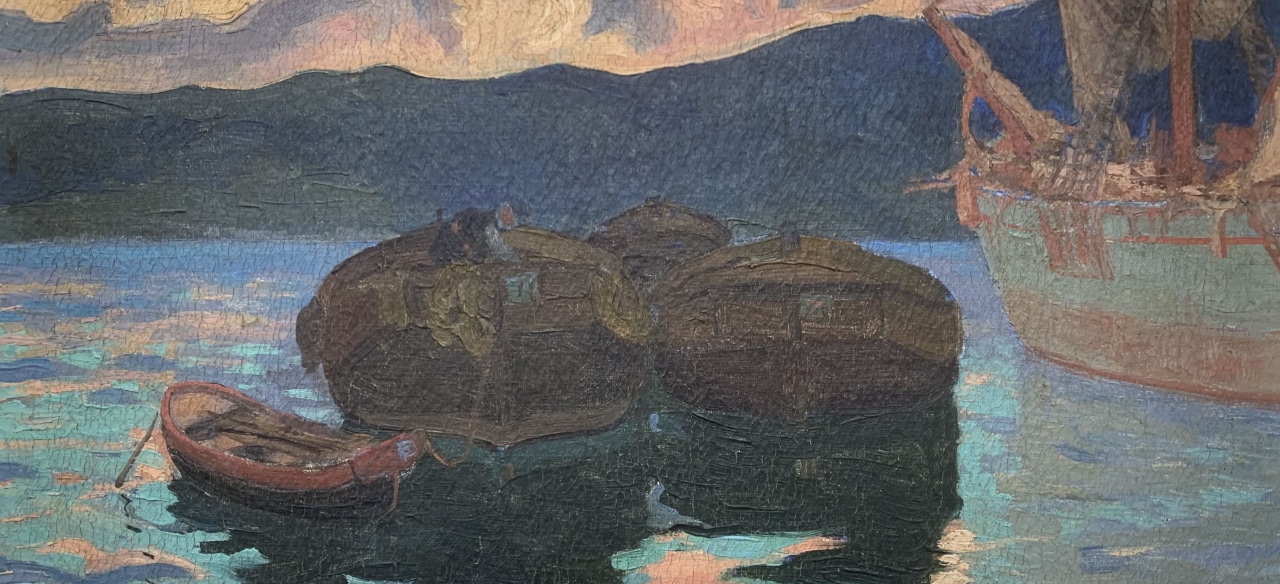
German-born artist Boris Fogel worked in Georgia for many years as both a painter—primarily a landscape artist—and a teacher; he was a man who generously shared the secrets he had learned of painting with the younger generations. Boris Fogel was born in 1872 in Dagestan, in the city of Temir-Khan-Shura (now Buynaksk). His father was a military colonel, and after his death in 1880, Boris’s mother, Olga Plavitskaya, moved with her son to Tbilisi. There, she enrolled young Boris at the Tbilisi Second Gymnasium for Boys.
Passionate about drawing from an early age, he received his first art education from local artist Alexander Zakharov, who was working in Tbilisi at the time. After graduating from the gymnasium, Boris Fogel went to Moscow, where he was admitted to the Faculty of Law at Moscow State University. Simultaneously, he pursued his passion for art by studying painting in the private studio of the renowned Russian artist Leonid Pasternak. In 1896, after completing his law degree, he followed the advice of one of his teachers, the artist Vladimir Makovsky, and moved to Paris for further artistic training. There, he studied at the Académie Julian under the guidance of artists Jean-Paul Laurens and Benjamin Constant.
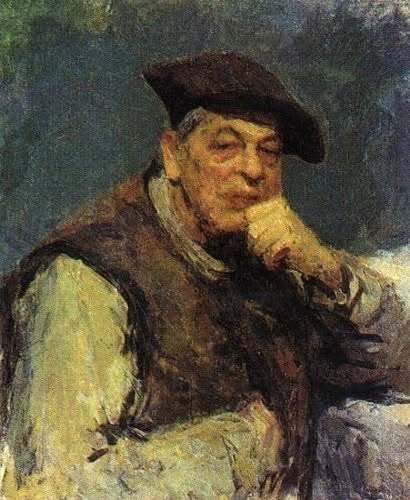
While in France, Boris Fogel
became actively involved in exhibitions organized by the Society of Russian
Artists in Paris. The society frequently exhibited his works at the famous Salon on the Champ de
Mars.
Fogel began his studies at the Imperial Academy of Arts in St. Petersburg in 1897, and earned a first-class certificate and the title of artist-teacher upon graduating in 1902. After successfully completing his education, he returned to Georgia, where he married Elena Sklifasovskaya, the sister of his friend Nikolay Sklifasovsky.
Settling in Tbilisi, Fogel began teaching art in both the boys’ and girls’ gymnasiums. He was soon invited to join the School of Painting and Sculpture under the Caucasian Society for the Promotion of Fine Arts. Alongside his teaching career, Fogel remained active in his artistic pursuits. He participated in numerous exhibitions both in Georgia and across Russia. He became a member of the Society of Artists of the New Generation, and, at one of their exhibitions, he was awarded a prize of the renowned Russian landscape painter Vasily Polenov for his landscape paintings. The artist traveled extensively across Europe—visiting France, Italy, and Germany—and captured his impressions on canvas. Although few of these works have survived, several of his landscape paintings, now held in private collections, reflect the impressions of his travels. His work reveals clear traces of French Impressionism and Post-Impressionism.
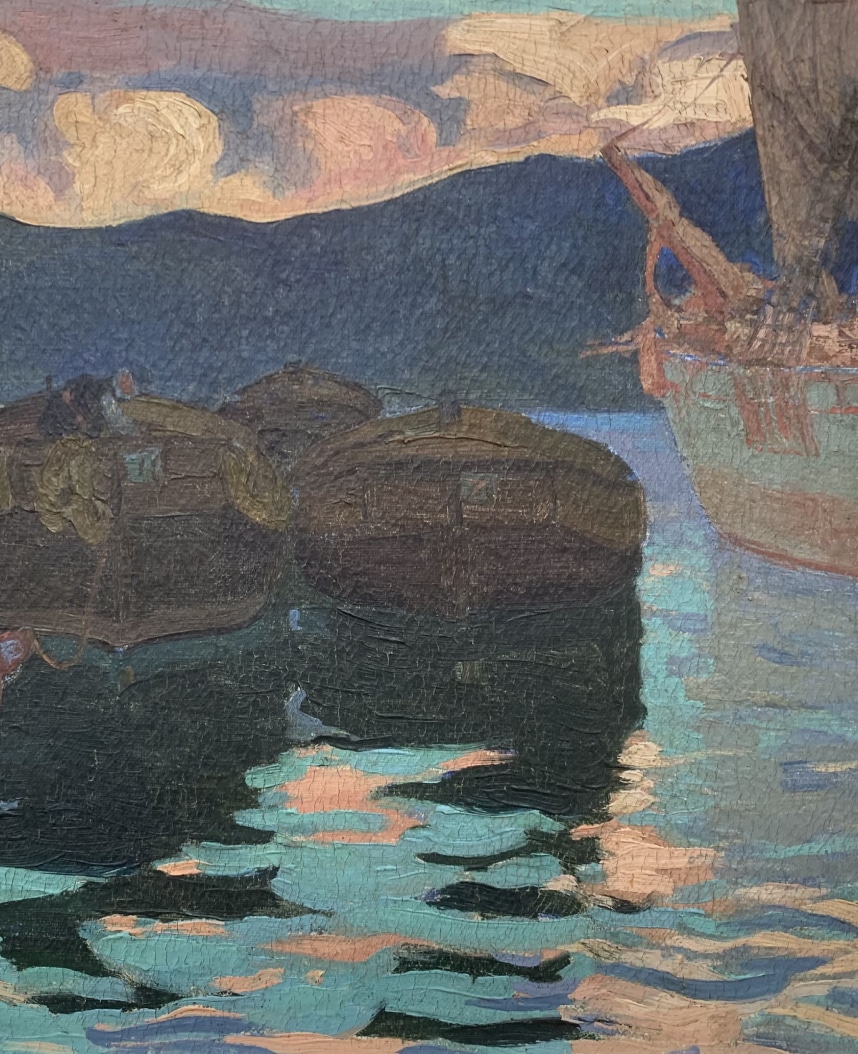
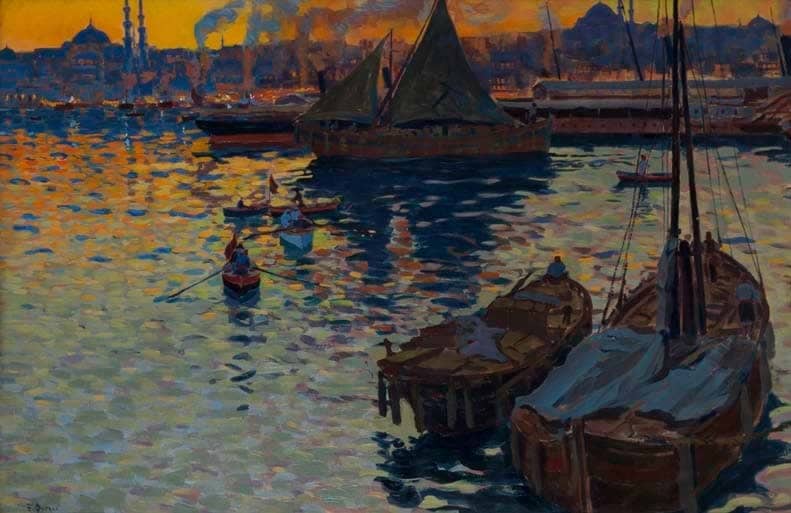
Like the Impressionists, Boris Fogel often painted the same landscape motif in different lighting. A notable example is his depiction of the Bosphorus Strait in the morning, and again at sunset. In the morning light, the life of the port is portrayed in soft, luminous tones—the gently rippling sea and the sky streaked with clouds appear in nearly identical dove-gray hues. At sunset, however, Fogel shifts focus to the waves, which he renders in short, textured brushstrokes that shimmer in the golden light of the setting sun. The two boats placed prominently in the foreground are painted with sharp clarity, while the opposite shoreline is softened in outline. There, the familiar silhouette of Hagia Sophia stands alongside other iconic landmarks, reflecting Istanbul’s rich oriental architecture. The narrow band of the sky is bathed entirely in a glowing orange hue by the rays of the setting sun. In the foreground, Fogel applies short, pastose brushstrokes, while, in the background, he opts for longer, thinner lines.
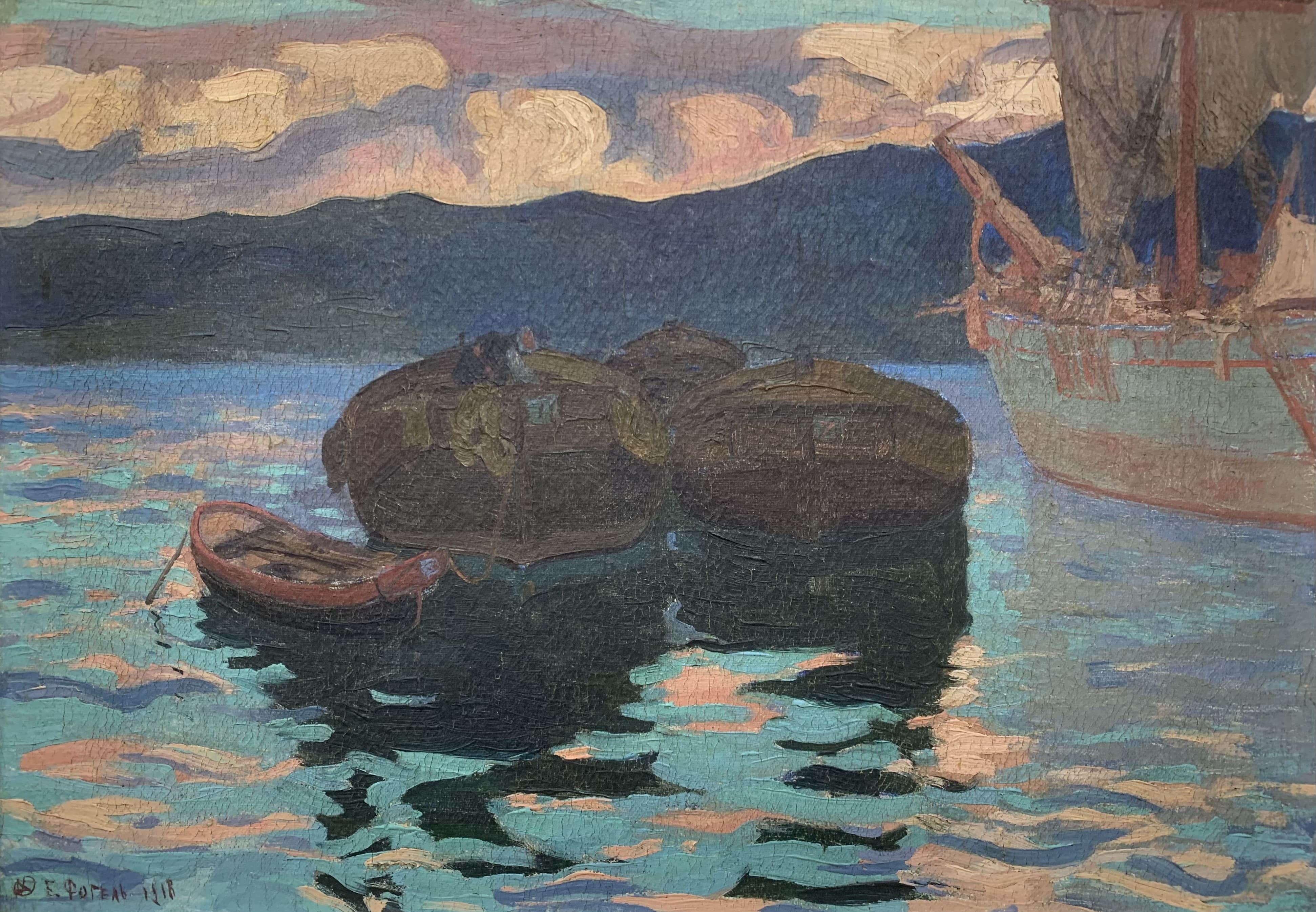
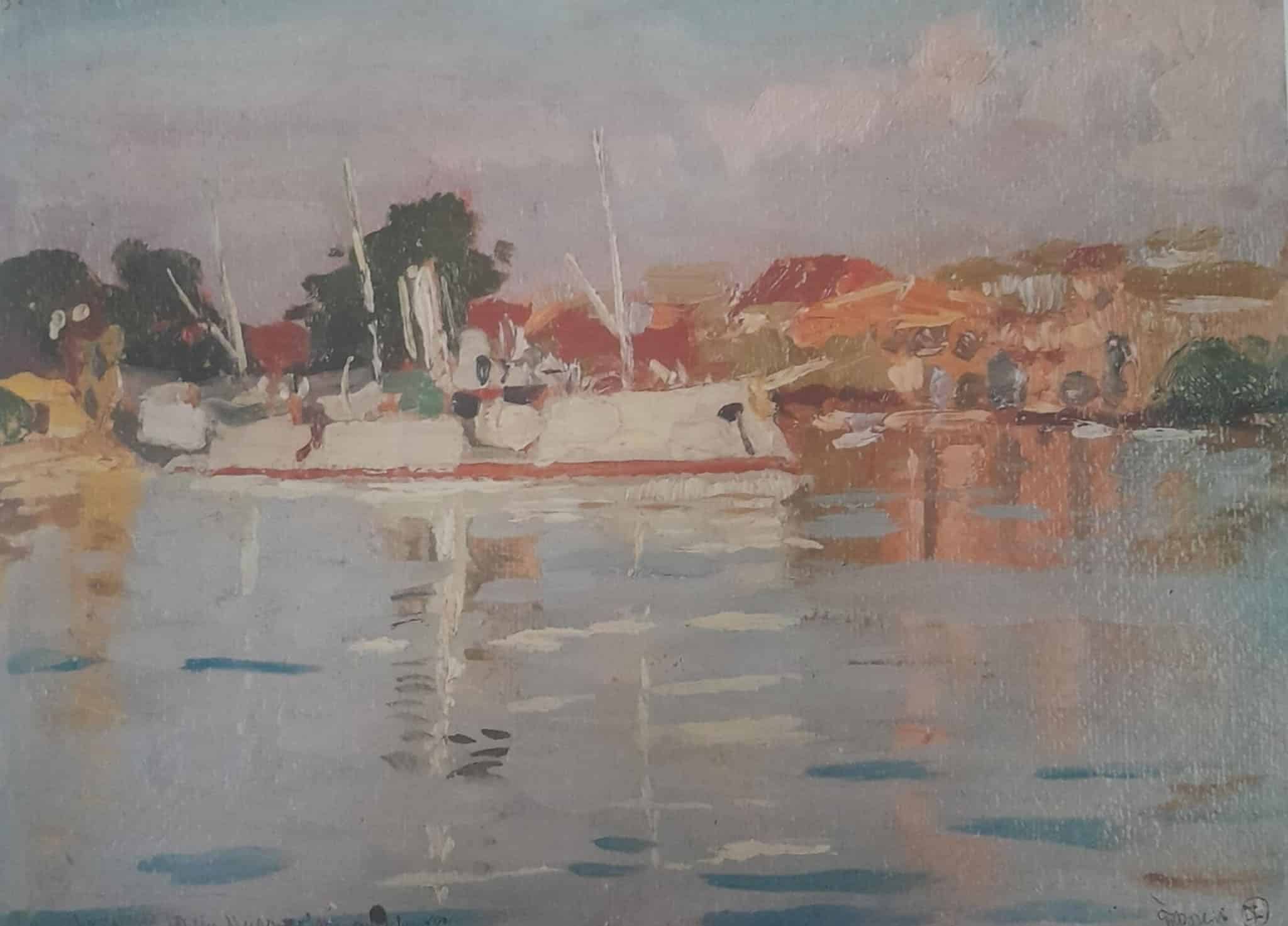
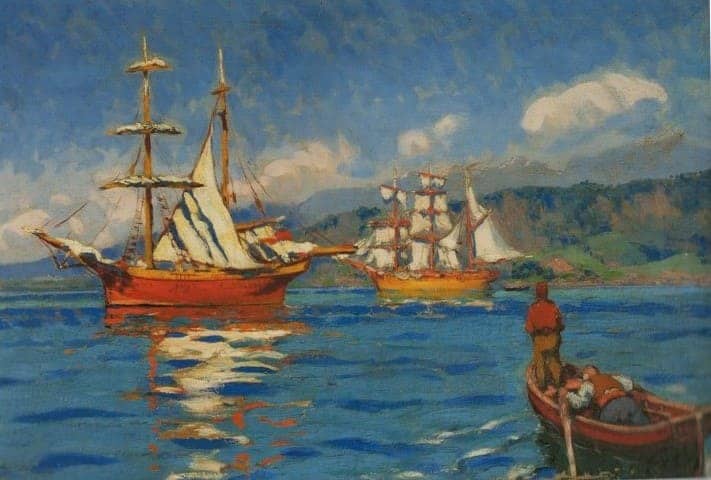
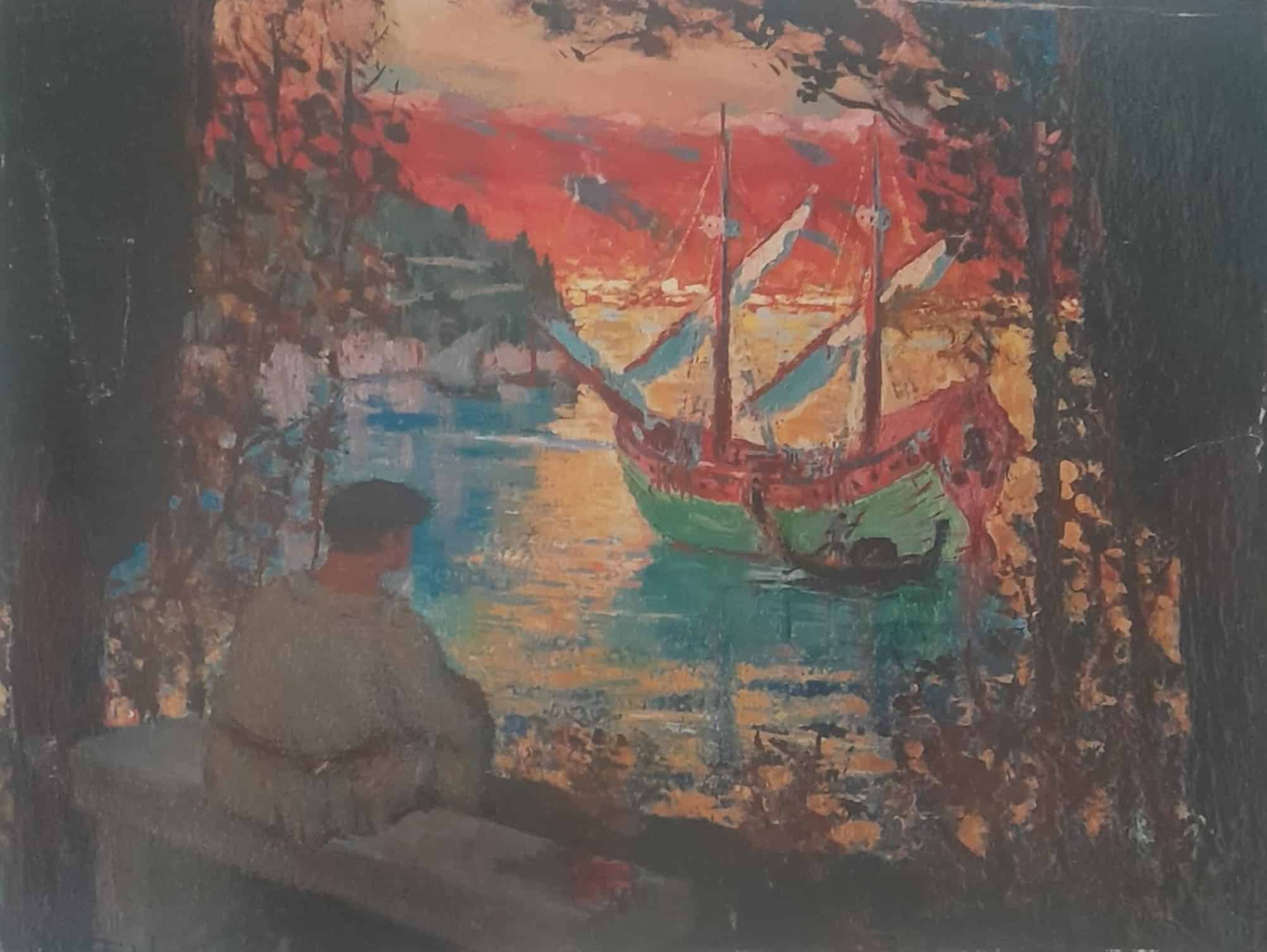
The splashes of dark purple in the shaded areas are particularly striking. The overall effect is a surreal, dreamlike vision of the bay and its boats. In another early etude, now housed in a private collection, Fogel presents a tranquil seascape as seen by a man seated casually on the shore, his back to the viewer. The scene radiates an amazing sense of calm. Boats, trees, and the man himself all convey a sense of ornamental conventionality, a weightlessness in form. It seems the artist's intention in this etude was to capture the impression that overwhelmed him upon witnessing the bay drenched in air and light. To achieve this, he rendered the boats as color patches, reducing their physical weight and integrating them seamlessly into the luminous unity of the sea and sky. This slightly blurred, unfocused image takes on a decorative function, as the artist weaves it into a composition of pictorial, linear rhythm, like a visual embroidery.
Following the First Imperialist War (1914), Boris Fogel and Nikoloz Sklifasovsky established a private art school, where Sergo Kobuladze and other well-known Georgian artists received their education. Among Fogel’s students over the years were several renowned Georgian landscape painters, among them Shalva Dzneladze, Aleksandre Tsimakuridze, and Elene Akhvlediani. In 1922, when the Tbilisi Academy of Arts was founded, Boris Fogel was among its first professors. For some years, he also served as a Dean of the Faculty of Painting at the Tbilisi Academy of Arts.
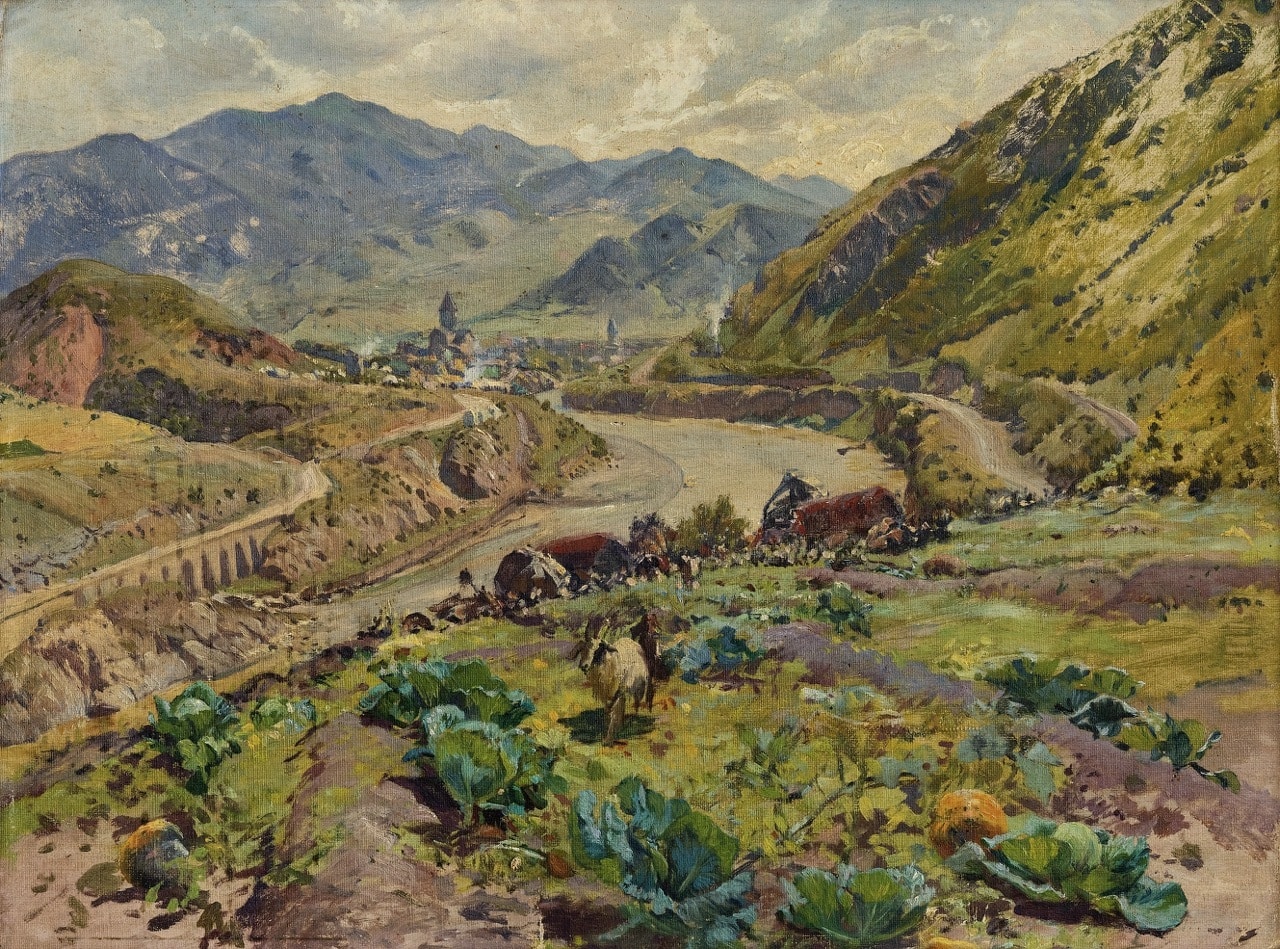
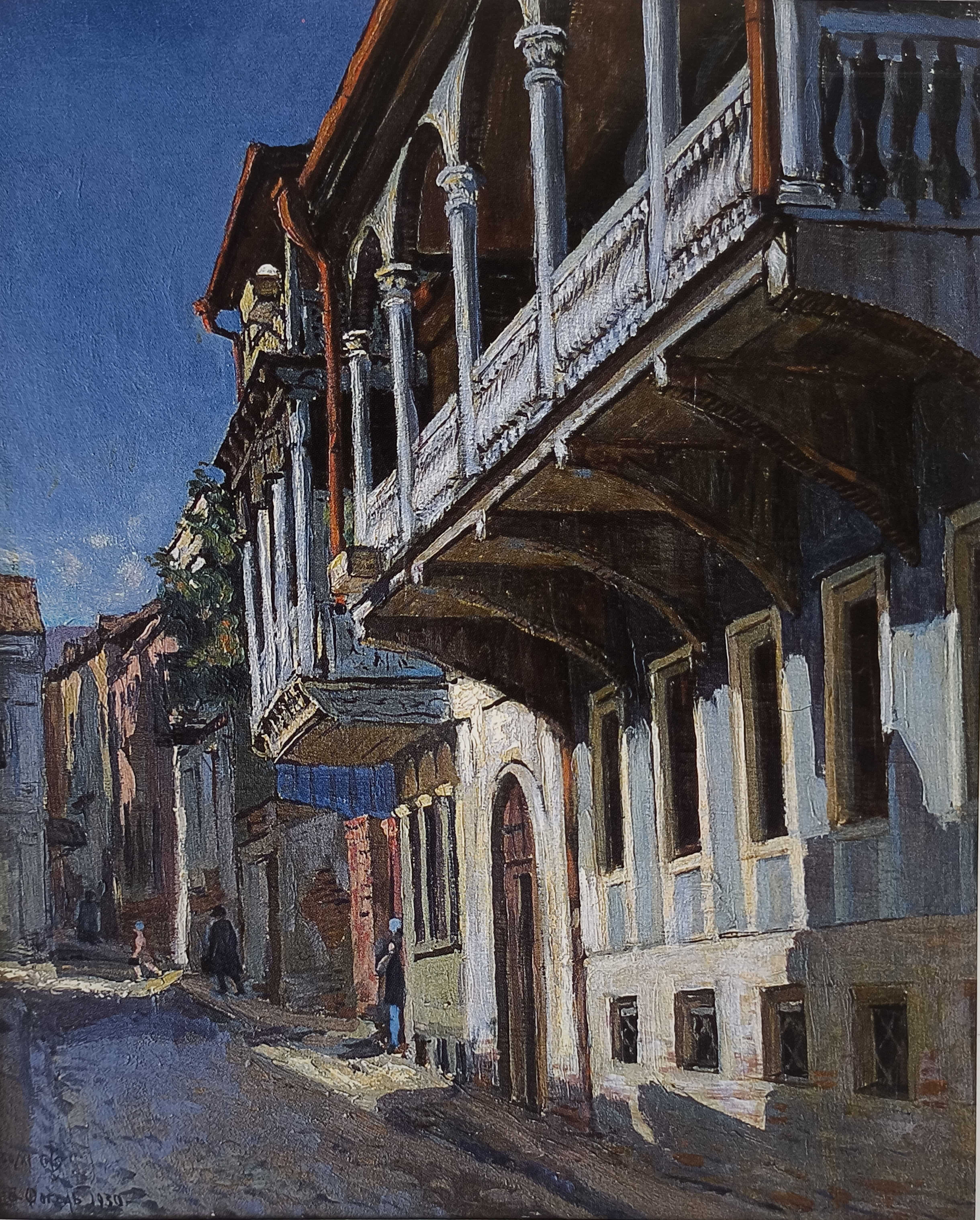
In 1926, the administration of the Tbilisi Communal Museum commissioned several landscape painters living in Georgia to depict scenes of both Old and New Tbilisi. Boris Fogel actively contributed to this project, producing numerous works between 1927 and 1932 that documented the city's expressive districts. In these landscapes, Fogel employed a bold, vibrant color palette. He was particularly enchanted by the narrow, winding cobblestone streets of Old Tbilisi, rendered in bright hues and bathed in the blazing sun.
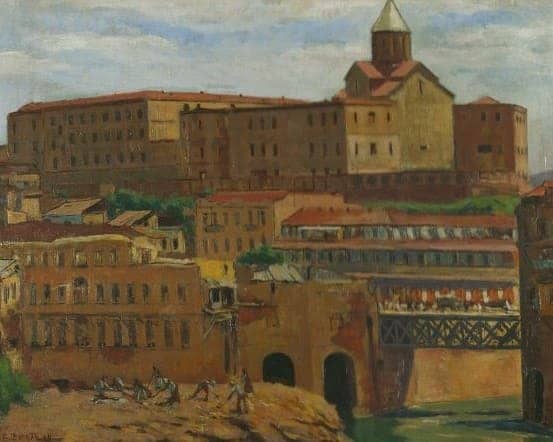
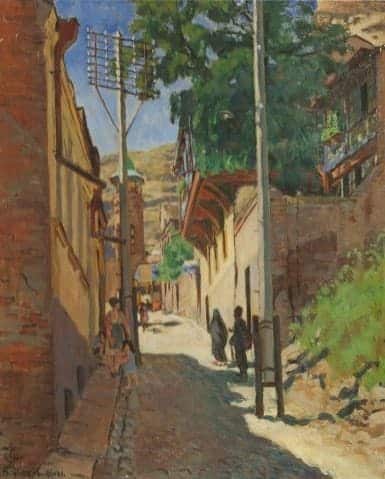
Through his brushstrokes, Boris Fogel seeks to present the expressive character of Old Tbilisi’s districts from various perspectives. Notable examples include his Houses with Balconies in the Surb-Nishan District and Tbilisi, Corner of Surb-Nishni Street, both painted in 1930, possibly on the same summer day. Interestingly, this vibrant Old Tbilisi street was also depicted by Fogel’s student, Aleksandre Tsimakuridze, as part of the same official commission. What stands out, however, is not just the similarity of subject matter, but the striking difference in mood and artistic approach—one that sets the Georgian student apart from his non-Georgian teacher. The contrast lies primarily in their attitude towards the motif itself. While the Georgian landscape painter intuitively conveys the spirit—the aura—of his native city, and the unique charm of its old neighborhoods, for Boris Fogel, this connection, despite his high professionalism, could never be entirely organic.
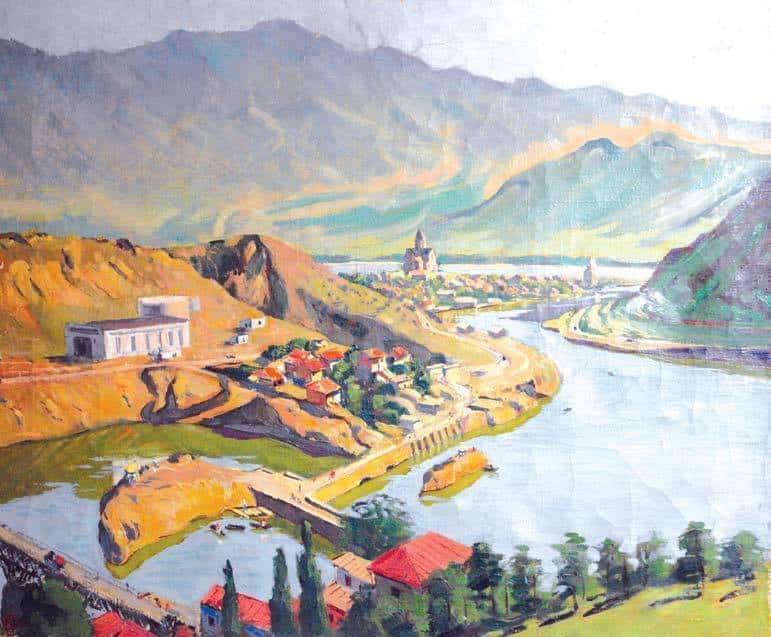
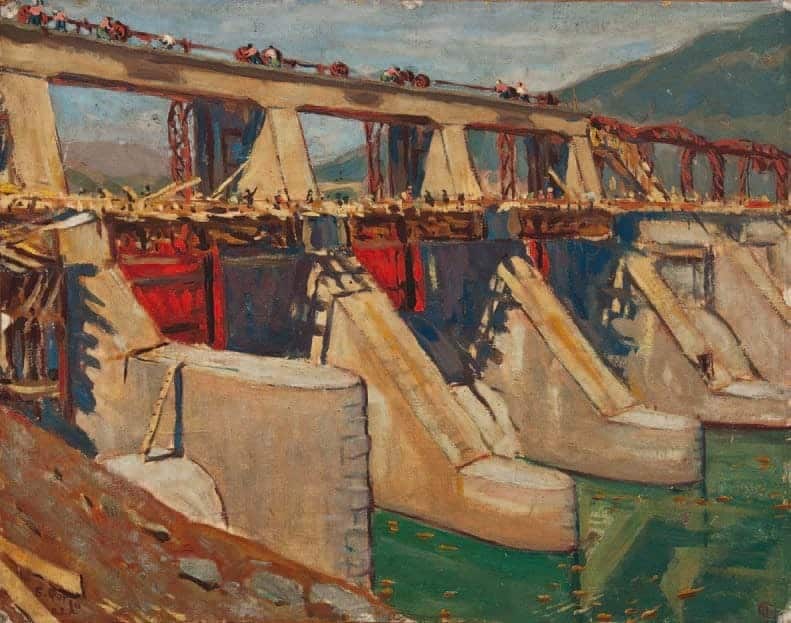
Under the Soviet regime, Boris Fogel—like many other artists of that time—was forced to make certain compromises in his work due to intense ideological pressure. This likely explains his decision to join the Revolutionary Association of Artists, established in 1929, and to dedicate two of his paintings to the construction of the Transcaucasian Power Plant (Zahesi).
He also painted the old seminary building where Joseph Stalin once
studied, fulfilling a commission from the Soviet Georgian government.
At the invitation of the city’s Academy of Arts, Fogel relocated to Leningrad (now St. Petersburg) in 1934. There, he assumed the position of professor and became deeply involved in the cultural and artistic life of the city. In June 1941, a large solo exhibition of his work was held in the Titian Hall of the Leningrad Academy of Arts. It included many of his landscapes painted in Georgia.
However, with the outbreak of World War II, the exhibition was abruptly closed, and most of Fogel’s works were lost during the Siege of Leningrad. After the war, he continued teaching at the Leningrad Academy of Arts, remaining there until the end of his life. The artist passed away in the same city in 1961, leaving behind a lasting legacy and deep affection in the hearts of his students.
Boris Fogel belongs to a generation of artists who fully mastered the visual tools necessary to convey a motif with precision and feeling. His focus was primarily on capturing compelling perspectives of urban landscapes, where his exceptional skill in manipulating light and shadow is particularly evident. He remained faithful to his artistic intuition and refined taste throughout his career.
Over time, he softened his textured, pastose technique with thinner, smoother brushstrokes, which helped him create a balanced compositional structure in his urban scenes. Favoring a sunlit palette, Fogel’s landscapes often evoke a bright and uplifting mood. Yet, in several of his Old Tbilisi landscapes, we also feel a touch of the nostalgia he most likely experienced when saying goodbye to his childhood city forever.