




 Share this article
From the 1930s onward, when Socialist Realism was established
as the official direction of Soviet art, the prospects for creative freedom and revolutionary change in
the
artistic sphere were effectively extinguished. Yet the rich artistic traditions that had
flourished for decades across the Soviet republics did not vanish without a
trace. They persisted in the shadows, hidden away in private studios and secret museum
vaults. Decades later, this artistic legacy, together with the experiences of
artists who had endured repression and a range of other historical
circumstances, helped lay the groundwork for the emergence and development of unofficial, so-called
nonconformist,
art within the Soviet sphere.
Non-conformist art and unofficial culture constituted
a conscious artistic and
social movement. Its representatives were free spirits who forged autonomous worlds of their own, cultivating creative practices and ways of life entirely separate from
the imposed norms of Soviet society. They asserted their independence not only
through their art,
but through their way of living; consistently rejecting the state's attempt to use art
as weapon for propaganda, and completely refusing to submit to ideological
dictates.
From the 1960s onward, with very few exceptions,
Georgian nonconformist art emerged within a circle of self-taught,
non-professional artists. This was a completely logical evolution; the creative
world of these passionate amateurs was free from the rigid academic dogmas and mandatory ideological narratives of official art schools.
Within this private circle, unique literature and fine arts quietly flourished,
until the movement eventually transcended its original boundaries to become a
powerful milestone in Georgian culture.
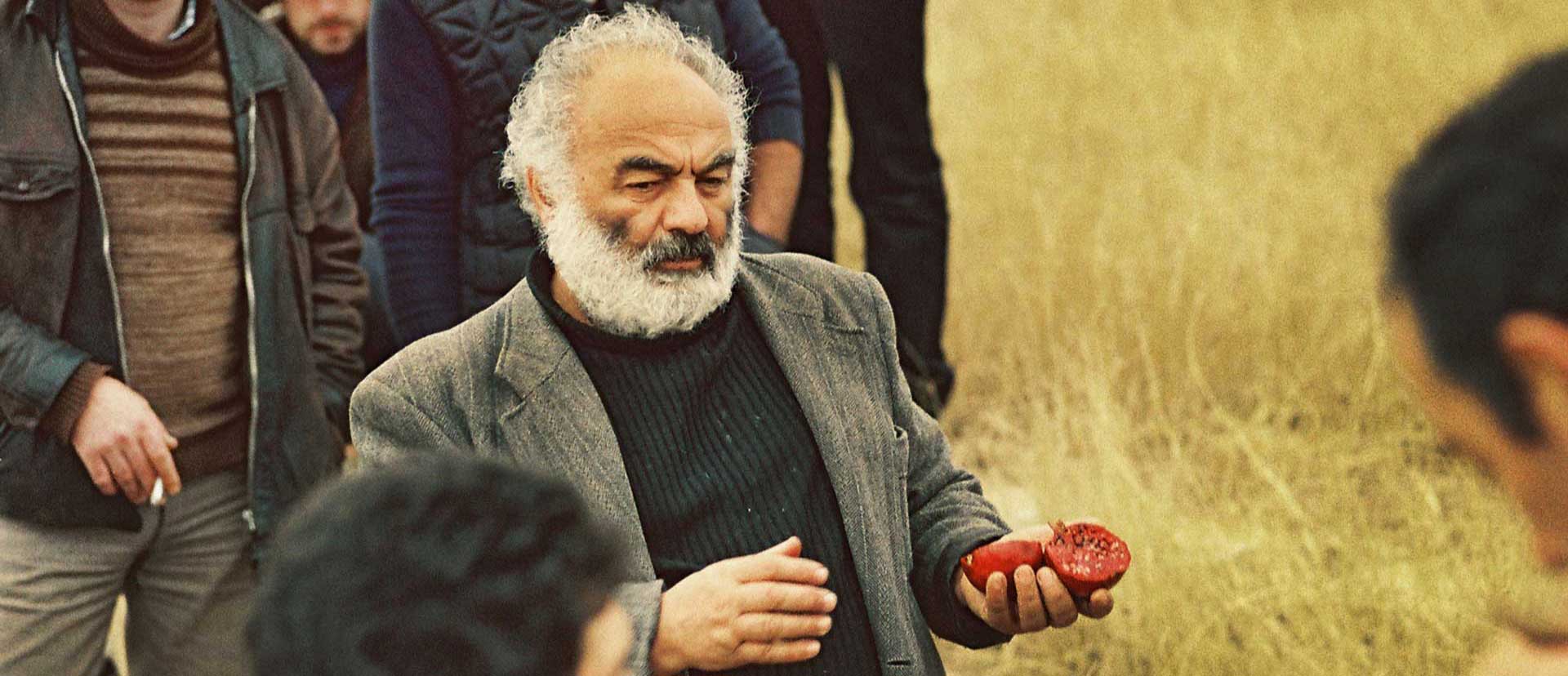
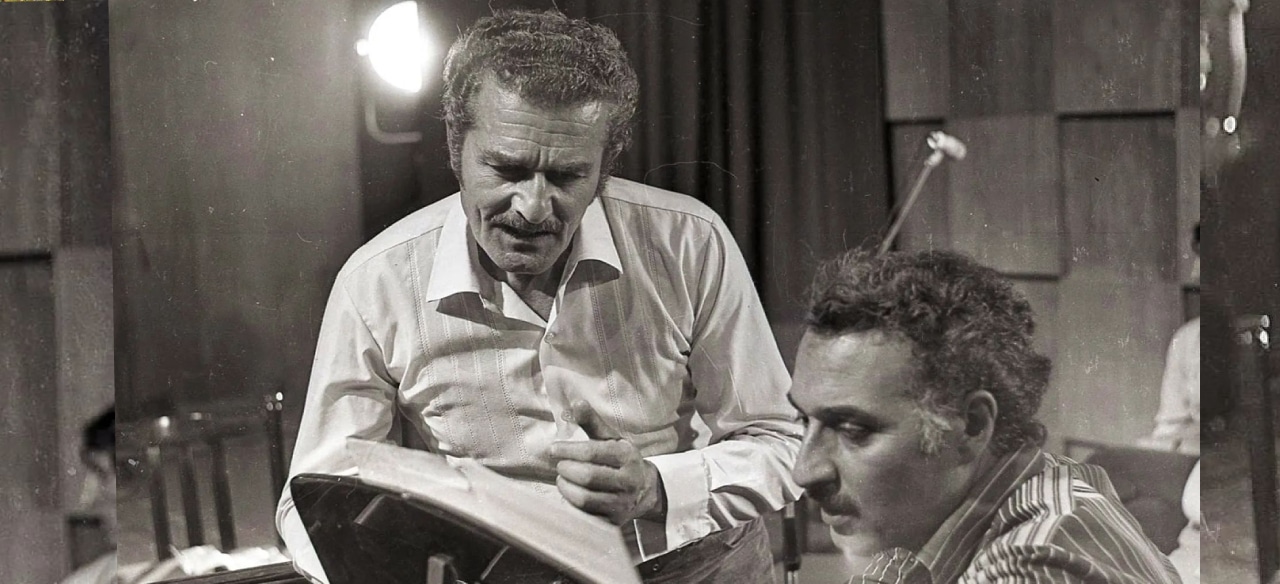
Vakhtang (Vati) Davitashvili was born in Telavi in 1946. After graduating, his path led him to the Kyiv Aviation Institute, where he was trained as a pilot. Yet it was in Kyiv that his life changed forever: through Sergo Parajanov and the brilliant, informal creative circle surrounding the Maestro, Davitashvili truly discovered the world of art. Though he had been passionate about painting since childhood, Davitashvili’s meeting with Parajanov and his circle had a significant impact on his artistic vision. When he returned to Tbilisi, he spent a year working in Avto Varazi's studio before devoting nearly the rest of his life to his native Telavi.
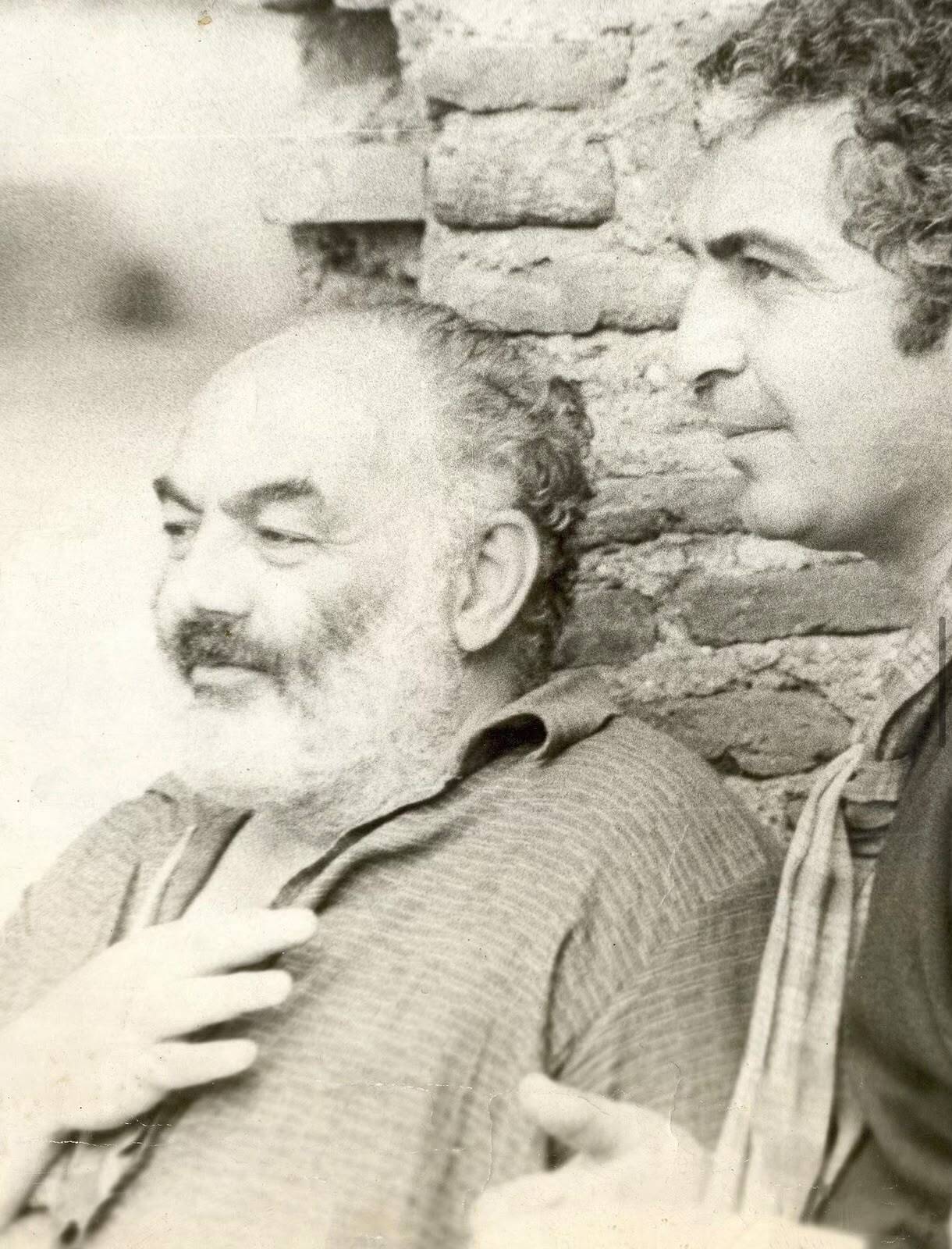
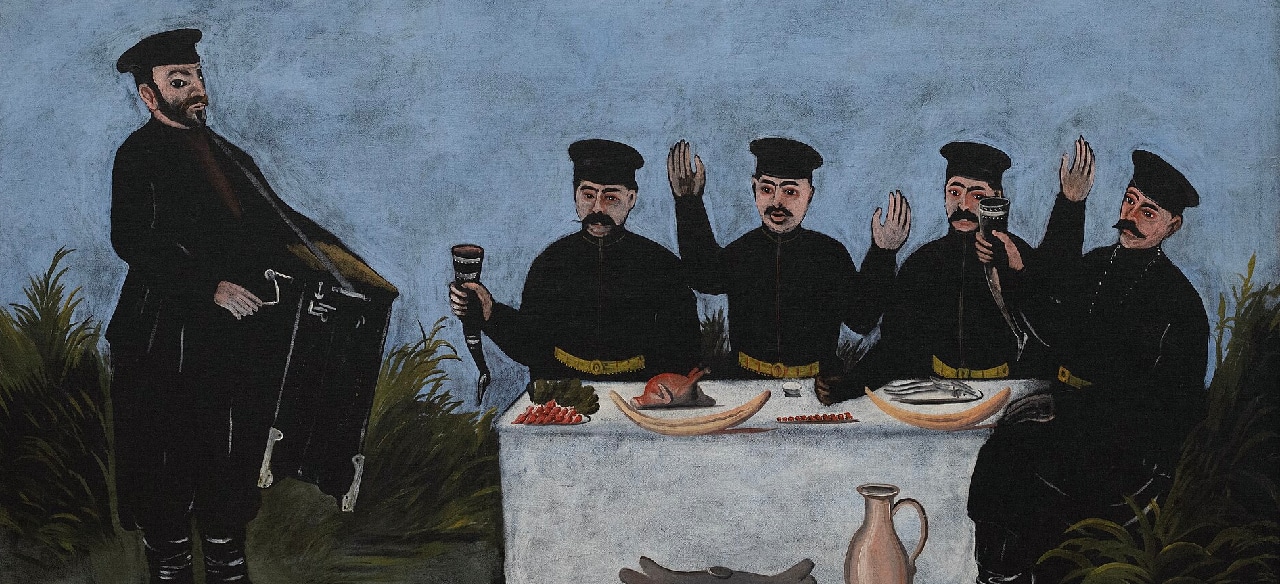
For some Georgian non-conformist artists, Western art provided a vital source of inspiration. Despite the Iron Curtain, works and ideas from the West reached artistic circles in limited quantities through various journals, magazines, and other publications. Others, by contrast, drew inspiration from local artistic traditions, folk art, and the works of Pirosmani. The attempts to blend and interpret these two distinct sources are truly remarkable. Vati Davitashvili’s aesthetics were founded on the latter source; like Pirosmani, he perceived the world as a source of inherent harmony and poetic possibility. His deeply personal artistic language was shaped by two worlds: on one hand, the poetic tradition of naive art that blossomed in the 19th and 20th centuries, and on the other, the vibrant, decorative freedom of 20th-century French modernists.
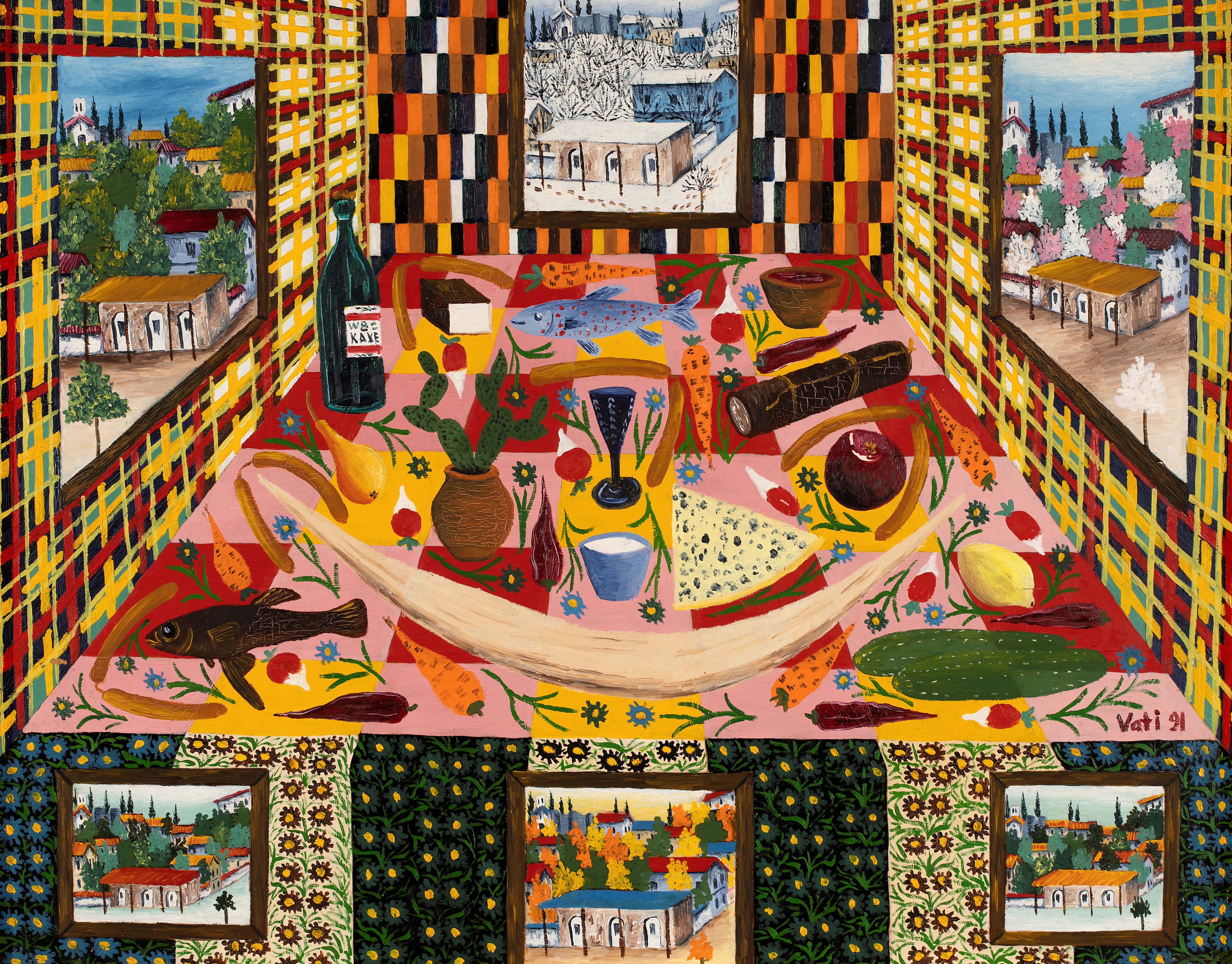
Davitashvili’s art lacks the experimental
exploration of plastic forms, new concepts, or combinations of novel materials
so typical of other non-conformist artists. He also distanced
himself from capturing of the social woes and grotesque ironies of the Soviet regime. Instead,
in
quiet opposition to the
loud pathos and forced heroism of official Soviet art, Davitashvili offered
something beautifully pure: the visual poetry of nature, daily life, and the
legendary traditional feasts of his beloved, native Kakheti.
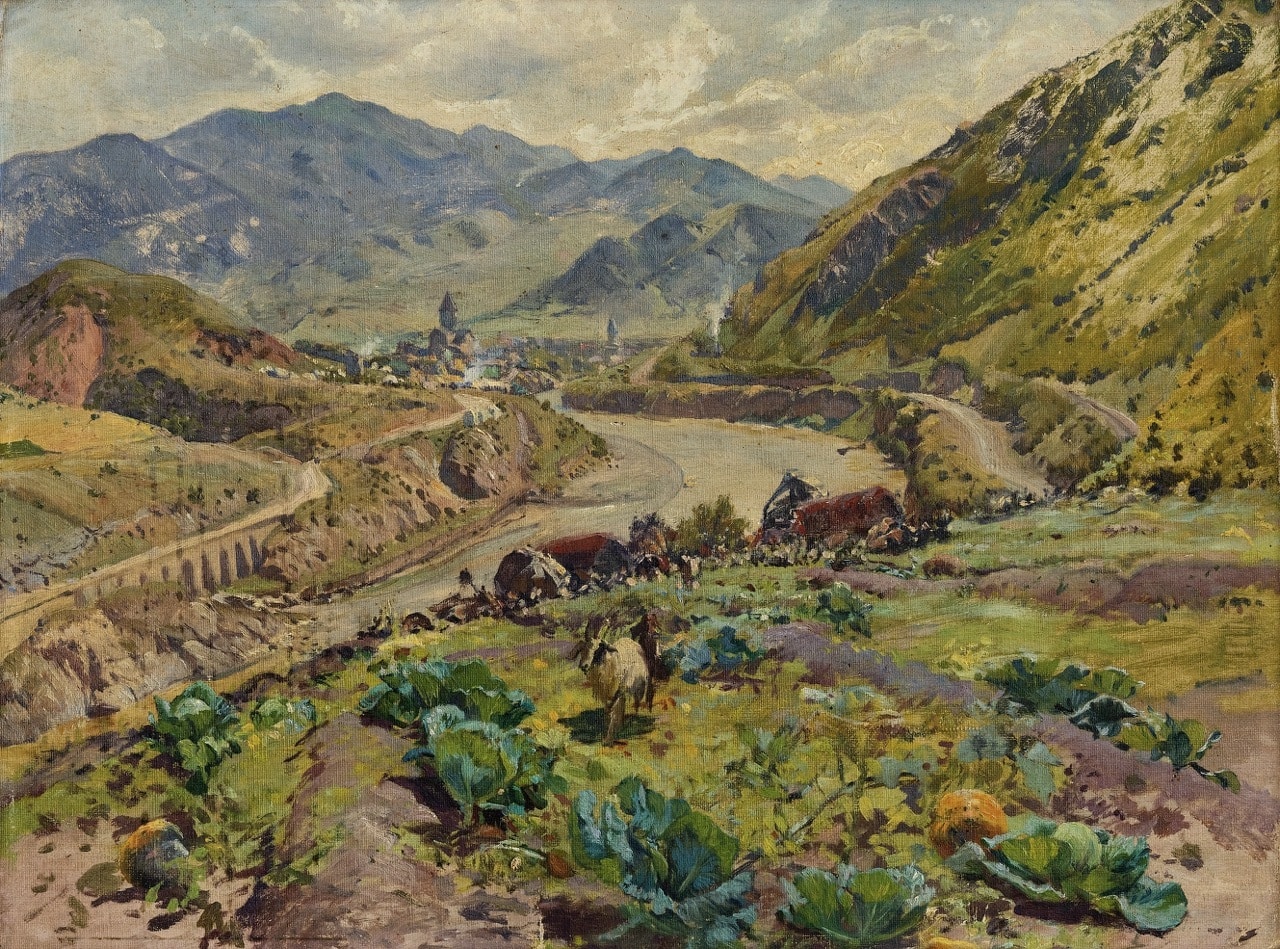
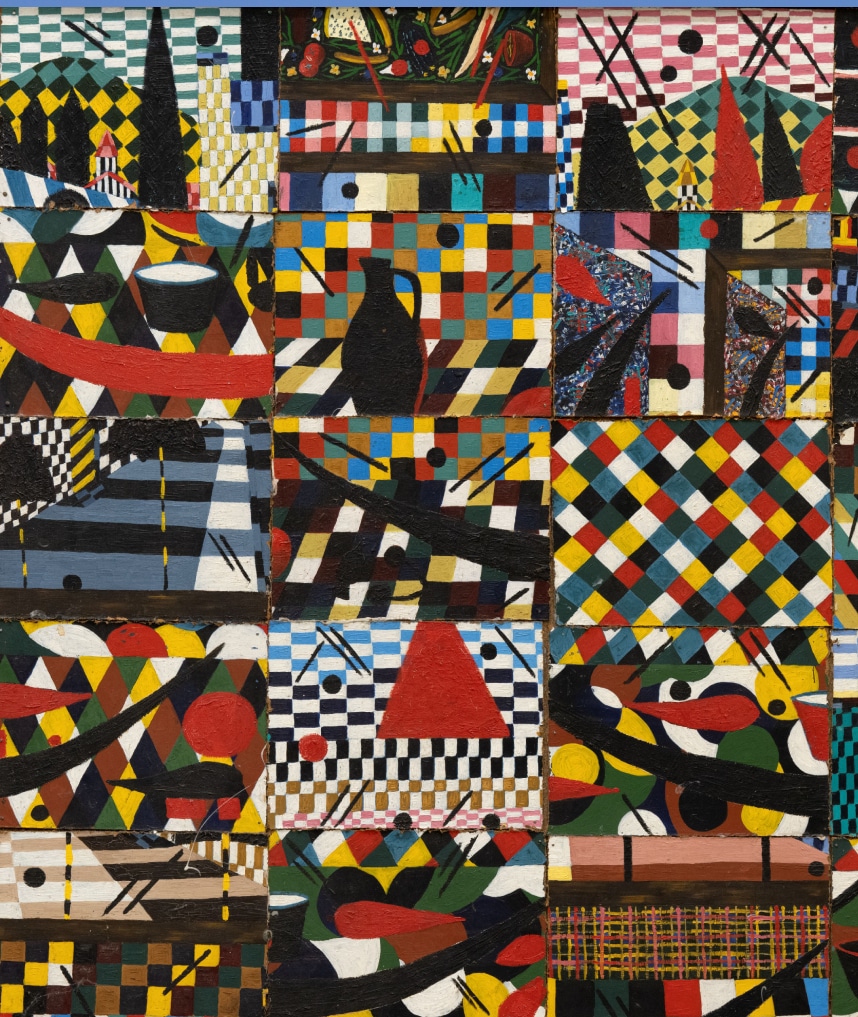
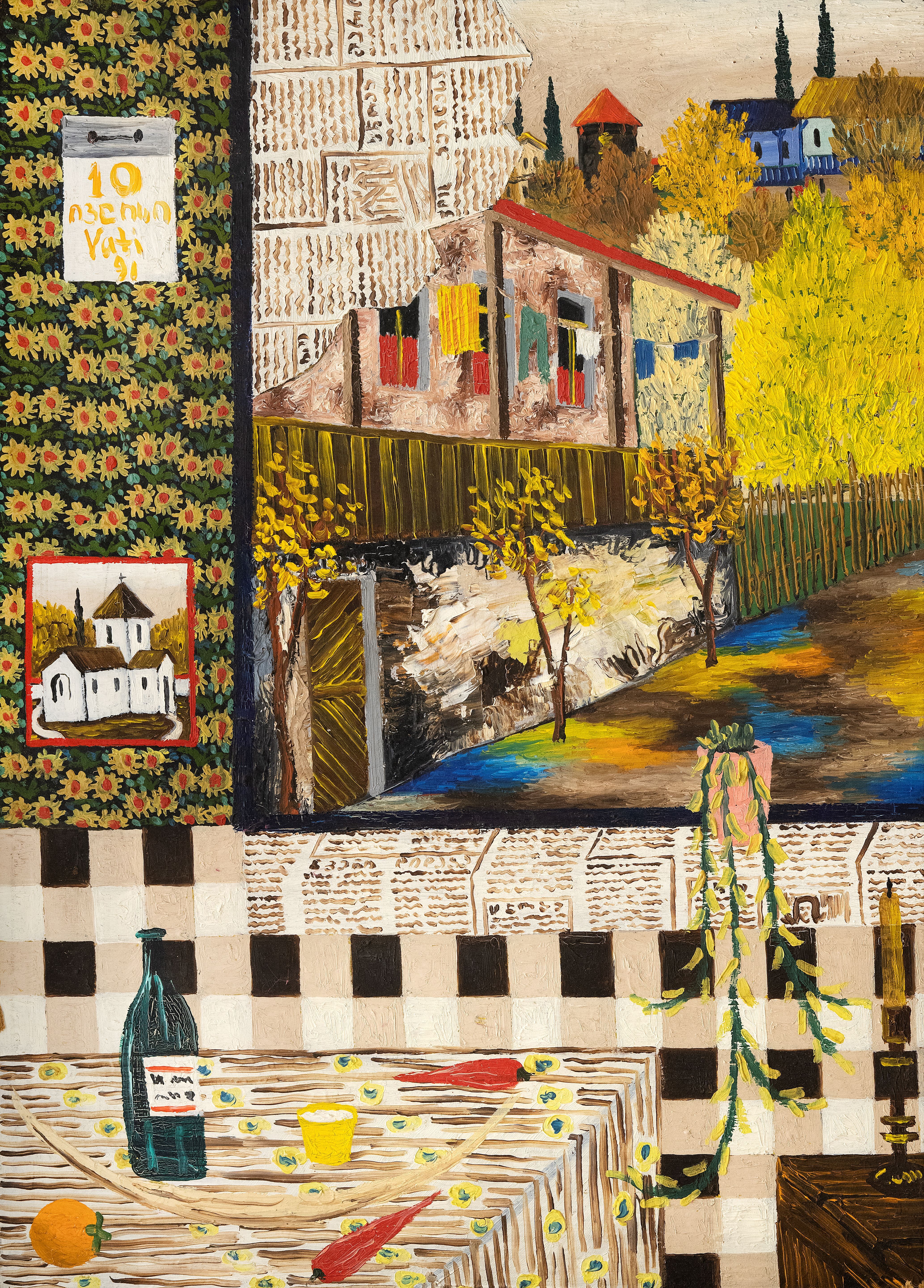
The themes of Vati Davitashvili’s oeuvre are typically scenes of everyday life and surrounding nature. His landscapes vary in perspective, execution, and mood. At times, he paints cityscapes and views of nature realistically, aligning himself with the famous artists of the Tbilisi School. At other times, he turns to a highly stylized, decorative approach. It is in these vibrant compositions that his individuality truly shines through; revealing a bold, decorative instinct for color and form, and a masterful use of the flat canvas as a powerful means of expression.
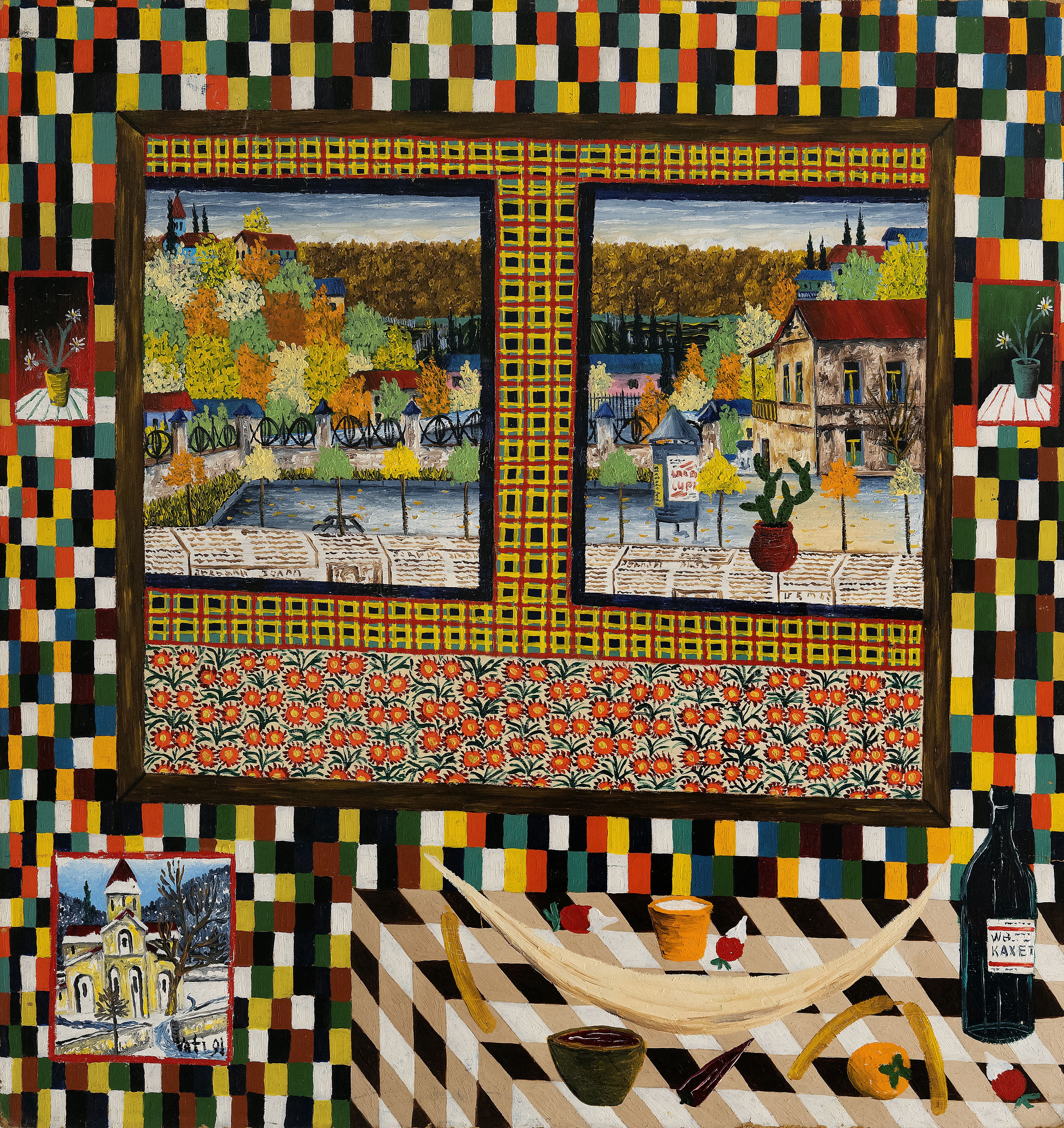
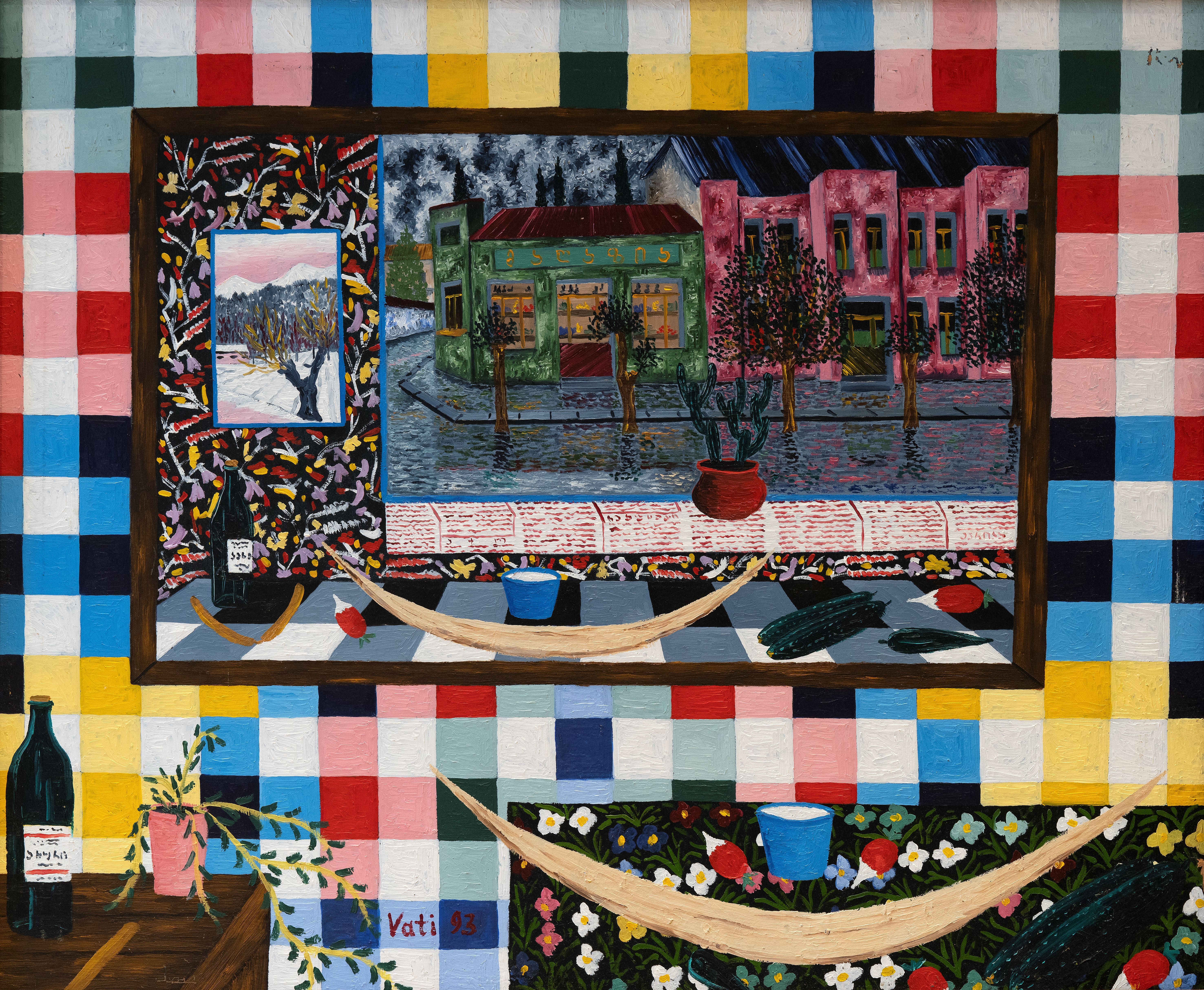
The heart of his work is usually a landscape or a
still life, beautifully framed by multiple rows of ornamental patterns, where geometric shapes and floral designs
gracefully alternate. The repetition of ornamental designs gives
Davitashvili’s compositions an extraordinary, decorative charm. Saturated local colors,
stylised motifs, an even distribution of light, and an atmosphere of serenity
reveal the inner world of this singular artist. It is a tranquil universe,
untouched by aggression or violence.
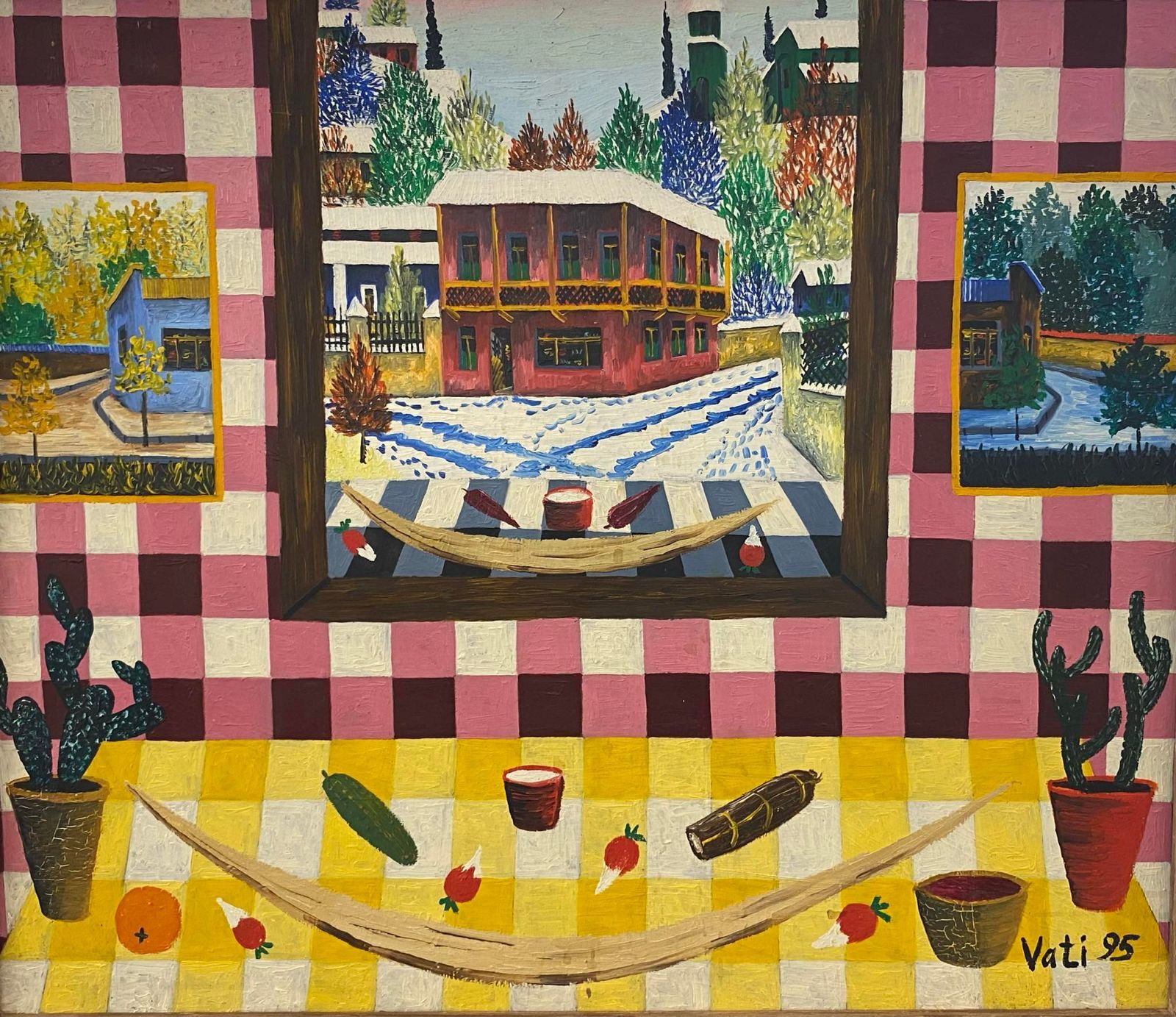
Among Davitashvili’s paintings, a picture hanging
on the wall becomes a window into the world through which the artist perceives
reality. The
details of the painting on the wall echo the still life spread across the table
below. Davitashvili was both a quiet observer of this world and a
living part of it.
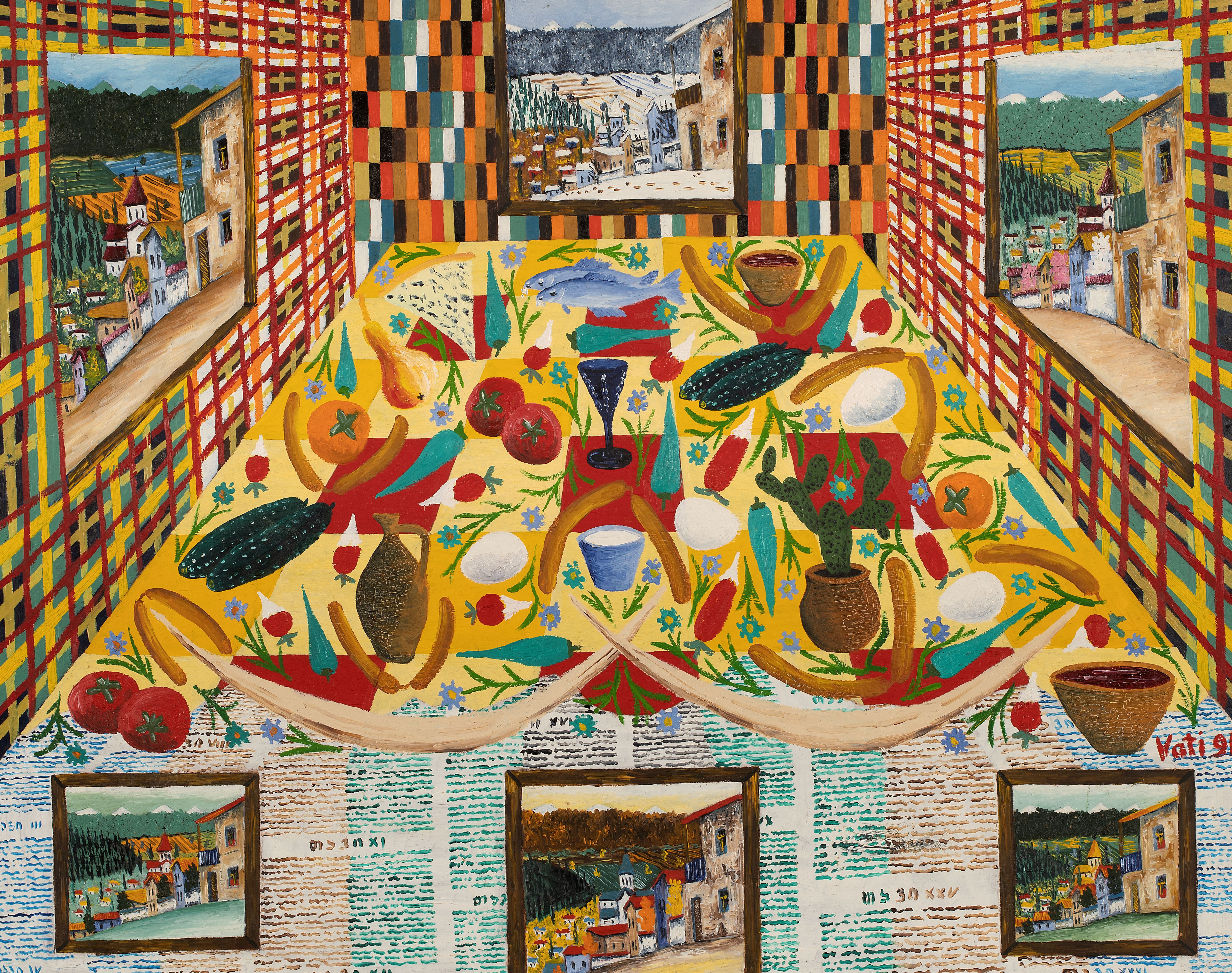
He almost always depicted his immediate surroundings, the cozy spaces where he felt safe and at ease: villages of Kakheti, quiet streets, and countryside churches. He captured them through different seasons and from shifting angles, yet he always returned to the same motifs.
His world is beautiful and tinged with a soft nostalgia, evoking memories of happier times. Within this vibrant, decorative tapestry of color, Georgian bread and a clay pitcher of wine become sacred symbols, opening up a quiet space for deep reflection and interpretation. The sparsely but aesthetically laid tables in his compositions undoubtedly echo the countless legendary gatherings he shared with like-minded friends, among them Baadur Balarjishvili, Zura Sekhniashvili, Vakhtang Rurua, and others. These were wonderful nights where passionate debates about Georgian culture, literature, and the country’s future flowed effortlessly until the morning light.
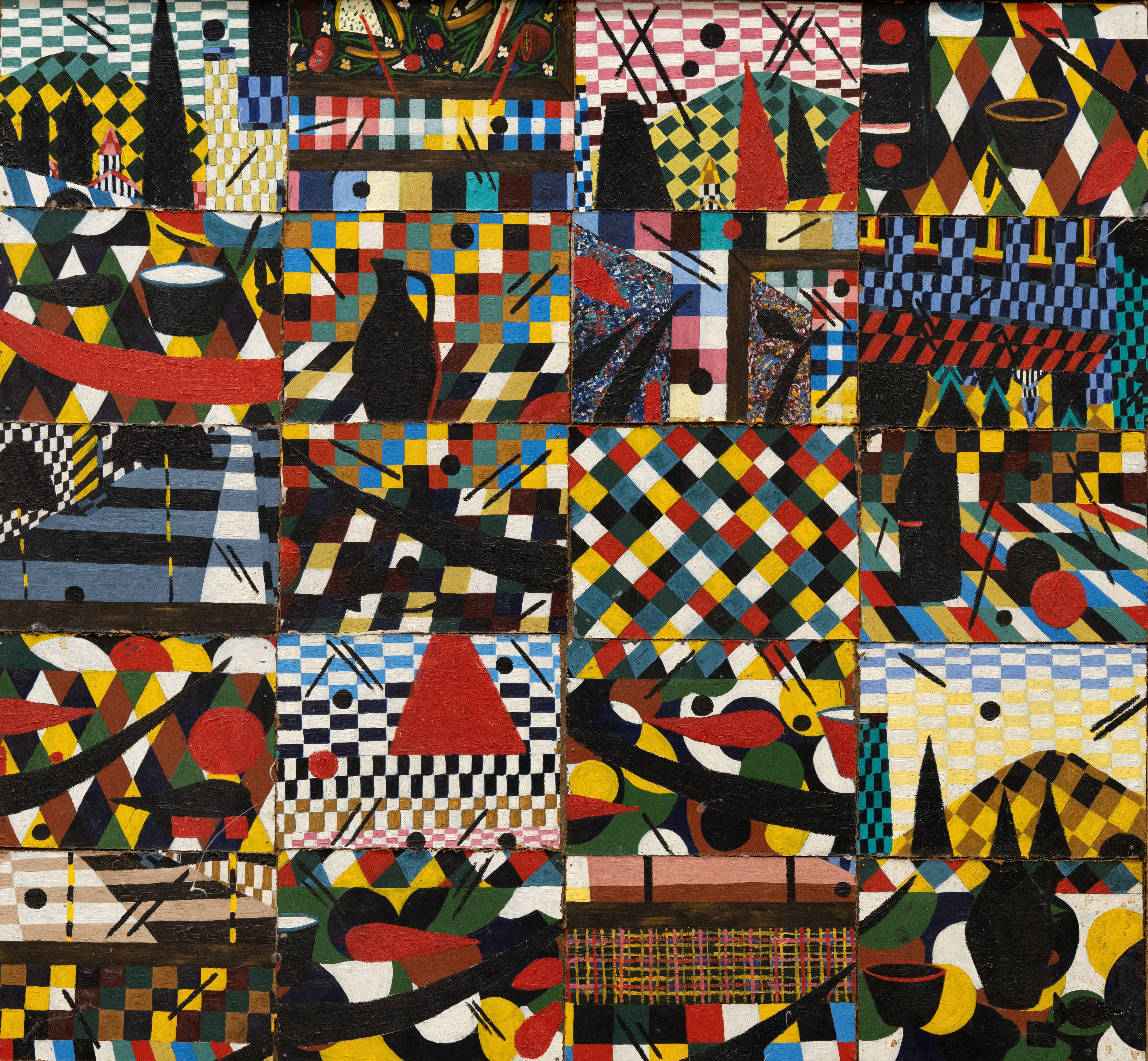
For
Soviet underground artists, abstraction was far more than an exploration of new
forms. It offered a vital sanctuary for creative freedom, a way to break free from
the ideological dictates of Socialist Realism and escape the rigid borders of
recognizable reality;
allowing them to depict
pure, unfiltered moods.
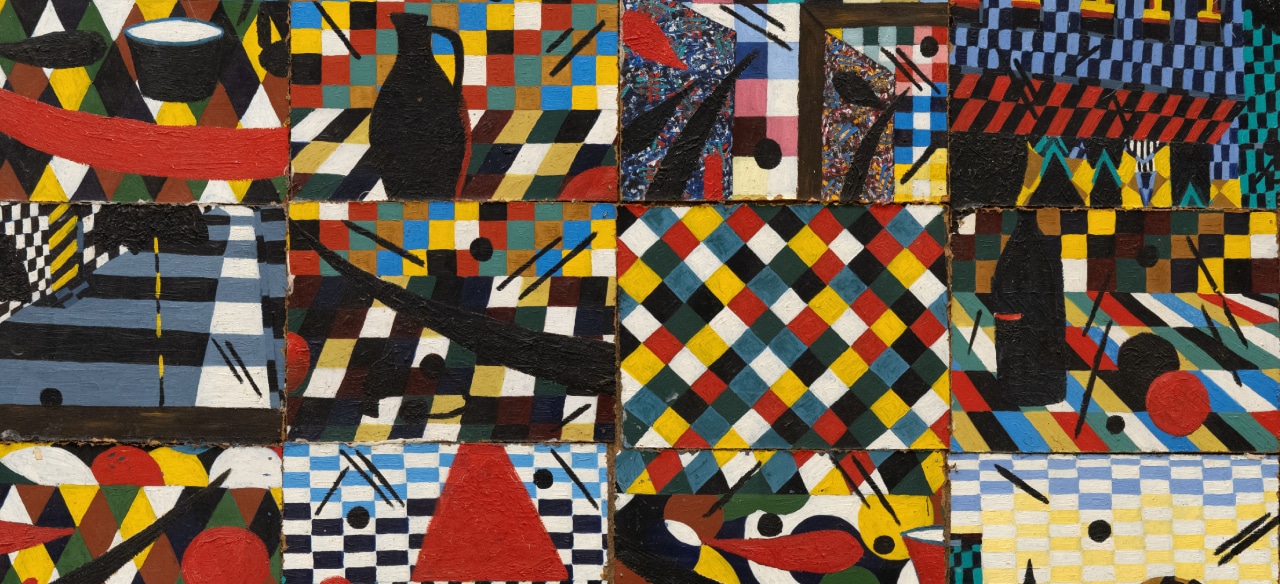
Almost every artist in this underground circle tried their hand at abstract art, and Vati Davitashvili was no exception. In his work, this transformation happened gently, completely free from heavy philosophical load. The geometric, patterned borders that once framed his paintings gradually lost their realistic shapes; melting into elegant abstract designs layered across the canvas.
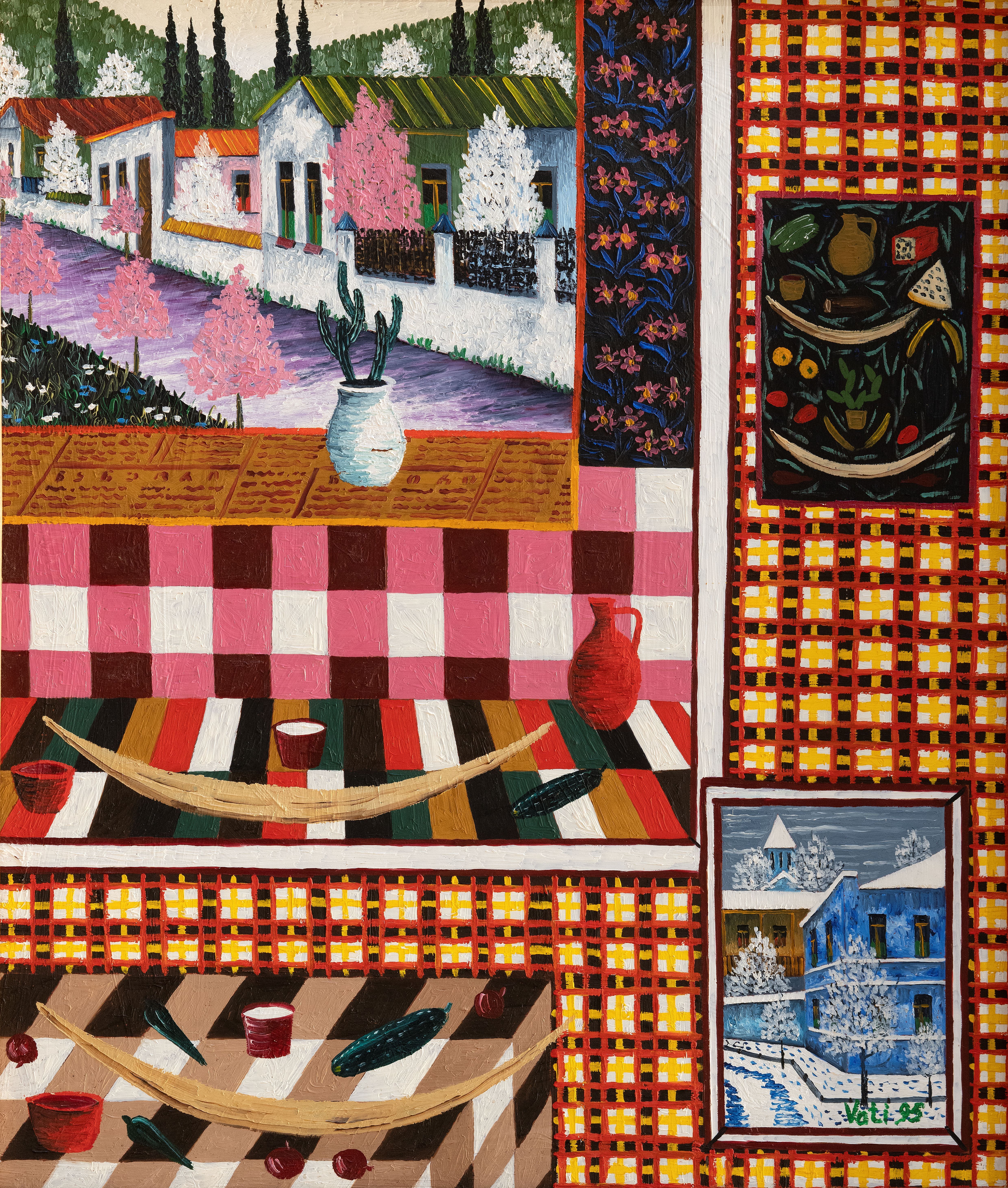
The
artist was not interested in breaking down or destroying the objects; instead,
he loved playing a joyful creative game with color, geometry, and floral lines.
His shapes changed through pure intuition and free play, turning the flat
surface into a light, breathing space animated with emotional color and visual rhythm.
In Telavi, Davitashvili’s studio stands as a
living archive of non-conformist art. The photographs, posters, and handwritten
notes covering the walls bring the history of this complex, fascinating
movement to life, allowing each visitor to feel transported into the very heart of the events.
During his lifetime, Tbilisi hosted only one solo exhibition of Davitashvili’s work, in 1991. Although he had participated in group shows since the 1960s, his paintings were so radically different from the prevailing trends of the time that the public largely ignored or misunderstood them. His exceptional talent was recognized only within his most intimate circle.
Over time, though, he became a living legend: a lonely artist who saw and painted the world through his own secret lens, creating silent spaces stripped of human presence, with deserted streets and empty churches. Davitashvili’s universe felt completely alienated from the society around him; the forced image of the "Soviet man" is virtually absent from his canvas. Perhaps it is because of this , empty world that portraiture remains a rare treasure in Davitashvili’s oeuvre.
Vati Davitashvili’s painting, much like non-conformist culture as a whole, served as an open window within the rigid Soviet realm, offering a rare connection to the values of the free world. It stood as a powerful alternative for a public that sought something real in art; looking beyond empty clichés and an imagined reality to discover a creator’s pure emotion, experience, and true mastery. Ultimately, Davitashvili invited his viewers into a truly singular and unforgettable world.