.jpg)





 Share this article
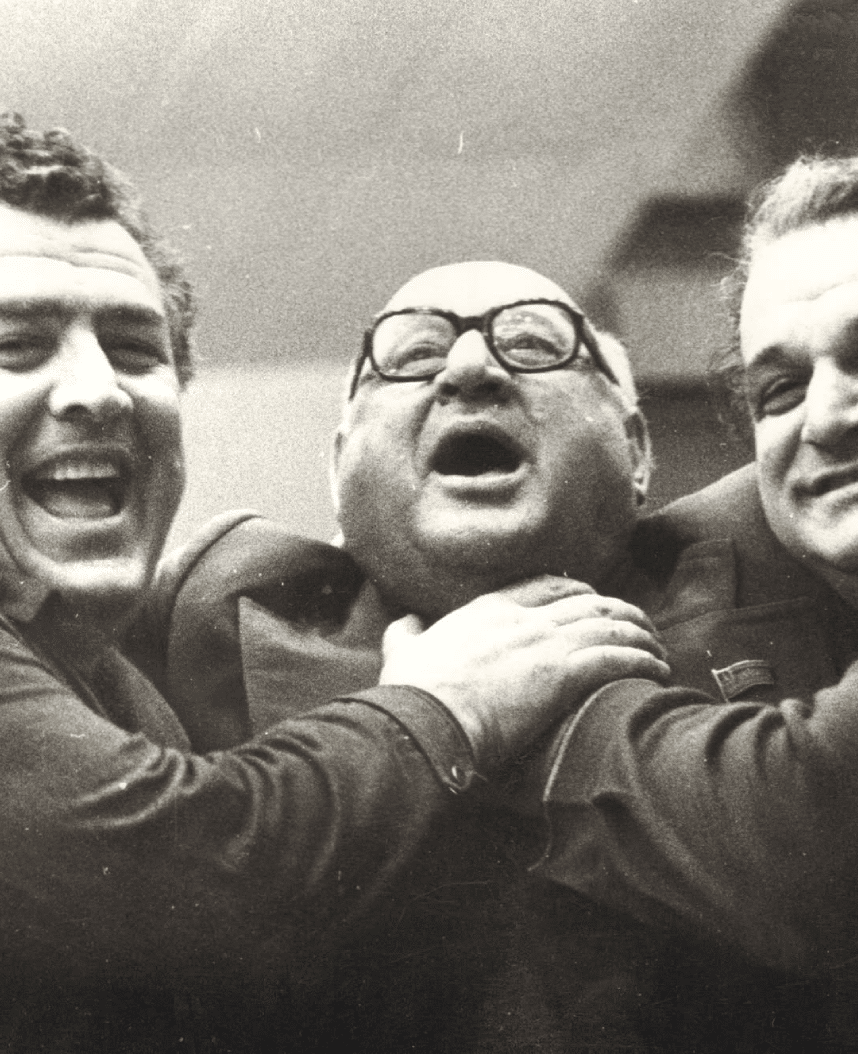
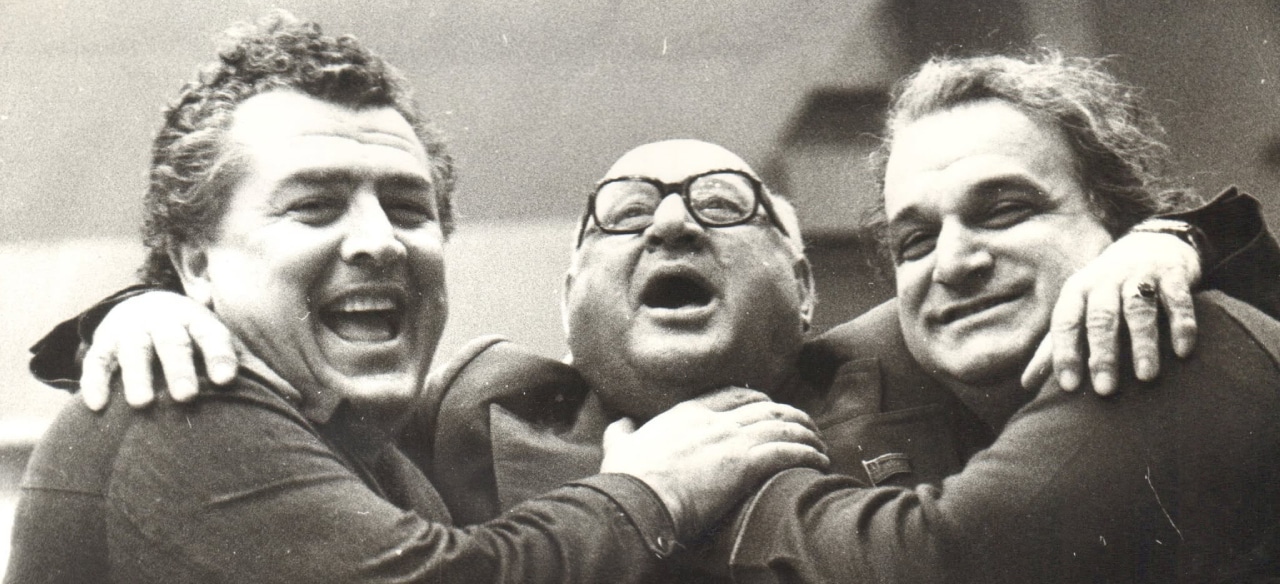
Living Celebration, Living Firework,
Living Festivity, Living Theater
An artist’s destiny is often extraordinary, fascinating, and strange. It is a path shaped by relentless searching, unexpected twists of fate, upheavals, and dramatic highs and lows. Naturally, every artist, like every other person, follows a unique path, marked by moments of soaring inspiration and profound joy, but also by heartbreak and suffering. In the world of art, while raw talent and professionalism are essential, a measure of good fortune also plays a role. In this respect, one could say that the legendary theater director and teacher Dimitri Aleksidze, known to everyone as Dodo, might be considered blessed with such luck. His creative journey, however, far from being simple, was accompanied by both immense triumphs and profound, undeserved pain.
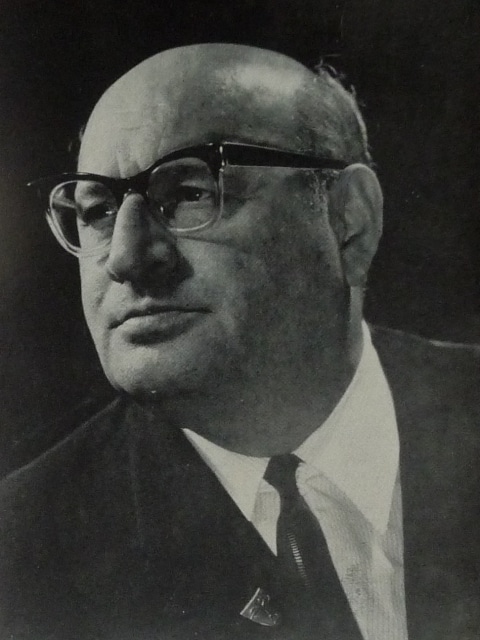
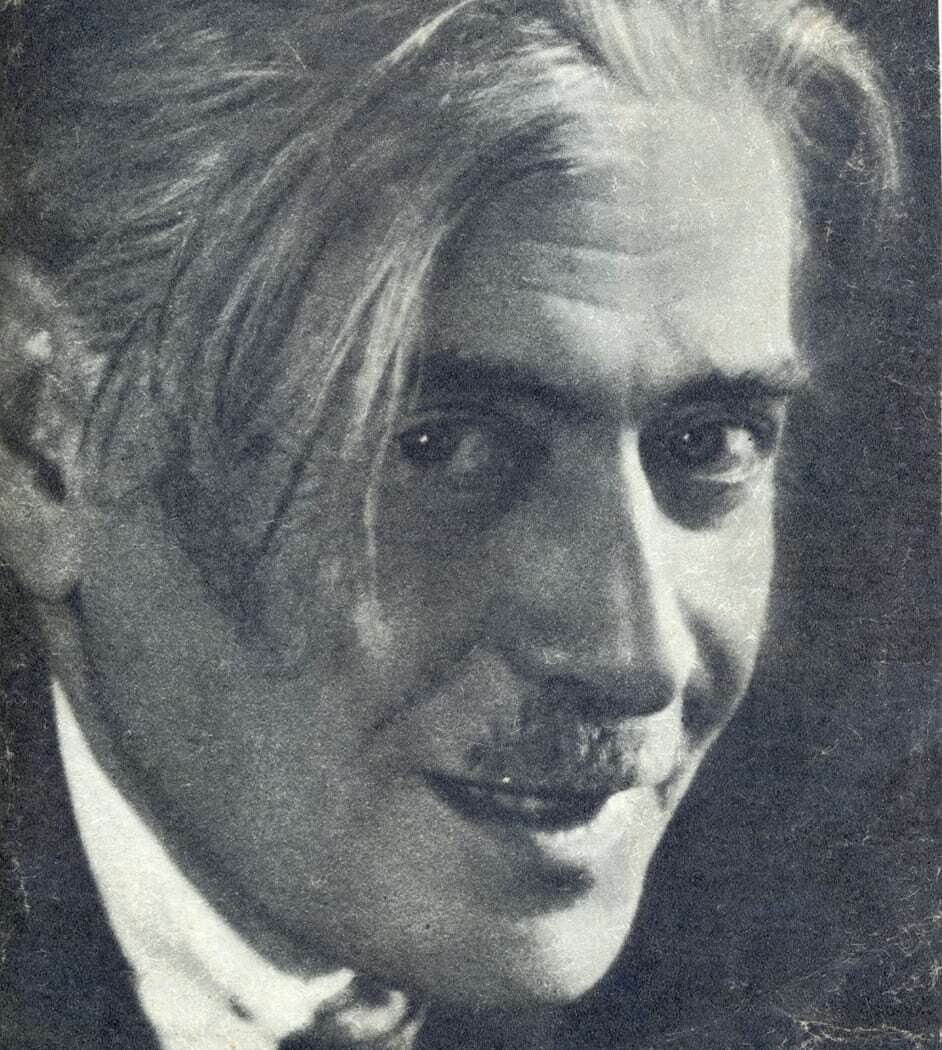
Dodo Aleksidze was born into a bohemian family in early 20th-century Tbilisi. His father, Aleksandre, was a renowned doctor, while his mother was the talented and beautiful poet Marijan (Mariam Tkemaladze), a woman with a deeply dramatic life story. It is hardly surprising that young Dodo was passionate about theater, dance, and poetry from an early age, given that the city’s leading literary and artistic figures frequently gathered at their home.
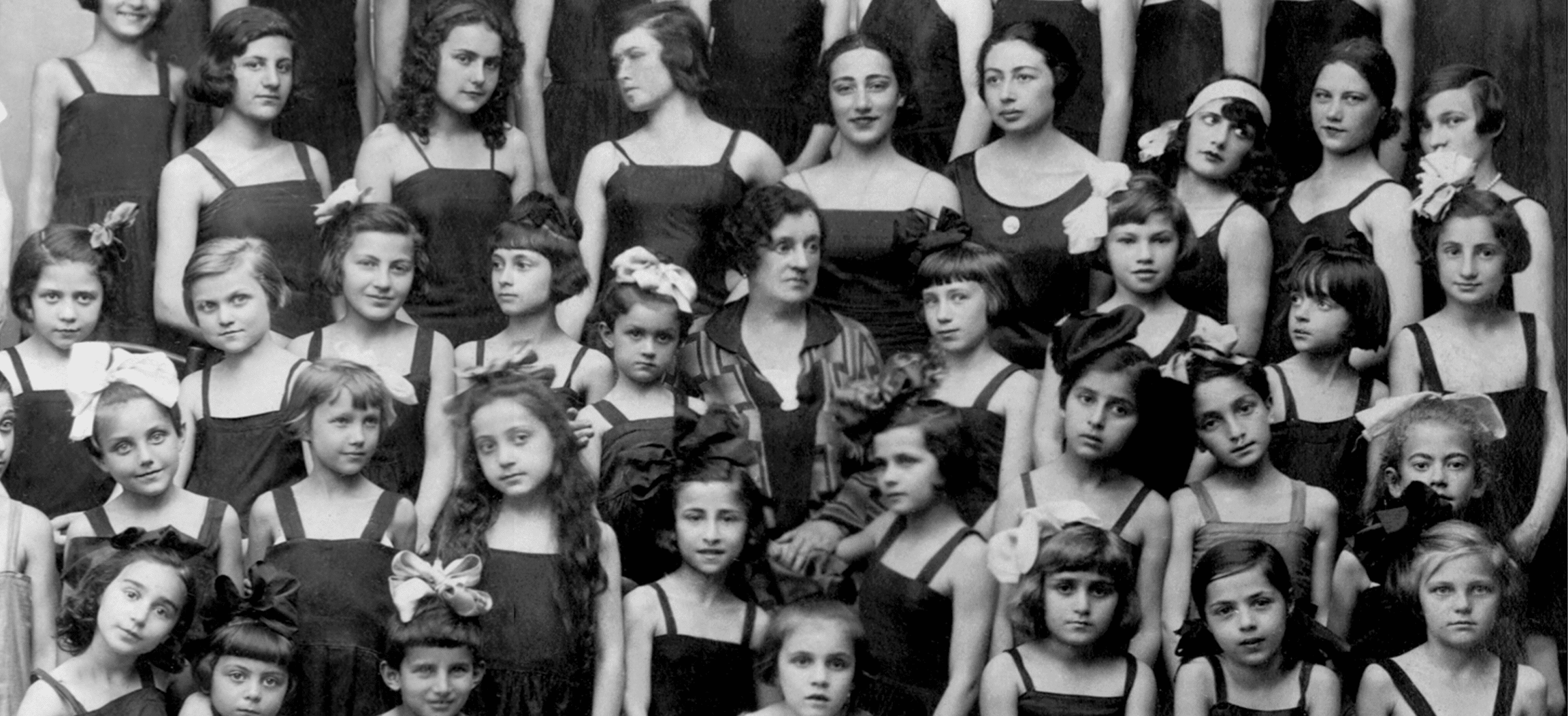
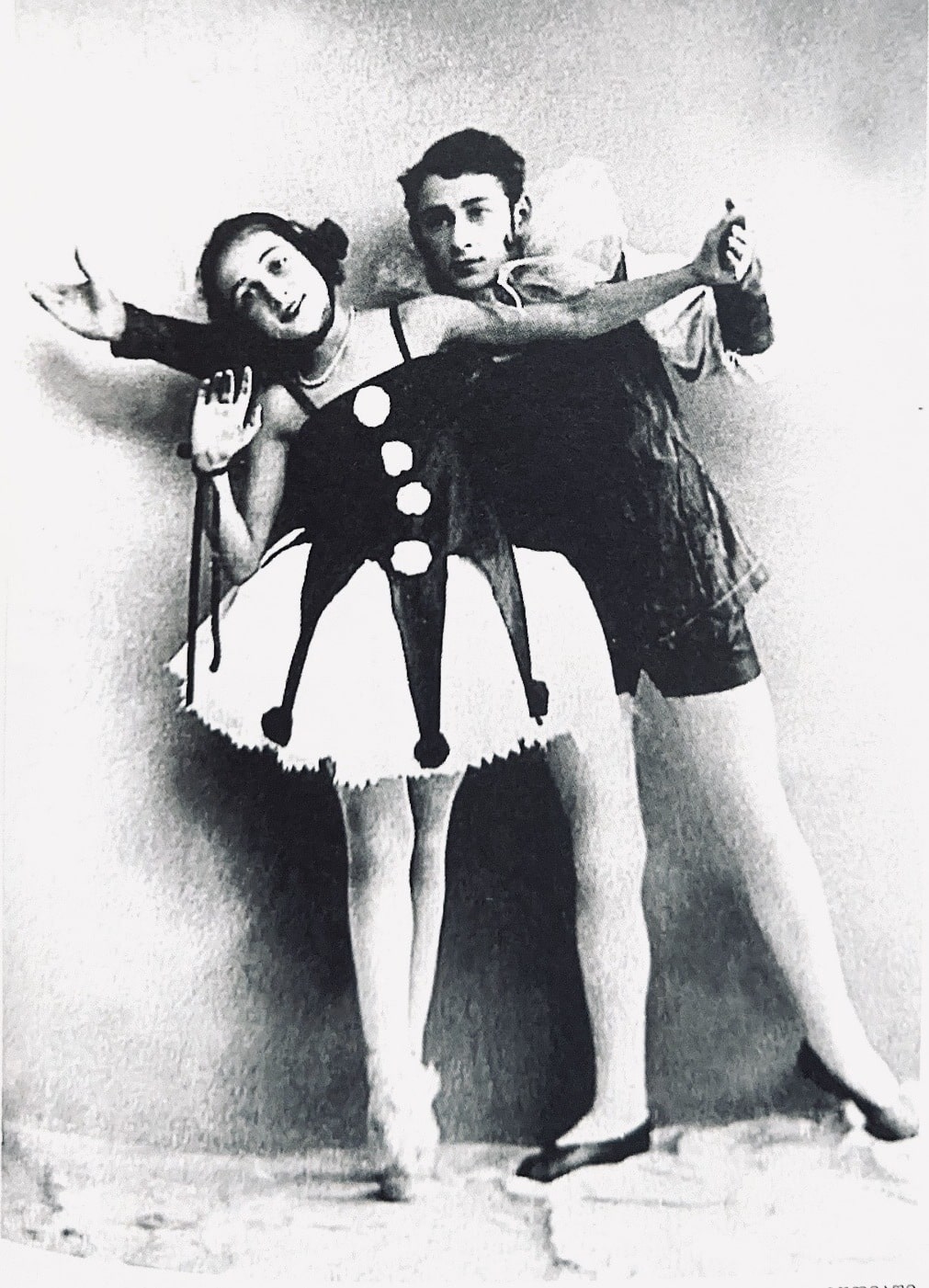
He began staging his own performances as a child, first at home, sometimes using plays he had written himself, and later at school. In 1916, he entered the private ballet studio founded in Tbilisi by the Italian ballerina Maria Perini. Here, he mastered the essence of dance, rhythm, graceful movement, and composition, sharing the studio floors with a brilliant generation of future icons: Soliko Virsaladze, Nino Ramishvili, Iliko Sukhishvili, Vakhtang Chabukiani, Lili Gvaramadze, and Maria Bauer.
In his youth, Aleksidze’s first major achievement behind the director's stand was a production of Boris Lavrenyov’s The Break, a staging likely inspired by Sandro Akhmeteli’s legendary production of the play. This debut theatrical experiment proved so remarkably successful that the performance was moved to the prestigious Officers' Club, earning widespread acclaim and glowing reviews.
Recognizing the talent and fierce dedication of young Dodo Aleksidze, the authorities sent him to Moscow to master the art of professional stage directing at the Lunacharsky Theater Institute (GITIS). There, he gained first-hand insight into the radical visions of Konstantin Stanislavsky, Yevgeny Vakhtangov, and Vsevolod Meyerhold, the avant-garde genius who later fell victim to Stalinist purges. His principal mentor was Ilya Sudakov, a brilliant pupil of Stanislavsky and a main director at the Moscow Art Theater, who held exceptionally high hopes for his gifted pupil.
In 1934, Aleksidze successfully
graduated from the Lunacharsky Institute with his diploma production, The Fighters, based on the play by Boris
Romashov. While he defended his directorial interpretation in Moscow, the actual
premiere came to life in Tbilisi. Sandro Akhmeteli attended the performance and
was so moved that he sent a glowing telegram to the Lunacharsky Institute
expressing his profound admiration.
The visual world for the young director's debut was crafted by Irakli Gamrekeli, already a legendary scenographer by that time. Noteworthy is the fact that the director and set designer integrated actual film shots directly into the stage production.
Around the same time, at the Red Army Theater, Aleksidze staged Mr. Officers, based on Aleksandr Kuprin’s short story The Duel, a popular text that saw numerous stage adaptations across the Soviet Union throughout the 1930s. The production once again earned glowing reviews in the press, and the result was immediate: Georgia’s two leading theaters vied to secure the talented young director. Both the Marjanishvili and Rustaveli drama theaters invited him to work with them, but he ultimately decided on the Rustaveli National Theater.
Upon his
arrival, Aleksidze was immediately assigned a
significant task: to direct the graduation performance of the studio's talented
Adjarian student group (which later became the Theater Institute and, today, the
Georgia State University of Theater and Film). He chose The Mistress of the Inn by the
outstanding Italian playwright Carlo Goldoni. The collaboration between the young director and his
debut cast was a triumphant success. Bursting with vibrant colors, infectious
energy, and sharp social commentary, the production starred actors who later
became true pillars of the Batumi Theater, including Yusuf Kobaladze, Nunu
Tetradze, and Lili Apkhazava. Akaki Vasadze, the artistic director of the
Rustaveli Theater at that time, later recalled that the production had a
profound cultural resonance, marking Aleksidze’s arrival as a director of
serious national stature. From 1935 until 1964, Aleksidze served first as a
director and then as the chief director of the Rustaveli Theater.
It is also noteworthy that, following his successful graduation performance with the studio students, the leadership of the Rustaveli Theater at the time, Director Akaki Khorava and Artistic Director Akaki Vasadze, immediately engaged the young director in the teaching process. From 1936 until his death, Aleksidze was to share the magic of theater with youth, bringing up multiple generations of directors and actors across both Georgia and Ukraine.
Even a shortlist of the stars
of Georgian theater whom he
trained, among them Ramaz
Chkhikvadze, Erosi Manjgaladze, Kote Makharadze, Giorgi Gegechkori, and Guram
Sagaradze, clearly demonstrates Dodo Aleksidze’s exceptional talent as a teacher.
Although Goldoni’s The Mistress of the Inn was followed by
a succession of heroic-romantic dramas, namely, Giorgi Mdivani's Alcazar (1936), portraying the valiant
struggle of freedom-loving Spaniards against the fascist regime in Spain;
Mdivani's Homeland (1936);
Simon Mtvaradze's At the Crossroads
(1938);
and Friedrich Wolf's Professor Mamlock
(1941), theater
scholars of that time regarded him strictly as a master of comedy.
Later, reassessments of Aleksidze’s oeuvre demonstrated that he approached comedies, heroic-romantic dramas, and tragedies with equal artistic mastery. Most notably, Aleksidze was a pioneer who introduced Bertolt Brecht’s dramaturgy and his alienation technique to Georgia, marked by his 1964 production of The Threepenny Opera at the Rustaveli Theater.
The
production enjoyed great success; however, it did not fully achieve the
generalization required by Brecht’s theatrical aesthetics and the
dramatization itself.
Theater
scholar Nodar Gurabanidze noted, “The
Georgian audience was encountering Brecht’s dramaturgy for the first time, and
much of it was unfamiliar to them. The audience was ill-prepared to understand
Brecht’s “songs;” the parabolic nature of the play, the playwright’s paradoxical
philosophy, and the overall dramaturgy of the piece were all unfamiliar to
them. In this context, the ‘alienation effect’ was interpreted as a social and ethical motif, where the most
reprobate people preached the highest moral ideals to society... ”
The
overall style and aesthetics of the production belonged more to Dodo Aleksidze than to Brecht. However, this fact did not prevent
several motifs of “epic theater” from
finding a natural and organic voice in the performance.
Eter
Gugushvili concluded her review with the following words: “The very act of
introducing a Brecht play to the Georgian stage cannot pass without leaving a
lasting mark.”
The performances of the actors in the play merited particular praise, especially the portrayal of Mack the Knife by Ramaz Chkhikvadze. Notably, a few years later, the acclaimed director Robert Sturua created a unique, polystylistic directorial style that included elements of Brechtian theatrical methods.
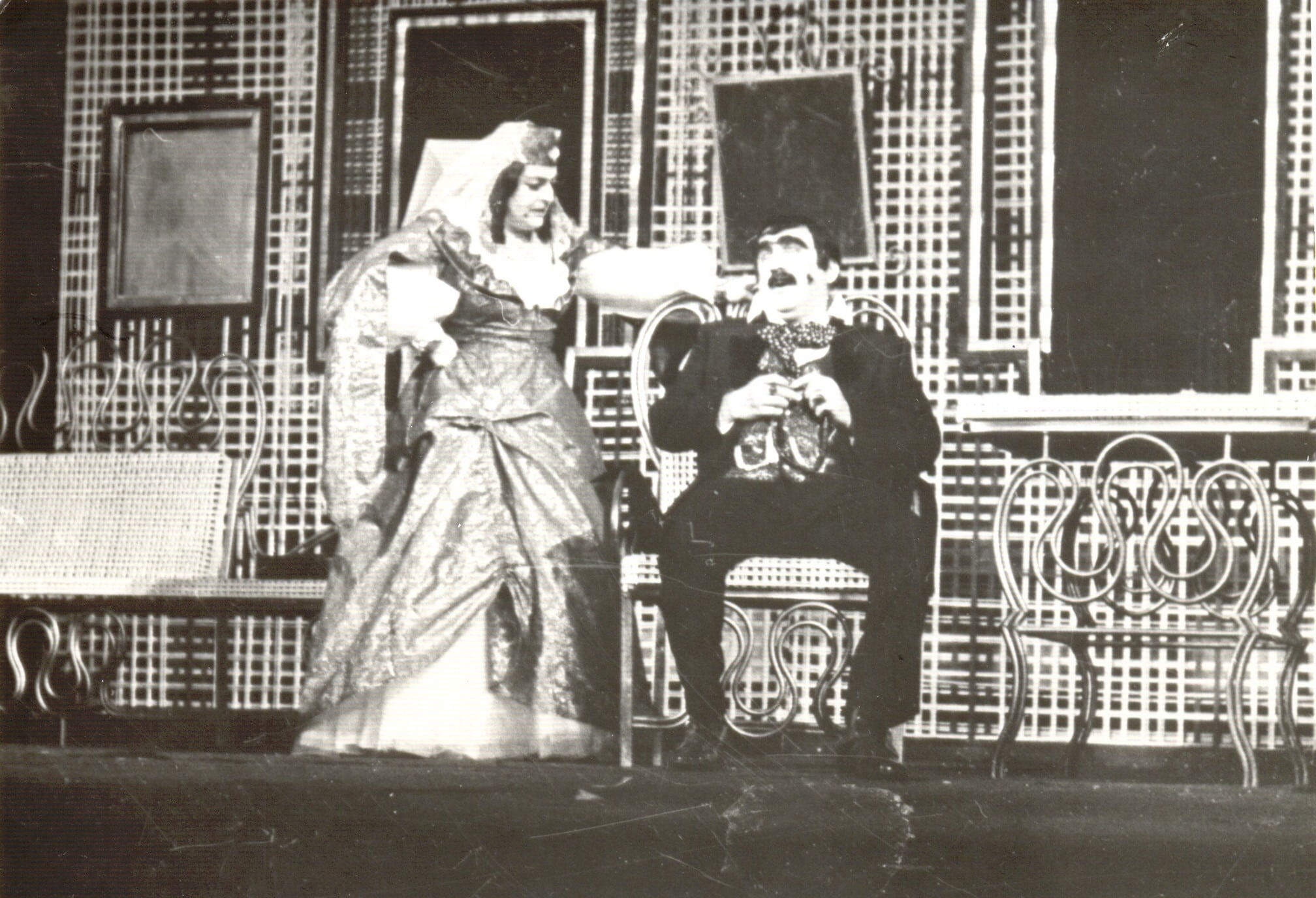
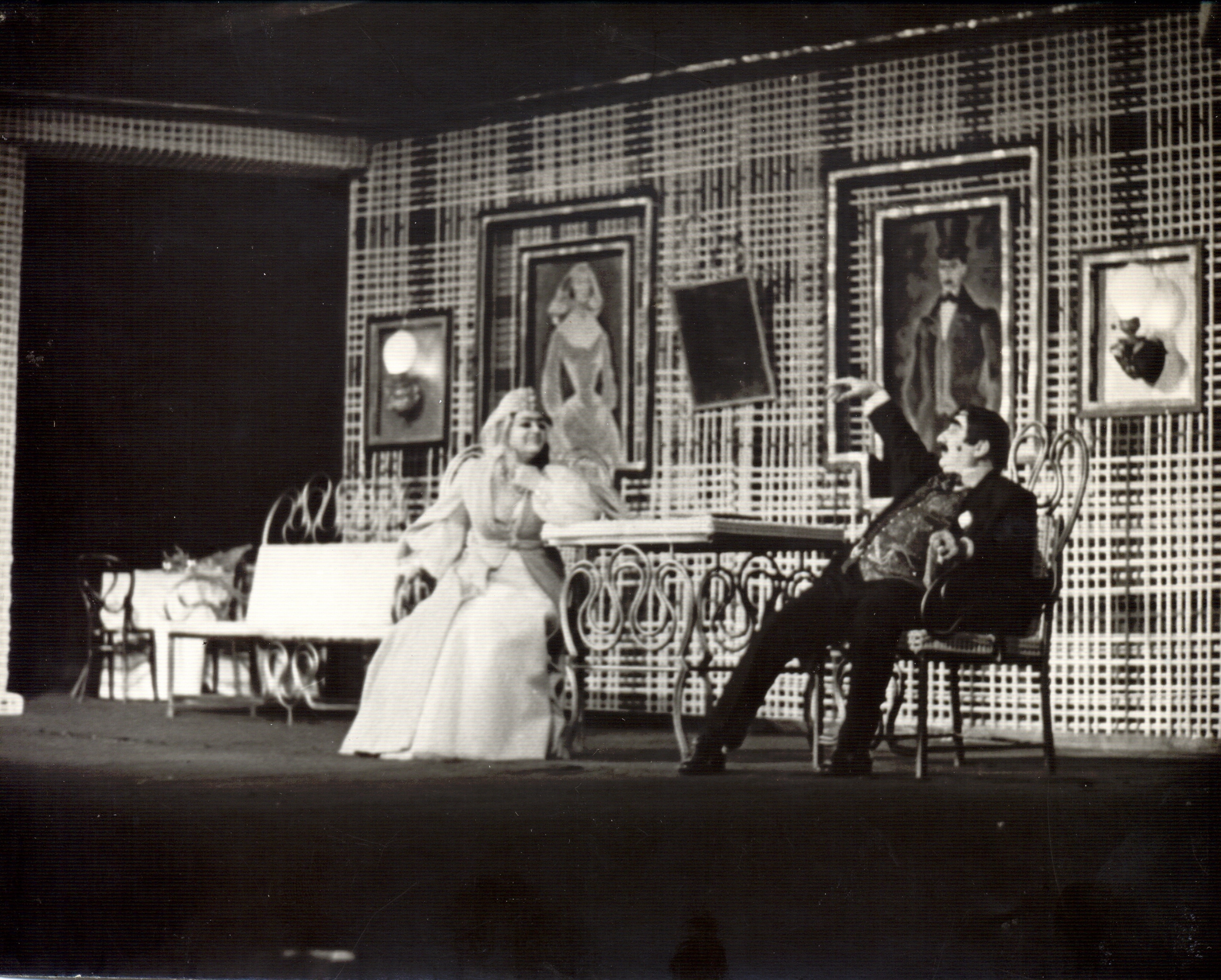
During his time at the Rustaveli Theater (1936–1964), Dodo Aleksidze, who was continously involved in creative exploration, employed a diverse range of directorial forms when staging plays of various genres. Social issues were prominently featured in comedies that were vibrant and full of life, crafted through the use of buffoonery techniques. His landmark comedies of this era –Eugène Scribe’s A Glass of Water (1941), Lope de Vega’s A Fool for Others, Wise for Herself (1942), Carlo Goldoni’s The Wedding by Advertisement (1943; the final, poignant masterpiece of scenographer Irakli Gamrekeli, who passed away during its production), Gabriel Sundukian’s Pepo (1951), Dumanoir and d’Ennery’s Don César de Bazan (1953), and Polikarpe Kakabadze’s Kvarkvare Tutaberi (1958) – stood as the finest examples of ensemble performance, where direction, acting, scenography, and music seamlessly fused into one harmonious whole.
Though widely celebrated as a master of comedy, Dodo Aleksidze took a daring turn between 1945 and 1950, exclusively staging dramas. The director was determined to shatter the creative stereotype surrounding him, and he did so triumphantly with his production of Mikheil Mrevlishvili’s Nikoloz Baratashvili.
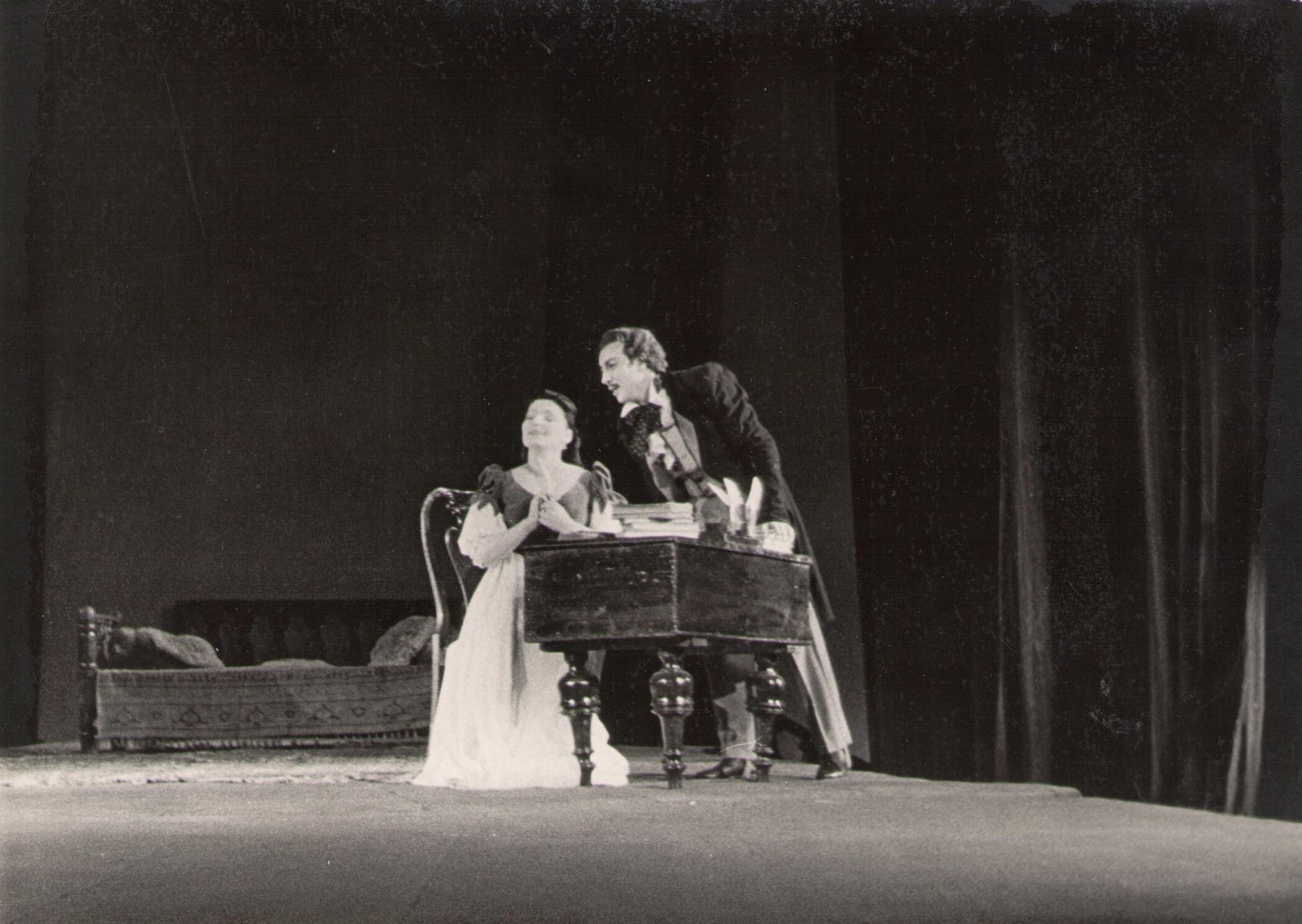
Theater scholars view Giorgi (Gogi) Gegechkori’s portrayal of the iconic romantic poet as one of the finest performances in Georgian acting history; masterfully fusing psychological depth with emotional intensity, and eloquent body language with verbal mastery. Gegechkori, who was trained under Aleksidze, later wrote that the director's vision was to paint Baratashvili not as a tragic victim, but as a brilliant, free-spirited creator. Despite being unlucky in love and unappreciated in his own lifetime, their poet was a man who fiercely loved life, cherished friendship, and held an unwavering faith in the future. The production was such a resounding triumph that, the morning after the premiere, Gogi Gegechkori woke up a national star, adored by the public. For the young actor, this masterpiece remained a definitive landmark in Maestro Aleksidze’s legacy.
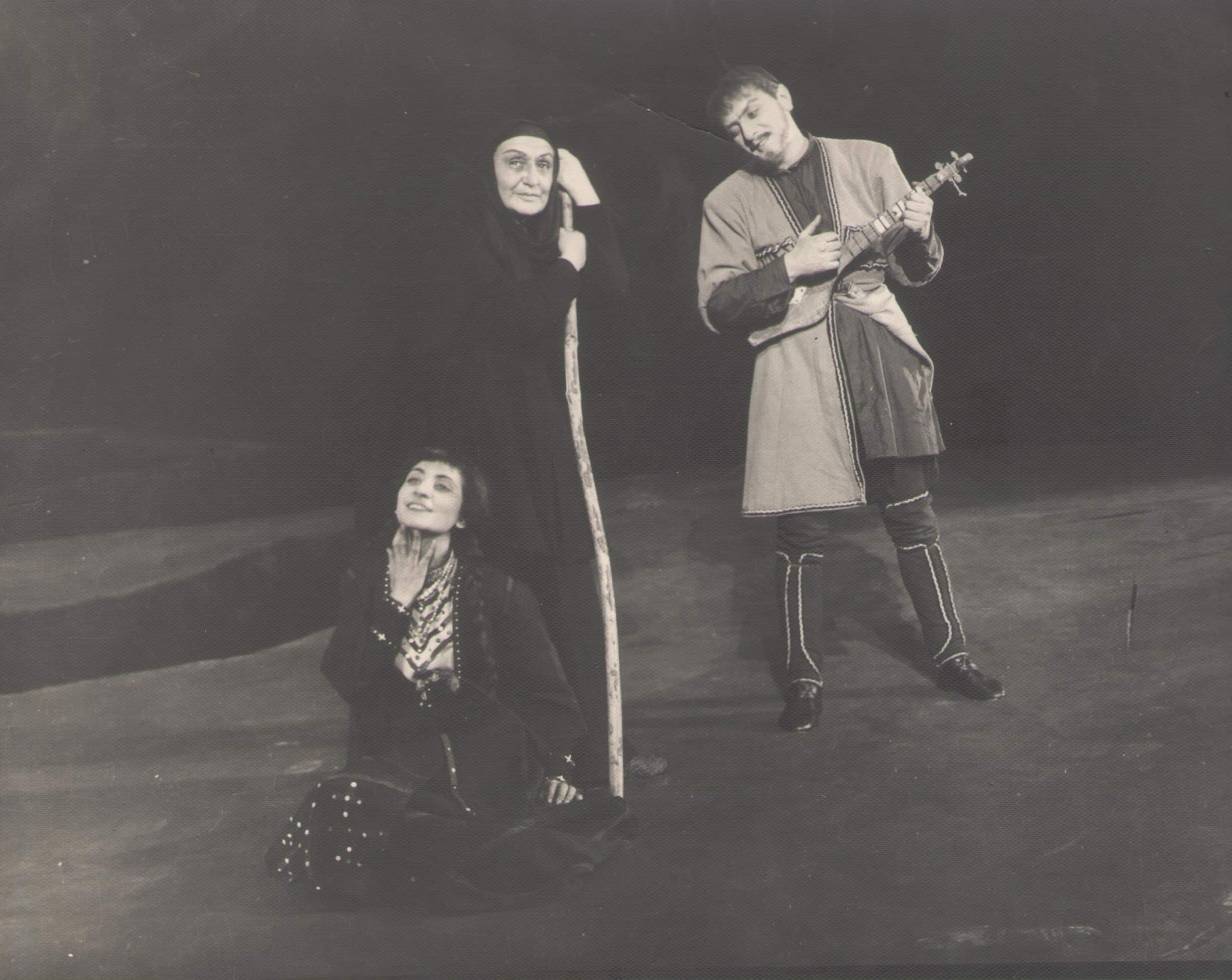
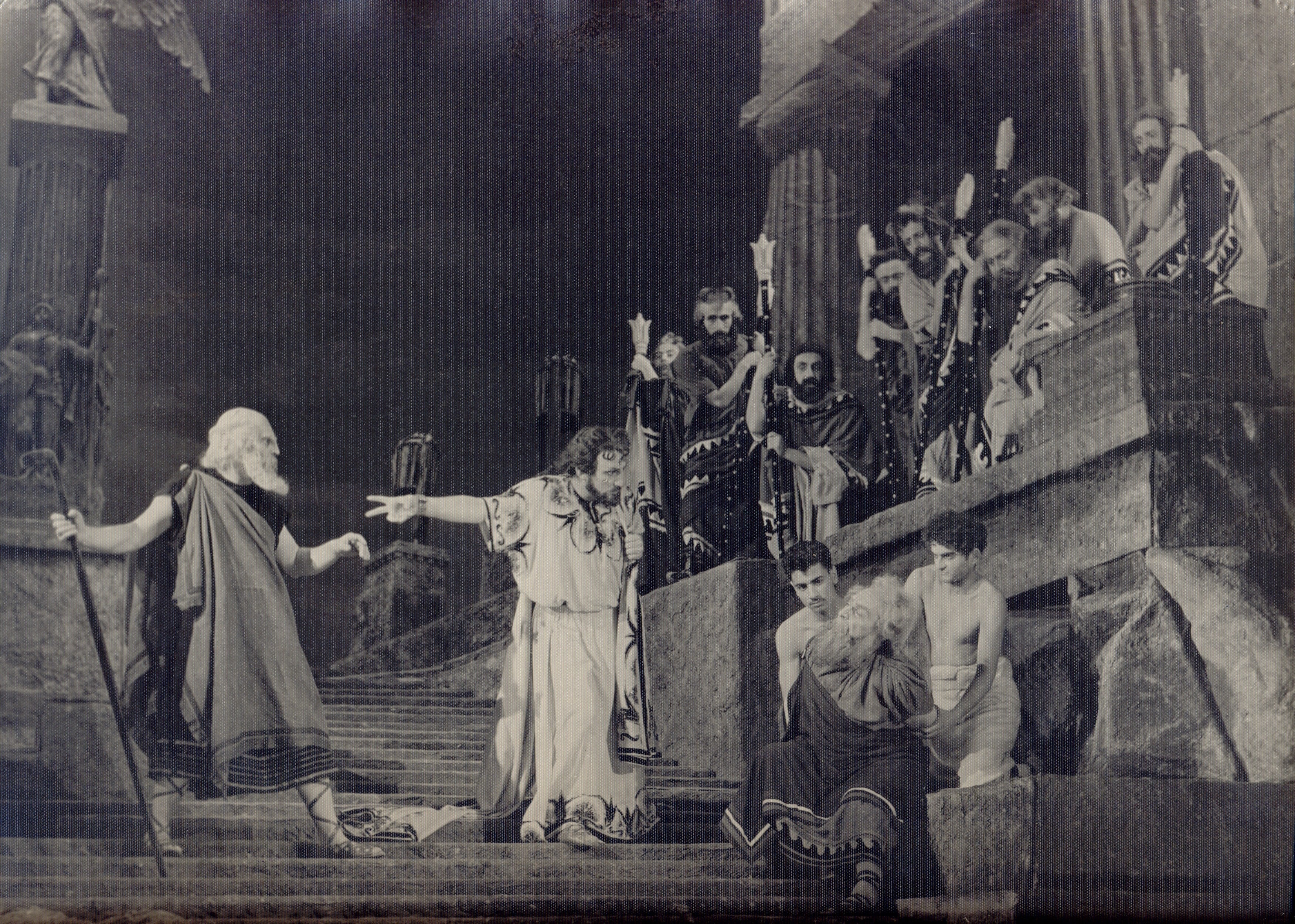
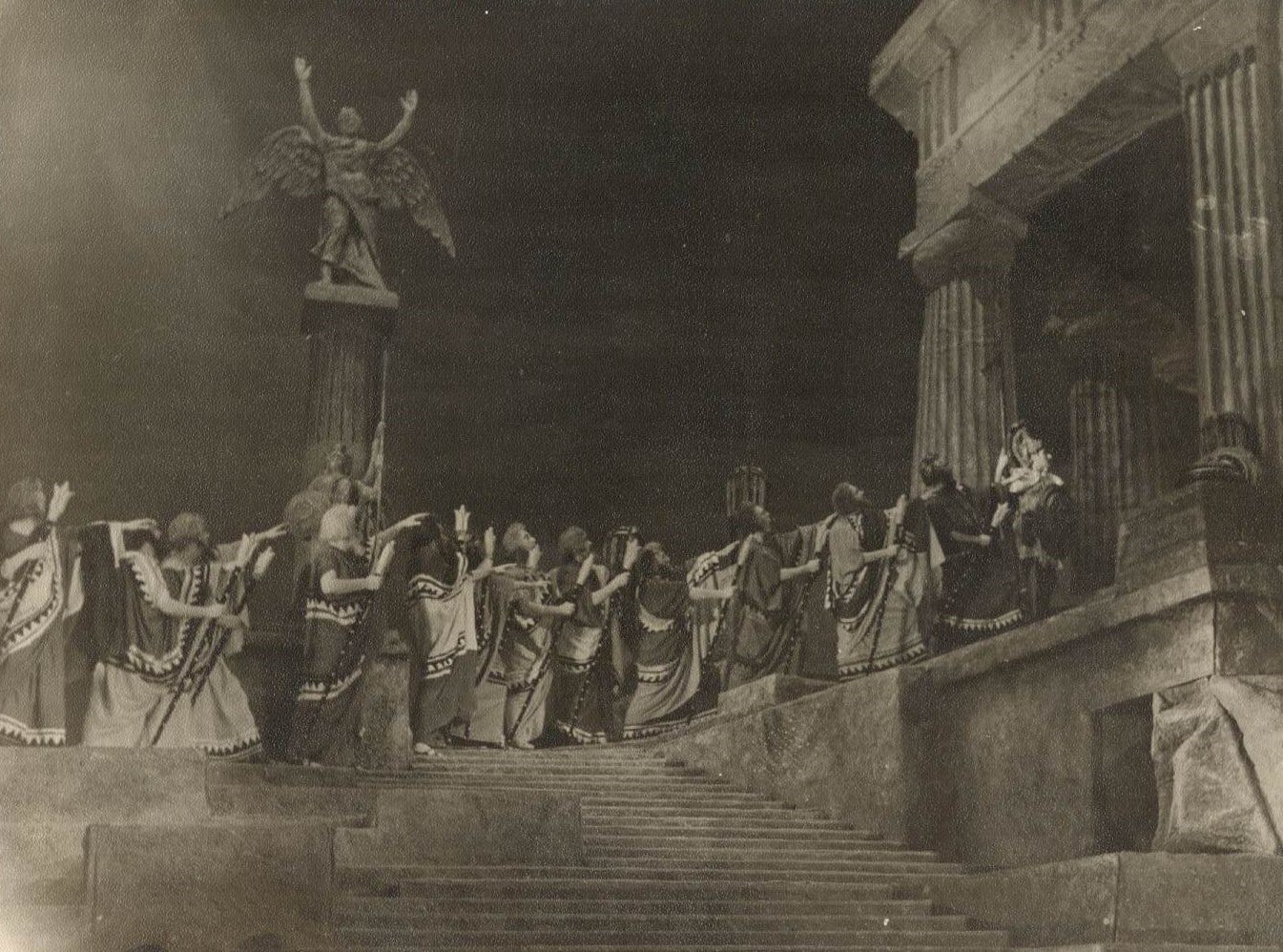
In their analyzes of Aleksidze's work at the Rustaveli Theater, Nodar Gurabanidze and Vasil Kiknadze, two major figures in Georgian theater studies, mention a few productions besides his comedies. They include Nikoloz Baratashvili, the stage adaptation of Ilia Chavchavadze’s The Beggar’s Tale, Sophocles’ tragedy Oedipus the King, and Bakhtrioni, a stage adaptation by David Gachechiladze of Vazha-Pshavela’s poem, which is deemed the “final chord” of Aleksidze’s career at the Rustaveli Theater.
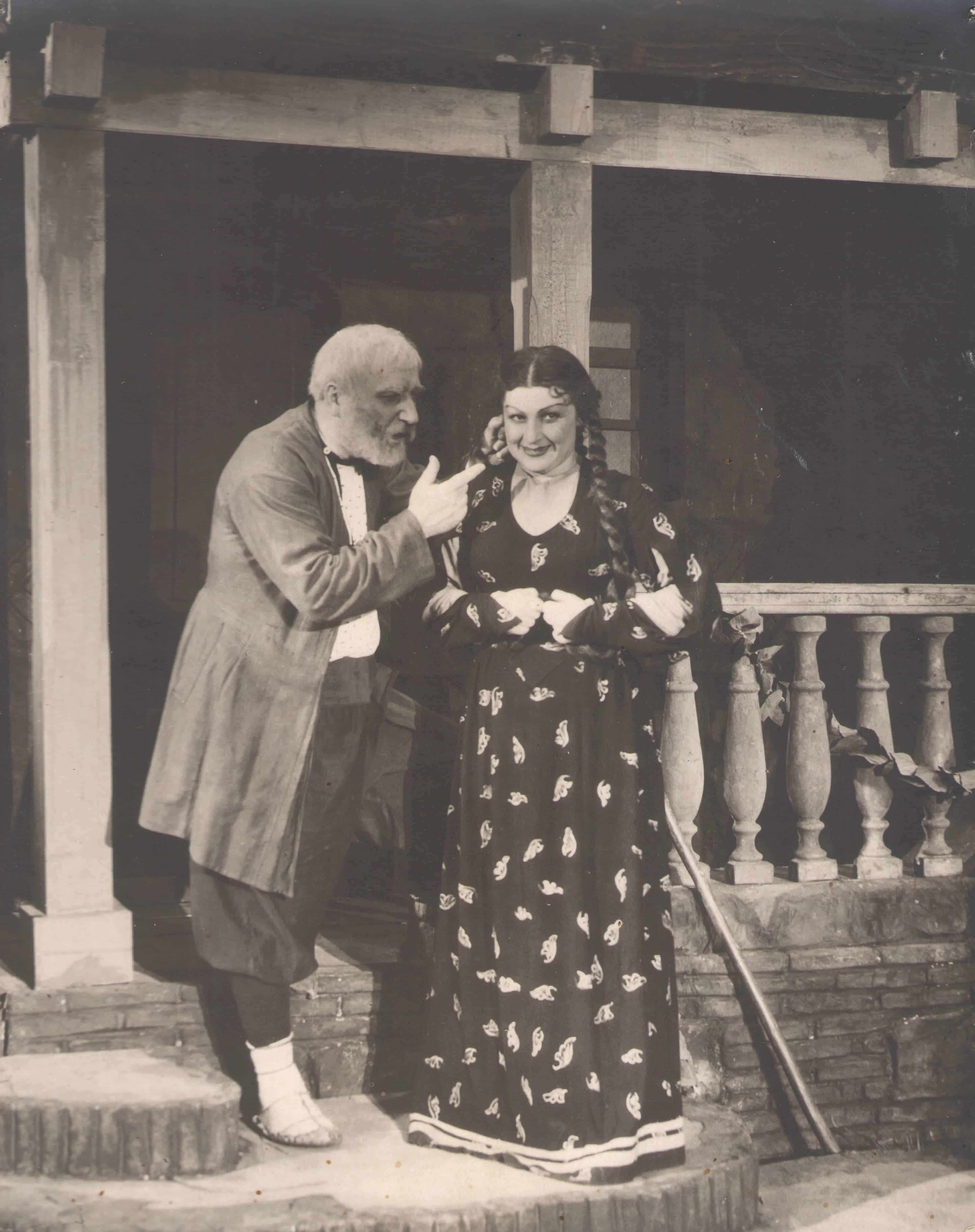
The authors consider these productions as examples of synthetic theater, characterized by directing based on interesting and precisely formulated ideas, large-scale collective scenes, choreographic and rhythmic compositions, scenography, original music composed for each production and, most importantly, high-quality acting.
These productions brought to life legendary figures in the history of Georgian theater, with exceptionally skillful performances: Gogi Gegеchkоri as Baratashvili; Akaki Vasadze as Pepia; the distinctive interpretations of Oedipus by Sergo Zakariadze, Erosi Manjgaladze, and Akaki Khorava; Sergo Zakariadze as the Prophet; Zinaida Kverenchkhiladze as Lela; and Kote Makharadze as Andarezi.
Then came a period of profound anguish: Dodo Aleksidze was forced to leave his artistic home, the Rustaveli Theater, where he had spent more than twenty years honing his craft as a director and shaping generations of actors and theater professionals as an educator. Yet adversity often opens unexpected doors. By this time, he had already established a formidable reputation across the Soviet Union. During the Rustaveli Theater’s tours, Aleksidze’s productions captivated audiences, while the all-Union press took notice, offering enthusiastic reviews and widespread acclaim.
Soon, Aleksidze was invited to Kyiv to work in the Ivan Franko Theater. His first production there was Sophocles' ancient tragedy Antigone (1965). In the same theater, he then staged Mykola Kulish’s Ukrainian modernist work Pathetic Sonata (1966).
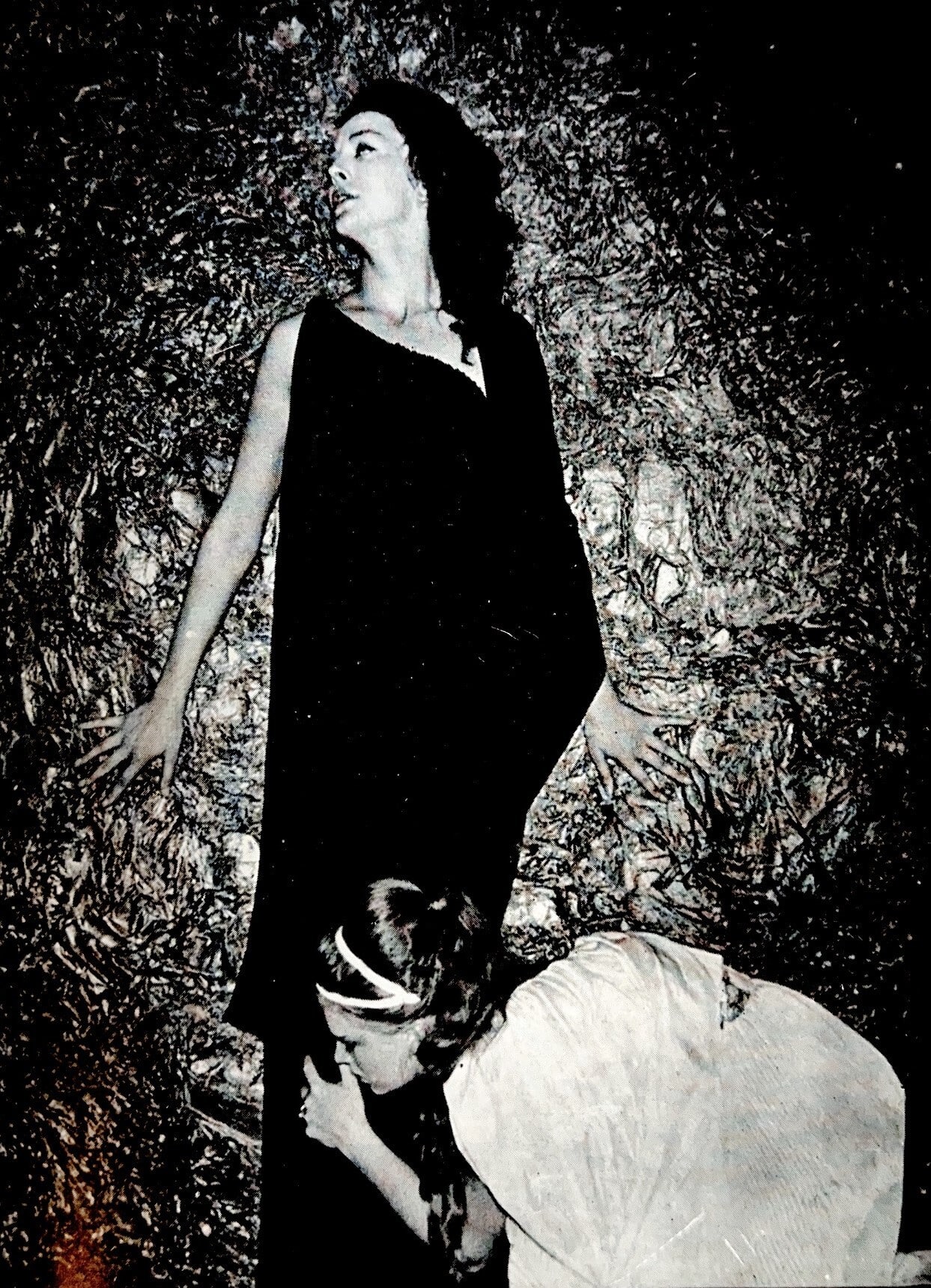
In her review of Antigone, Eter Gugushvili highlights the contemporary nature of Aleksidze’s approach and thought. It was a production about the heroism of man, resistance to dictatorship, and, above all, high human principles: dignity, pride and unbroken spirit. It showed a person who could stand on his convictions to the very end.
The director cast young actresses Svetlana Koroshko as Antigone and Marina Gerasimenko as Ismene, both recent graduates of the Kyiv Theater Institute. Many cautioned him against taking such a risk, but Aleksidze’s seasoned instinct as both director and teacher proved sound: the young actresses rose to the challenge and fully vindicated his confidence in them.
Between 1964 and 1970, Dodo Aleksidze worked in Ukraine as a director and teacher. He served as a chief director, first at the Lesya Ukrainka Russian Drama Theater and later at the Ivan Franko Academic Theater, and headed the Department of Acting at the Karpenko-Kary Theater Institute in Kyiv, where he trained numerous generations of actors and directors.
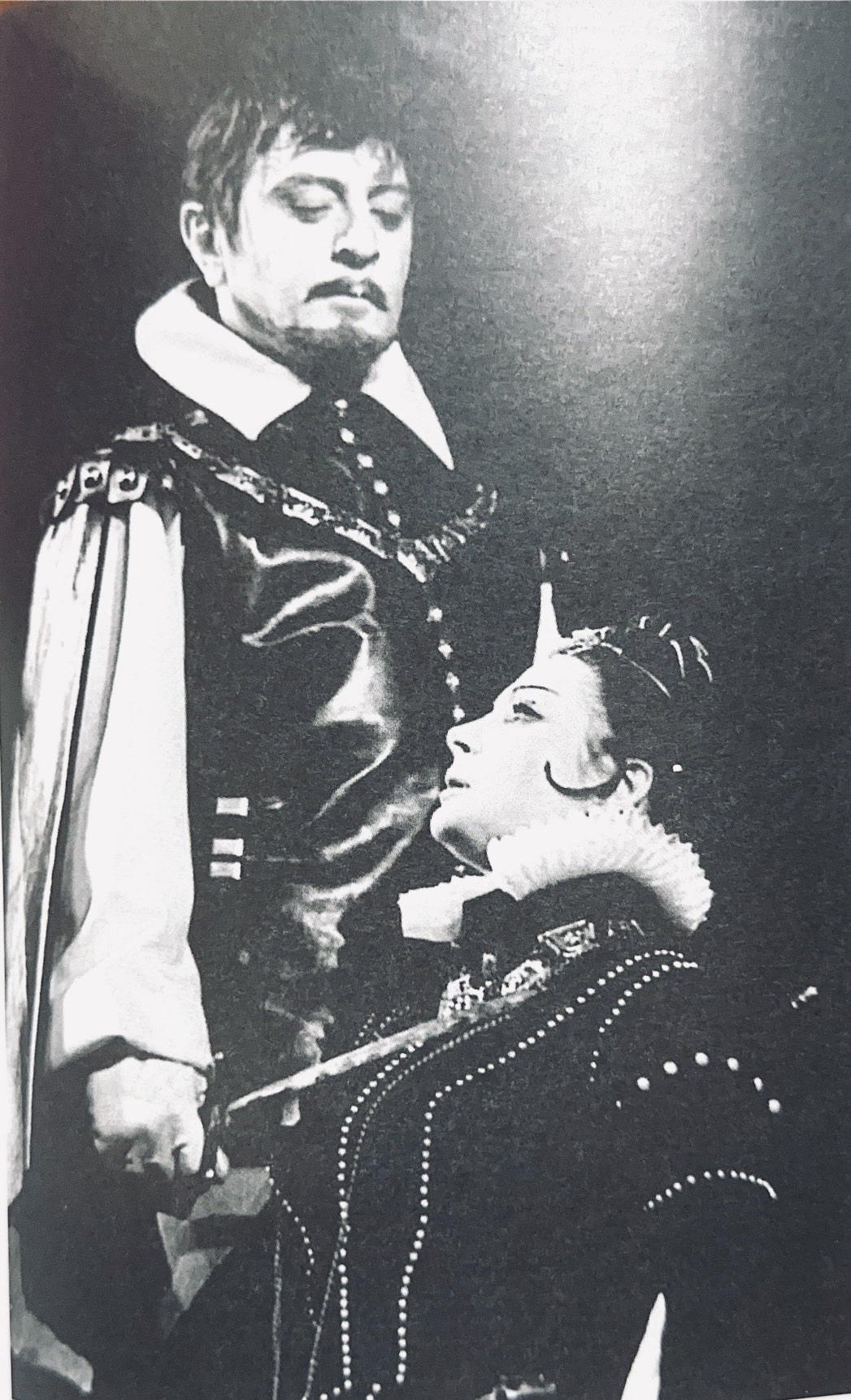
He then returned to Tbilisi and headed plays by classical and modern artists at the Kote Marjanishvili Theater from 1970 to 1974. Notable productions, distinguished by compelling direction and acting, included Friedrich Schiller's Don Carlos (1970), Oleksandr Korneichuk's Memory of the Heart (1971), Sophocles' Antigone (1972), Nikolai Gogol's Marriage (1972), and Alexander Ostrovsky's Talents and Admirers (1973).
From 1974 to 1984, Aleksidze led the Georgian Theater Society. During this period, he staged both within Georgia (Tbilisi and the surrounding regions) and outside the country (Moscow, Leningrad, present-day Saint Petersburg, Chisinau, Tashkent, and Yerevan). His last performance was Shakespeare’s The Merchant of Venice, staged in the Sokhumi Georgian Theater, where the distinguished Georgian actor and theater’s creative director Gogi Kavtaradze played Shylock. He also directed a number of opera performances.
Aleksidze’s directorial work exemplified the principles of synthetic theater. He developed a distinctive theatrical language in which content and form existed in perfect harmony. Indeed, he possessed immaculate taste, best exemplified by his productions in the comedy genre. The challenges the genre presents are such that many renowned directors prefer to avoid it altogether.
Dodo Aleksidze was never content to rest on his laurels. He made his works in collaboration with prominent artists who thought like him. The caliber of his collaborators is reflected in the names of Irakli Gamrekeli, Soliko Virsaladze, Parnaoz Lapiashvili, Andria Balanchivadze, Otar Taktakishvili, Sulkhan Tsintsadze, and others; and casts counting Akaki Vasadze, Akaki Khorava, Sergo Zakariadze, Erosi Manjgaladze, Ramaz Chkhikvadze, Gogi Gegechkori, Zinaida Kverenchkhiladze, Kote Makharadze, Elene Kipshidze, Iakob Tripolski, and more.
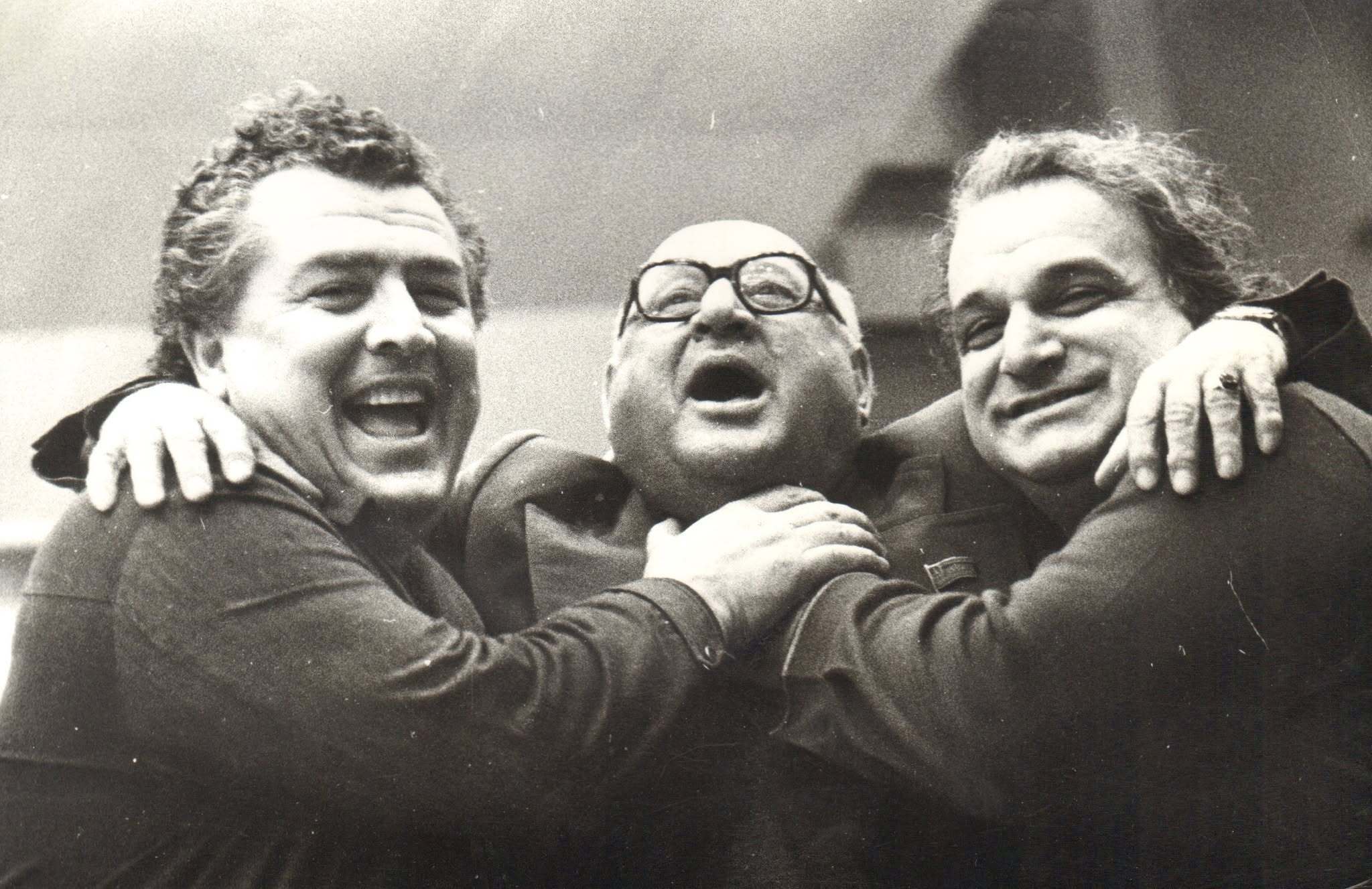
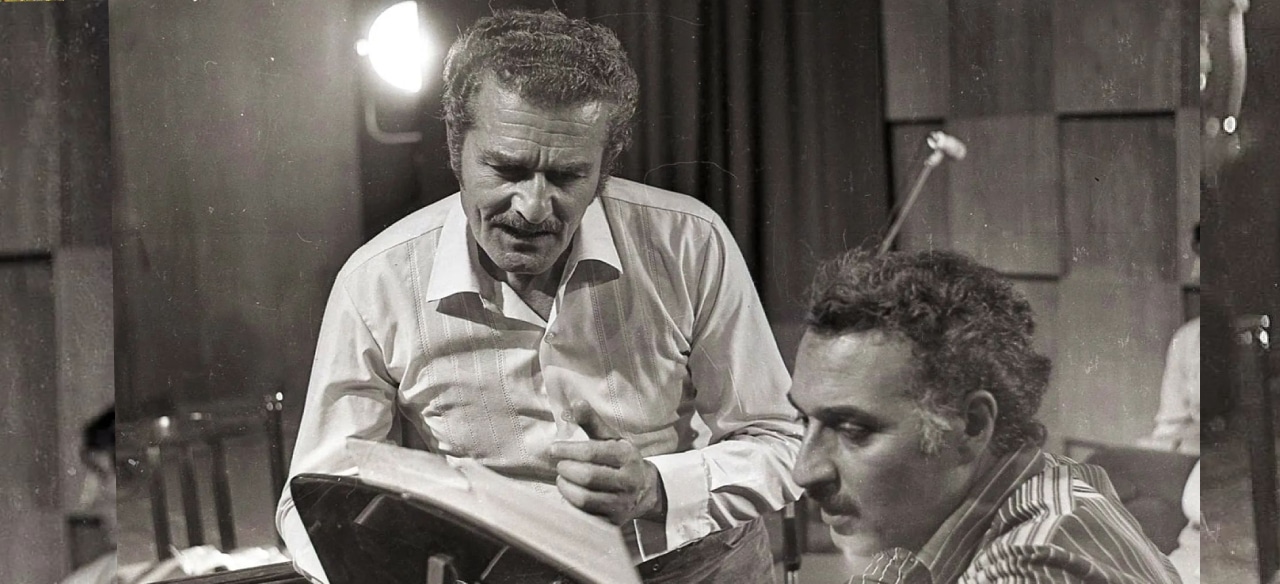
Aleksidze was a fascinating character throughout the rehearsal process; a creator with an artistic nature and unlimited imagination. He was not only a fine director, but also a fine actor; a true “master of demonstration.”
Nodar Gurabanidze wrote that Dodo Aleksidze was so richly endowed by nature with innate talent, artistry, personal charm, and temperament, that his exquisite craftsmanship and virtuosity, qualities actually refined through long years of hard work, could easily have been interpreted for qualities that were simply inborn or genetically determined.
Dodo Aleksidze, it is said, was consistently driven by the desire to create something new. Many betrayed him because of his talent; many associates turned their backs on him at the height of his creative success, and yet the director, with a remarkably forgiving nature, forgave them all. He was a man to whom the feeling of envy was altogether foreign; rather, he was always genuinely pleased by the success of others and was the first to extend his congratulations. Indeed, Aleksidze was the first to go backstage after The Caucasian Chalk Circle and congratulate Robert Sturua on his victory.
His
contemporaries describe Dodo Aleksidze as a person of exceptional charm, a living celebration, a living
firework, and a living festivity. Nodar Gurabanidze titled his final book,
dedicated to Dodo Aleksidze, “Living Theater.”