

- Sort by
- Date
Feel free to add tags, names, dates or anything you are looking for



Feel free to add tags, names, dates or anything you are looking for

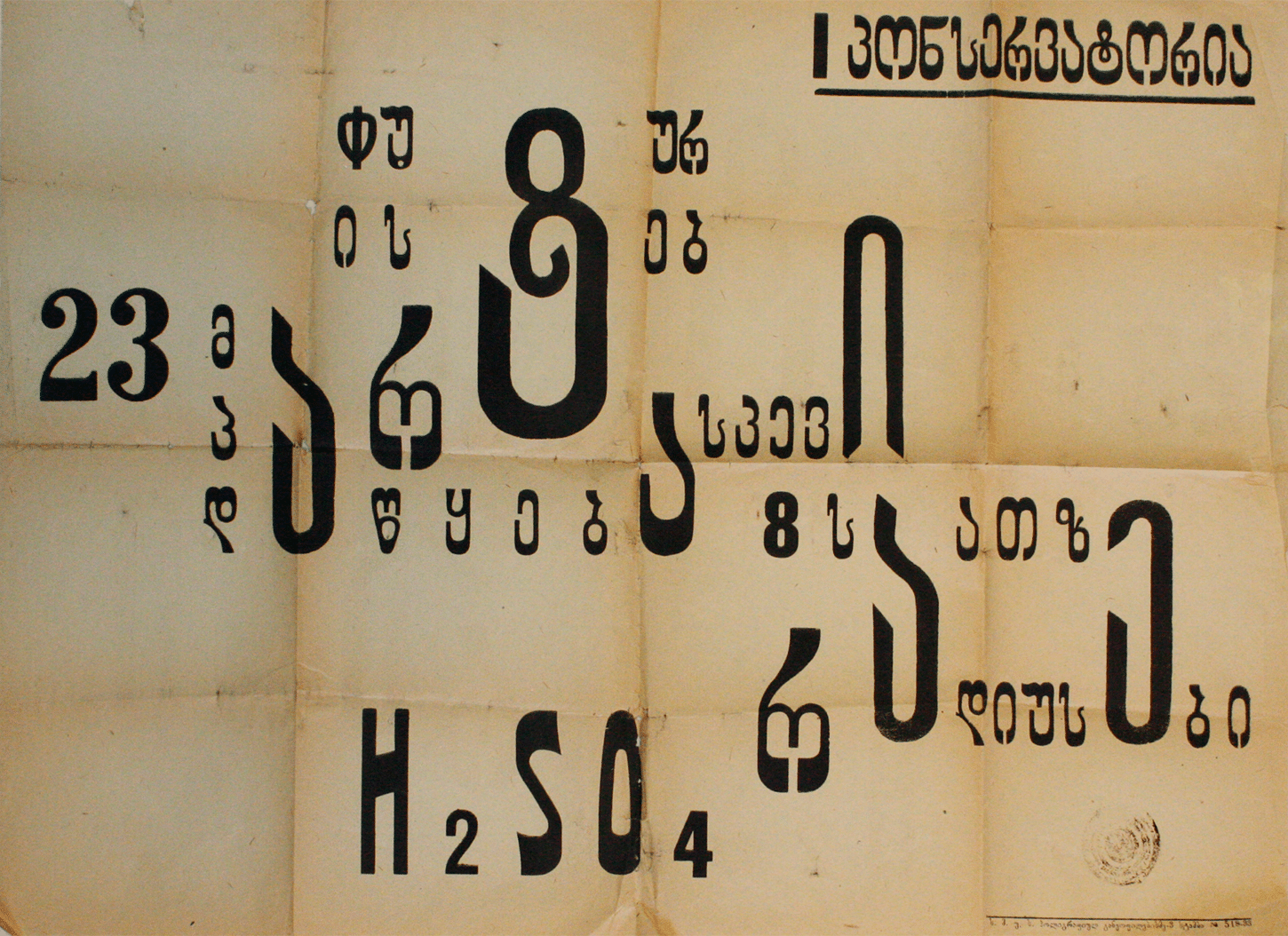
Beno Gordeziani is regarded as one of the most prominent figures in Georgian avant-garde art. His name is most closely identified with the Dadaist-Futurist group known as 'H2SO4.' This literary-artistic association was established in 1924. In a similar way to the effect of sulfuric acid (the chemical formula of which is reflected in the group’s name), its members aspired to destroy everything old and outmoded in the creative world.
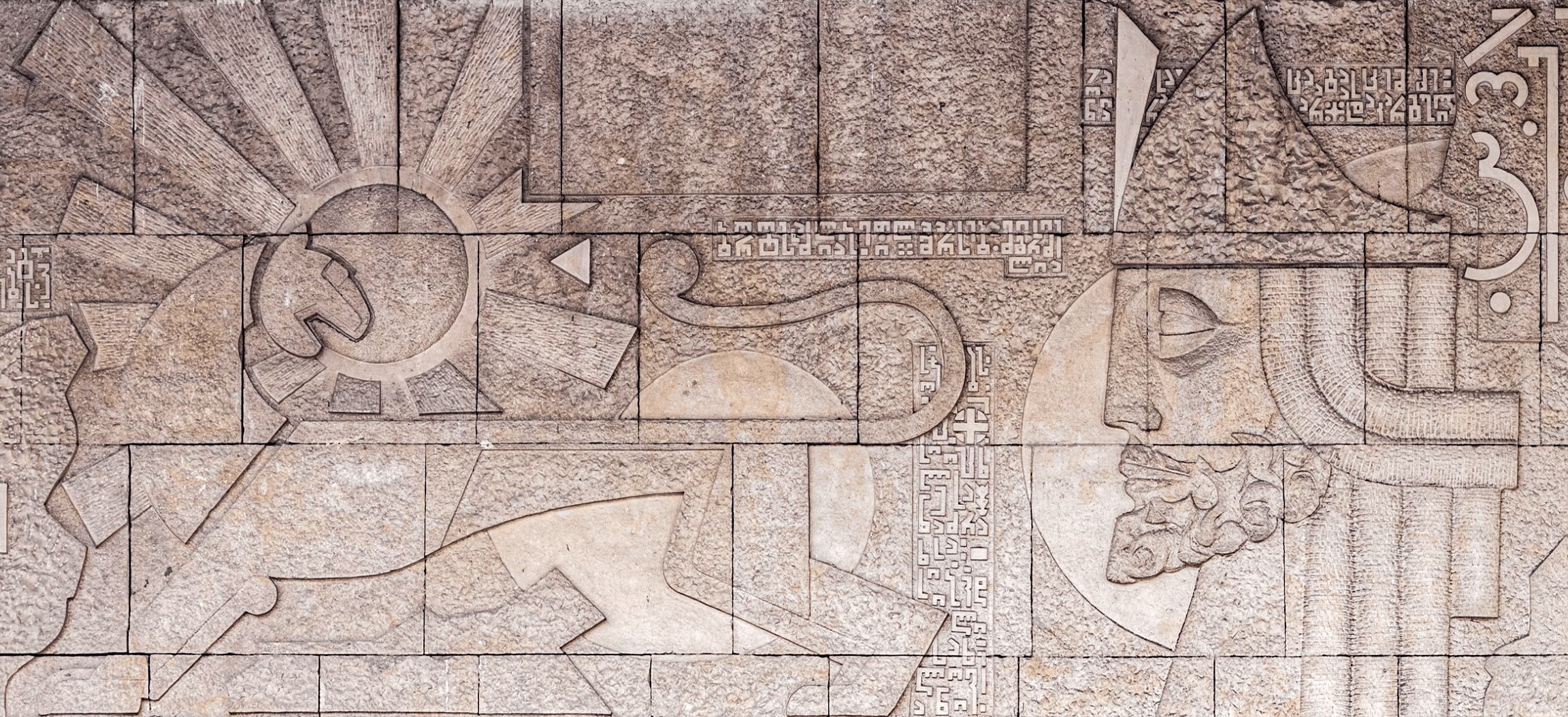
In 1960s Tbilisi, the name Elguja Amashukeli quickly became famous. It was impossible to be in the city without hearing about him, and even more impossible not to notice his public works. They became instant landmarks, and have remained as symbols of the city ever since.
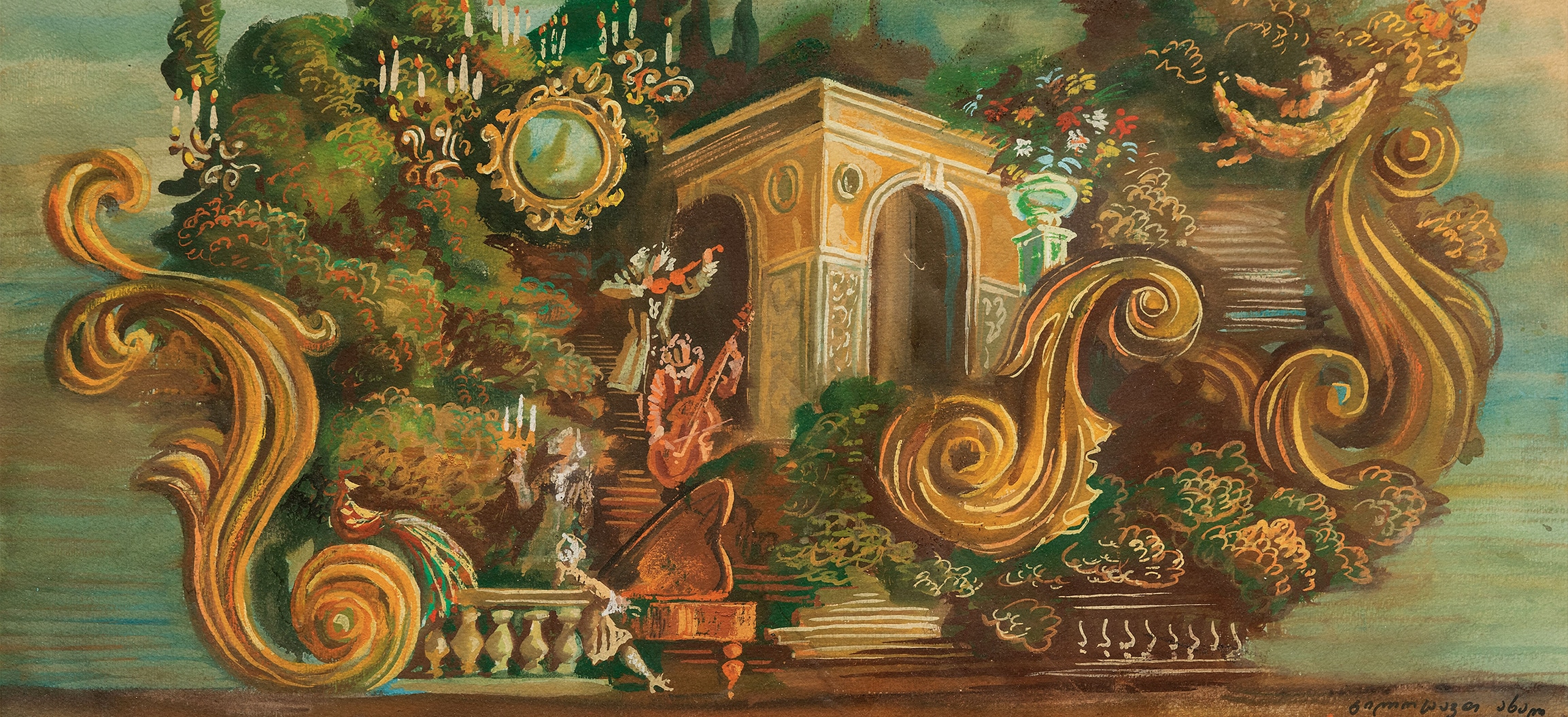
Nikoloz (Koka) Ignatov (1937–2002) was the key figure in Georgian art and culture during the 1960s -1980s. His first well-known work was the 1965 production of the play ‘The Wisdom of Lies’ at the Rustaveli Theater, which was directed by Nana Khatiskatsi and Tengiz Maghalashvili and was based on the fables of Sulkhan Saba Orbeliani. With its vibrant colors and creative expressiveness, the artist's background panel for this performance, which depicted a fairy-tale metaphor of the Georgian terrain, prompted audience applause as soon as the curtain opened.
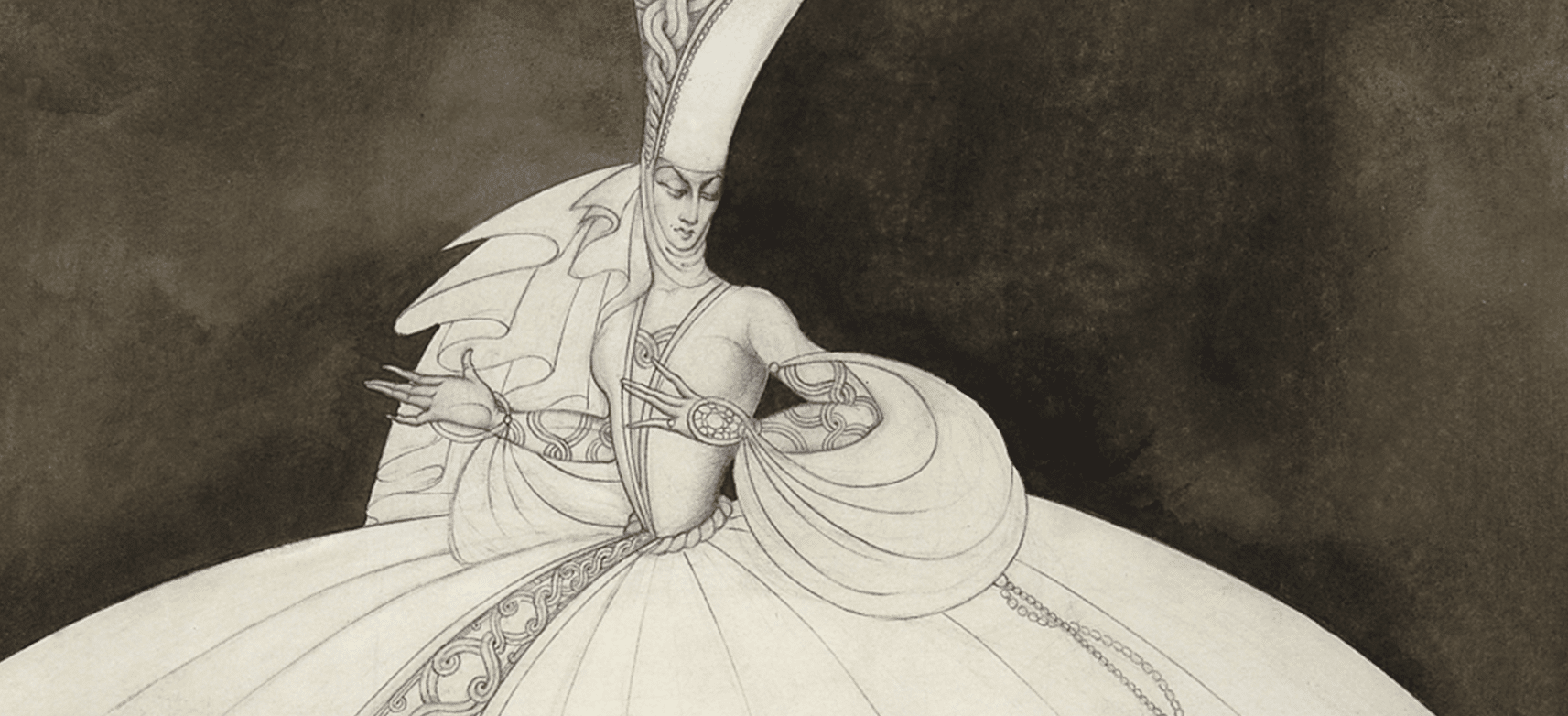
Petre Otskheli's sketches not only speak of his broad imagination, technical virtuosity and deep thinking as an artist, but also refer in general to Georgian theater and cinema of the 1920s and 1930s, as well as universal contemporary avant-garde art.
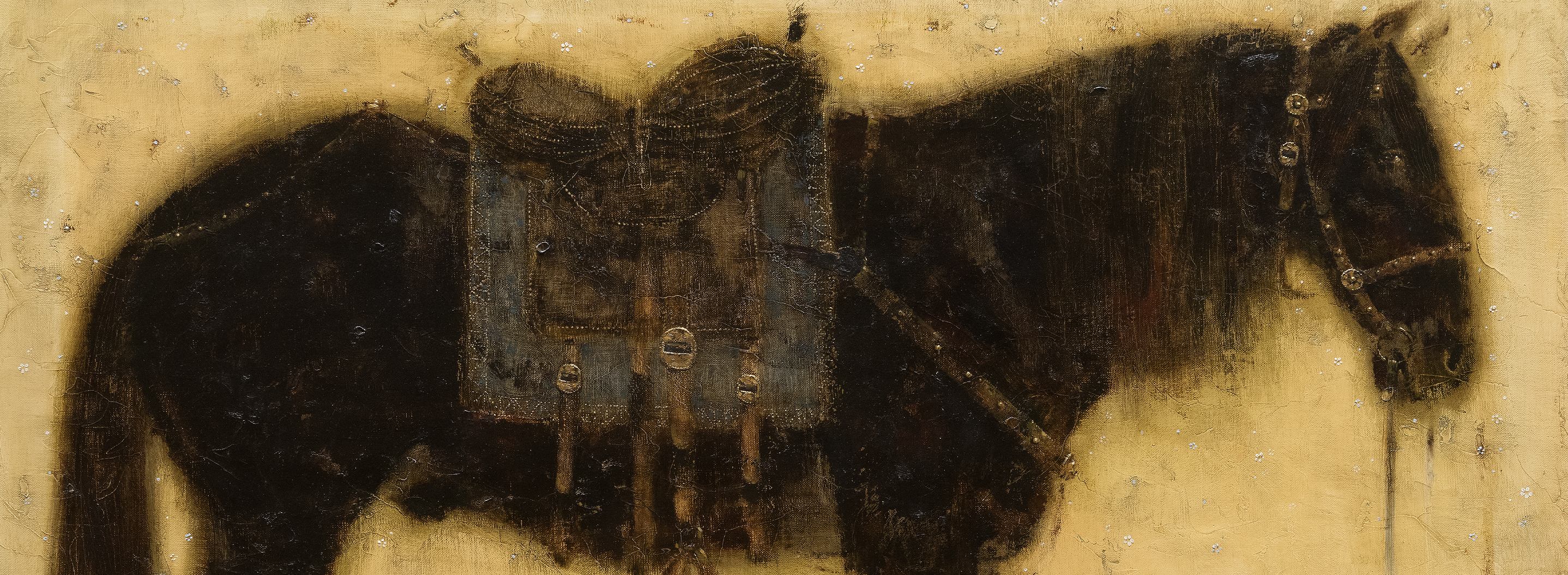
Irakli Sutidze's art provides undeniable evidence that the author's style emerged and developed from his inner world. He painted as he lived, and lived as he painted. He stood at the center of both the surrounding reality and the world invented by him. As such, inanimate objects and living beings around him lived the life he created for them.
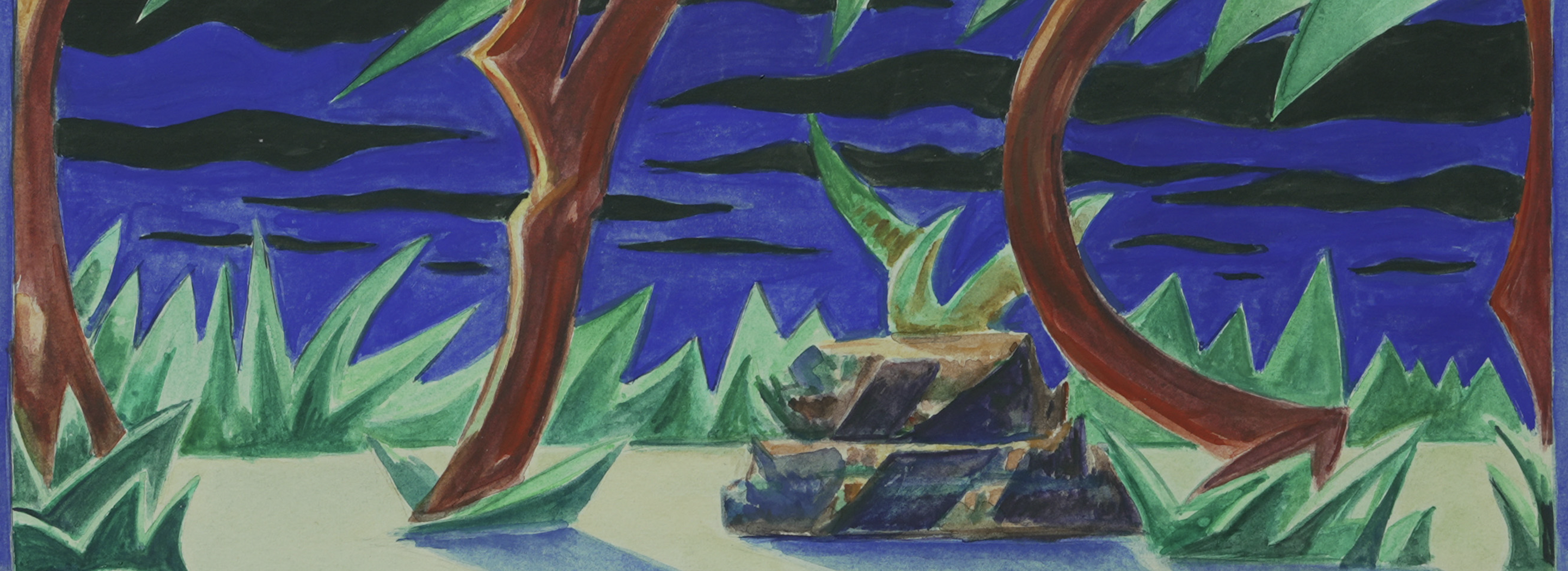
Irakli Gamrekeli was one of the founders of Georgian scenography and a prominent theater and cinema artist, futurist, and constructivist. Born on May 17, 1894, in Gori, Georgia, to a priest's family, he received his primary education at a theological school.Essentially a self-taught artist, he also spent time at the Medical Institutes in Rostov and Odessa, but failed to graduate, feeling that painting was his true calling.
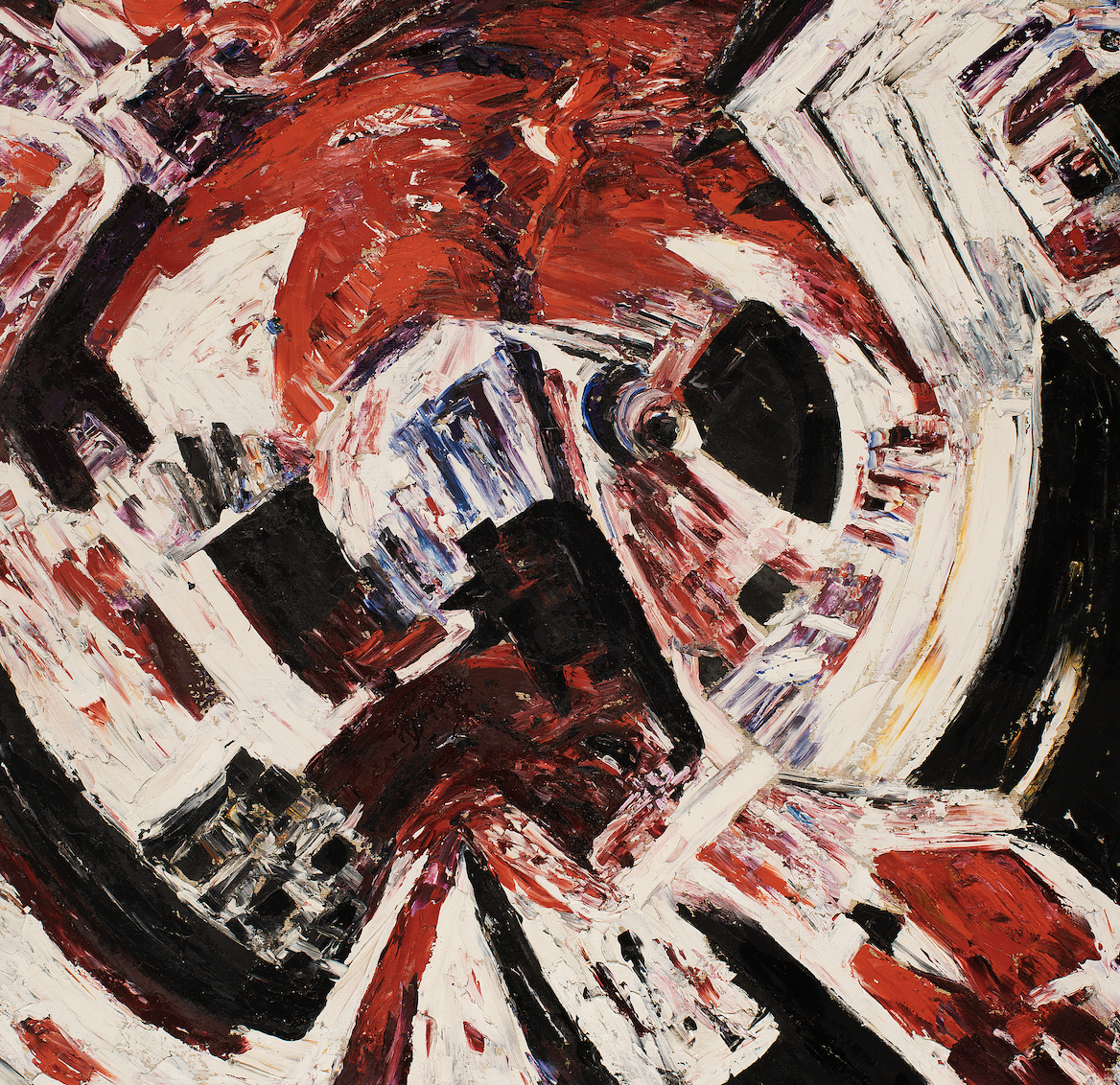
Jibson Khundadze (1927-2022) was one of the foremost representatives of the second stage of abstract art in Georgia. He studied at the Tbilisi State Academy of Arts in 1945-52. It was the time when social realism was canonized in all fields of art. The title of his diploma work - "The Rally in Batumi" - proves that at that time everyone had to follow the official requirements. But in spite of the contradictions, even in his student years, he tended to figurativeness and color effect.
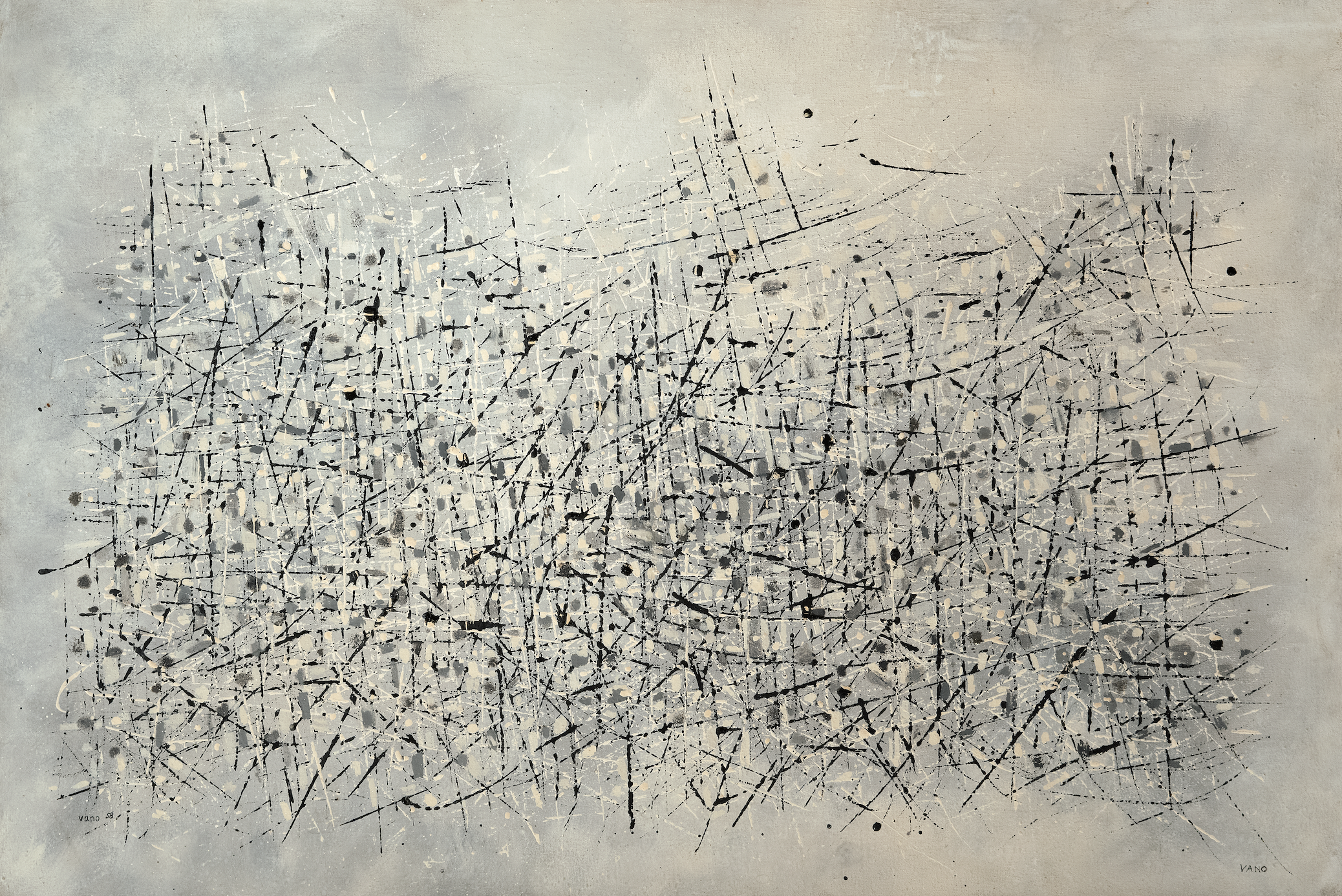
In 1929, when Vano Enukidze arrived in Paris, he had already graduated from the Faculty of Socio-Economic Sciences of Tbilisi State University. Together with other young people, Enukidze had been involved in fighting for Georgia's independence, and, seeing the situation worsening in his homeland, he realized it was becoming increasingly risky for him to stay. Without a doubt, he intended to return to Georgia, but circumstances prevented him from ever doing so.
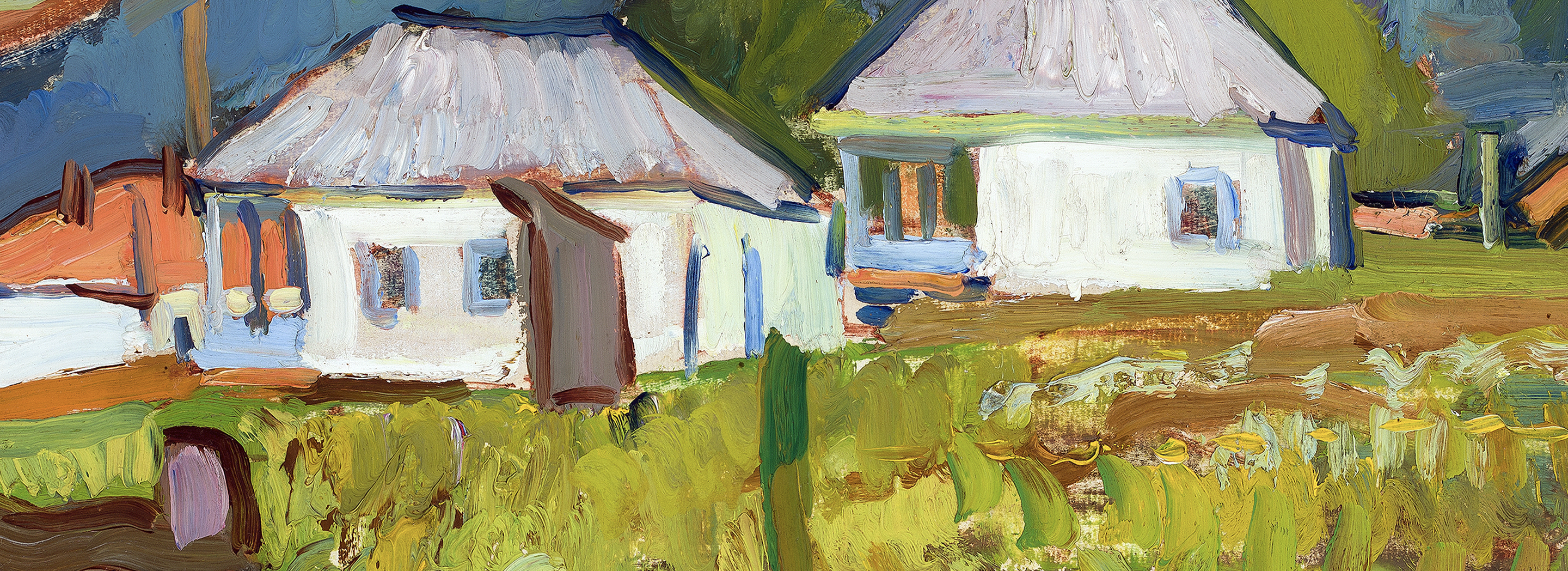
Zygmunt (Zyga) Waliszewski (1897-1936) was a Polish artist who lived in Georgia from 1903 to 1920. His name is associated with the history of the Georgian avant-garde of the 1910s. In the second half of his life, he was a prominent figure on the Polish art scene. Waliszewski lived and worked in Paris in 1924-1931.
At the end of the 50s/beginning of the 60s Vera Pagava created a unique graphic style, which she mostly employed for plein-air landscape paintings and occasionally for the production of still lifes.The artist utilized this method to produce dozens of lyrical drawings that capture the fleeting essence of nature. Pagava drew dots and created images on blank pieces of paper using just a pencil (graphite).
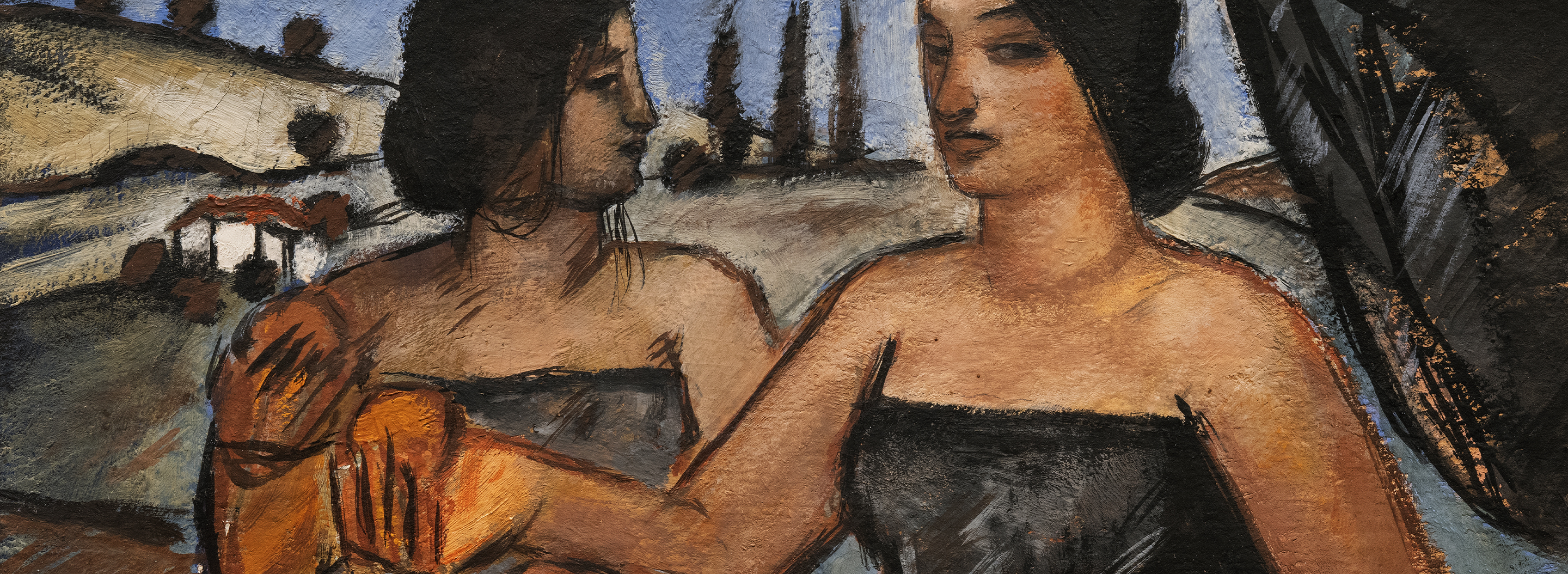
Ioseb Gabashvili's creative work unconsciously occupies a place in the thoughts of many people from an early age, since he produced impressive illustrations for Georgian fairy tales and children's books. The books he illustrated will be remembered as works of art, leaving lasting and significant artistic impressions that will remain with the reader forever. Nevertheless, Soso Gabashvili's creative work is far more comprehensive and diverse. He was a graphic artist, painter, and stage and film designer.
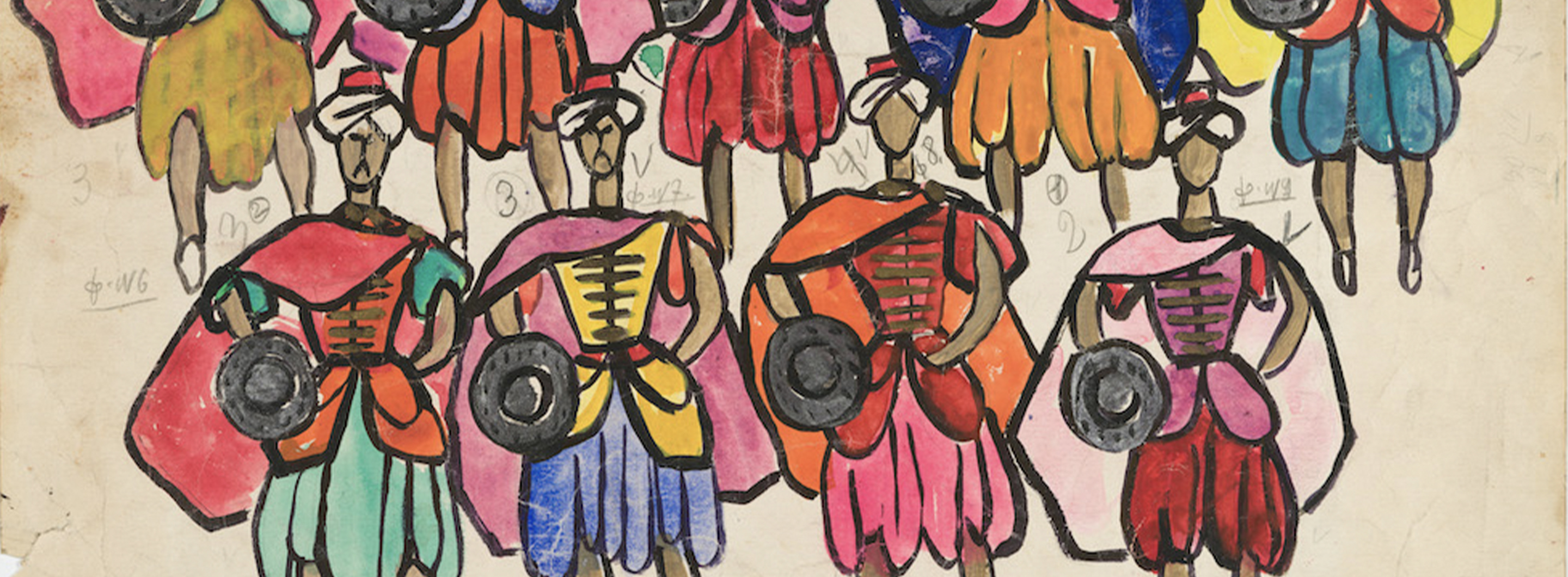
Simon (Soliko) Virsaladze was born at the end of 1908, on New Year's Eve, and as if from Hoffmann's fairy tale "The Nutcracker and the King of Mice,"this real-life Drosselmeyer, the great master of creating magical New Year's decorations, appeared to the world.
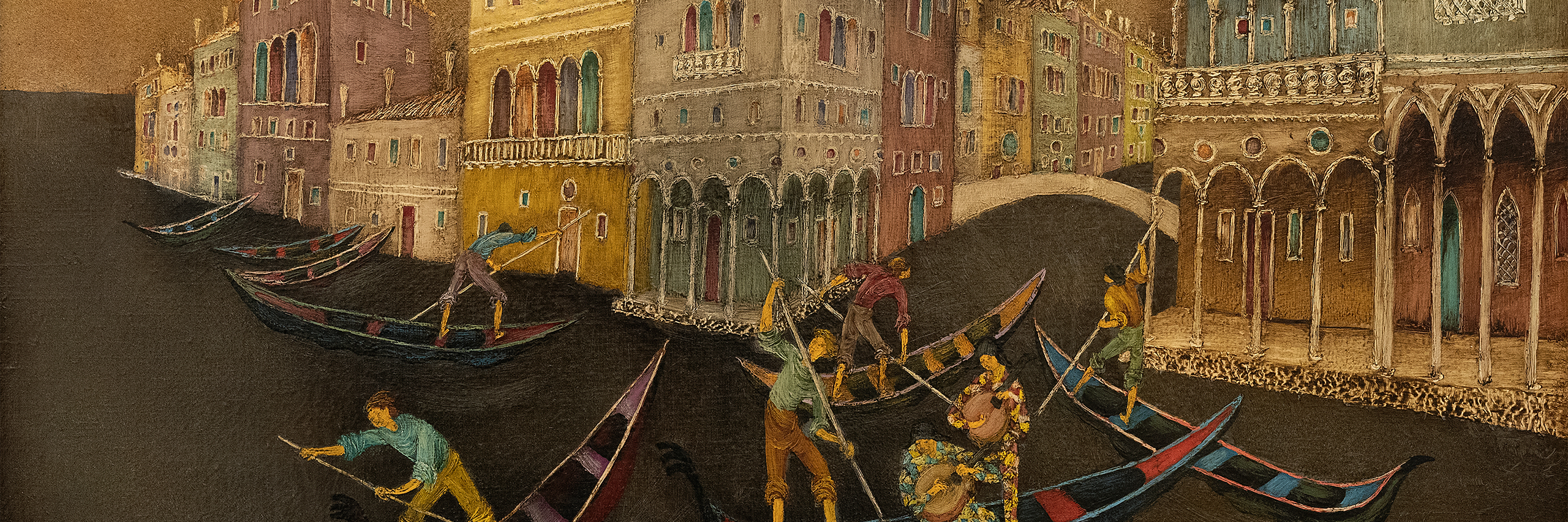
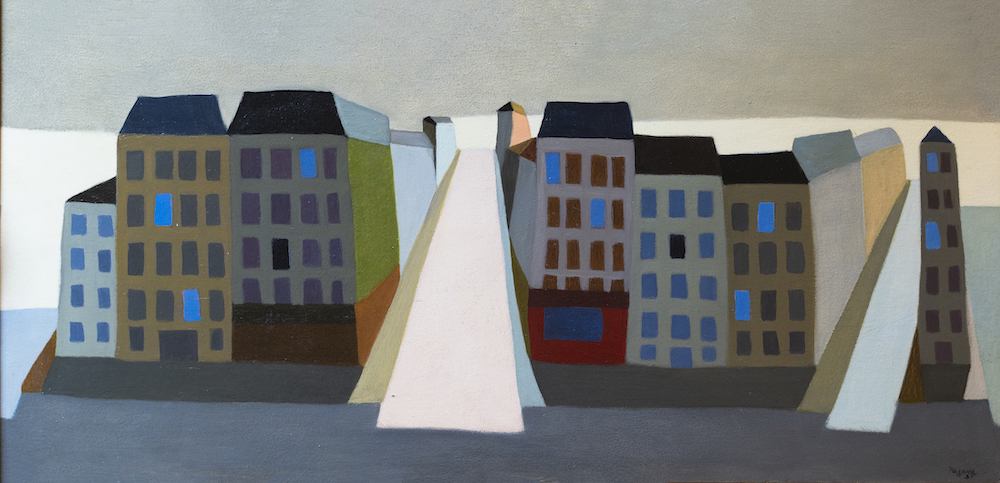
Felix Varlamishvili (aka Varla) was born in 1903 in Kutaisi. He graduated from the Tbilisi State Academy of Arts (1922-27) and in 1928 left Georgia, arriving in Paris in 1929. Between 1948 and 1952 he lived in Buenos Aires and died in Paris in 1986.

In 1965, an album of Vera Pagava’s sketches that included small-scale pencil drawings was published in Paris. Therein, by use of dots drawn with a tip of a graphite pencil, the artist presents the entire richness of nature. Through application of the simplest materials, she not only designs shapes that are perceived by the eye, but also makes us sense their dynamism, movement, and even hear the rustle of the leaves. And while contemplating these minimalistic graphic compositions, we can feel the light that is distributed throughout the space.
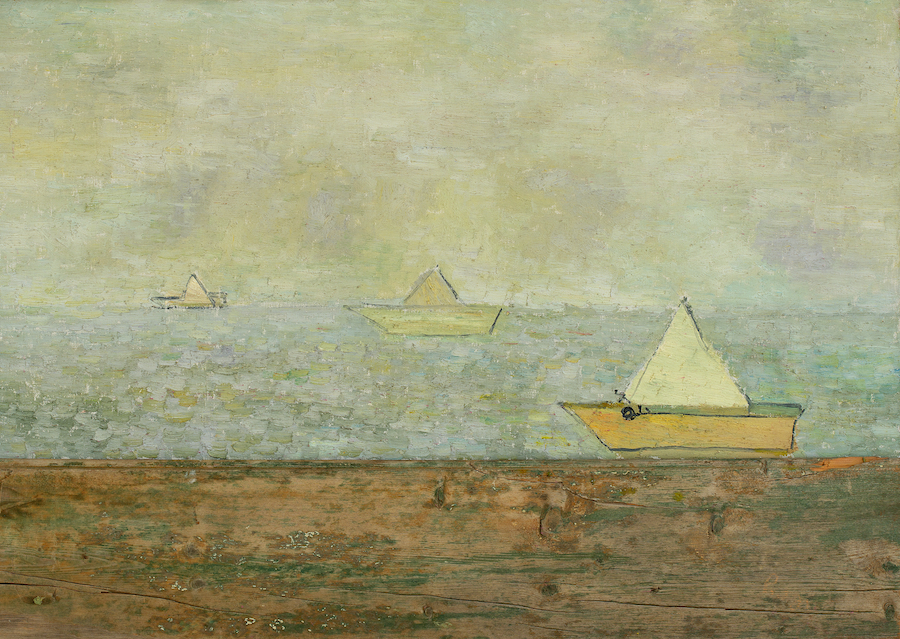
Gogi Chagelishvili creates artworks in a variety of genres and styles, including portraits, landscapes, still lives, multi-figure scenes, and abstraction, amongst others. Nevertheless, none of his works possesses a descriptive nature. Through them, the artist does not express reality but rather his emotions, which turn into a story.
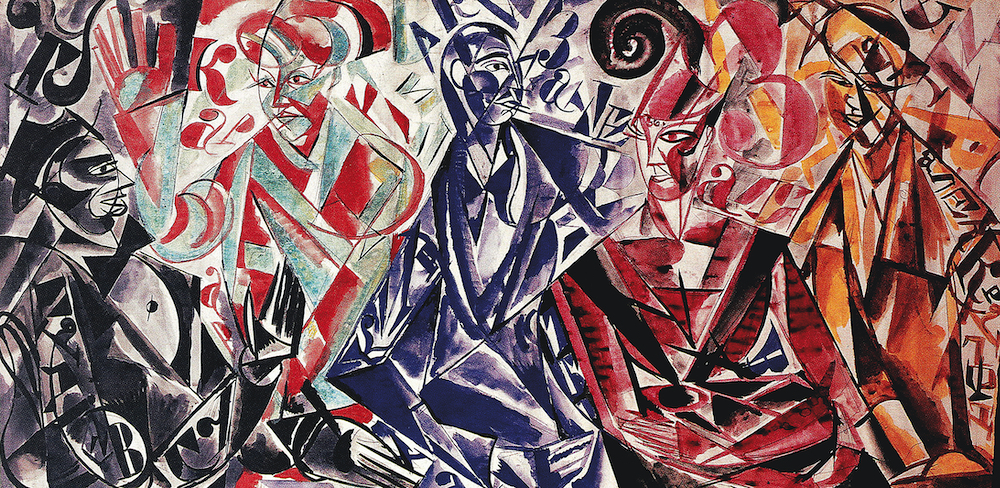
The biographies of the Zdanevich brothers are as rich with the names of persons and events as their comprehensive works are in the fields of poetry, drawing, graphic painting, prose and theory. Their works have proven to be so difficult to fit within any existing Genre that they invented the additional term “Orchestral”, which describes a notion that unites in itself diverse elements, ideas, images, words, letters and colors.
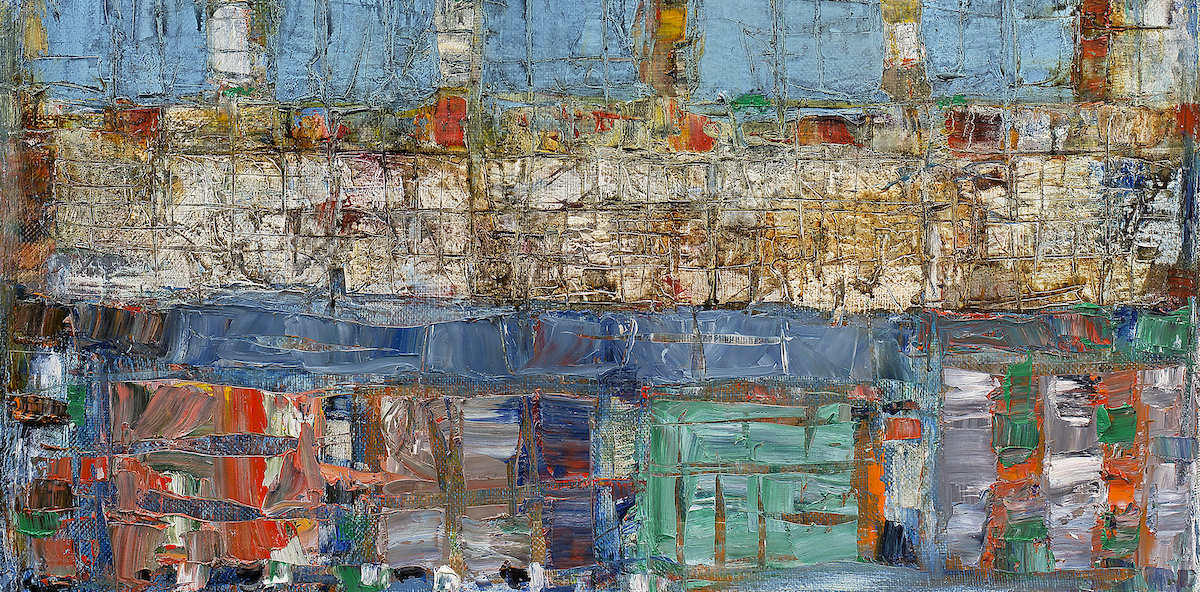
Over twenty years Lagidze has drawn abstractions by placing rectangular shapes or sections on rectangular canvases, in this way creating his distinctive handwriting that is familiar to everyone. However, he is not the one who discovered the rectangles or the squares.
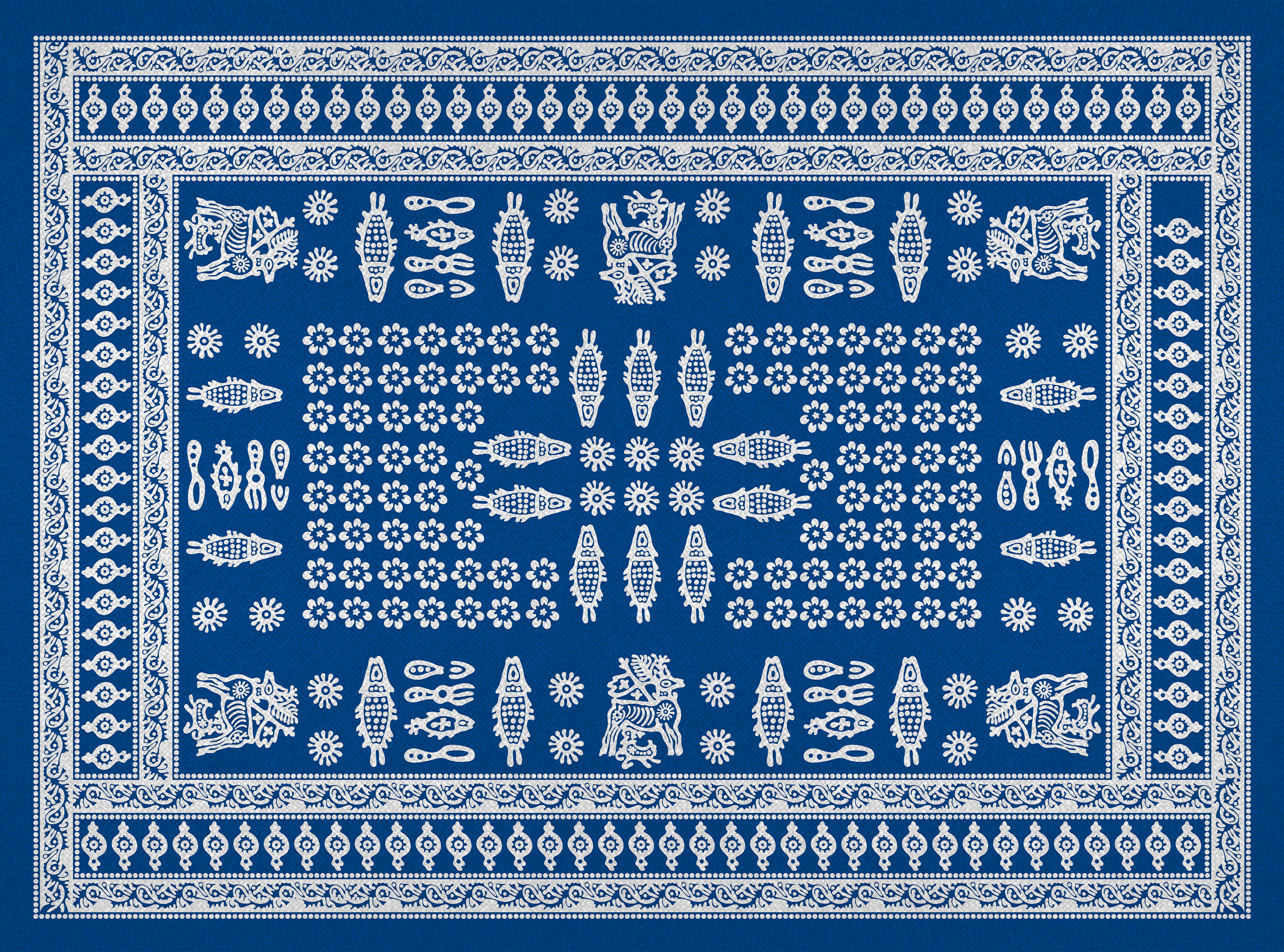
The blue tablecloth represents one of the best manifestations of the organic fusion of eastern and western origins in Georgian culture. It was used to cover the tables of feasts, or was spread directly on the ground (such tablecloths have a narrow and elongated shape). It used to be loaded with festive dishes, food, and drinks. The cheerful drawings on the textile filled guests with a celebratory spirit from the very beginning.
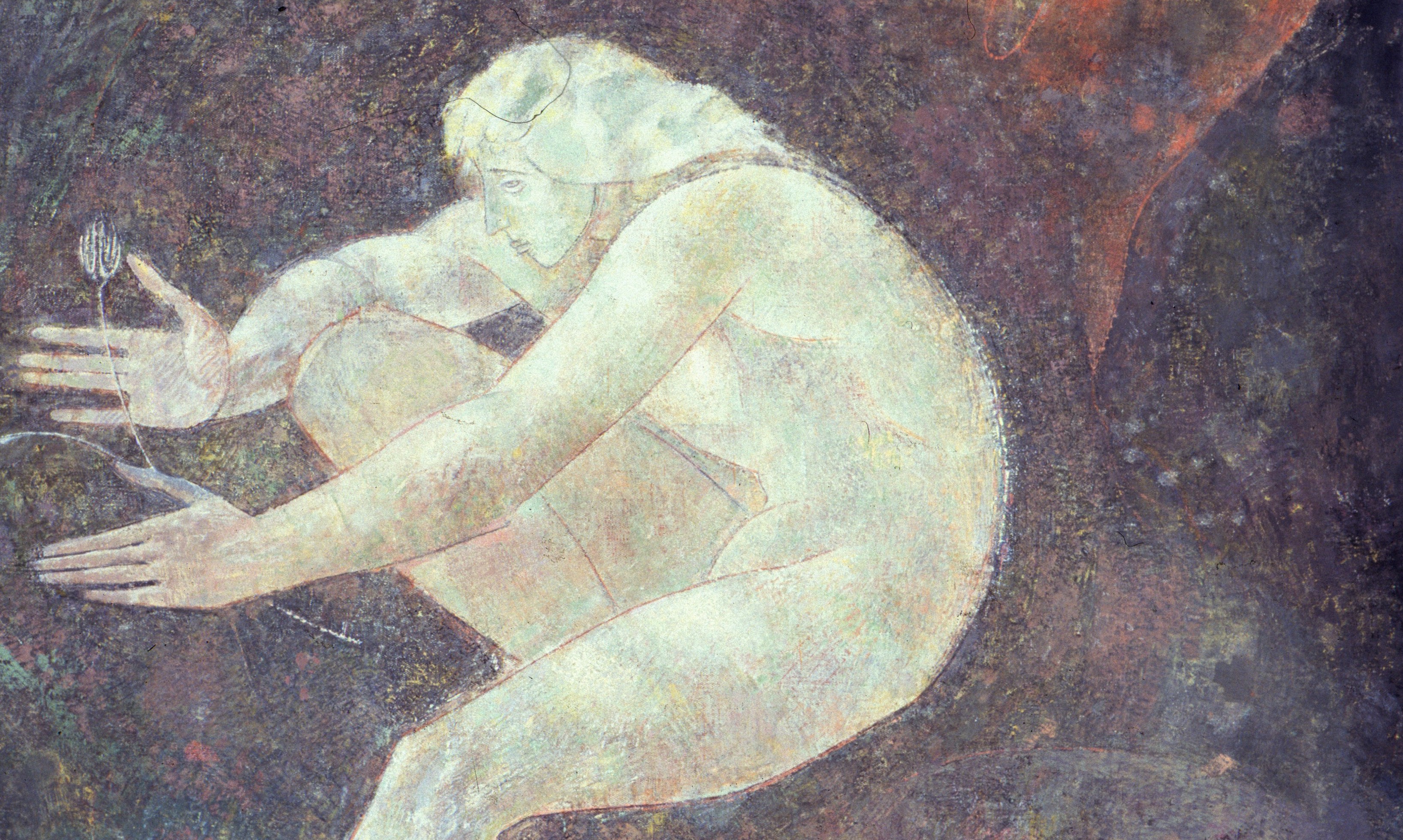
Levan Tsutskiridze’s (1926 - 2021) oeuvre deals principally with literature. However, considering the uninterrupted monumentality of each of his pieces, he should not be labeled as a mere illustrator. In each of his paintings, Levan Tsutskiridze emerges as a sculptor, characterized through exceptional mastery of the principles of plasticity.
.jpg)
Despite never having boarded a plane, David Kakabadze “flew over” his native land at an altitude of a “bird in flight,” and captured landscapes that ended up becoming symbolic representations of Georgia – truly resembling bird’s-eye views.
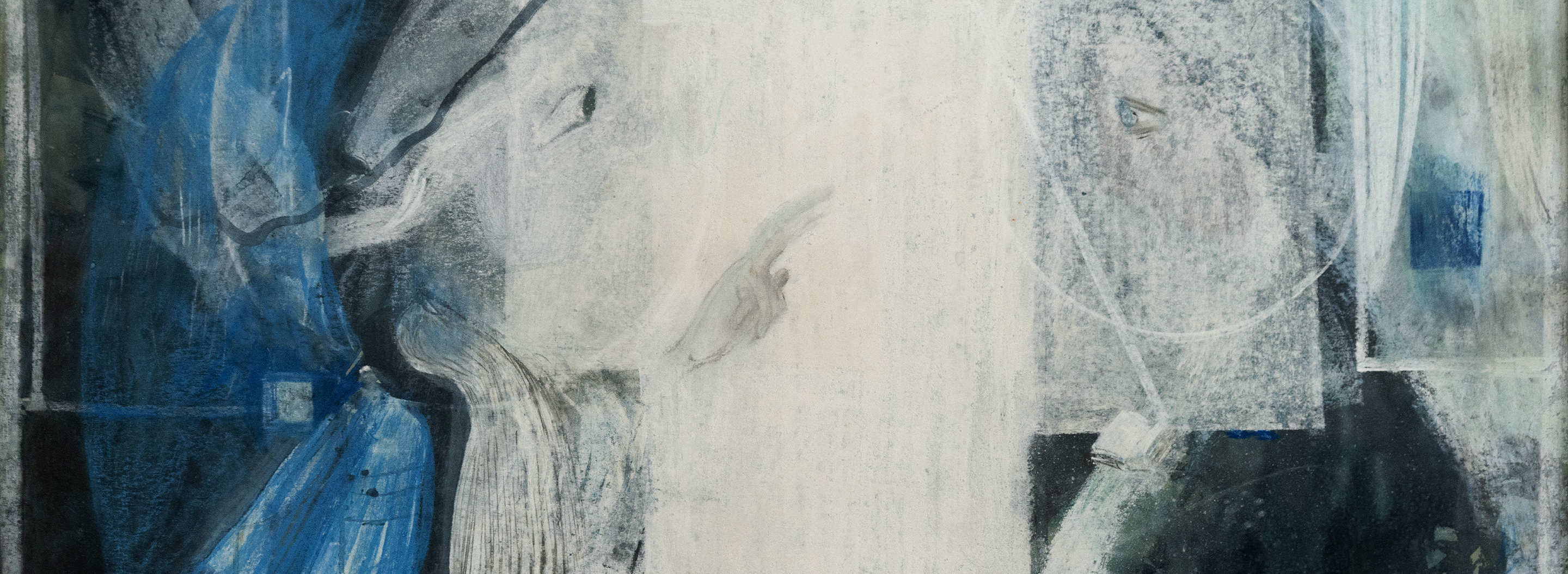
Irakli Parjiani’s oeuvre is all about attempting to decode the inscrutable. This is precisely why he kept revisiting the theme of the Annunciation — easily the central subject underlying most of his creations. Countless pieces inspired by this theme are scattered among numerous museums and private collections, and for the time being it would be virtually impossible to estimate their total number.