
Irina Koshoridze (ირინა კოშორიძე). Curator of Oriental collections, Shalva Amiranashvili State Museum of Fine Arts, Georgian National Museum; Associate Professor of the Institute of Fine Arts, Department of Humanity Tbilisi State University Irina Koshoridze is Associate professor of the Institute of Fine Arts, Department of Humanity Tbilisi State University and Curator of Oriental collections in Georgian National Museum.
Since February 1 2014 she was appointed as the Director of Georgian State Museum of Folk and Applied Arts. She has various fellowships and trainings in Museum management and museum studies: IPAM -International Partnership between Museums (1999-2000,USA), Fulbright Scholarship (2000-2001,NY University, USA); FDP –Faculty Development Program –(2006-2009, NY University), RCAC – Research Center of Anatolian Civilizations (2015, Koç University, Turkey). 2002-2008 Dr. Koshoridze was the head of the comity of exporting the cultural Heritage moveable objects in the Ministry of Culture and protection of the monuments. 2013-2015 Koshoridze was the member of the committee of the Cultural Heritage comity in the Ministry of Culture and protection of the monuments. The long experience in Museum work includes curatorial, educational and exhibition practice. As Vice-president of Georgian Museum Association and board member of ICOM National Comity in Georgia she organized different loca,l and international trainings for Museum staff. From 2002 Koshoridze implemented the course of Museology in Tbilisi State University on bachelor’s degree level. Since 2006/07 till today she is heading the model of Museum study Graduate program in Tbilisi State University. Koshoridze participated in international conferences and meetings in Museology, have published papers and book about new models of Museum management.
As Curator of Oriental art collections in Georgian National Museum she works on various projects, her research and publication concentration are Islamic art and the cultural connections between Georgia and neighboring countries (mostly Iran and Turkey) in the 17th to 19th centuries. As former fellow of New York University department of Art History (2006-2009) she developed the curriculum in Islamic art for BA degree students and special seminars for M.A. students. Dr. Irina Koshoridze is the participant of various international symposiums and seminars, the author of publications in the field of Islamic, Far Easter and Indian Art and Museology.
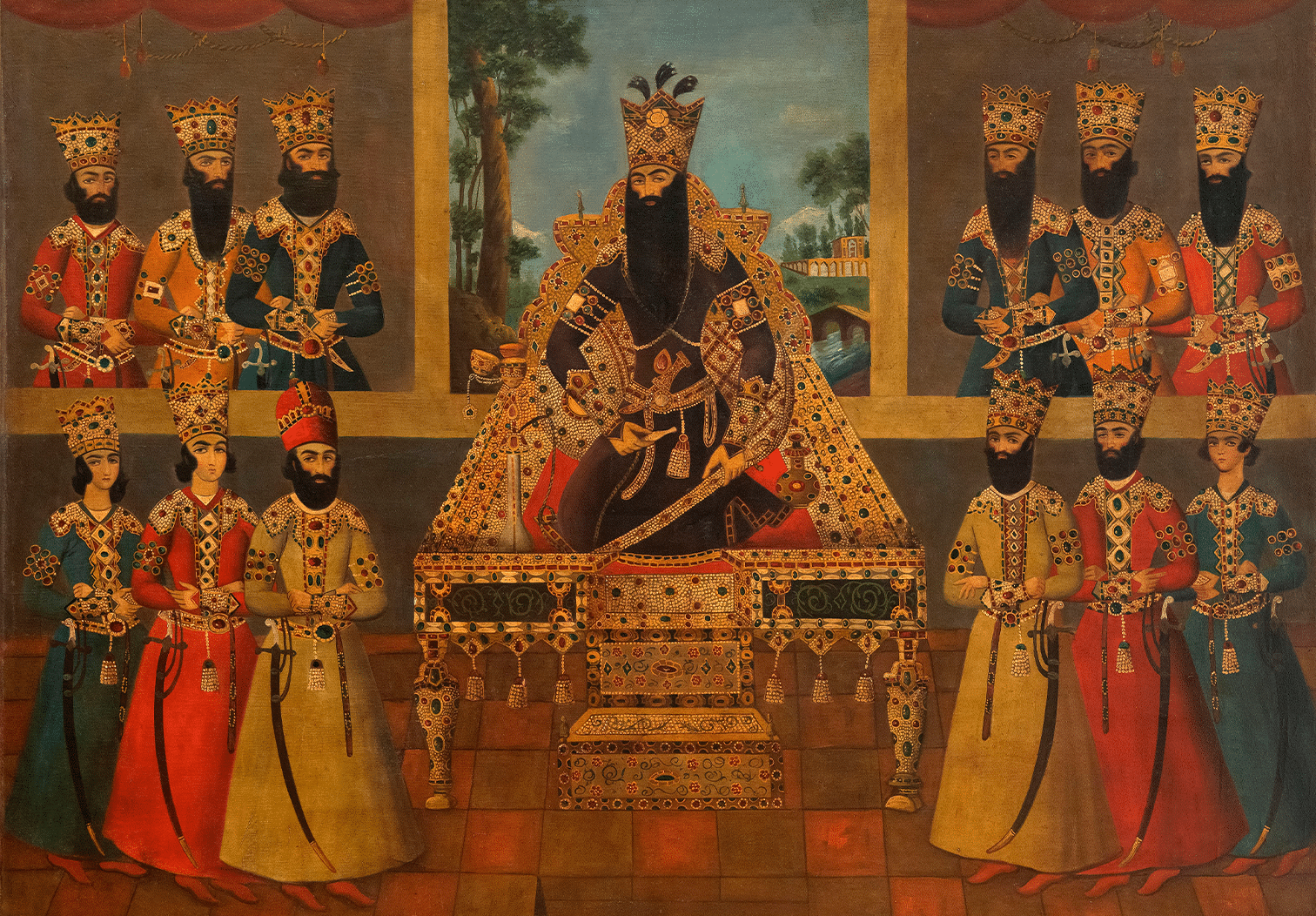
The ATINATI Foundation recently acquired an outstanding Persian painting representing the ceremonial reception of Fath-Ali Shah, the second ruler of the Qajar dynasty (1797-1834). Fath-Ali Shah is represented in the middle of the composition, clad in ceremonial robes and seated on the Peacock Throne with a gorgeous crown on his head. On either side of him, there are two rows of three noblemen and princes, also wearing crowns, or dressed in turbans and other expensive items.
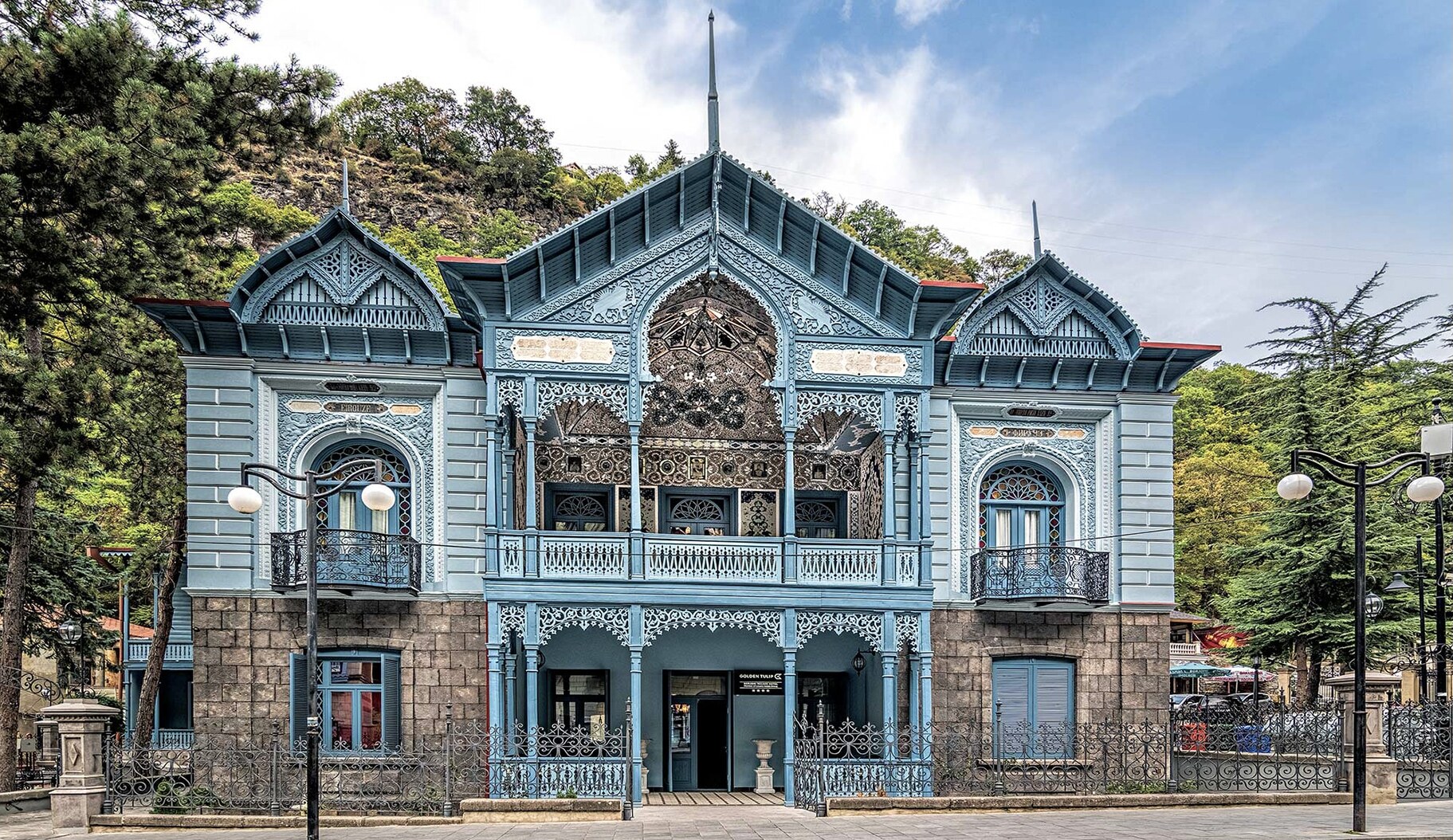
Piruza is the name of a building that stands out from all other country houses, both in terms of its artistic design and its vibrant colors. It stands near the entrance to the main park of Borjomi. Mirza Reza Khan, an Iranian diplomat who served as the Iranian Consul General in Tbilisi from 1889 to 1895, constructed Piruza on a piece of land that he had earlier purchased with the permission of Nicholas Mikhailovich Romanov, Grand Duke and a Viceroy of the Caucasus (1863–1881).
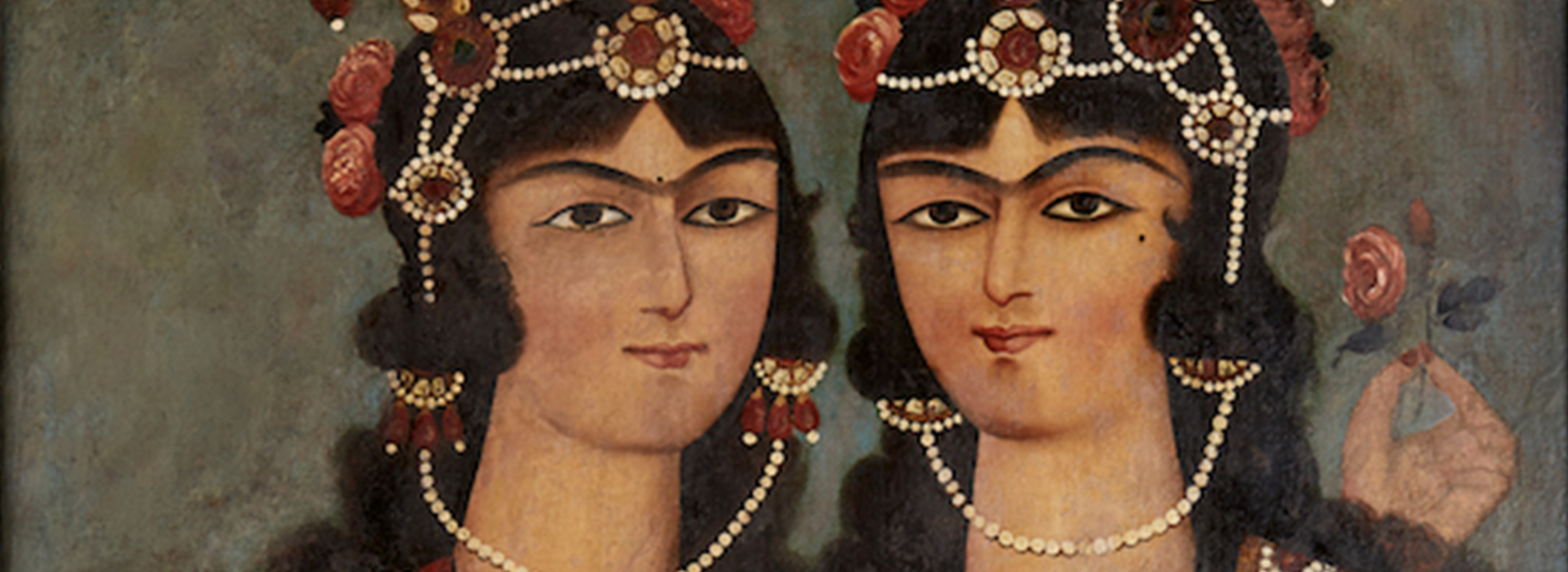
Iranian easel painting from the 18th and 19th centuries occupies an important place in the history of both Iranian and global art. Owing to the fact that its initial creation and subsequent development occurred precisely during the reign of the Qajar dynasty in Iran, it is frequently referred to as Qajar or Royal Persian Painting. One of the world’s largest collections of easel paintings from the Qajar era is housed at the Shalva Amiranashvili State Museum of Fine Arts, which is a part of the National Museum of Georgia.
We use cookies!
When you visit a website that uses cookies, these cookies will get placed on your device. Cookies can contain information about actions you take on the page. The information is specific to you and the website you visited. For more visit our Privacy Settings.