

- Sort by
- Date
Feel free to add tags, names, dates or anything you are looking for



Feel free to add tags, names, dates or anything you are looking for

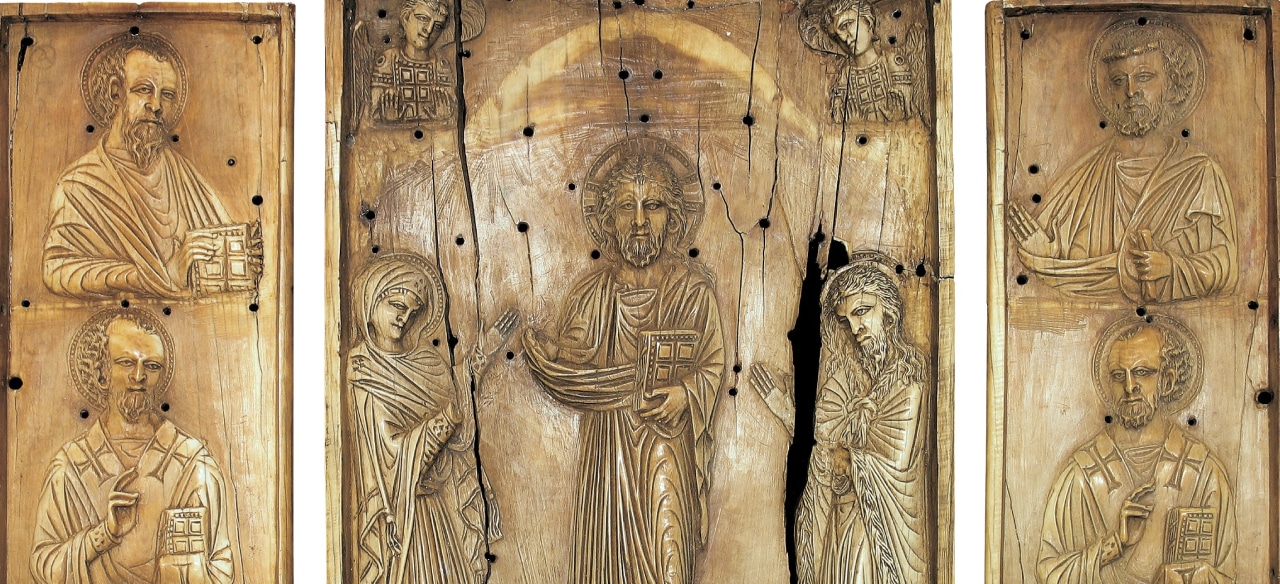
In 2001, an exceptionally valuable Georgian artefact, which had been considered lost since 1991, unexpectedly appeared at a Christie’s auction in Geneva. This outstanding ivory work, known as the Okoni Triptych Icon, had disappeared from the Tskhinvali Museum. At that time, Georgian jurisdiction no longer extended over the territory, and the loss was not officially reported by the museum.
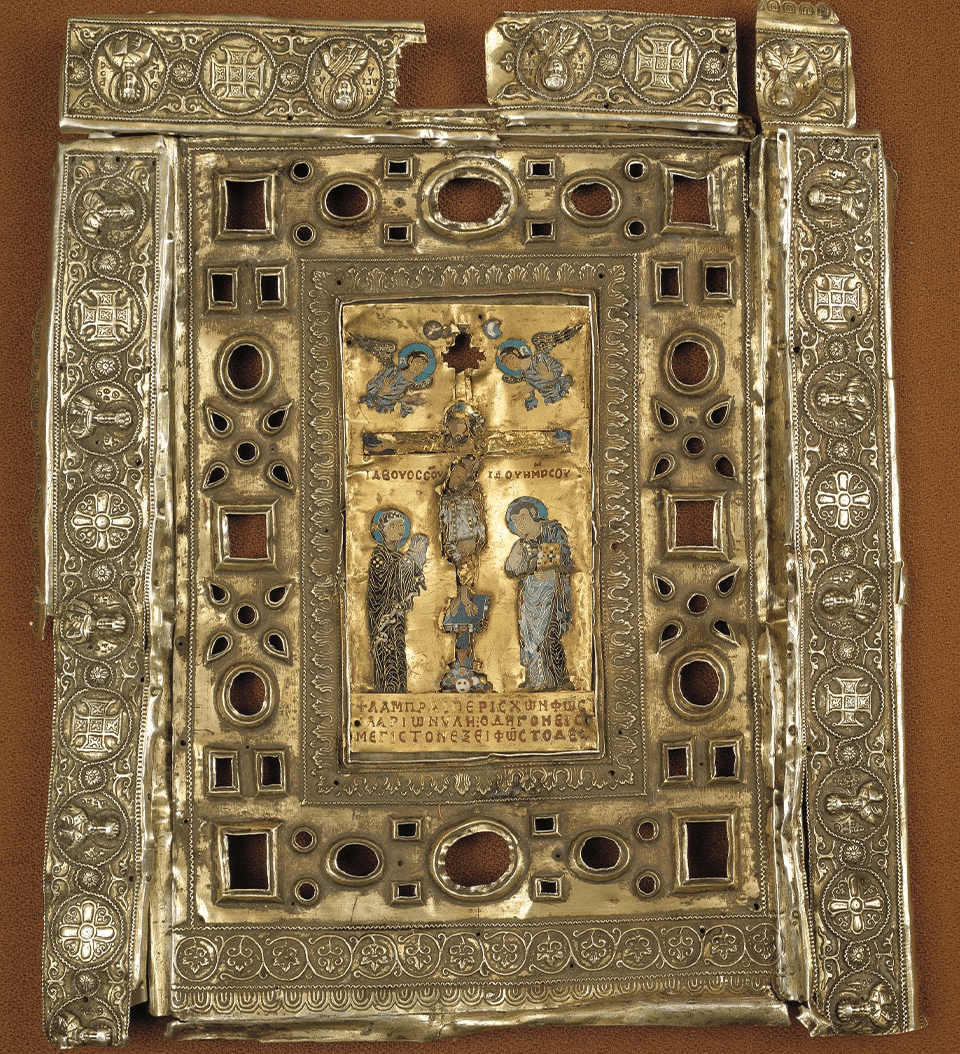
The Shaliani Icon is preserved in the most important shrine of Upper Svaneti — the Church of St. Kvirike (Lagurka). This modest, hall-type church is situated atop a mountain in the community (temi) of Kala, on the left bank of the Enguri River. Although architecturally unassuming, the church occupies a prominent place in the history of medieval Georgian art. Its interior is adorned with remarkable 12th-century frescoes attributed to the renowned royal artist Theodore. The church treasury houses exceptional examples of medieval Georgian goldsmithing, among them the Shaliani Icon, a masterpiece of Byzantine origin.
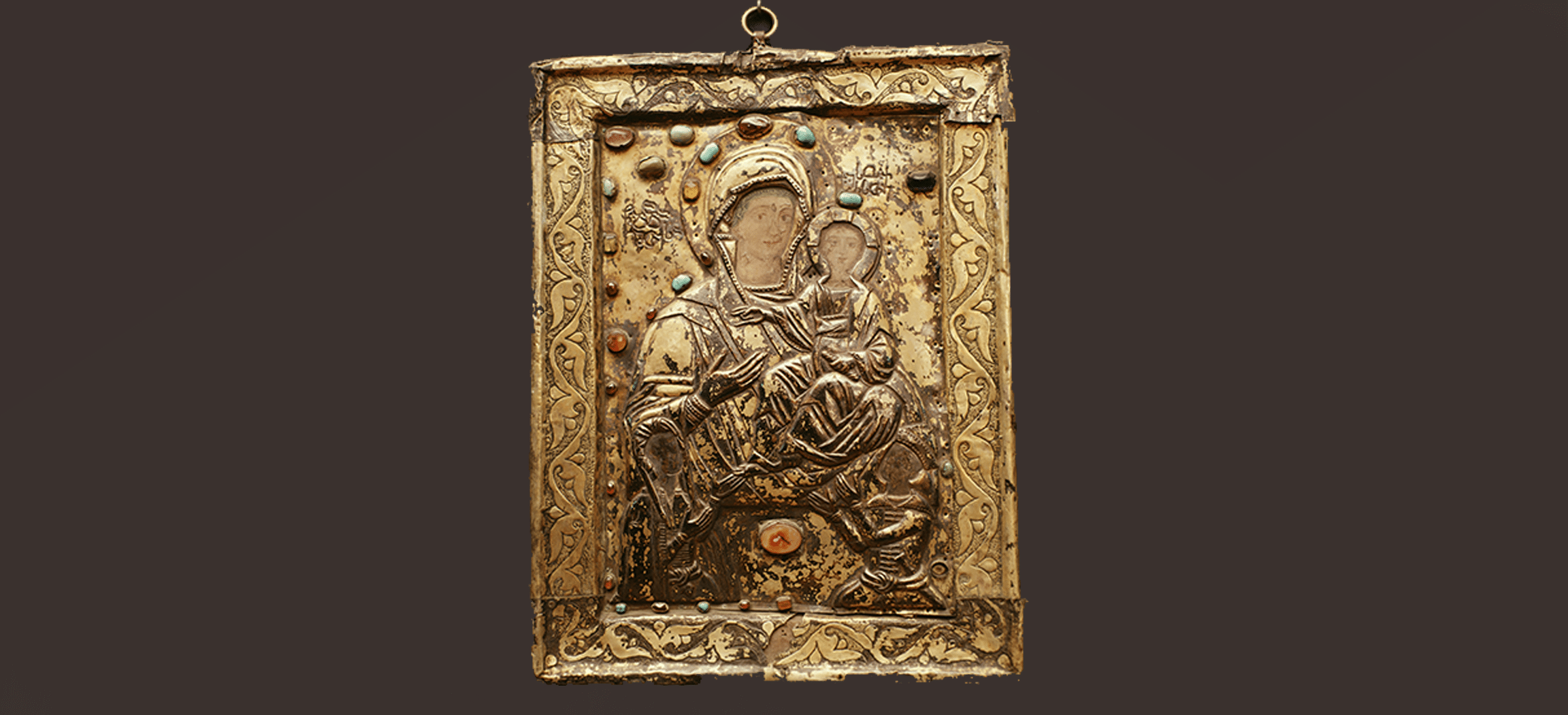
In the history of Georgian repoussé art, the 17th century represents a significant period, marked by the establishment of a goldsmith's workshop amid the challenges and upheavals of the era. The workshop, founded by the prominent Prince of Odishi (Samegrelo), Levan Dadiani, a distinguished figure of the time, has garnered considerable interest. To what extent did the strained family relations within the Dadiani family affect the works produced in this workshop? It is worth recalling how he treated his first wife, the daughter of Sharvashidze. Without apparent reason, he accused her of betrayal, having fallen in love with Nestan-Darejani, the beautiful wife of his uncle, Giorgi Lipartiani. Subsequently, he abducted his aunt and married her.
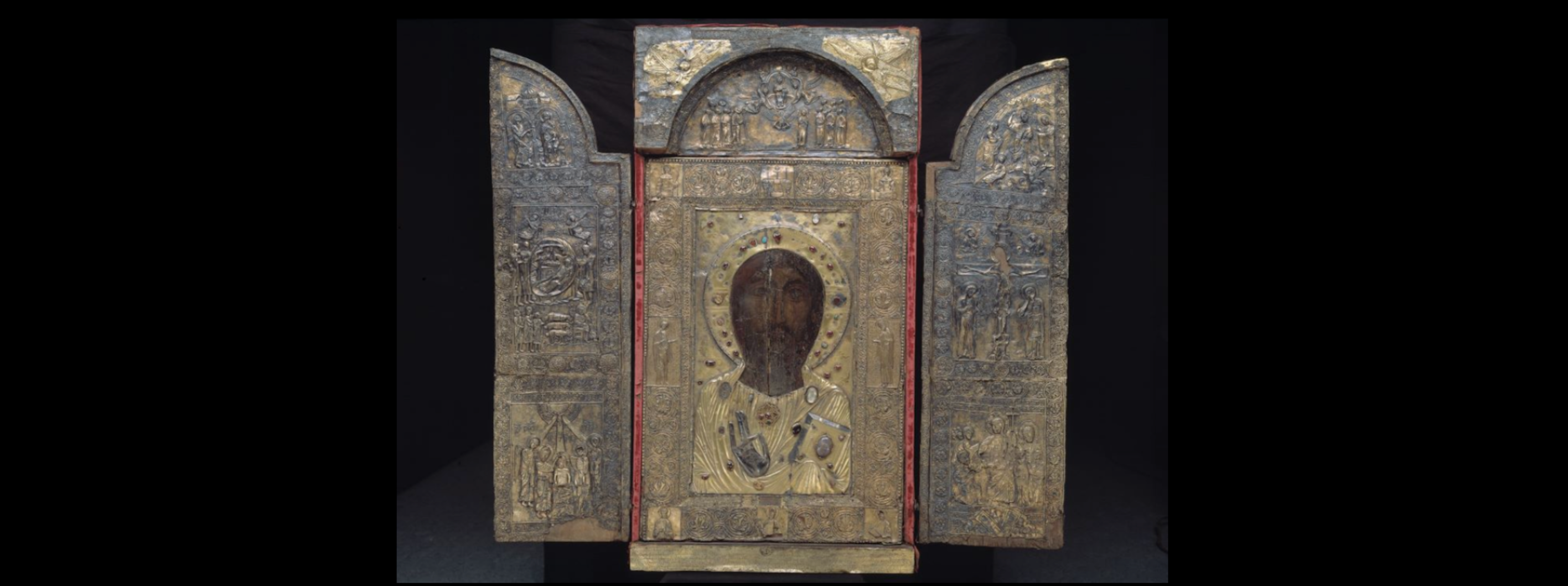
The majority of master craftsmen’s identities remain anonymous in the art of the Middle Ages. Nevertheless, because of their extremely special abilities, several old masters' personalities generated a lot of curiosity. In this regard, the gifted goldsmith Beka Opizari, and his senior contemporary, Beshken Opizari, were always popular in Georgia.
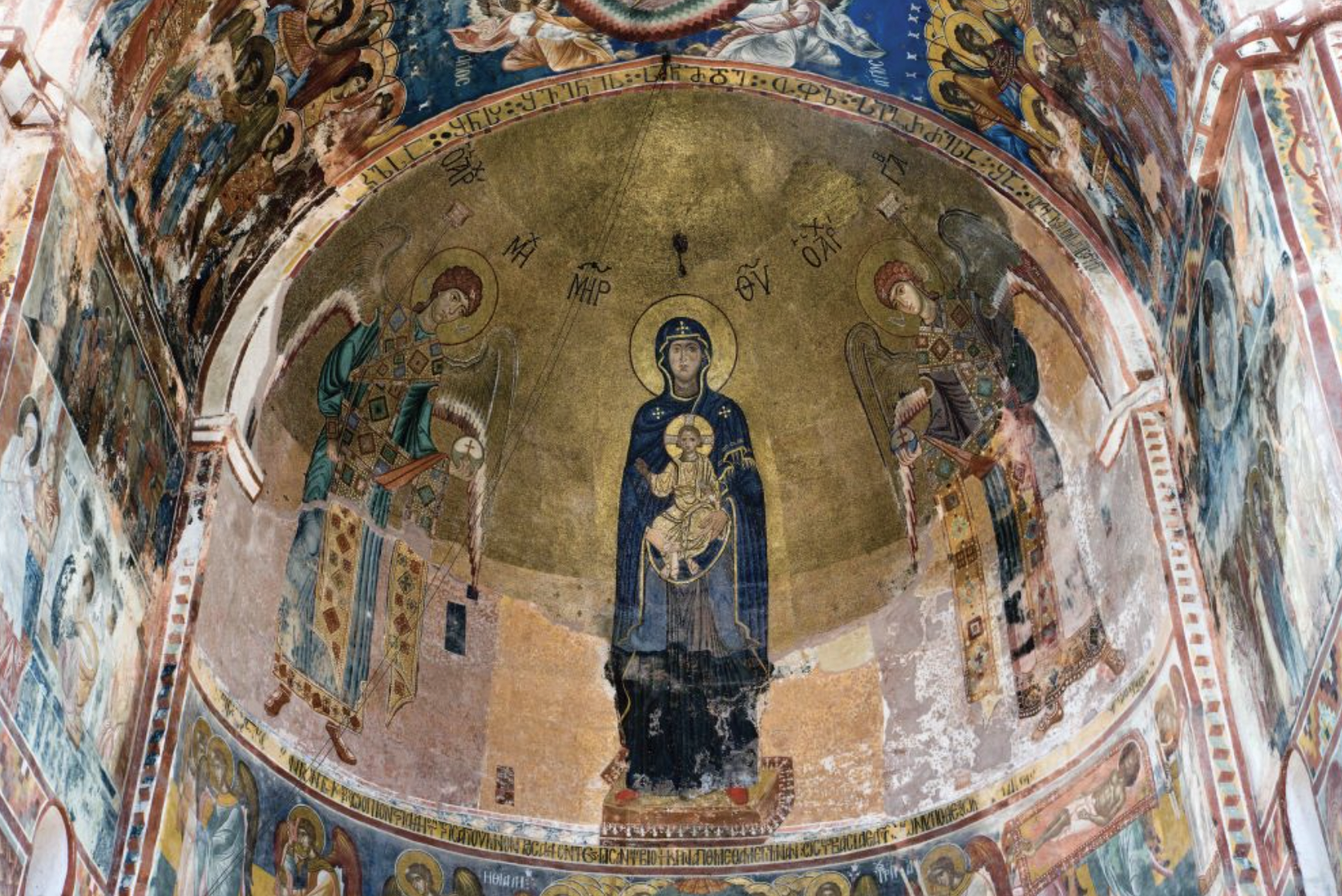
The Gelati Mosaic adorns the domed roof of the apse in the main temple. The solemn, monumental, and representative composition, on a golden background, depicts the Virgin and Child seated on a richly decorated podium, with Archangels on either side. Although the area of this scene is relatively small within the vast space of the temple, it is evident that the interior is dominated by the significance of the images, their color palate, and the amazing shimmer of the mosaic stones, all of which helps to create a spiritual impulse that seems to shine down from Heaven itself. During masses, this atmosphere is further enhanced by the presence of other sacred items.