




 Share this article
In 1975, Zaza Berdzenishvili graduated from the Iakob Nikoladze Art School. He never entered the Academy of Arts, as his family was able to offer him an alternative artistic path. His father, Elguja Berdzenishvili, was a painter and graphic designer. His uncle, Merab, was a painter, graphic designer, and sculptor. Art thus surrounded Zaza Berdzenishvili throughout his childhood.
Zaza Berdzenishvili was among the 1980s generation of Georgian artists, which included Irakli Parjiani, Irakli Sutidze, Anton Balanchivadze, and Kako Topuria, who worked on the border between abstraction and naive figuration. With painting presenting an exploration of space, color, and texture, their chosen artistic objects were shown in a deformed and frontal manner which gave their works a truly epic splendor.
The highlighting of the inherent meaning within an object, and the emphasizing of an idea over form, originates from medieval Georgian monumental painting and iconography. This direction, which later found inspiration in Pirosmani and, afterwards, in the creative principles of Vera Pagava, became a tradition in contemporary Georgian art.
The artwork of Zaza Berdzenishvili can readily be described as an "island of silence" amidst the cacophony; a protest against the rush of daily life and the contemporary metropolitan setting. Each piece serves as a symbol for a quiet, private haven. This pause is reminiscent of the hesychast stillness, Christian asceticism, and Eastern philosophy. The Georgian genetic code is preserved by the artist, who situates it within the framework of global modernity. His compressed shape and vibrant, deep hues are closely associated with both European laconicism and Georgian fresco.
Zaza Berdzenishvili is more than just a "medium" between the past and present: he is an artist who creates his own universe, a spiritual shelter, using colors and symbolism. He constructs this for both himself and for us, the viewers. Berdzenishvili's dense texture, "built" in layers, whether in pastel or oil, indicates that spirituality is hidden beneath the colors of his universe. As such, in order to understand how Zaza Berdzenishvili sees existence, we must look into the silent, cryptic layers of his works.
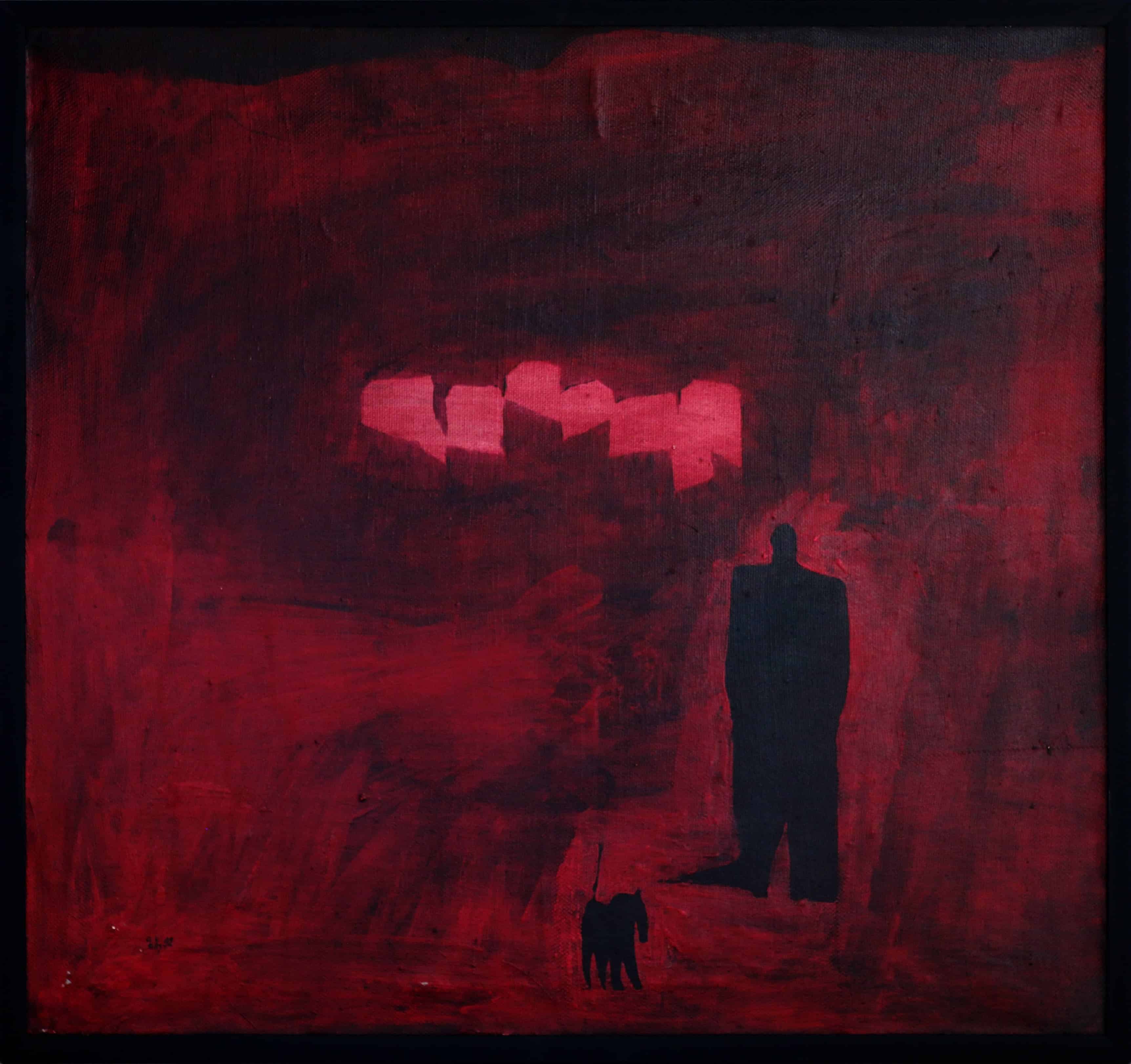
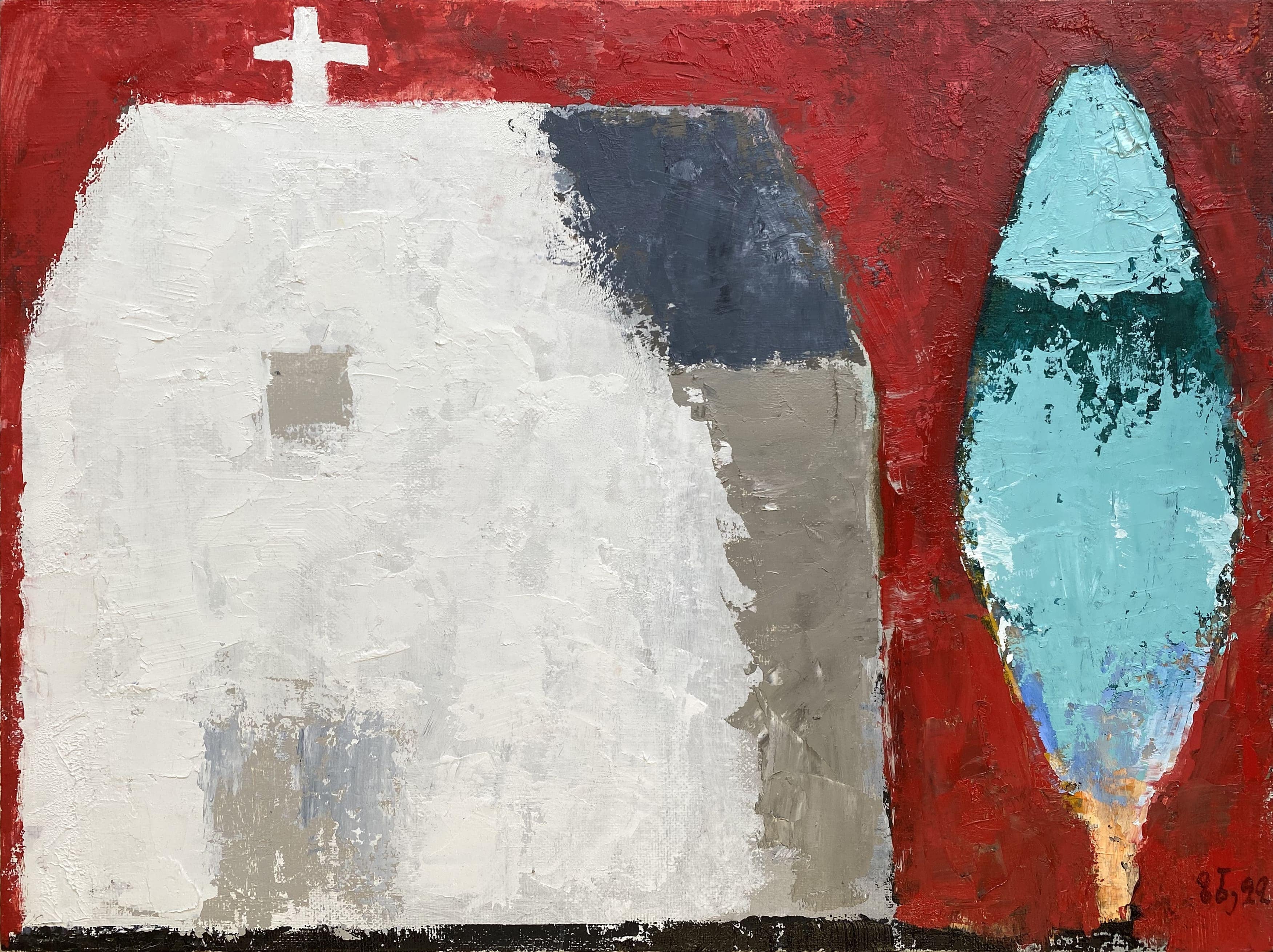
Zaza Berdzenishvili's house serves as both an archetypal shelter and the heart of his imaginative world (Axis Mundi). The "Red House" is a safe haven; a place of seclusion, and an inner emigration in an urban setting. This dwelling place is beyond any particular place or geographical coordinates; it is a place where Zaza Berdzenishvili allows himself to merge both the symbolic and the emotional. Perhaps the night's silence represents a personal, inner voyage; one that is not just physical, but also philosophical or existential: a reflection, a travel from consciousness to the subconscious via untraceable channels. The night's silence heightens this dreamy atmosphere. Berdzenishvili's house lacks unique architectural characteristics (a door, roof texture): this is more an idea of a house.
The artist's emotional condition is reflected in the color red, with the light from the colored windows dramatically echoing the cosmic light of the moon and stars. They are the "sole confidants" of the house. This is Berdzenishvili's endeavor to transform painting into a shelter; to discover his own tranquil space amidst the chaos, where he can experience a sense of harmony with himself and his surroundings.
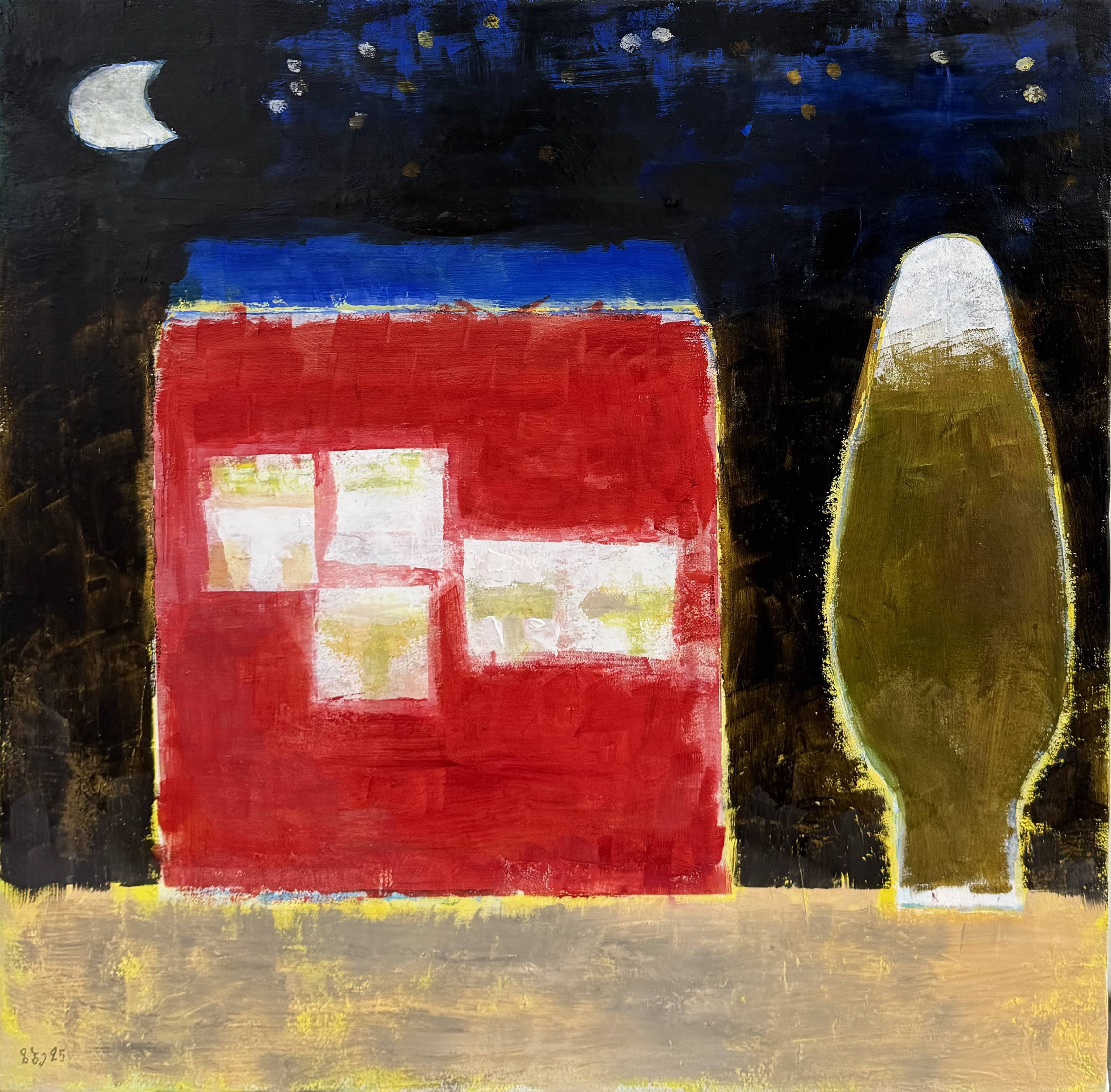
The red house is situated in an "anti-megapolis" environment. The artist develops a housing paradigm that allows individuals to "pause." The paint's soft, velvety, multi-layered texture creates the illusion that the house is not constructed, but rather appears to float out of memory, as if Berdzenishvili has defined the essence of creativity by constructing his own universe and establishing a house there. Peaceful coexistence with the environment is exclusively achievable through this method. Visual symbols in Zaza Berdzenishvili's universe acquire the significance of concepts. His "Red House" is the visual representation of a location where an individual can pause, catch their breath, and gradually acclimate to the tranquility of the house or the night.
Zaza Berdzenishvili's works employ large, multilayered patches of color which appear to radiate light from within: a vibration and an inner glow as if the lower strata radiate through the surface. The depth of color is comparable to that of Mark Rothko. Zaza Berdzenishvili's multilayered color is also a "color field" (Mark Rothko's COLOR FIELD), allowing viewers to experience "presence."
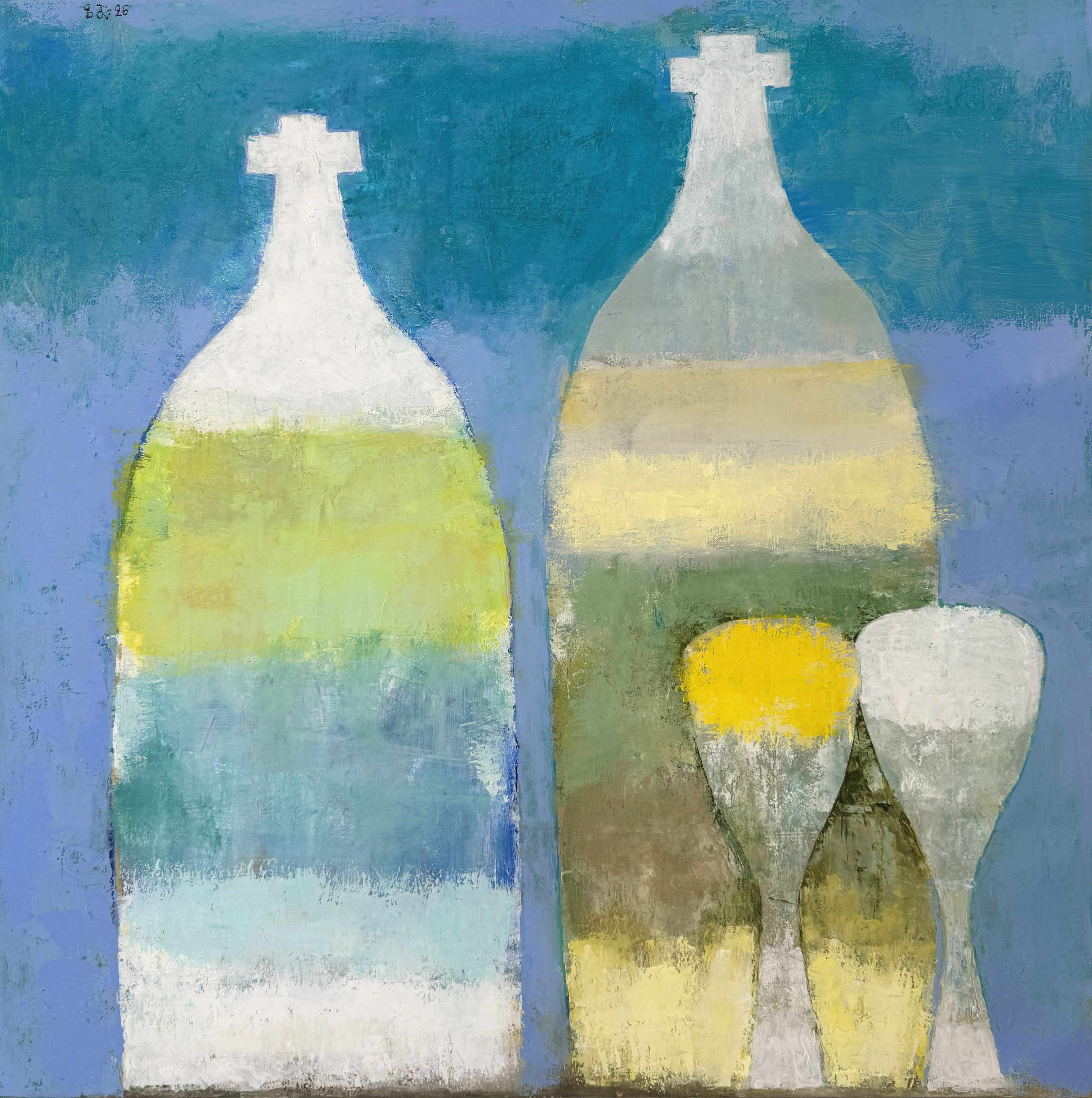
Zaza Berdzenishvili's still lifes possess a modern yet archetypal sanctity. These eternal still lifes are devoid of time. The subject exudes vibrant vitality and establishes an atmosphere of quiet intensity and contemplative presence. Berdzenishvili's bottle is not merely a vessel; its monumentality suggests that it is instead a sacred attribute. Sunflowers are not merely vegetation; their circular shapes and yellow background establish a connection with the worship of the sun.
In Zaza Berdzenishvili's paintings, the subject is entirely devoid of existence, and is transformed into an idea. The still lifes of Vera Pagava are inadvertently evoked by composed silence and paused time. In a bright space, Pagava's delicate, stylized, elegant objects exist independently of their environment, liberated from the gravitational pull of the earth. They appear transparent and weightless, seeming to float in the air like ephemeral shadows. Zaza Berdzenishvili likewise purifies the form; endowing it with an austere, abstracted presence. Here, however, in this instance, the form becomes more slender, remote, and majestic, evoking the silhouette of a menhir. It is monolithic and monumental, standing firmly on a colorful foundation and ascending to the "ceiling" of the painting.
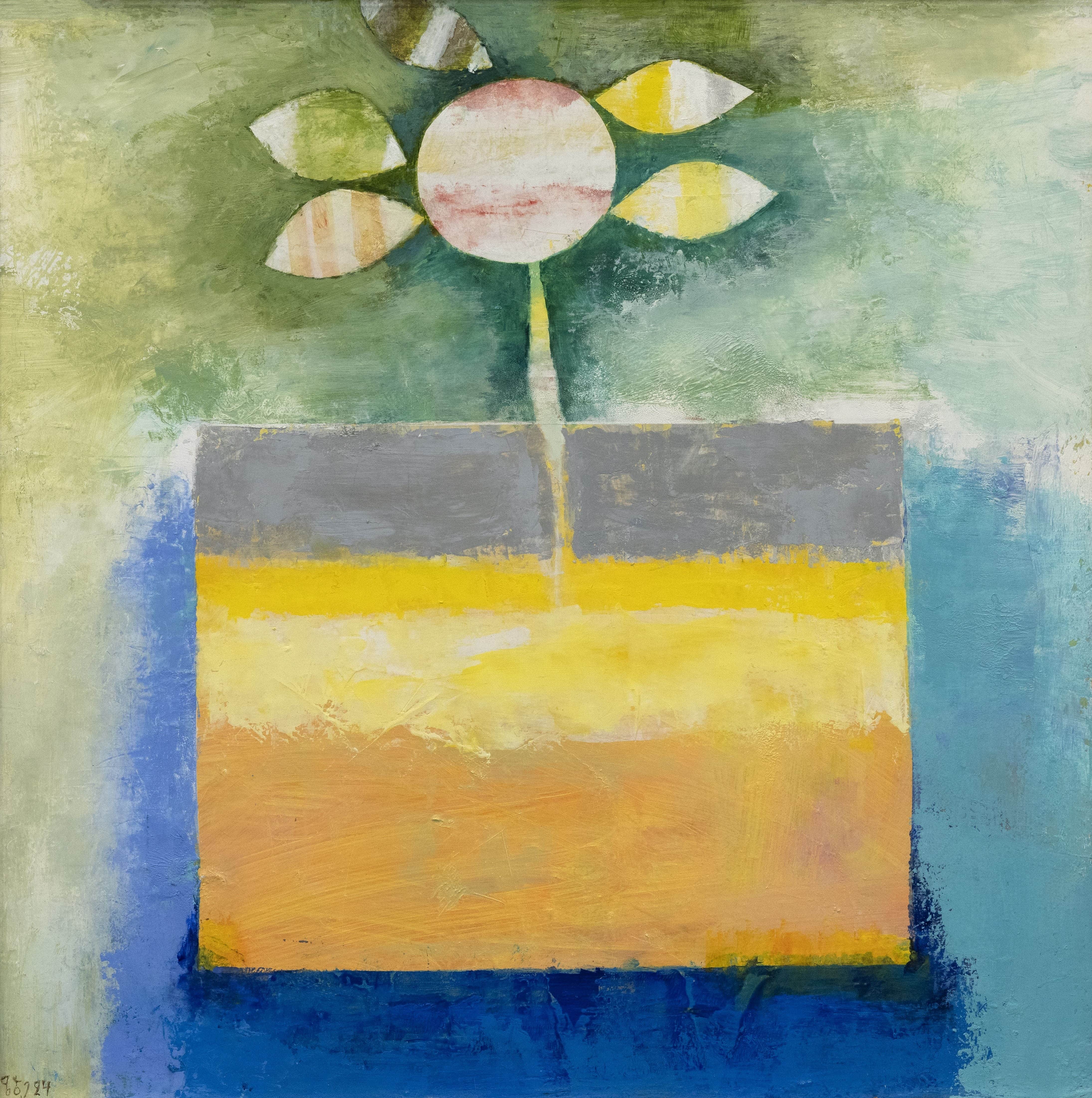
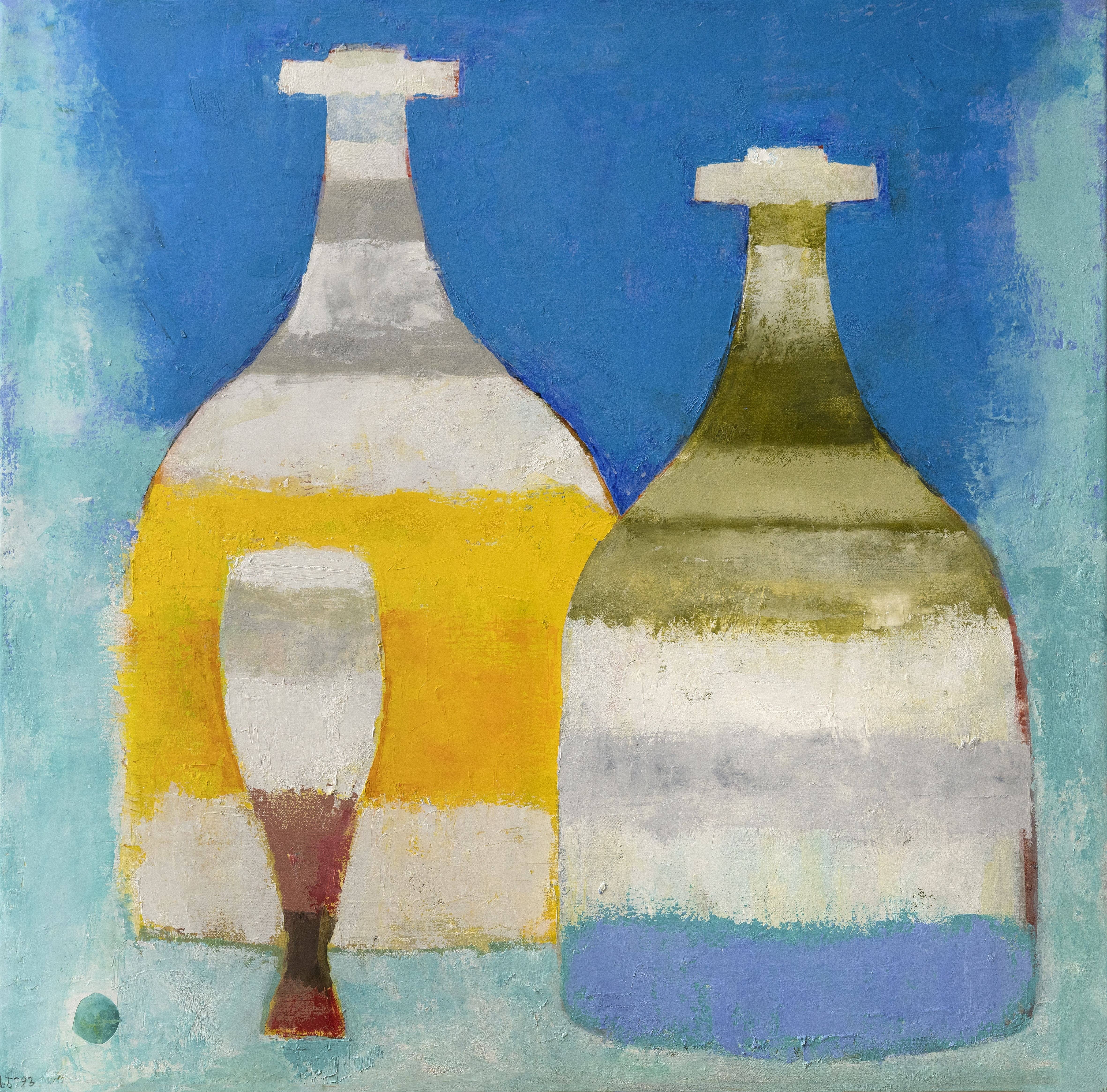
Much like the still lifes of Giorgio Morandi, the bottles, glasses, jars, and pots of Zaza Berdzenishvili exhibit an extreme simplicity in form, a rigorous laconicism, and an underlying philosophical stillness. Morandi perceived within such objects a hidden order to the world, returning to the same motifs throughout his life. The subjects are simple, not characterized by any particular delicacy or ornamental quality. A similarly austere restraint defines Berdzenishvili’s work.
For Berdzenishvili, decoration is a kind of overgrowth; a weed that masks the essence of the subject. When it comes to liberating the body from the "dust" and superficial consequences of daily life, Zaza Berdzenishvili is the "exorcist" who does the heavy cleaning: everything that visually burdens or obscures the substance of the subject is expelled from it. What remains is the pure structure of the thing itself: rigorous, plain, and essential. Through this reduction, Berdzenishvili imparts a metaphysical "purity" to this world of objects. All of Berdzenishvili's subjects are equal. The bottle's significance equals that of the basilica.
Form expresses more of an object's idea in his creations. Color is also more than just an accessory to shape. In Berdzenishvili's art, color is the tool for shaping reality. The artist uses the object as a springboard to experiment with light and space, staging a color drama. Using color, he builds the object's shape, outline, and "anatomy."
A sense of stillness pervades many of Berdzenishvili's compositions. This is the direct outcome of his decision to remove these "outgrowths." It is as if he were to paint objects without any subject matter at all, capturing simply their inherent vitality on the canvas. The artist proposes pausing in front of a bottle to observe its history in an age where visual information is rapidly evolving. This is Berdzenishvili’s cultural protest against superficiality.
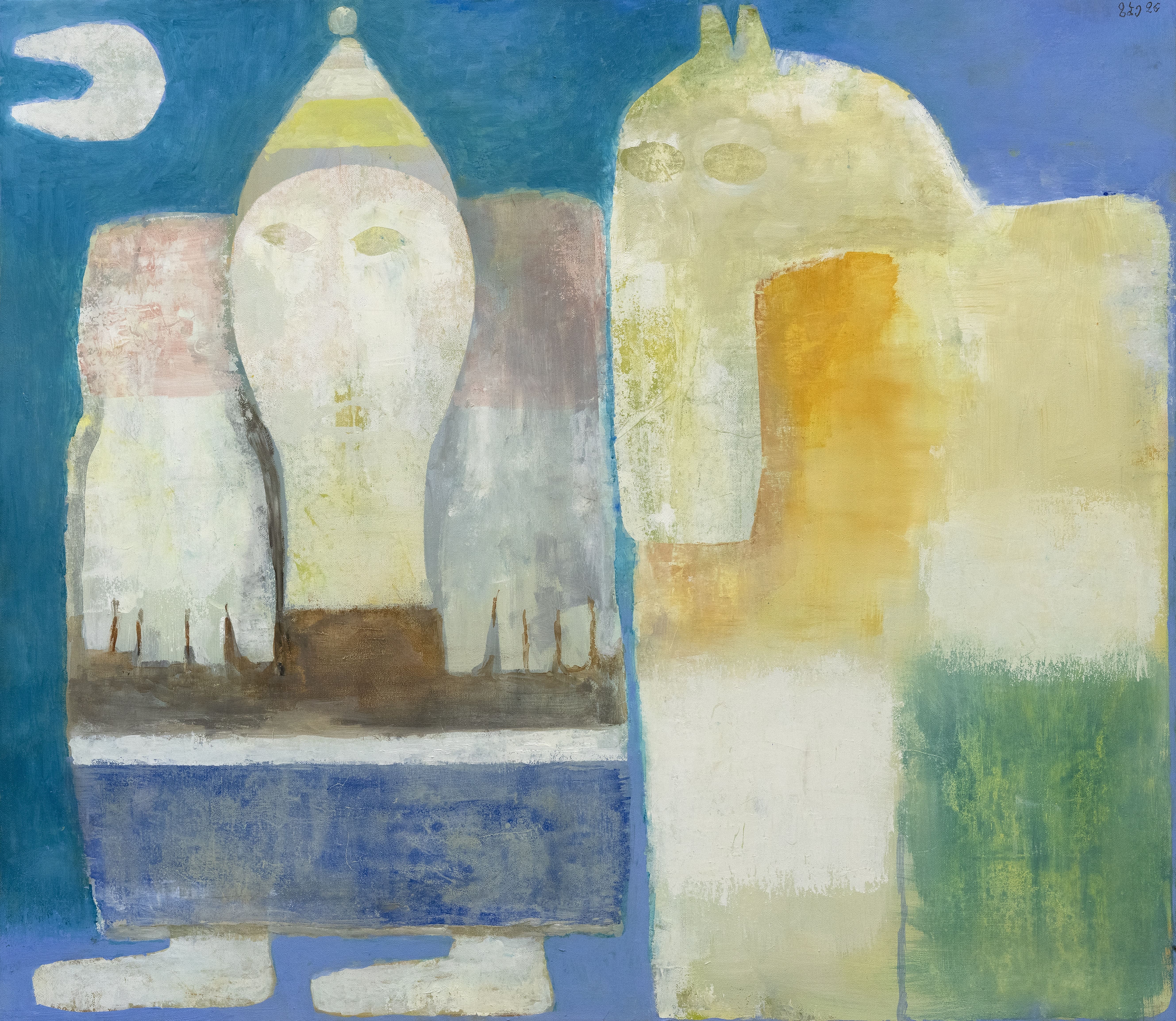
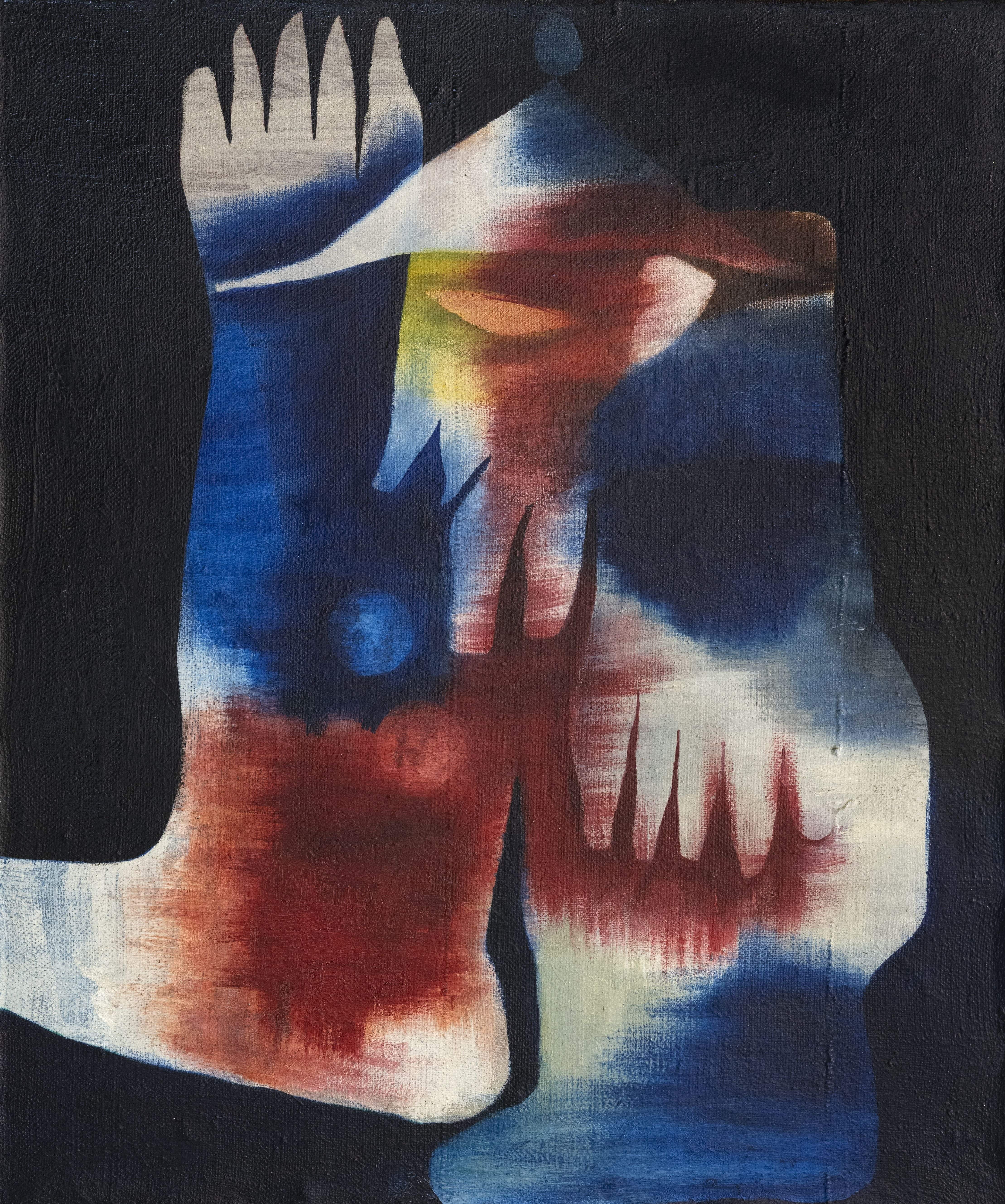
Zaza Berdzenishvili's "Clowns" are not just circus performers or entertainers for the audience: their stretched arms and hieratic postures evoke images of a ceremonial dance, in which the performer strives to transcend his or her own limitations. They seem more like figures taking part in a mysterious ritual or ancient enigma. Their multi-layered, enigmatic, almost totemic forms emerge. They also halt time due to their monumentality and immobility. Maybe the clown is really just the artist's secret identity; a solitary conduit which finds meaning in the midst of multicolored chaos. The immobility of the clowns' movements lends them an air of ethereal grandeur and a sense of being beyond time. This is not a performance, but a sacred dance of the spirit on canvas, where each brushstroke is a reflection of the artist's innermost feelings.
The artwork of Zaza Berdzenishvili is a solitary, philosophical self-portrait. Here, the clowns represent the artist's sole confidants; the bottles or cups represent thoughts cleansed from existence; and the house represents the tranquility of his spirit. Each canvas is a block in the enormous shelter that the artist constructs using the "aesthetics of silence." This is the process of creating his own inner universe.
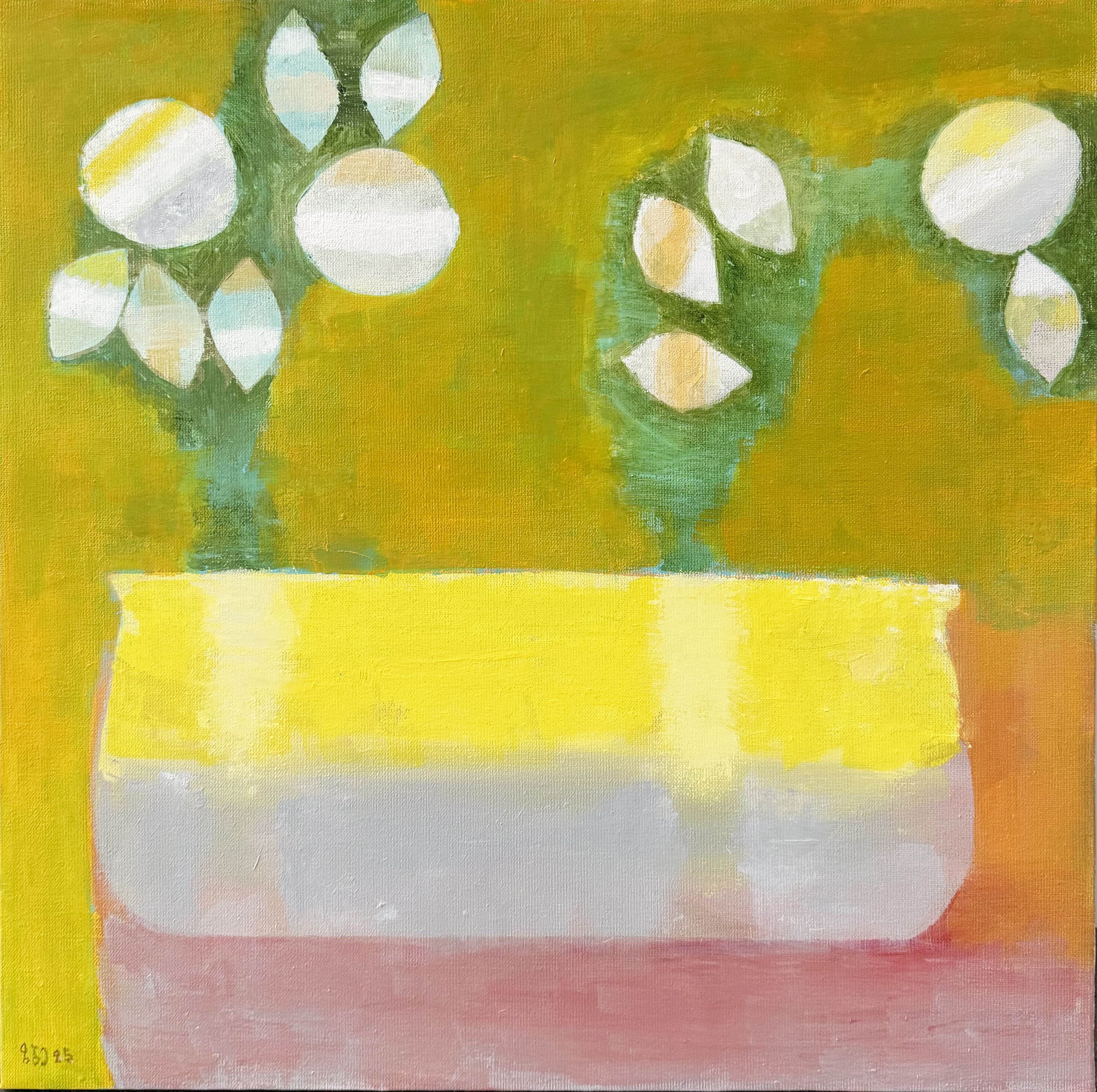 | 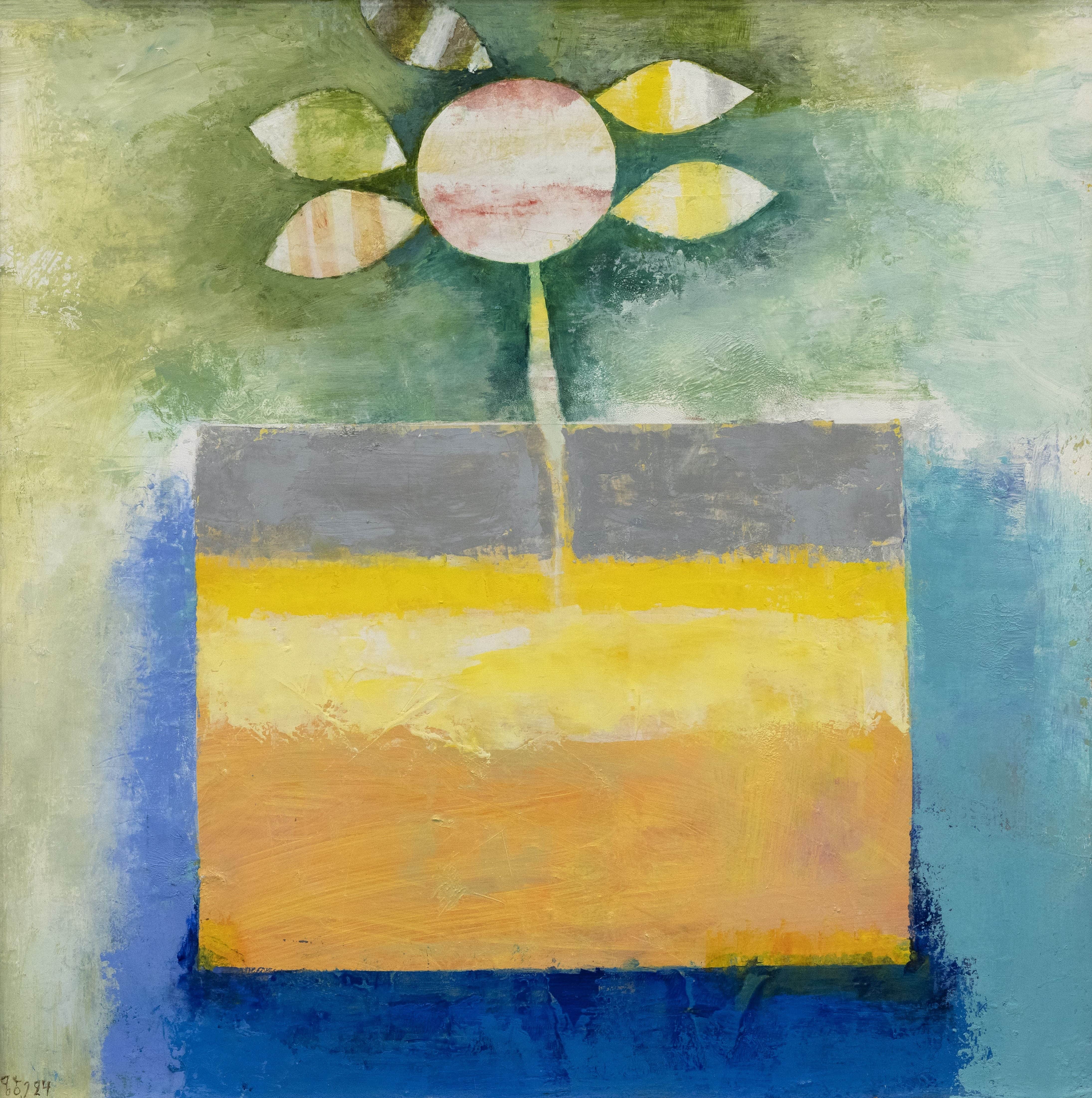 |
| Zaza Berdzenishvili. Sunflower. Oil on canvas. 50x50 cm. ATINATI Private Collection | Zaza Berdzenishvili. Still Life. Oil pn canvas. 50x50cm. 2024. ATINATI Private Collection |
Zaza Berdzenishvili's painting is a form of spiritual act in today's overloaded and digital environment, where the artist seems to us as a medium. He transports us from individual mysticism to intercultural communication. He takes us back to the beginning, when the content is cosmic but the form is straightforward. This is a voyage from commonplace items to holy symbols; from the tangible to the intangible; and from the material to the spiritual. Zaza Berdzenishvili takes us back to that primordial stage, where color is the primordial light that leads us through the mist of daily existence: a house is a house, and a glass is a glass.