.jpg)





 Share this article
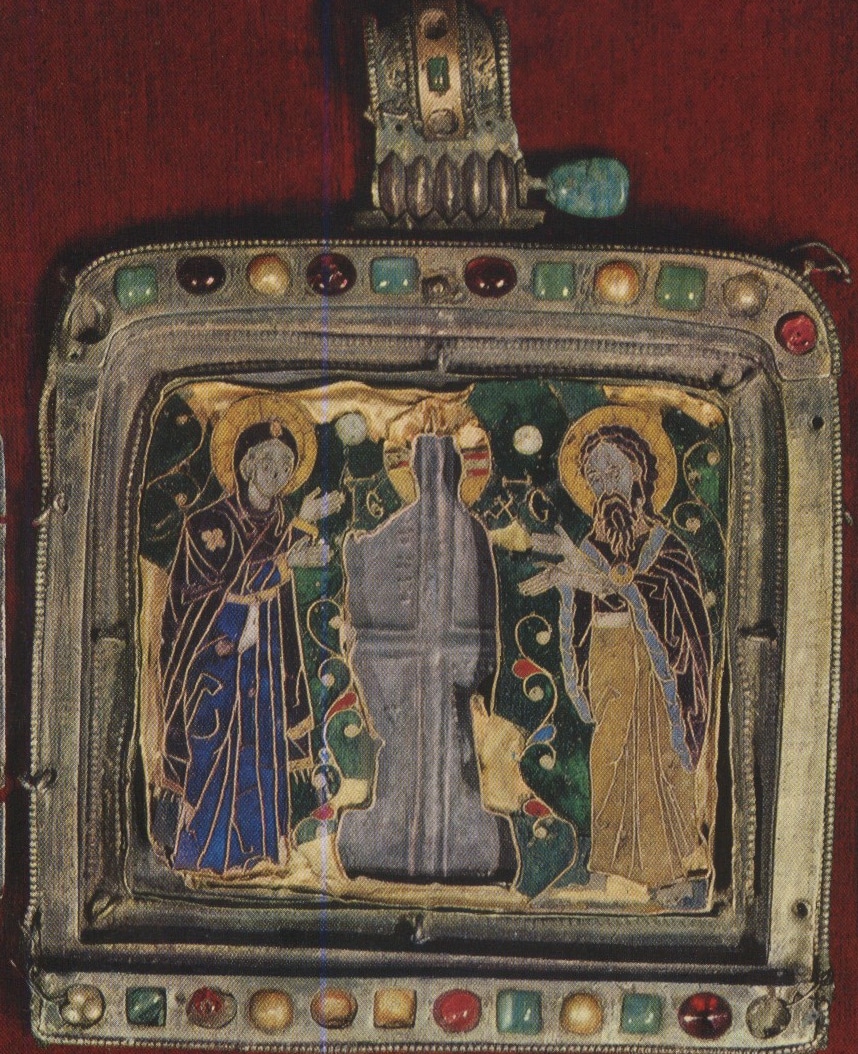
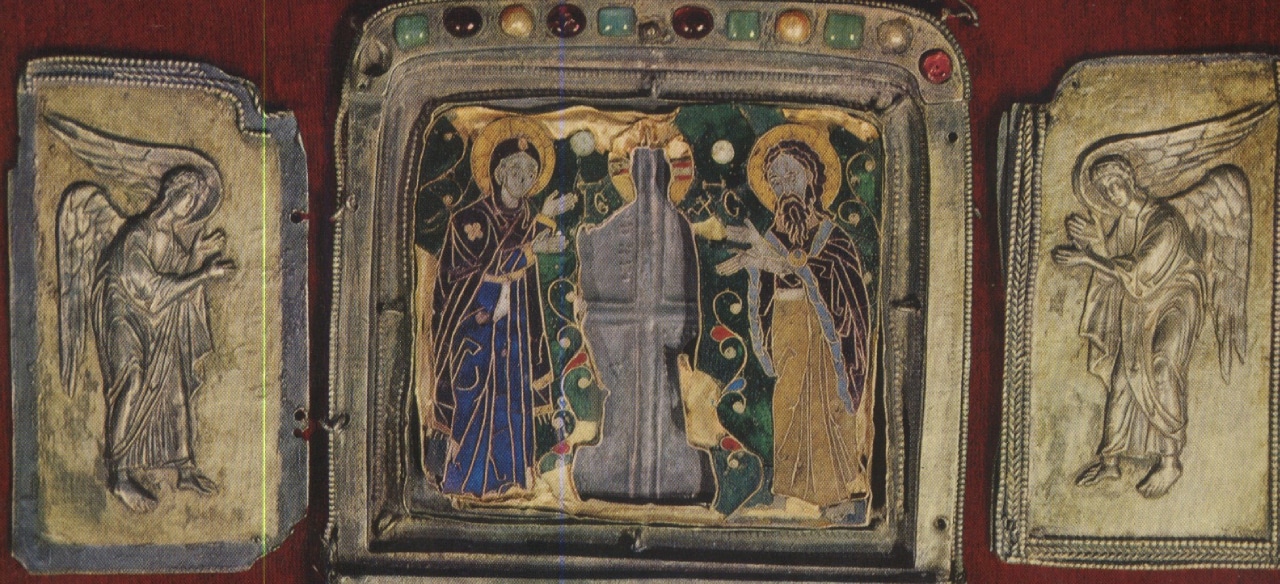
One of the earliest pieces of medieval Georgian art is the Martvili Encolpion, a miniature triptych icon dating to the 8th-9th centuries. Preserved for generations at Martvili Monastery, it is a complex work composed of three carved panels enriched with a variety of materials and techniques. Partitioned enamel, gilded silver relief figures, Gospel scenes on the reverse, and inlaid precious stones create a striking artistic whole.
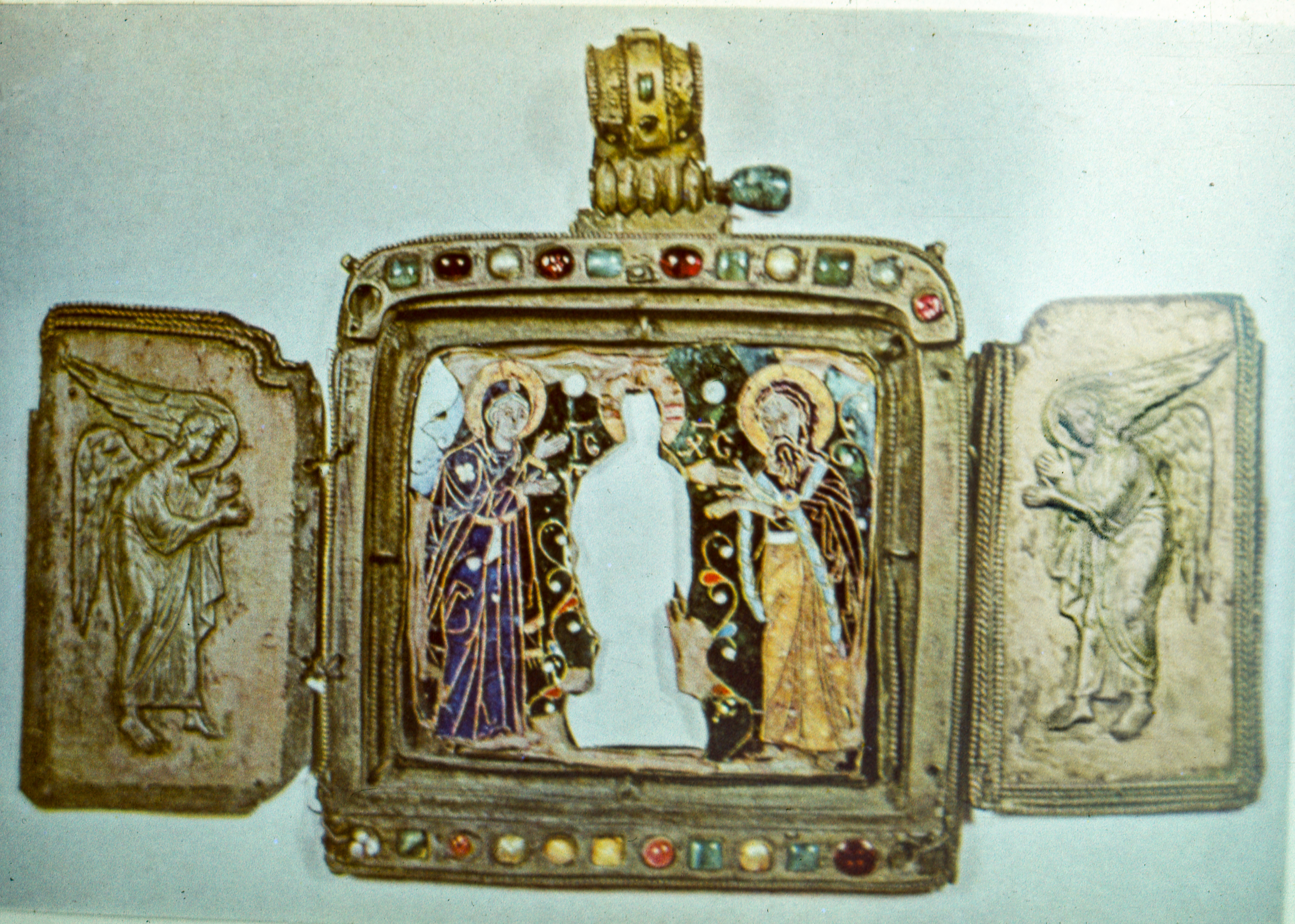
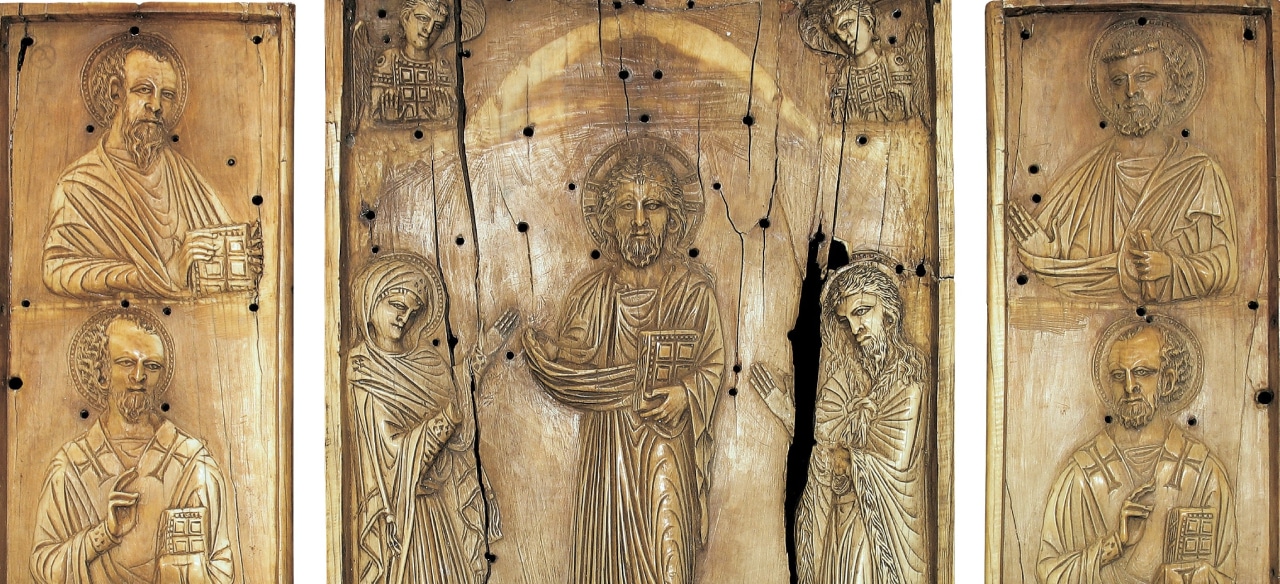
The central panel presents an enamel composition known as the "Supplication." Here, the Mother of God and John the Baptist stand before Christ, interceding on behalf of humanity. This widely used iconographic motif in Christian art is associated with the Second Coming and the hope of salvation.
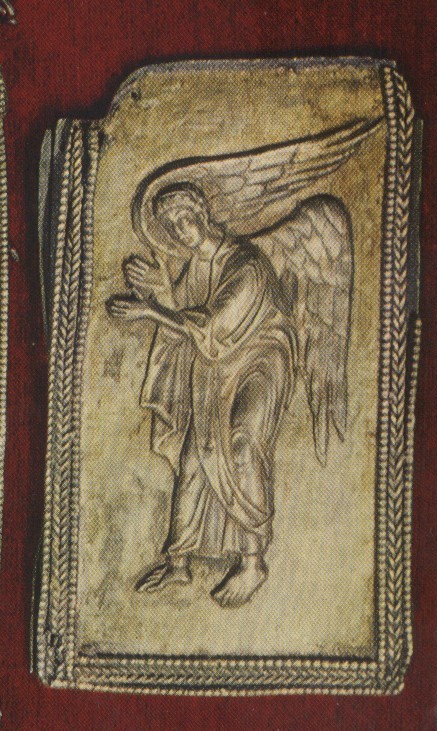
The side wings feature embossed silver-gilt angels, who, when opened, join the enamel three-figure composition of the "Supplication" and broaden the reach of this motif.
.jpg)
The "Supplication" of the Martvili Encolpion is not only one of the earliest known examples of this composition, but also a rare early example of partition enamel, boasting impressive artistic and technical qualities. The composition's colorfulness, achieved through the restrained tonality of emerald green, purple-black, and dark blue colors, is particularly notable. The yellow highlights on the garlands give a distinct touch to the overall palette. The figures and delicate ornaments are defined by sketching extremely fine partitions, and the brilliance of the gemstones - emeralds, rubies, and pearls – further enhances the visual richness of the icon.
.jpg)
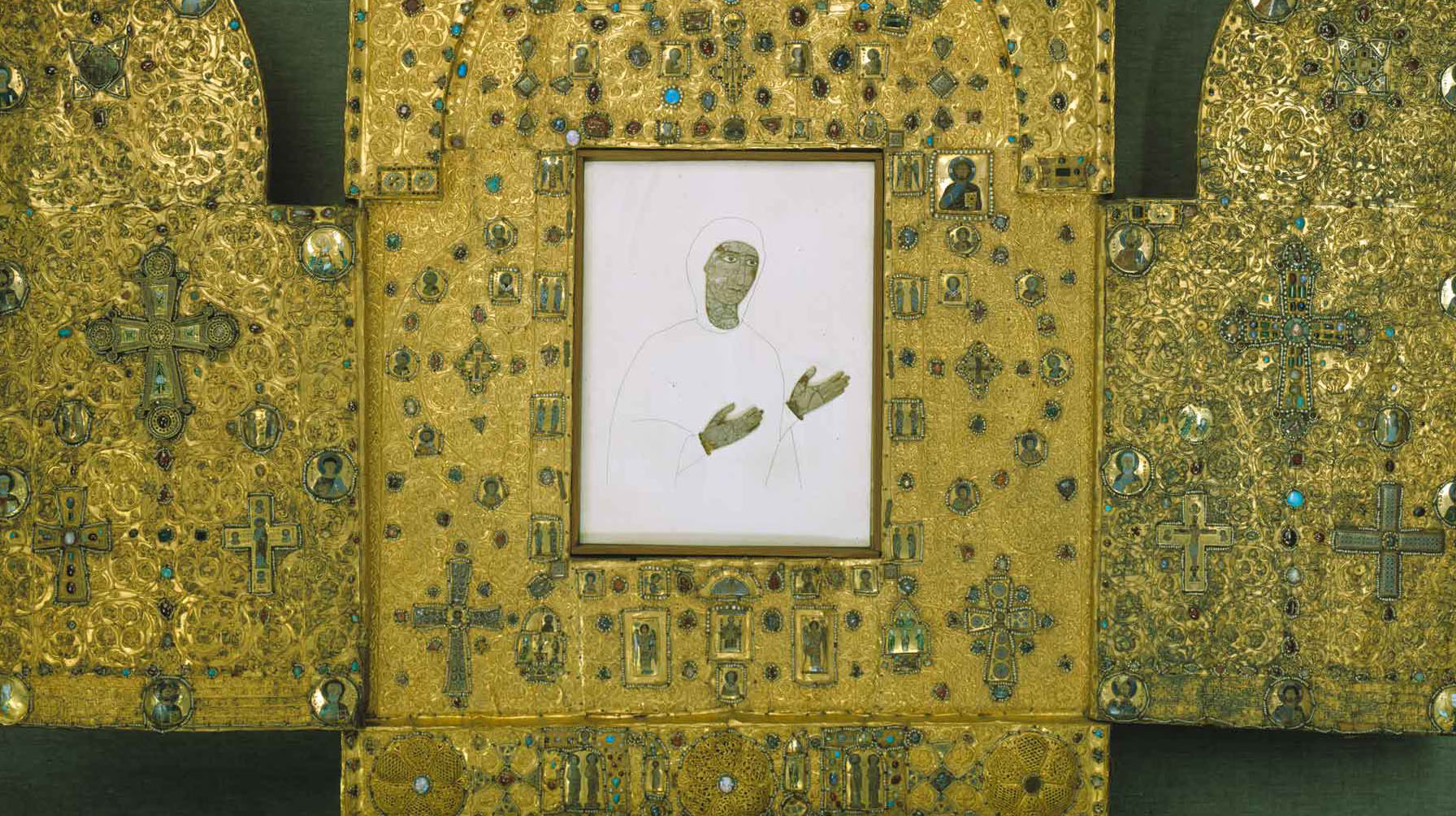
The closed front of the encolpium is divided into four compartments decorated with precious stones. A gem-studded cross is set in the center, whose reverse-side reveals a nielloed cross made of framed parts of niello compositions. In this way, the Martvili Encolpion achieves a total balance between artistic refinement and conceptual coherence.
On the back of the Martvili Encolpion, four Gospel scenes are rendered in niello: the Nativity, the Presentation of Christ in the Temple, the Harrowing of Hell, and the Myrrh-bearing Women at the Tomb. The selection of the scenes is dictated by a clearly expressed theological meaning. The Nativity and the Presentation of Christ in the Temple emphasize the Incarnation of the Lord, while the Harrowing of Hell, and the Myrrh-bearing Women at the Tomb affirm the Resurrection of the Savior and His Divine Hypostasis. Together with the central “Supplication,” they form a single, unified theological vision.
.jpg)
The Martvili Encolpion's niello compositions reflect certain iconographic characteristics that are typical of Eastern Christian art. The reduced quantity of gospel scenes and laconic compositions recall early Christian liturgical objects from the Holy Land, such as ampullae, and 6th-7th-century bronze censers.
There are also stylistic parallels between the enamel and niello sections. The main artistic method in both the "Supplication" and niello pieces is the careful drawing of lines. In the "Supplication," this is achieved through fine gold outlining and intricate vegetal background decoration, while in the niello scenes, the engraved black lines offer expressive and emotionally charged narratives.
The angels in the Encolpion triptych display the influence of the plastic traditions of Hellenistic and Roman art, which were still popular in the early centuries. This can be seen particularly in their movement and how their robes are draped.
full.jpg)
Greek inscriptions appear on both the enamel compositions and niello scenes. The niello writings feature errors that suggest the triptych was likely created by local craftsmen, who, as per workshop tradition, were following the established models of the time.
The donor’s desire for divine intercession was likely what led to the addition of the "Supplication" icon on the encolpion. Together with the accompanying scenes, it expresses a unified prayer for salvation and protection before Christ the Judge.
The Martvili Encolpion is an outstanding example of early medieval Georgian Christian art. Its excellent creative level and the theological depth of the compositional structure place it among the finest examples of contemporary Christian art.