




 Share this article
The
worship of the cross has held a prominent place in Georgia's spiritual life since the early
Christian period. St. Nino's crosses took on a distinctive form within Georgian Christian culture during the Middle
Ages,
while sculptors, painters,
and goldsmiths have created crosses in a variety of forms, and for
different liturgical purposes, throughout
history.
A distinctive type of cross with a specific
liturgical function, known as an altar cross, was
common in medieval Georgia, and was inspired by the monumental wooden crosses
erected by St. Nino. A large cross, constructed from two wooden poles and
adorned with silver relief plates, was placed on a specially created pedestal
in the center of the church, in front of the holy doors. The front of the cross, facing the
worshipers, was embellished with relief-composition plates, while the reverse side,
which faced the altar, and the edges of the arms of the cross, were covered
with embossed ornamentation.
Within
the church, the monumental cross stood on a stone pedestal in front of the
altar, organizing the sacred space and emphasizing key aspects of worship. These
objects were regarded as representations of the Cross of Golgotha, and specific
rituals were performed around them.
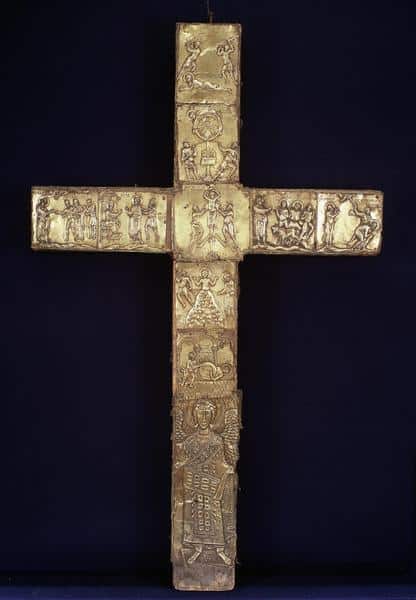
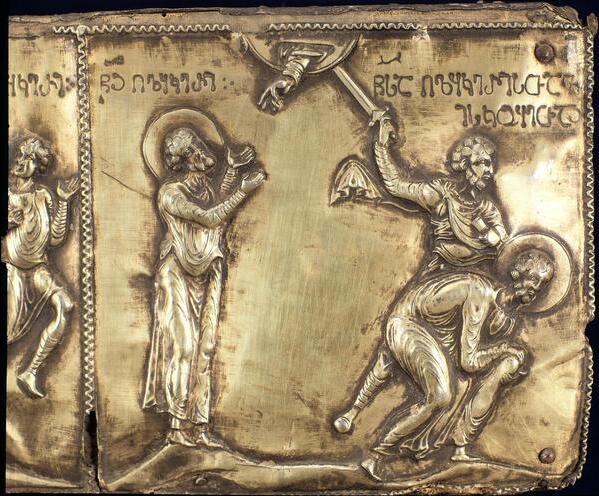
A notable example is the large altar cross of the St. George Church in Mestia. Measuring 125 cm in height, it is mounted on a distinctive pedestal at the center of the church. Created in the early eleventh century, the cross is entirely covered with finely carved silver. Dedicated to the revered martyr St. George, the cross features narrative scenes from the saint’s life, engraved on gilded silver plates.
The
relief compositions, executed in precious metals, are the work of an exceptional medieval master, and demonstrate a remarkably sophisticated level of
development in Georgian metalwork and relief sculpture.
Although some of the embossed plates of the cross are missing, nine scenes have
survived, allowing for the
reconstruction of the overall iconographic program. Analysis of these relief compositions indicates
that the master drew inspiration from the “Life of St. George,” a narrative that has formed part of Georgian culture
since ancient times. The earliest known version of this text dates to the 10th
or 11th century.
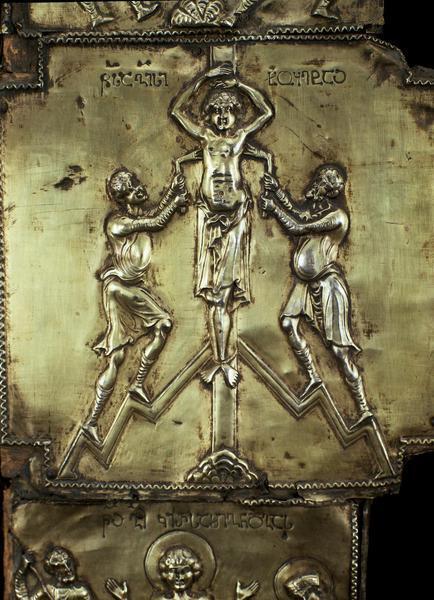
The gilded silver embossed plates depict scenes from the life and martyrdom of St. George. At the center of the cross, at the intersection of its arms, a large plate depicts the saint impaled on a stake and pierced by a lance. The arrangement of this scene mirrors the compositional scheme of the Crucifixion of Christ. From this central motif, other episodes from St. George's life radiate out. The careful placement of these scenes across the surface of the cross offers a striking representation of the saint’s life and martyrdom.
Each
embossed plate features different scenes of torture. The arrangement of the
relief compositions fosters both ideological and artistic unity within the
intricate relief decoration of the cross.
The upper vertical arm of the cross depicts St. George’s torture on the wheel and his beating with a whip, while the lower arm shows his being thrown into a lime pit and his imprisonment.
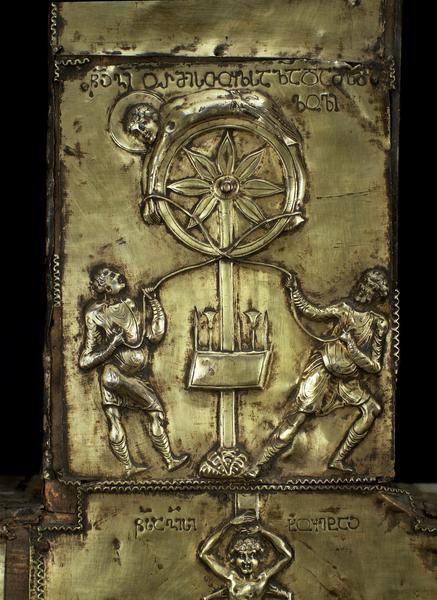
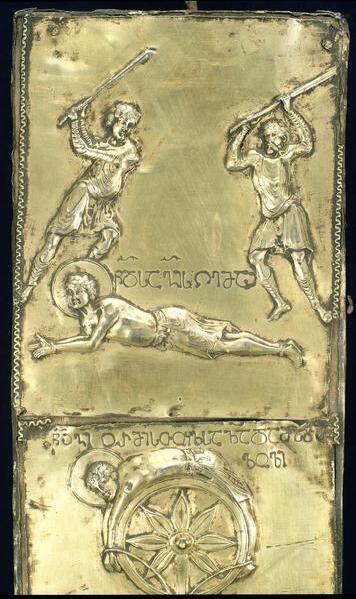
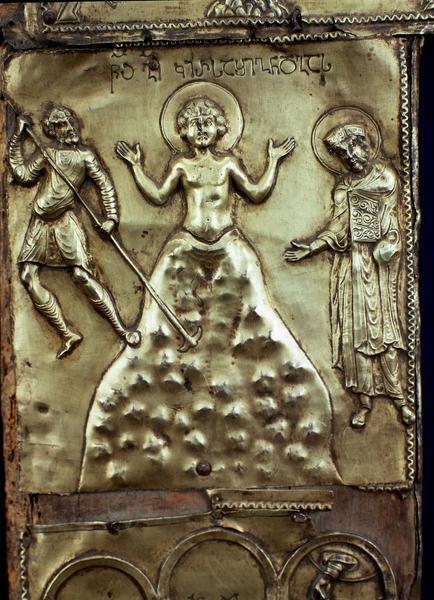
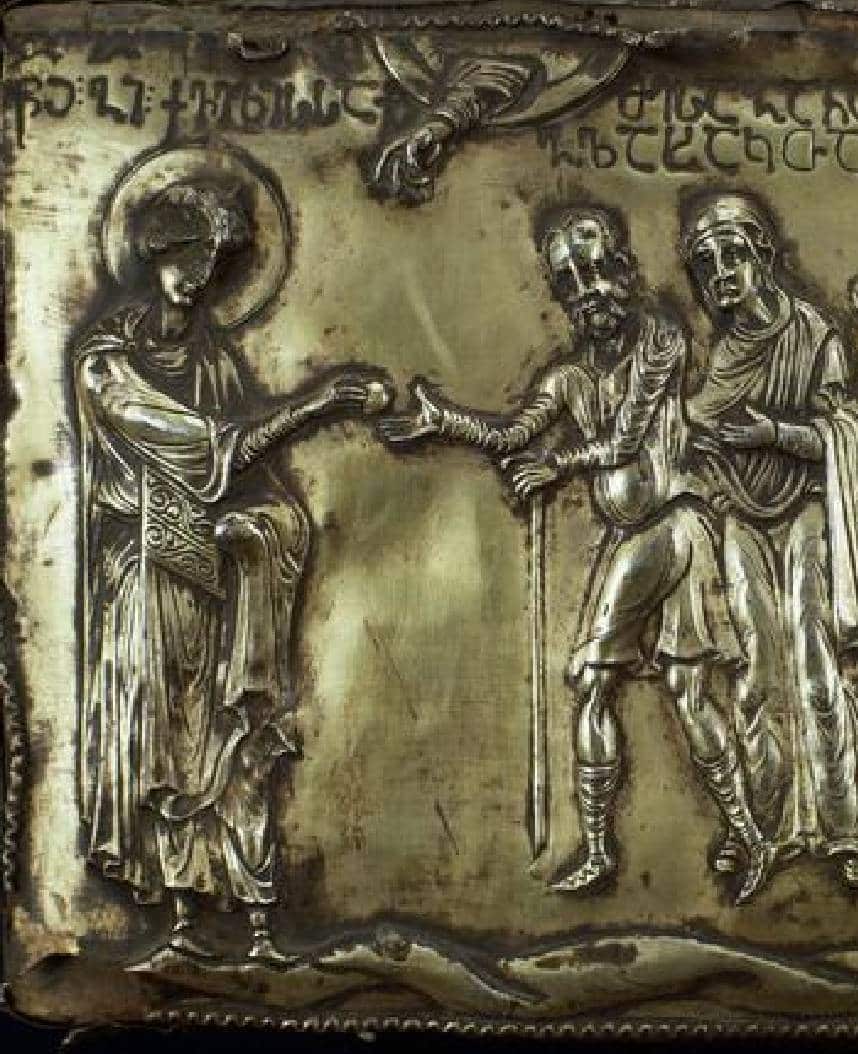
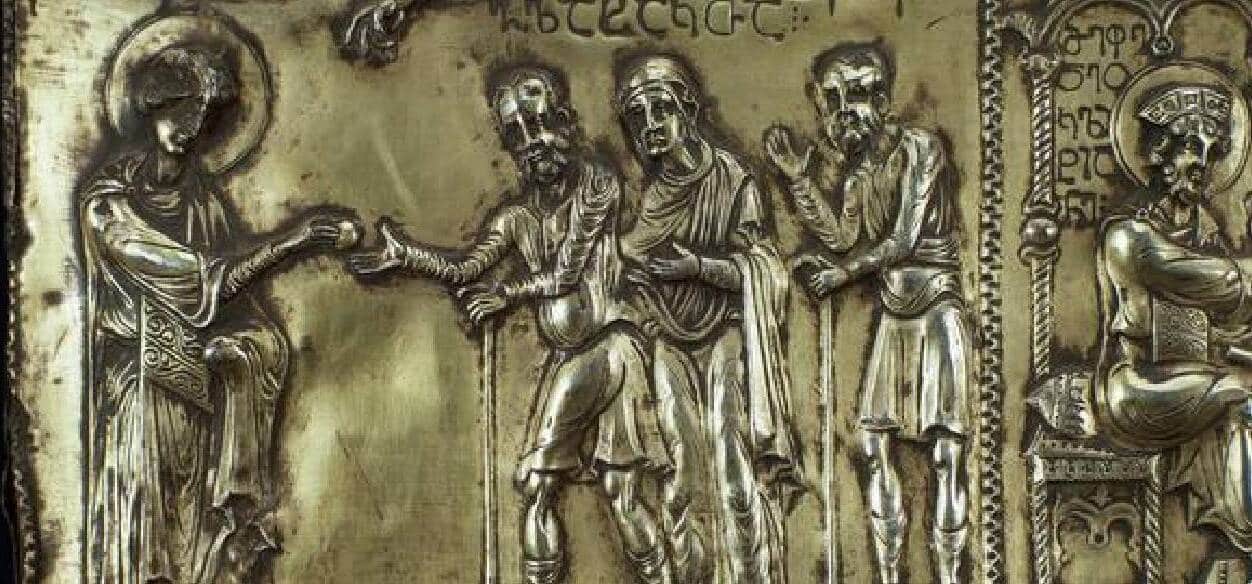
Two scenes are placed on the horizontal arms of the cross: on the left, St. George distributing his wealth to the poor and his encounter with Diocletian; on the right two scenes of St. Glycker's martyrdom. The compositions are accompanied by explanatory inscriptions in beautiful capital letters.
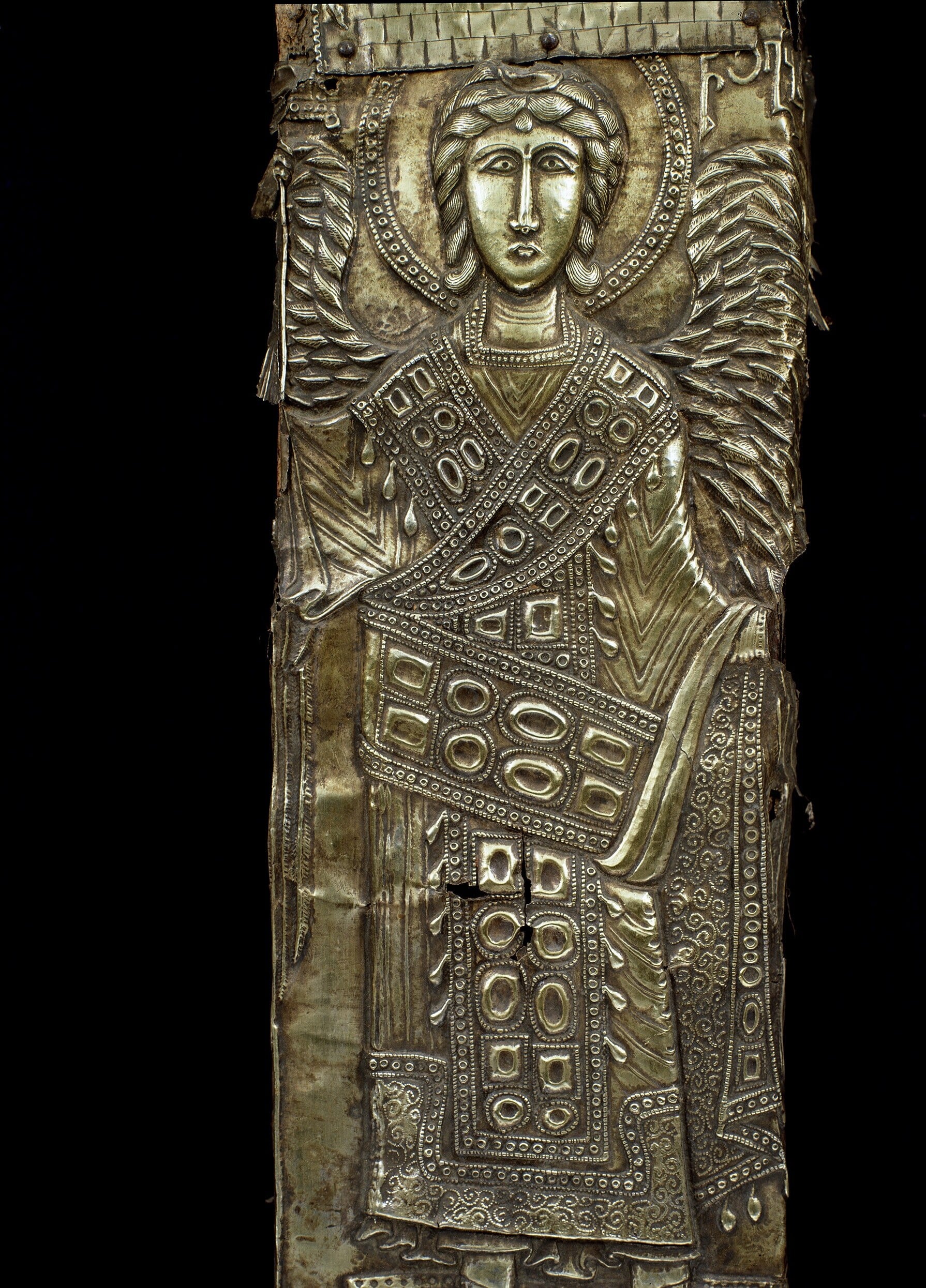
In the damaged place of the lower arm of the cross, a silver embossed figure of Archangel Gabriel was later added, which, according to its artistic features, likely also belongs to the 11th century.
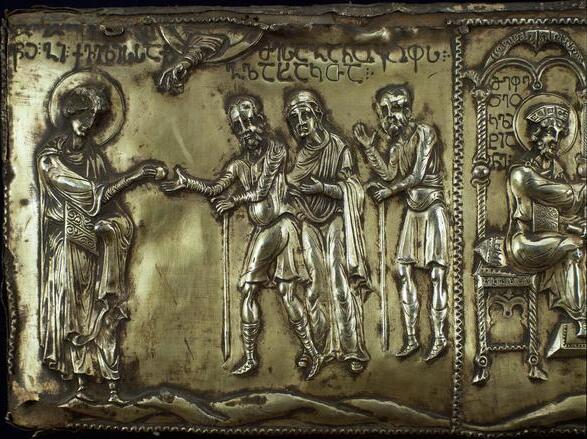
The Mestia altar cross represents a unique aspect of medieval religiosity, combining the broader Christian significance of the cross with local church traditions. The Mestia cross serves as an early example of the representation of the hagiographic cycle of St. George. The detailed scenes from St. George’s life depicted on this monumental cross reflect the deep importance of his veneration and his enduring role as a protector and warrior in Svaneti and across Georgia.