




 Share this article
The great-grandfather of the artist and graphic designer Iosif Charlemagne, Jean Baptiste Charlemagne-Baudet (1734–1789), was a sculptor and decorator who came to Russia from France during the reign of Catherine the Great, and settled in St. Petersburg.
Iosif’s parents were also artists. His father, Adolf Charlemagne (1826–1901), was a full member of the Imperial Academy of Arts, and painted large canvases in the military-historical genre. He is also remembered as the creator of the most famous playing card design in Russia—the Atlas deck.
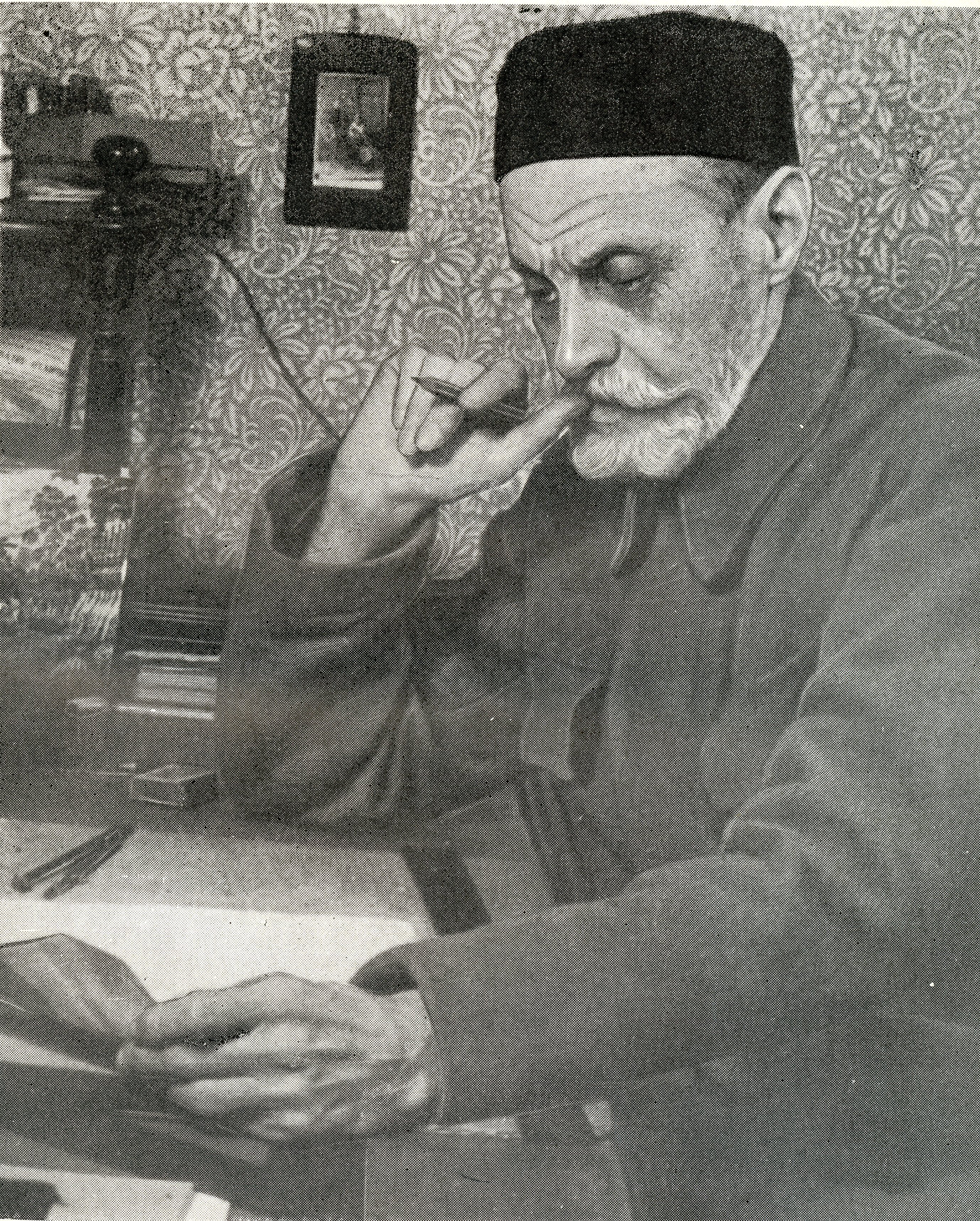
Iosif’s mother, Elizabeth, the daughter of Ivan, a portrait painter and student of Ivan Kramskoy was regarded as Iosif’s first teacher. In 1905, he traveled with her to Western Europe. At the National Library in Paris, he studied 18th- and 19th-century book art. He also visited museums in Milan, Venice, Luxembourg, and Vienna.
During these years, he created and exhibited a series of illustrations for Leo Tolstoy’s novel War and Peace.
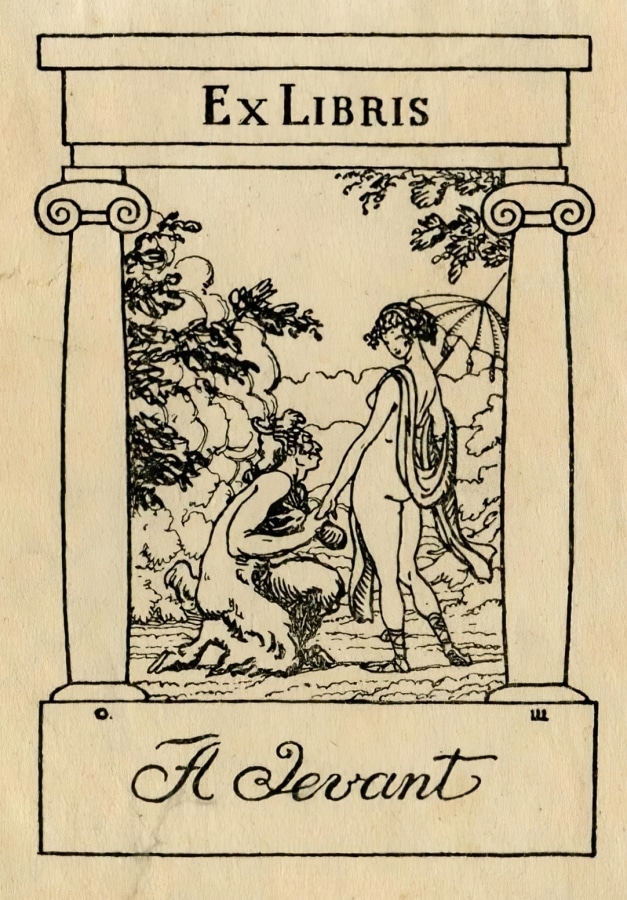
Iosif Charlemagne began his artistic education at the school of Society for the Encouragement of the Arts. He went on to continue his studies at the St. Petersburg Academy of Arts, under battle painter Professor Franz Roubaud (1856-1928). Although he did not complete his studies at the Academy, Charlemagne remained actively involved in the artistic community.
In 1907, together with several young artists—among them D. N. Kardovsky, D. I. Mitrokhin, S. V. Chekhonin, and the architects A. V. Shchusev and I. A. Fomin—Charlemagne co-founded the New Society of Artists, which remained active until 1914. Around the same time, he also developed close ties with members of the Mir Iskusstva (“World of Art”) circle.
Between 1911 and 1912, he contributed to the magazines Apollon, Satyricon, and Lukomorye. In 1914, the Brockhaus and Efron Publishing House commissioned him to illustrate the collected works of Leo Tolstoy, though the project was never brought to completion.
Later, while attending the gymnasium, Iosif Charlemagne learned the art of lithography. Since a young age, he had been fascinated by Russia's history and ethnography, often assisting his father with illustrations for the history of the Yerevan Regiment. Following his father's death, Charlemagne himself received commissions, and he spent several years creating military-themed illustrations. He also did easel and graphic work, as well as applied graphics (ex libris, stamp and invitation card printing, diploma and poster design).
In the 1910s,
Iosif Charlemagne started
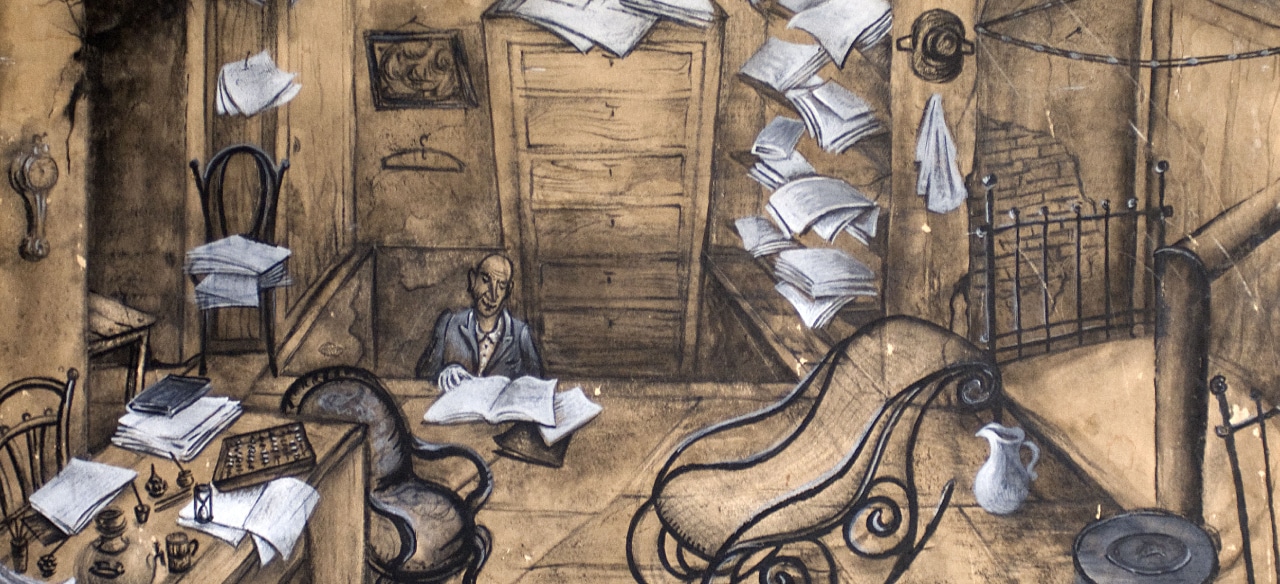
working in the theater. In 1913, he designed the curtain
for Kote Marjanishvili’s Theater of Miniatures,
and completed the panel The Bronze Horseman for a hotel vestibule in St.
Petersburg. Commissioned by the publishing house Argus, he also made a series of
postcards depicting
Russian ethnographic typescript.
In 1916, Charlemagne traveled to the North Caucasus to gather material for illustrations of Leo Tolstoy’s The Cossacks (a project that never came to fruition). He visited Mozdok, Grozny, and other parts of the Caucasus; however, his return was prevented by the outbreak of the Russian Civil War. In 1917, he traveled to Tbilisi via the Dariali Gorge, following the military road. It was there that he met his future wife, Mariam Muskhelishvili. After their marriage in 1918, he settled in Tbilisi and became actively involved in Georgian cultural life. With genuine dedication and curiosity, he explored Georgian traditions and art, traveling extensively throughout the country to study its regional cultures.
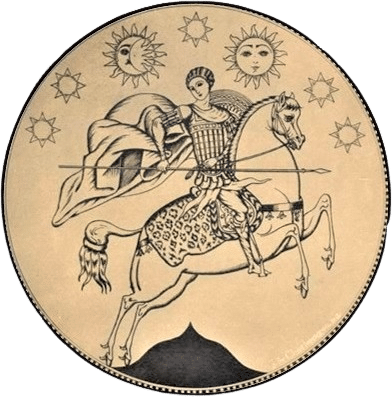
On December 27, 1918, the State Emblem of the Democratic Republic of Georgia, designed by Iosif Charlemagne, was officially approved.[2] In collaboration with Henryk Hryniewski and Dimitri Shevardnadze, Charlemagne also took part in designing Georgian currency. He decorated banknotes with motifs drawn from traditional stone and wood carvings characteristic of Georgia’s national ornaments. The reverse side featured the image of St. George. On the 500-ruble note, in the background of St. George, a seated Georgian woman was depicted, with a war shield attached to her chair. The explanatory text on the banknote was printed in Georgian, in two-line and four-line fonts.
In 1921, together with the artist Eugene Lansere, Charlemagne also designed the coat of arms of Soviet Georgia.
In
1922, the Tbilisi Academy of Arts was established. Its
leadership was entrusted to Academician Giorgi Chubinashvili, who assembled an
excellent faculty made up of Iosif Charlemagne, Eugene Lansere, Gigo
Gabashvili, Iakob Nikoladze, Egishe Tatevosyan, Mose Toidze, Nikolai Severov,
Henryk Hryniewski, and Nikolai Kalgin.
The Faculty of Graphics was founded at the initiative and under the leadership of Iosif Charlemagne. A distinguished artist with a European education, he made a significant contribution to bringing up generations of Georgian graphic artists. His work laid the foundation for modern Georgian book illustration and print design, as well as the development of fonts, ex libris, and poster art.
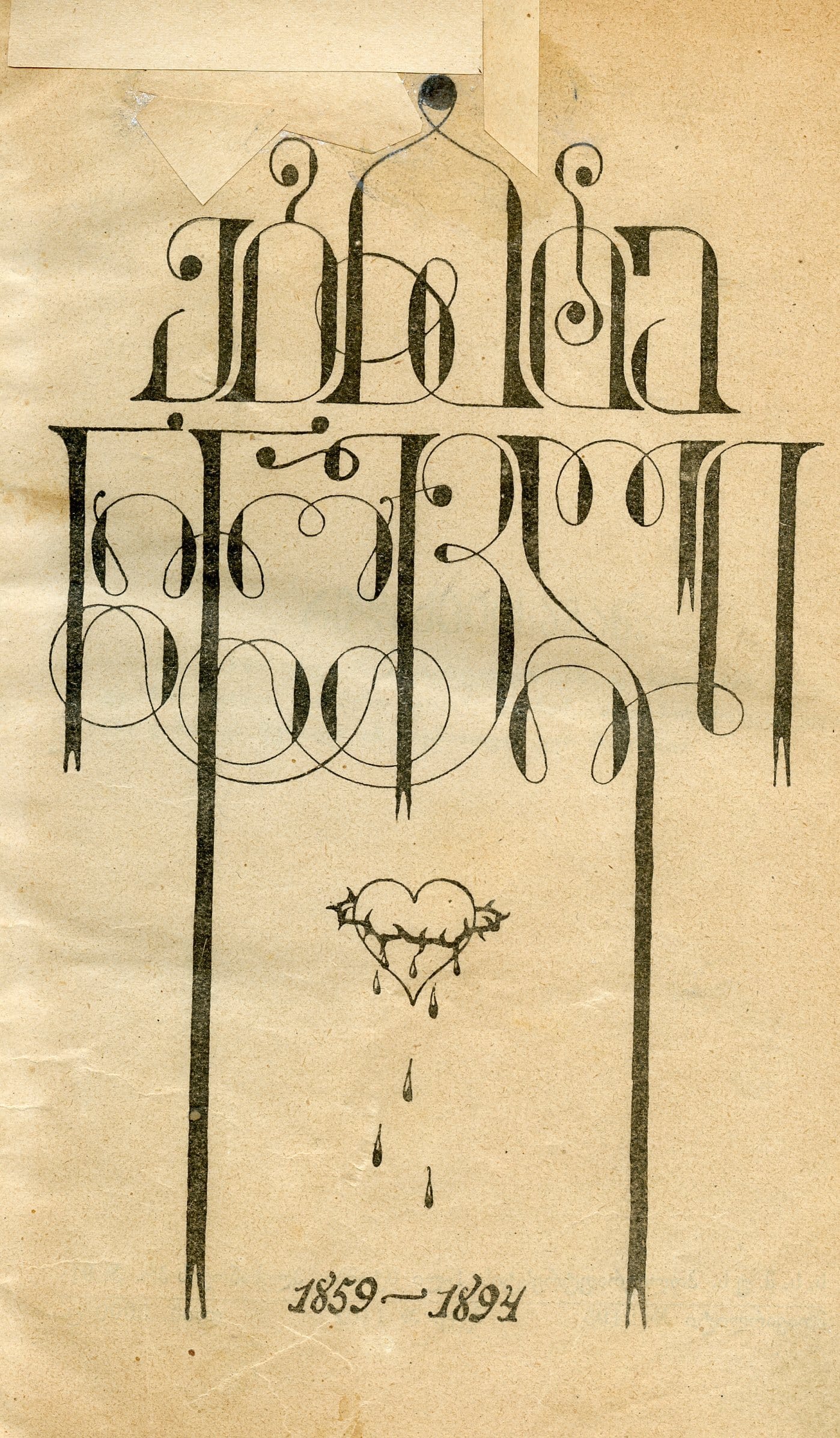
In addition to teaching, Iosif Charlemagne studied in depth and fully absorbed the national characteristics of Georgian art. A vivid example is his 1922 illustrated edition of the complete works of Nikoloz Baratashvili, whose artistic design is shaped by simple ornamental motifs and stylized forms of the Georgian script. Charlemagne paid particular attention to the cover and title page, placing the primary artistic emphasis on the typography. The interplay of thin and thick letter contours at different heights creates a lively rhythm, while the white space at the top and bottom of the page is accented with a simple ornament. This understated decor, composed of twisted lines, harmonizes seamlessly with the elegant and sophisticated forms of the font.
Academician Vakhtang Beridze wrote of Iosif Charlemagne's illustrated edition of Nikoloz Baratashvili's collection of poems: "The design of the cover and title page attests to the artist's profound understanding of the heritage of the ancient Georgian manuscript tradition, and to his ability to perceive and express the beauty of the Georgian script and the possibilities of its stylization." This observation was particularly significant, as the subsequent search for a distinct national artistic form in the years that followed was carried out primarily by Charlemagne's students, who achieved remarkable results.
The same year, Iosif Charlemagne illustrated Vazha-Pshavela's compositions. These works of his are also distinguished by their simplicity and sophistication, with the artistic design primarily defined by modest, rounded letterforms, and the symmetrical arrangement of the text.
In 1922–1923, a two-volume edition of Egnate Ninoshvili's works was published to mark his anniversary, with contributions to the design made by artists of both older and younger generations, including Mose Toidze, Eugene Lansere, Iosif Charlemagne, Apollon Kutateladze, Shalva Mamaladze, Shalva Dzneladze, and Irakli Toidze. The book covers were designed by Iosif Charlemagne. It features the writer’s name and surname in a refined, decorative, and clearly legible font, accompanied by a small, symbolic decoration.
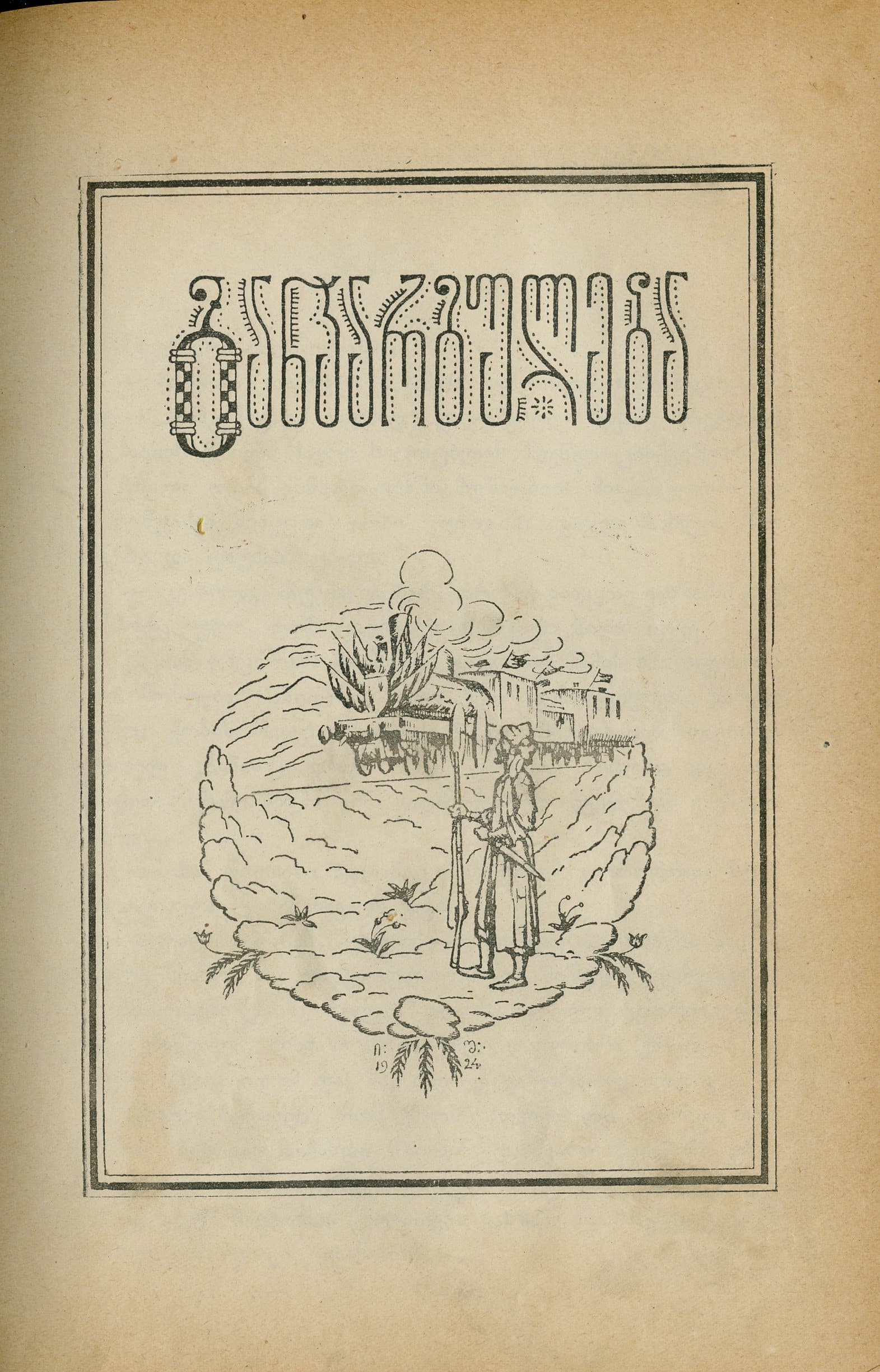
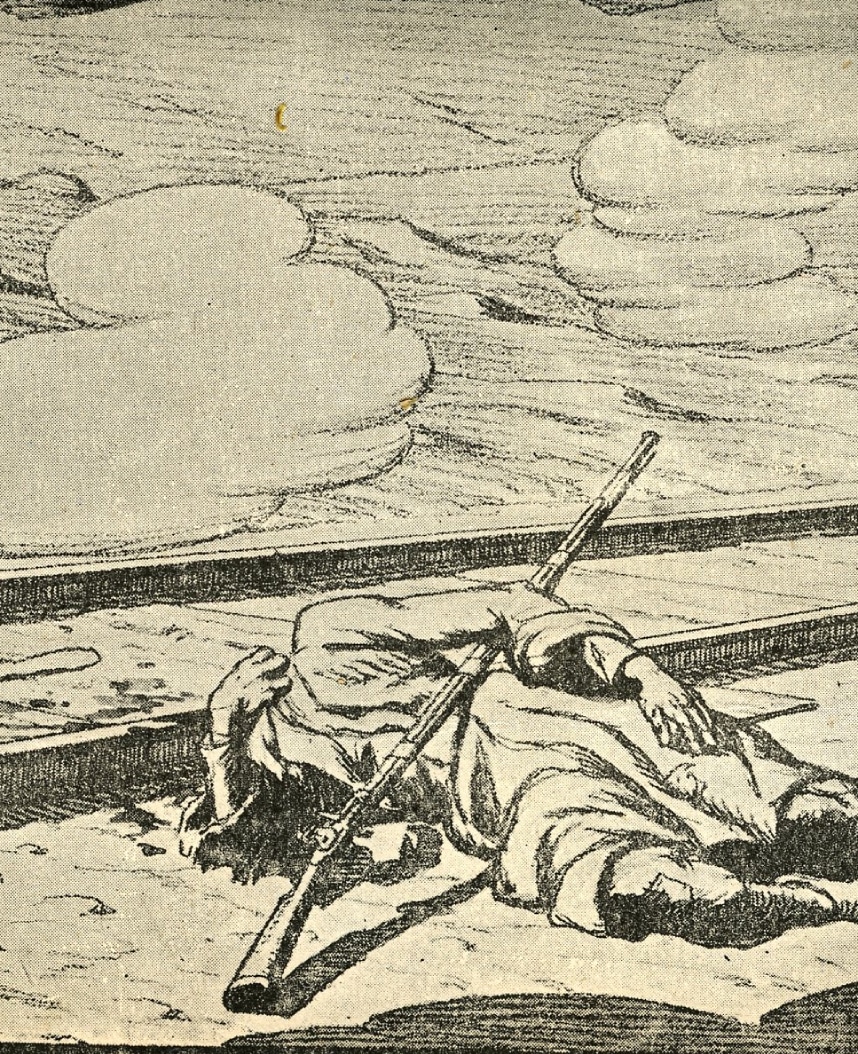
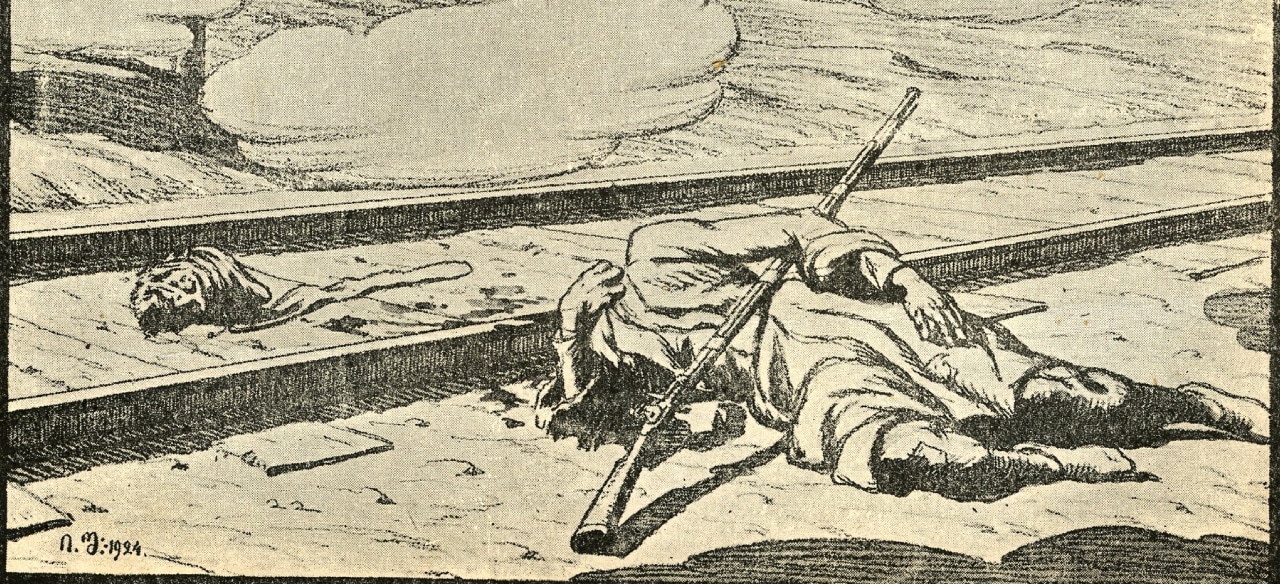
Charlemagne also designed the half-title page for the short story The Decree. This composition is also simple: it is framed by a rectangle, with the story’s title font at the top and, below it, a circular outline containing a symbolic image that reflects the story’s theme — a man standing by the railway tracks, waiting for a train.
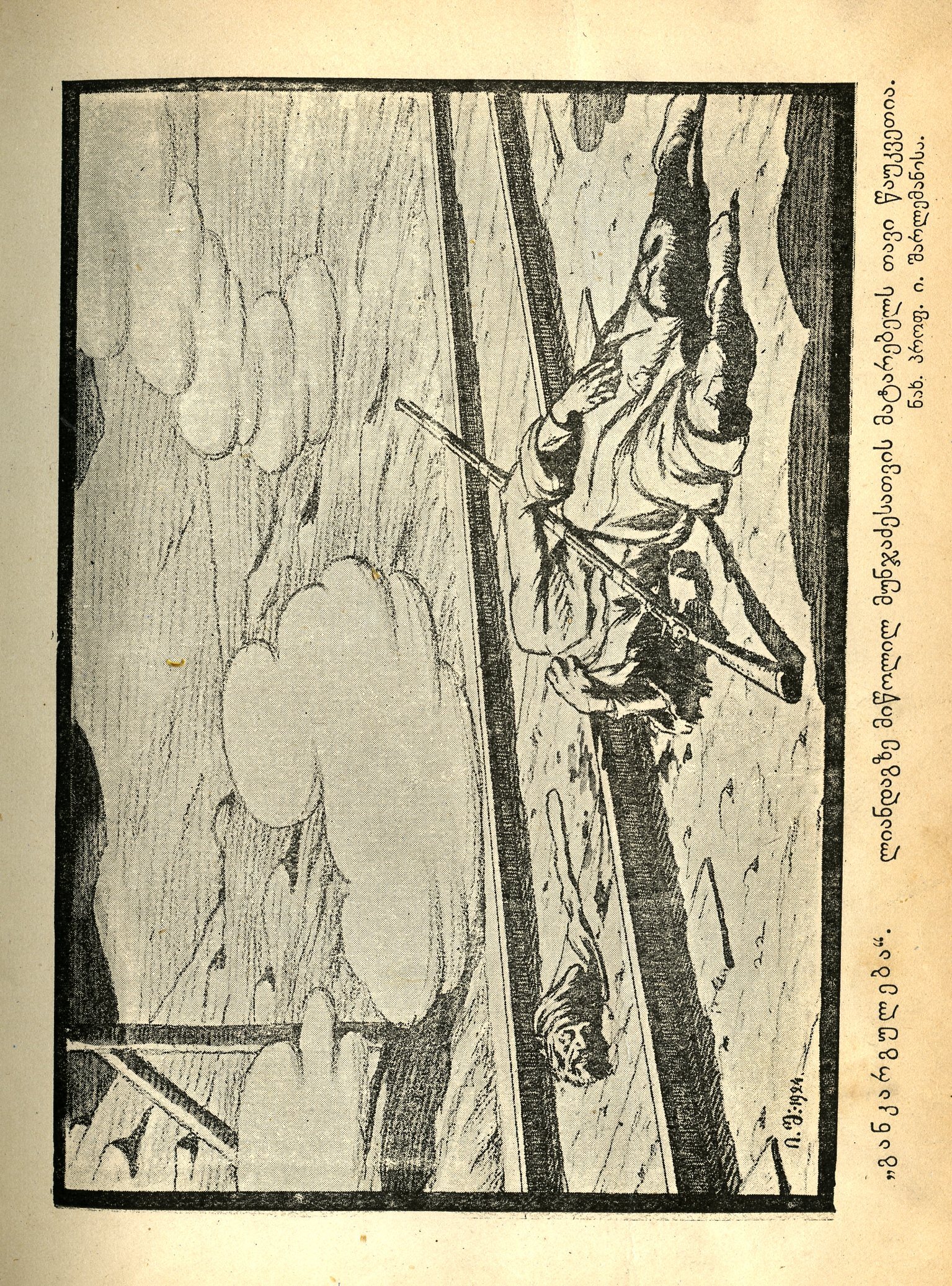
The illustration accompanying the story depicts its most tragic episode, with the inscription: “A train beheaded Munjadze lying on the railway track.” The composition features railway tracks, with the figure of a man lying in the foreground, his head dropped between the rails. The work displays the lightness and subtlety characteristic of lithography. The image realistically captures the story’s most climactic moment, and powerfully evokes a profound sense of tragedy within the viewer.
Iosif Charlemagne’s style consistently reflects a distinctive personal vision, and is marked by a completely unique creative character.
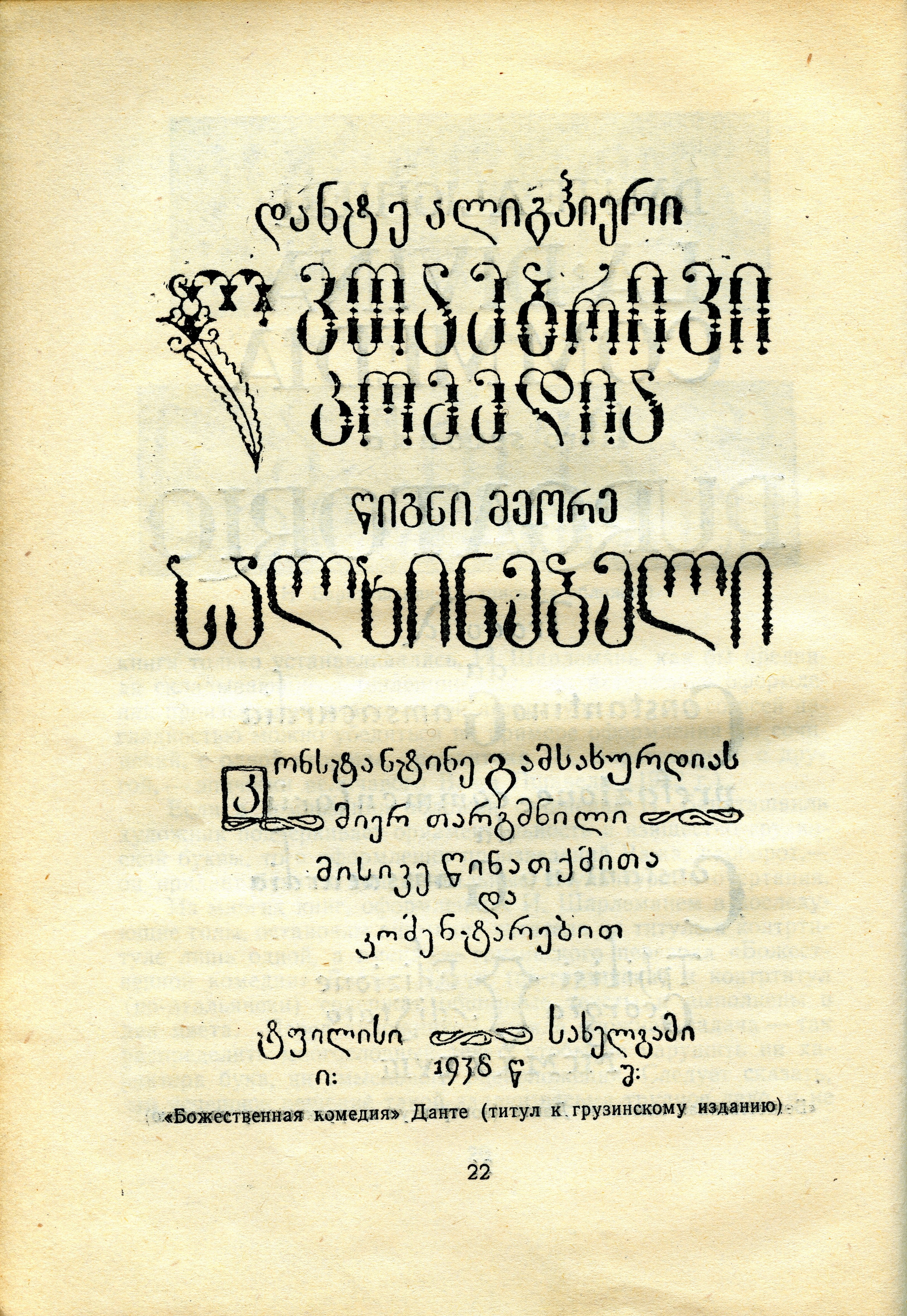
In later years, he occasionally returned to the artistic decoration of books, illustrating Dante Alighieri’s Divine Comedy, and creating artwork for Vasil Barnov’s historical novel Giorgi Saakadze (1939), Anna Antonovskaya’s The Great Mouravi (1952, in Russian), and the works of Niko Lortkipanidze.
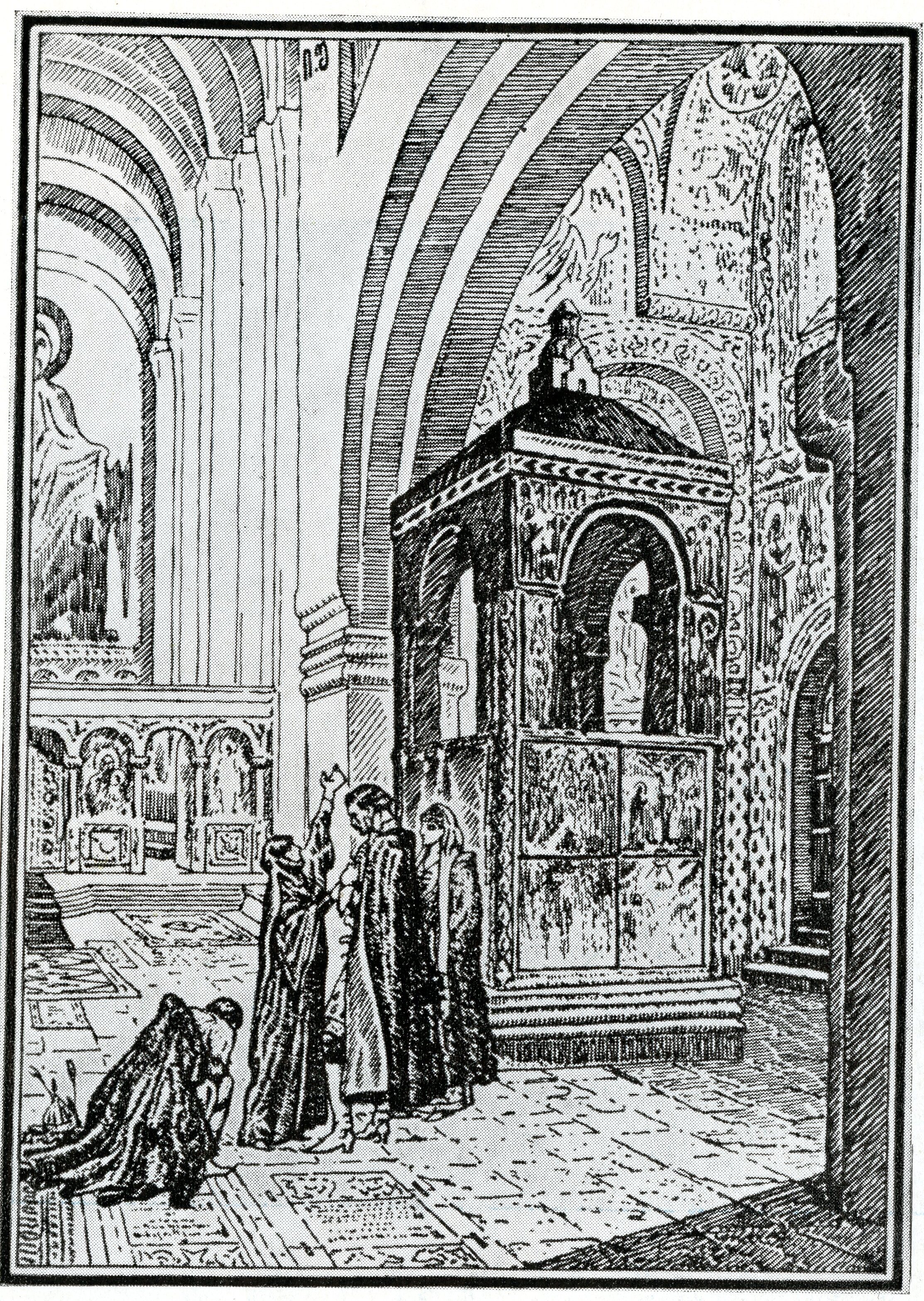
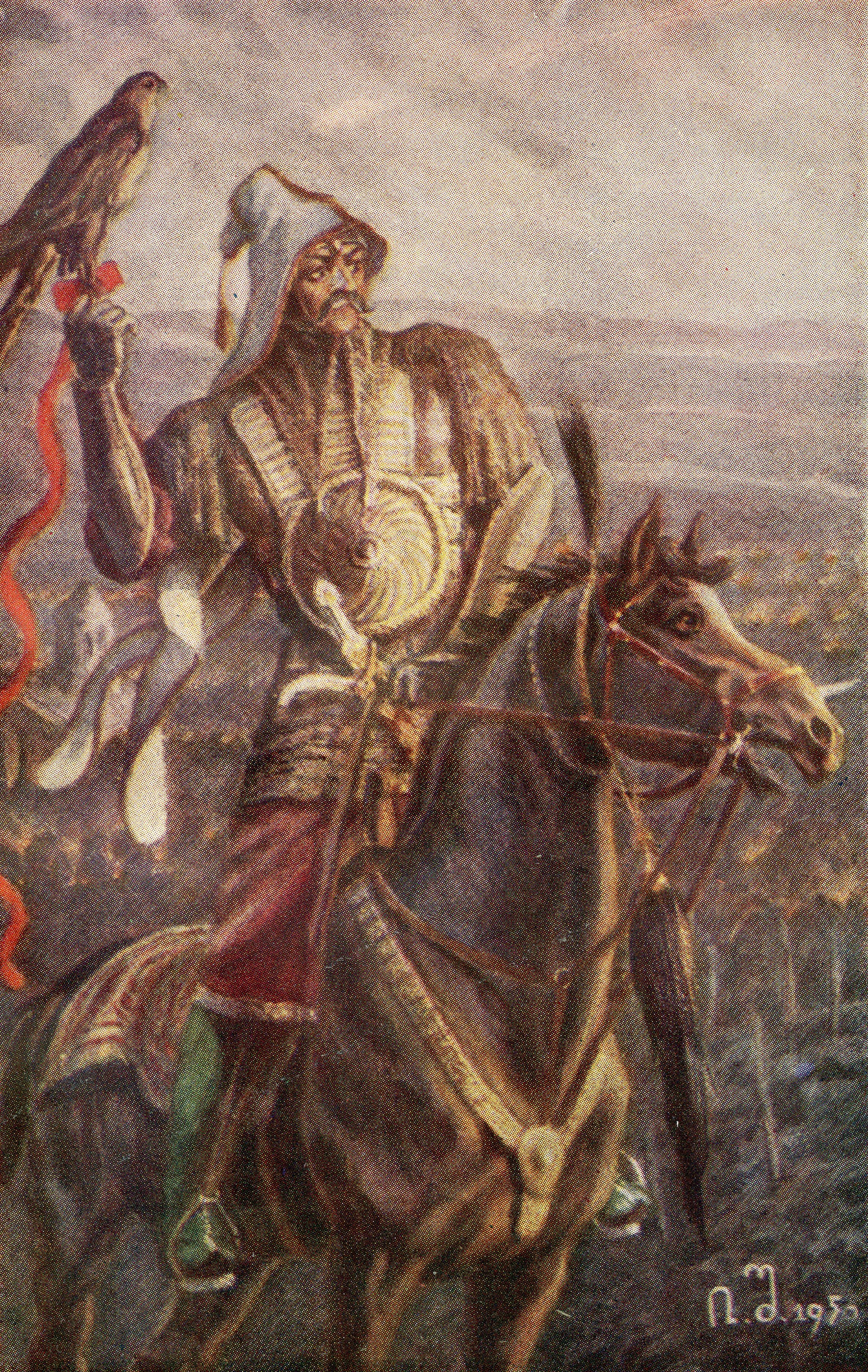
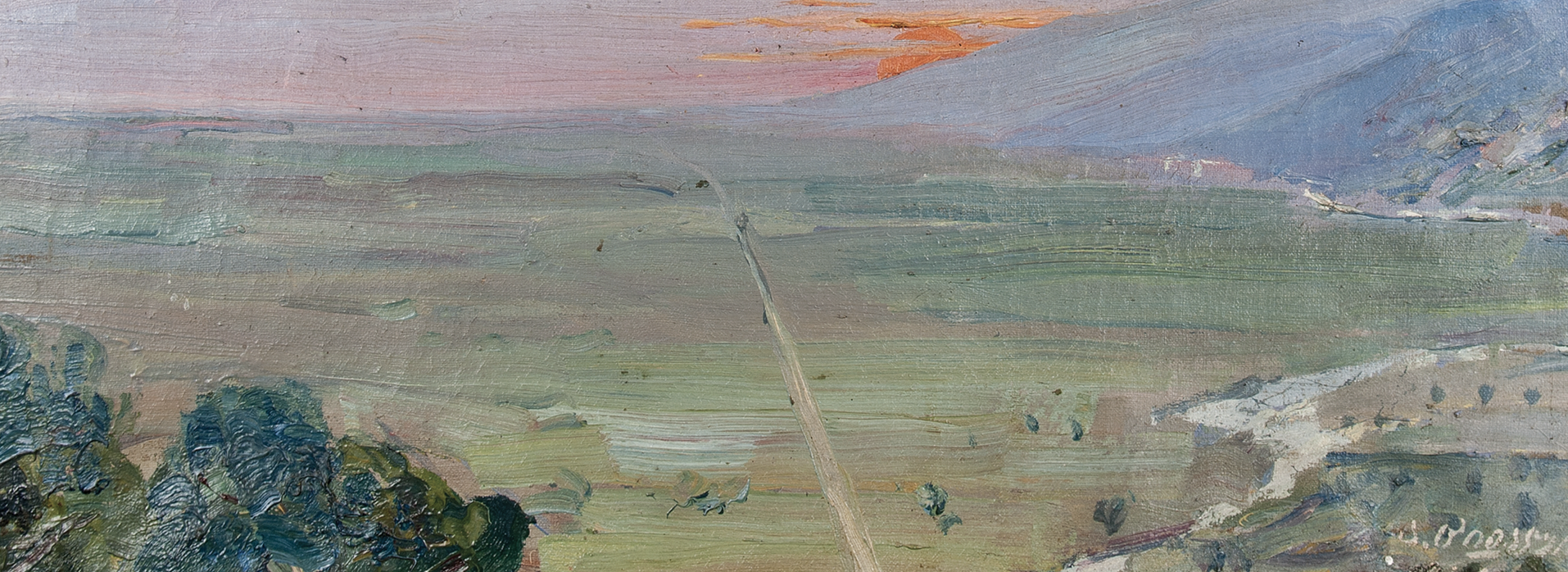
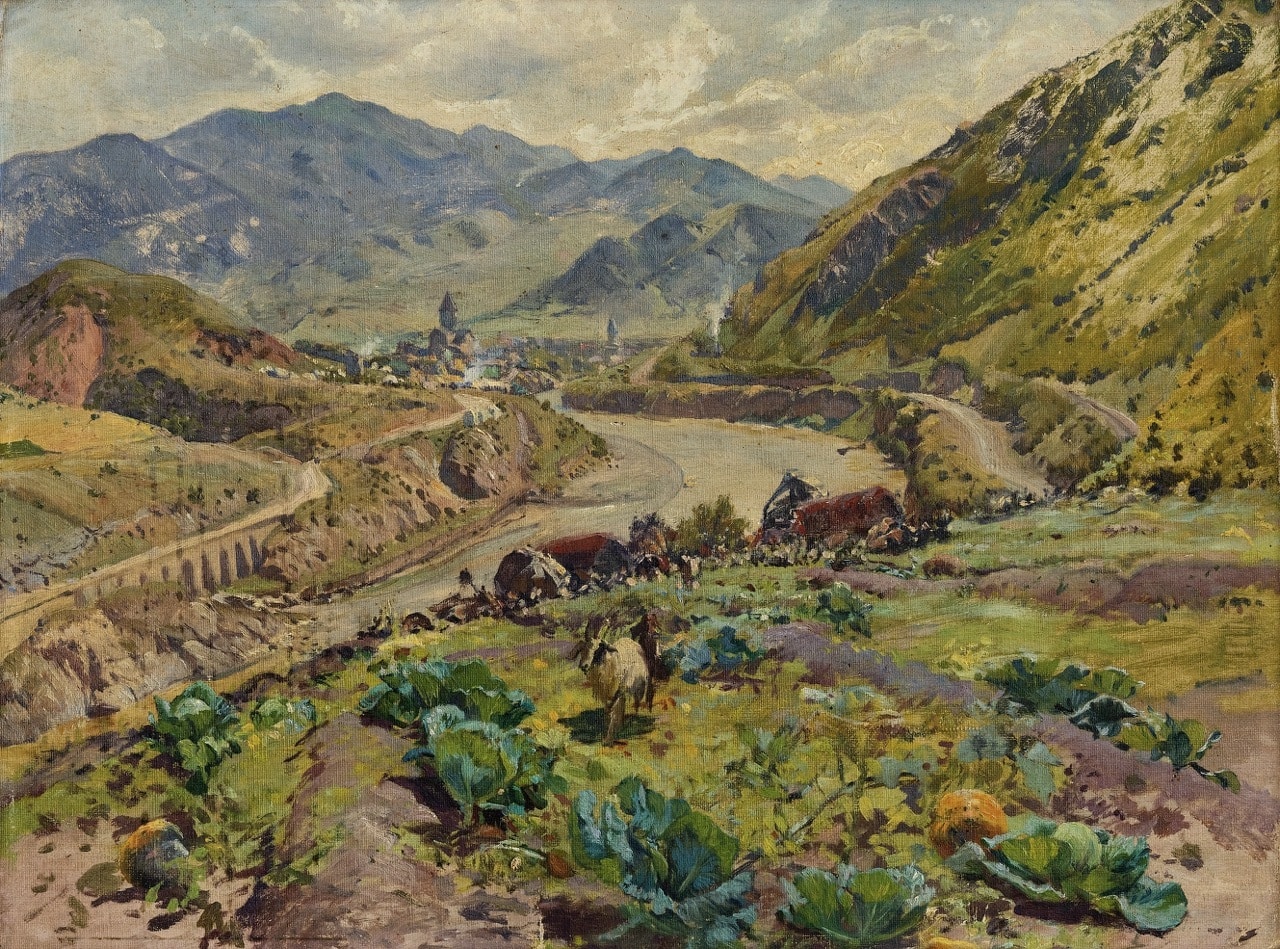
Iosif Charlemagne also took part in the expeditions led by Academician Giorgi Chubinashvili, the founder of the School of Art History, which advanced the scientific study of Georgian heritage. In 1927, several albums were published under Chubinashvili’s editorship, with most of the drawings contributed by Charlemagne. In addition to these illustrations, Charlemagne painted landscapes of Kartli, and created graphic compositions depicting Georgian national architecture.
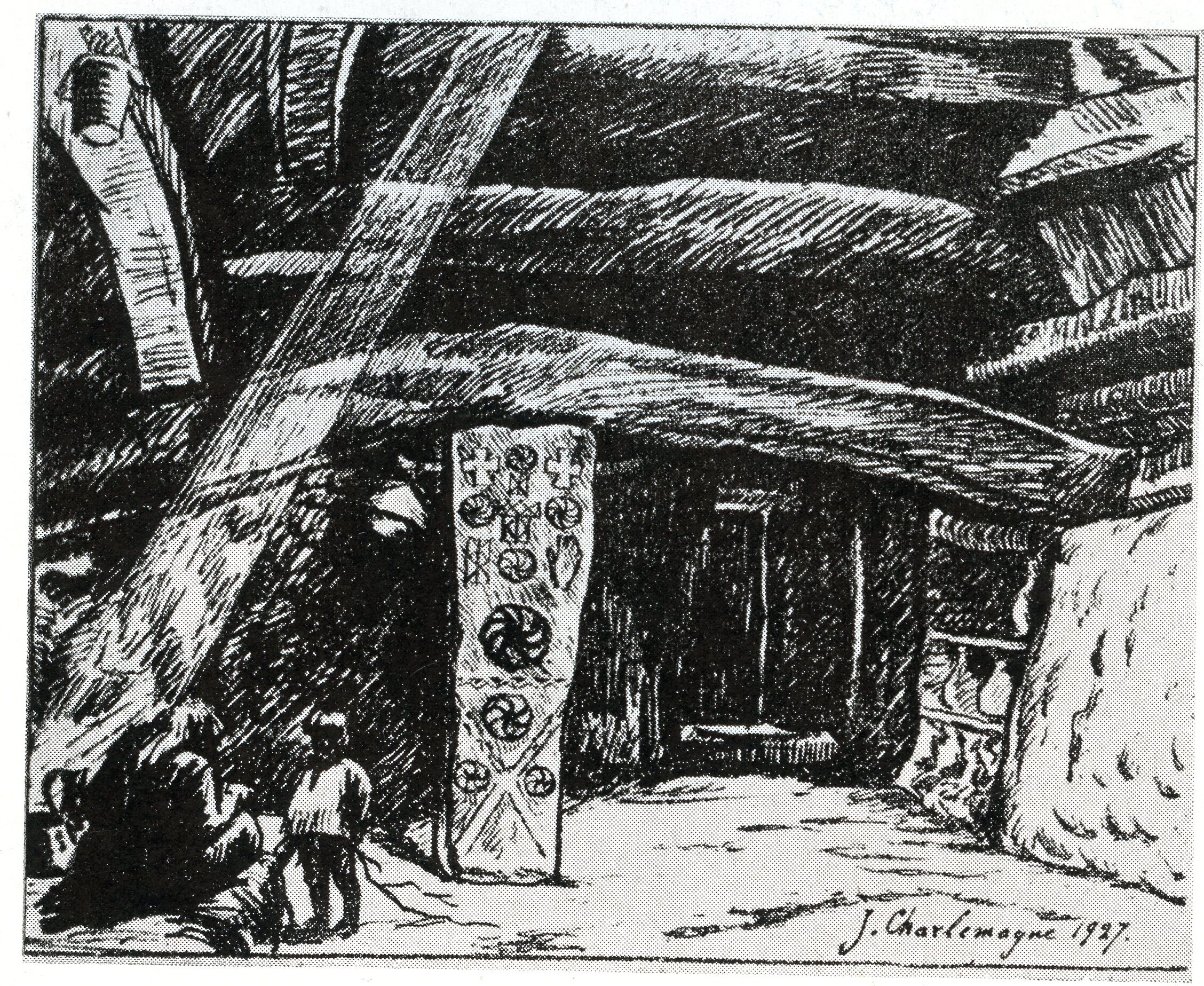
Iosif Charlemagne made a
significant contribution to the development of Georgian cinema and theatrical
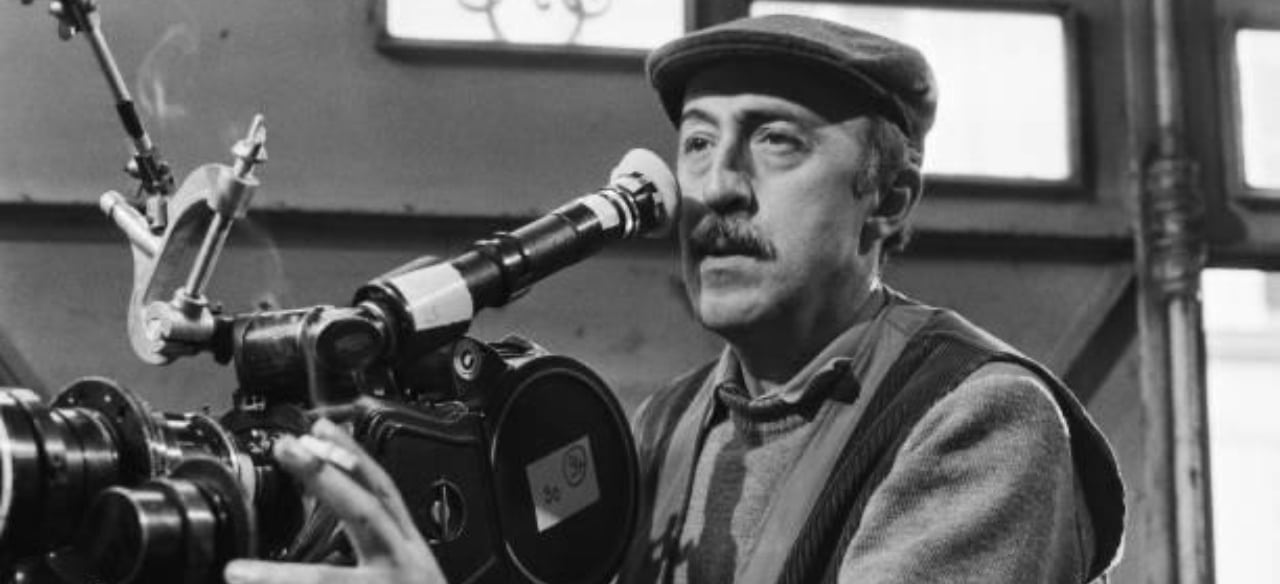
art. In 1923, he traveled to Svaneti to work on the film Dzina Dzadzu, producing sketches,
measured drawings, and watercolors that depicted residential buildings, natural
landscapes, and ethnographic objects.
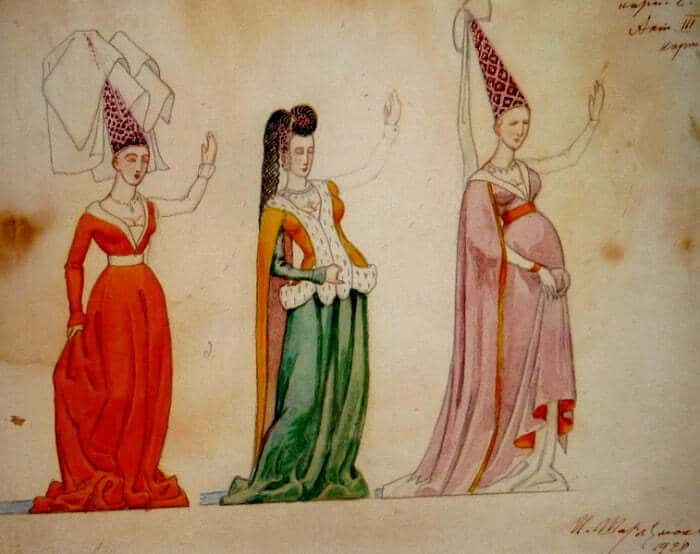
He also worked in the theater, participating in the production of Bernard Shaw's Saint Joan at the Kote Marjanishvili Theater (1928–29). At the Opera House, he was involved in productions such as The Tsar’s Bride, Battleship Potemkin, Eugene Onegin, The Deputy, Boris Godunov, and others.
In 1927, Iosif Charlemagne joined the Georgian Museum’s expedition
to Khevsureti. He painted large panels for the Archaeological Department of the
Georgian State Museum,
illustrating scenes from the life of primitive people, such as the hunting of wild animals.
He also worked on a book devoted to animalists.
He organized his first shows in 1929–1932, in the newly constructed Georgian Museum (pieces titled Khevsureti, Svaneti, and Mineral Resources of Georgia). His drawings served as the basis for the design of every piece of museum furniture. In 1932–1934, commissioned by the Resort Building Company of Georgia, he produced over 100 sketches for resort houses in Bakuriani and Gagra.
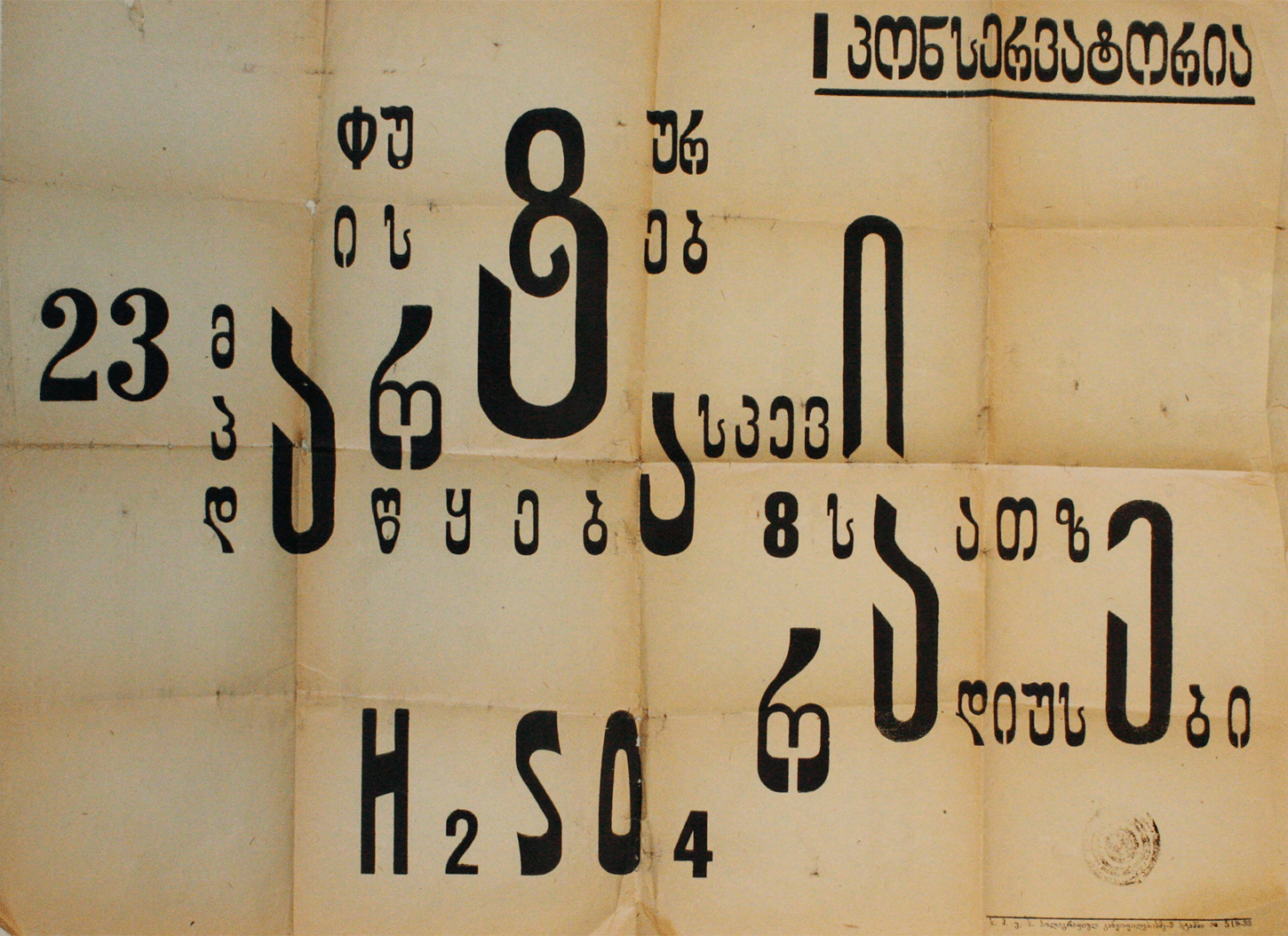
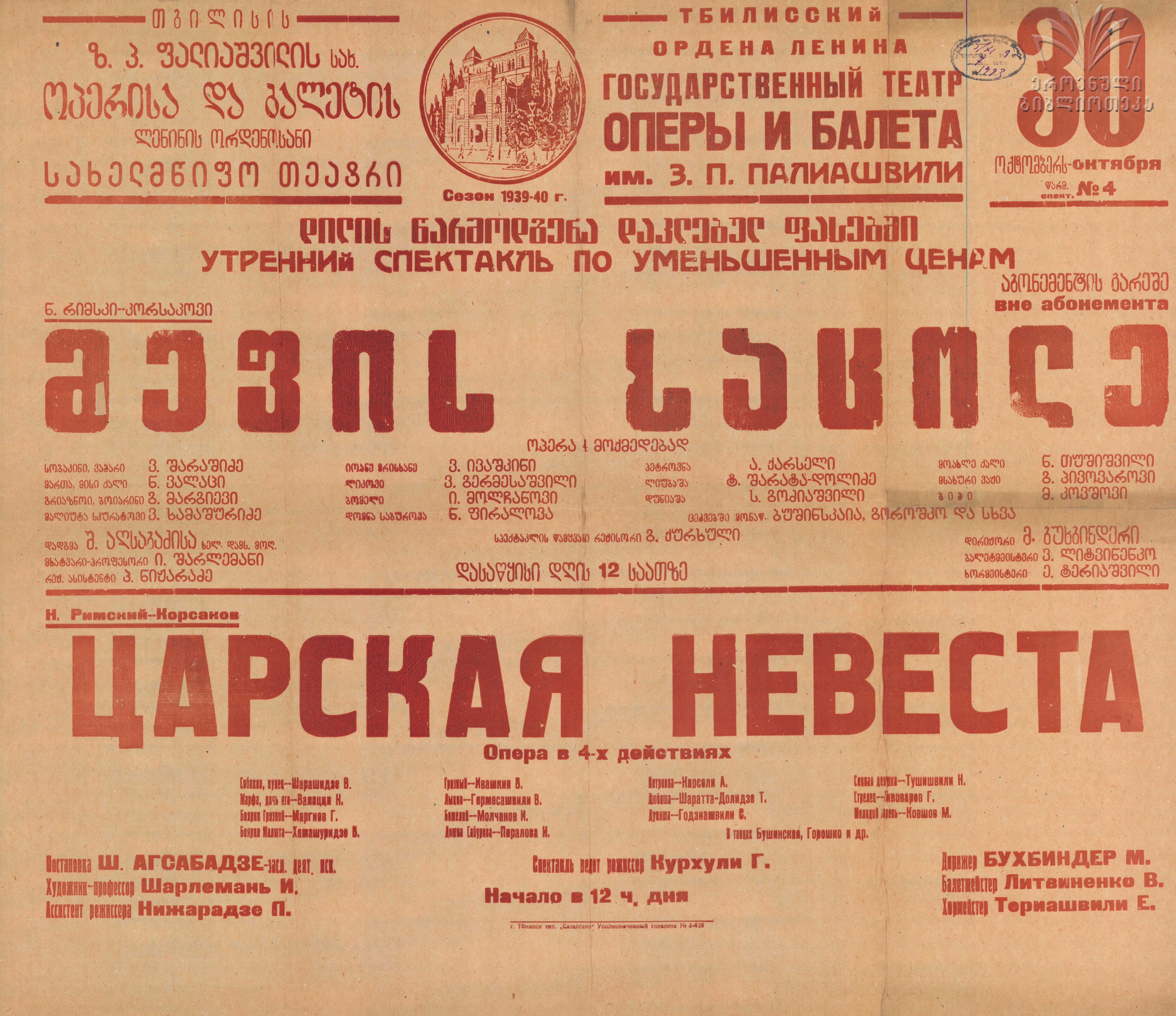
In the 1930s-1940s, Charlemagne designed
posters, most of them for the Tbilisi Opera and Ballet Theater. In these
compositions, he skillfully combined the refined forms of Georgian and Russian
fonts, achieving a harmonious unity between the two scripts.[3]
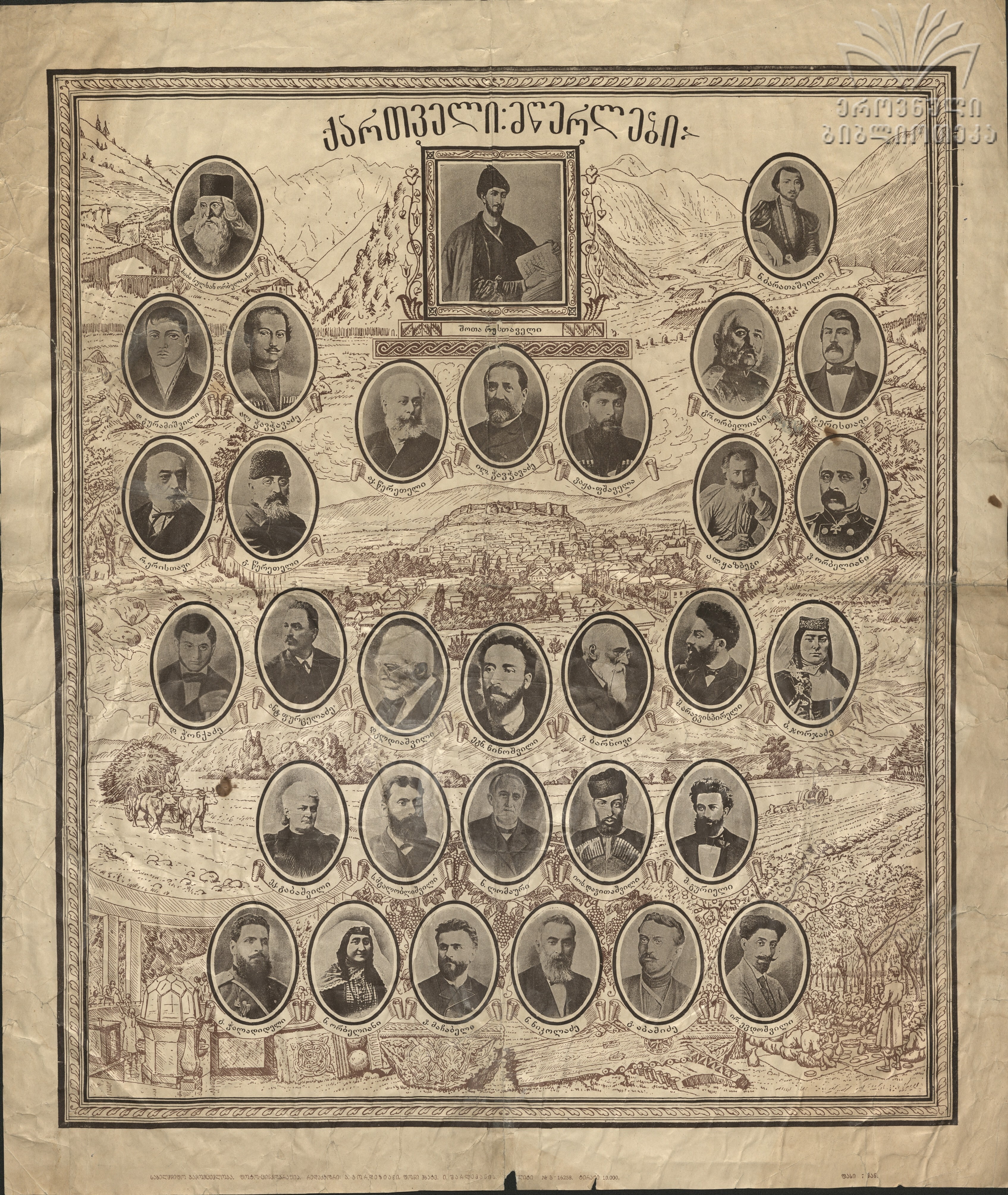
Iosif Charlemagne is the author of the poster Georgian Writers, which features portraits of Georgian writers, framed in oval outlines, against a subtle background depicting Georgian landscapes, architectural landmarks, stone reliefs, and vine-shaped ornaments. Shota Rustaveli’s portrait is featured in the center of the composition as the main figure, enclosed in a rectangular frame.
Charlemagne worked on easel paintings with historical themes. He created thematic compositions featuring prominent figures from Russian and Georgian intellectual circles, including Bagrationi in Switzerland in 1799, Pushkin with A. Chavchavadze and P. Chaadaev in Tsarskoye Selo Park, and Ilia Chavchavadze’s Speech at the State Council. He also produced lithographs such as P. Tchaikovsky and Mizandari in Borjomi, P. Tchaikovsky, A. Tsereteli and M. Gorky in Borjomi, and M. Lermontov in Mtskheta. Additionally, he created portraits of prominent figures of the cultural elite, among them F. Dostoevsky, A. Blok, K. Gamsakhurdia, G. Tabidze, and N. Severov.
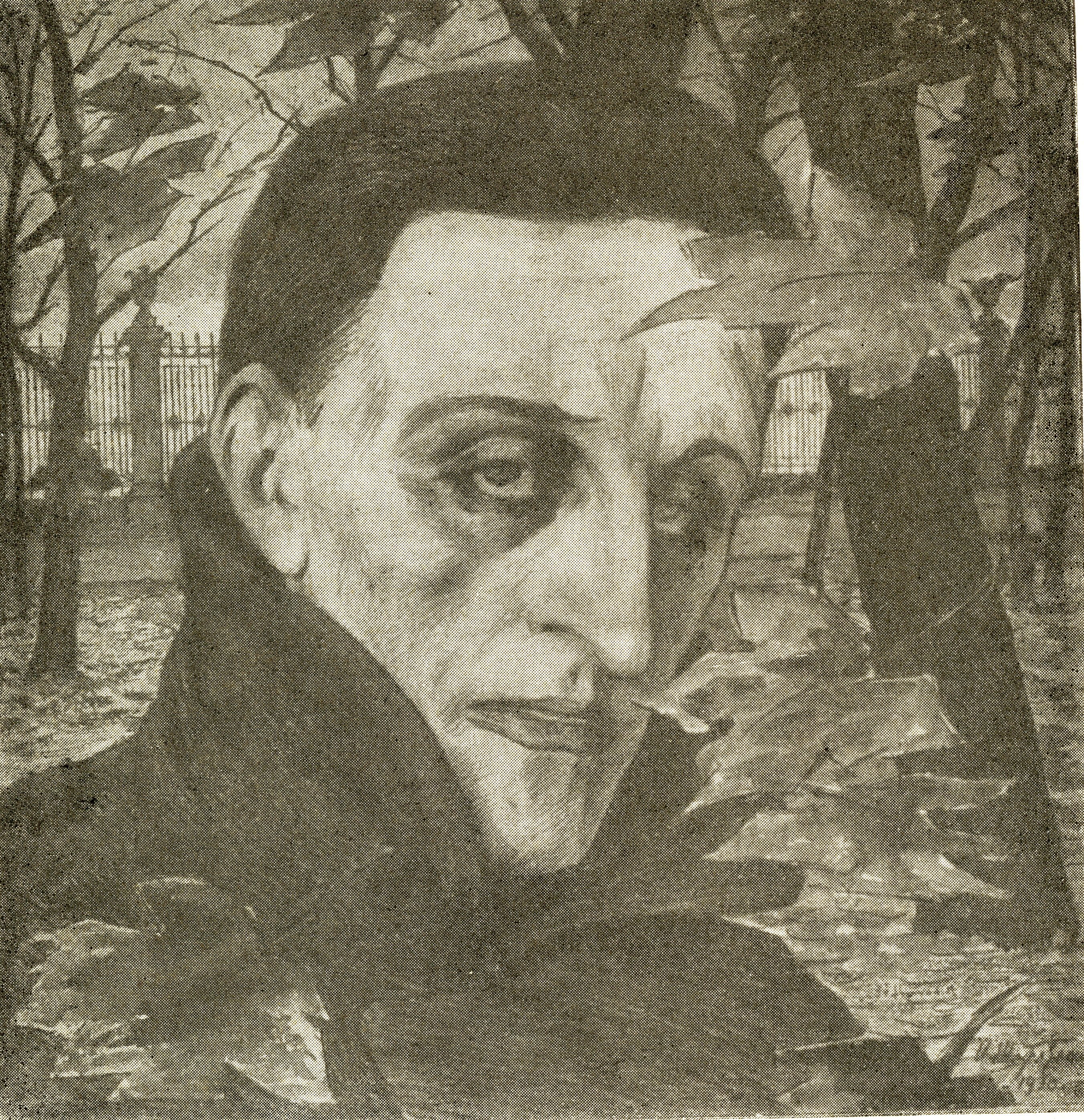
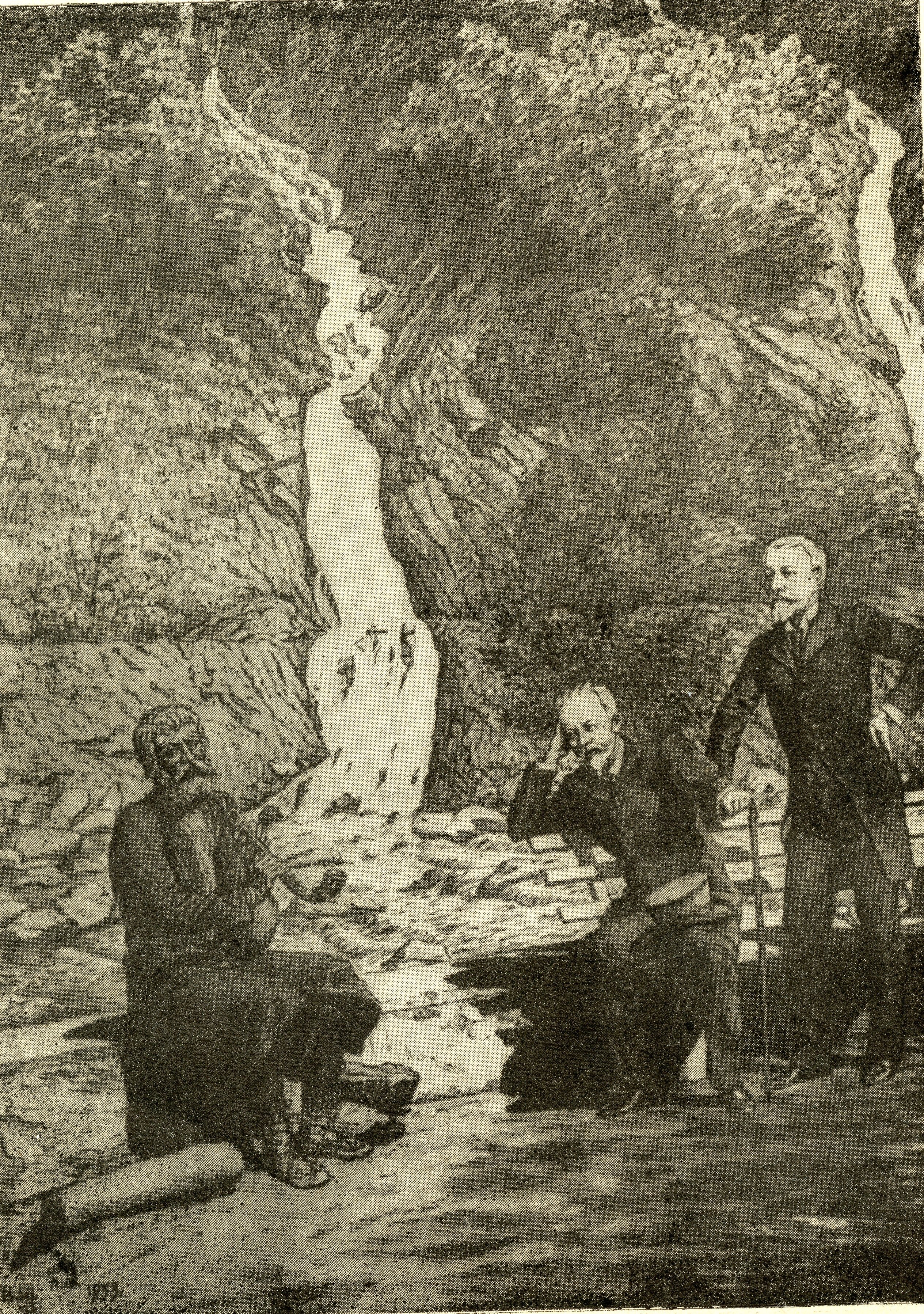
In addition to watercolors, he used oil paint and easel graphic techniques.
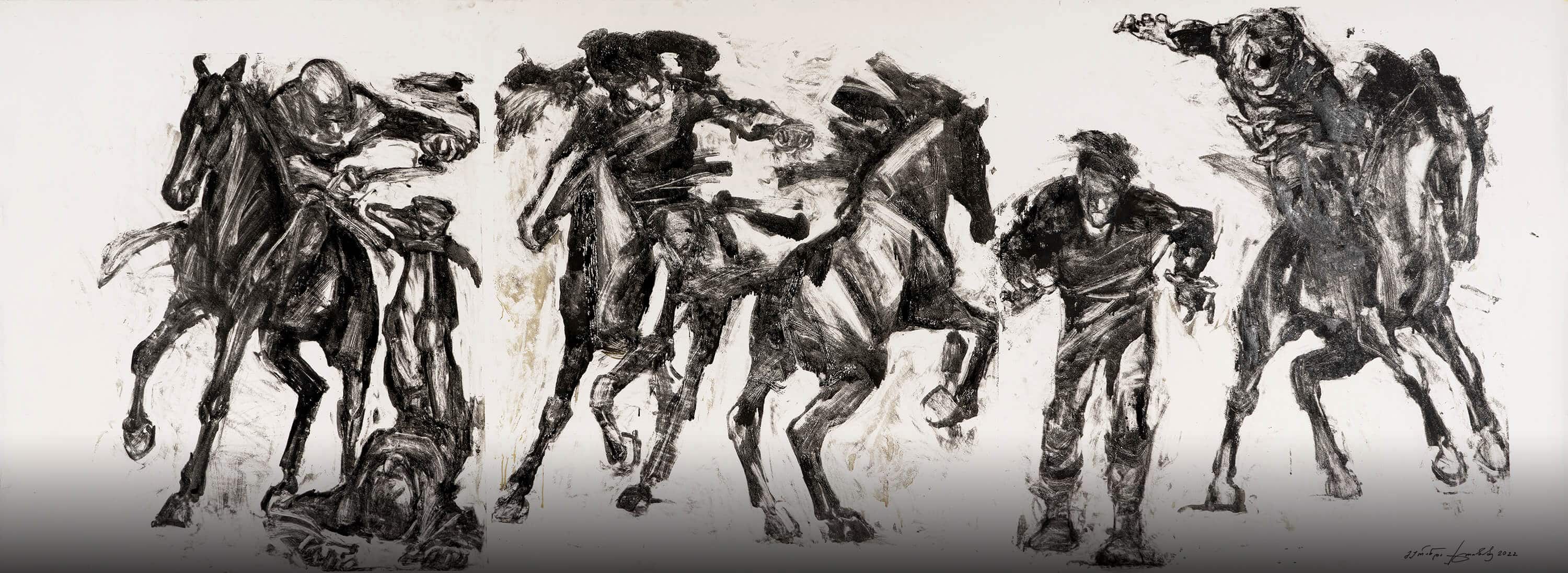
Further, the artist painted works on Soviet themes, including Red Army Men in the Liakhvi Gorge, The First Electric Train in Atskuri, Galloping, and others. He created paintings depicting construction, such as the laying of railway lines in the direction of Akhltsikhe – Near Atskuri. He also illustrated sporting events, including Horse Race, Arrow Throwing , and Jerid . In 1944, he completed the watercolor work Bagrationi on the Borodino Field.
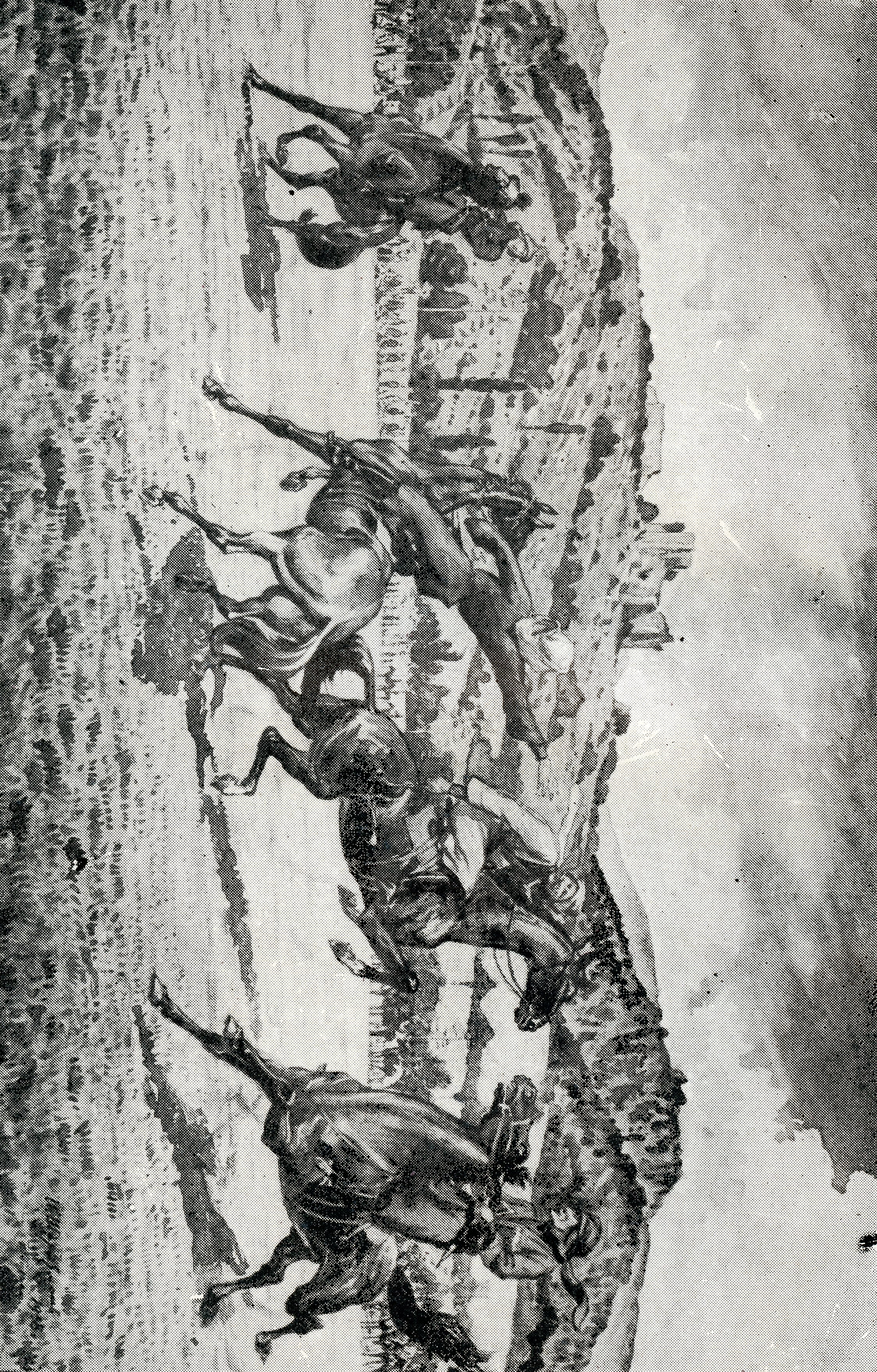
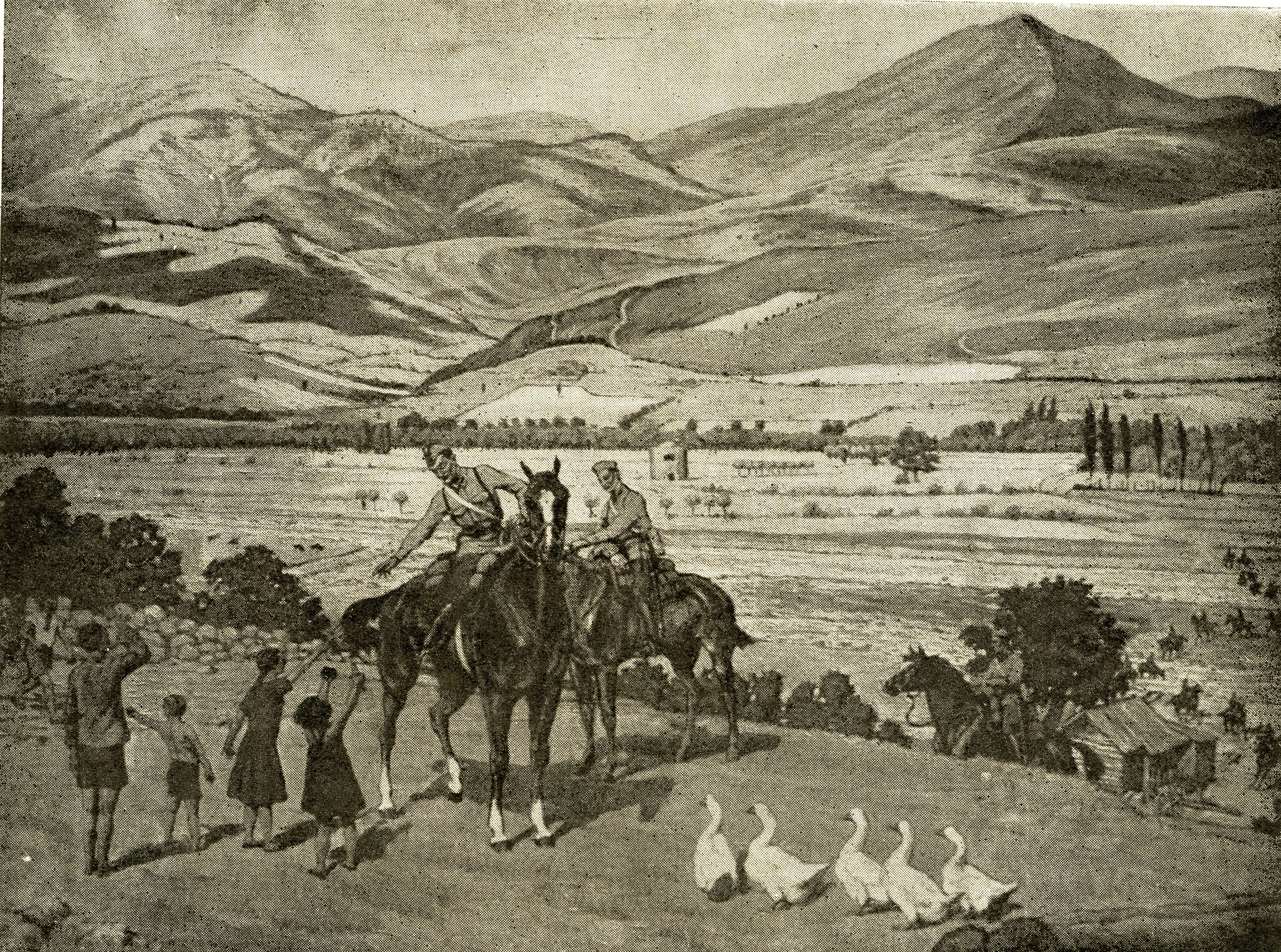
Iosif Charlemagne brought up many generations of graphic artists. Thanks to him and Eugene Lancere, the field of graphics continues to hold a leading and distinguished place in the history of Georgian fine arts.
Iosif Charlemagne passed away on December
31, 1957. He is buried in the Didube Pantheon of Writers and Public Figures in
Tbilisi.
[1] It
was only in 1937 that Anna Karenina,
with several illustrations, was published.
[2] Dimitri Shevardnadze and David Kakabadze worked on refining the figure of Saint George.
[3] I. Charlemagne designed the posters for the performances of the
1939-40 season of the Z. Paliashvili Tbilisi State Opera and Ballet Theater: N. Rimsky-Korsakov's The Tsar's Bride, Oles Chishko's Battleship
Potemkin, P.I. Tchaikovsky's Eugene Onegin; for the 1940-44 season:
P.I. Tchaikovsky’s Eugene Onegin; for the 1955-1956 season: Boris
Godunov (a performance dedicated to the 75th anniversary of the death of
Modest Mussorgsky).