Distinguished by her way of thinking, strength of character, views and courage, Elene Akhvlediani,
commonly called Elichka, was the very epitome of freedom.
1 Throughout her life, she remained
inspired by the town of her birth, Telavi. Located in the Kakheti region, eastern Georgia, this small
town, deeply rooted in history, is characterized by narrow streets and fortresses, mostly balconied
stone and brick houses dotting the hills. The genuine affection the artist felt for this place, its
architecture and lifestyle, had never faded.
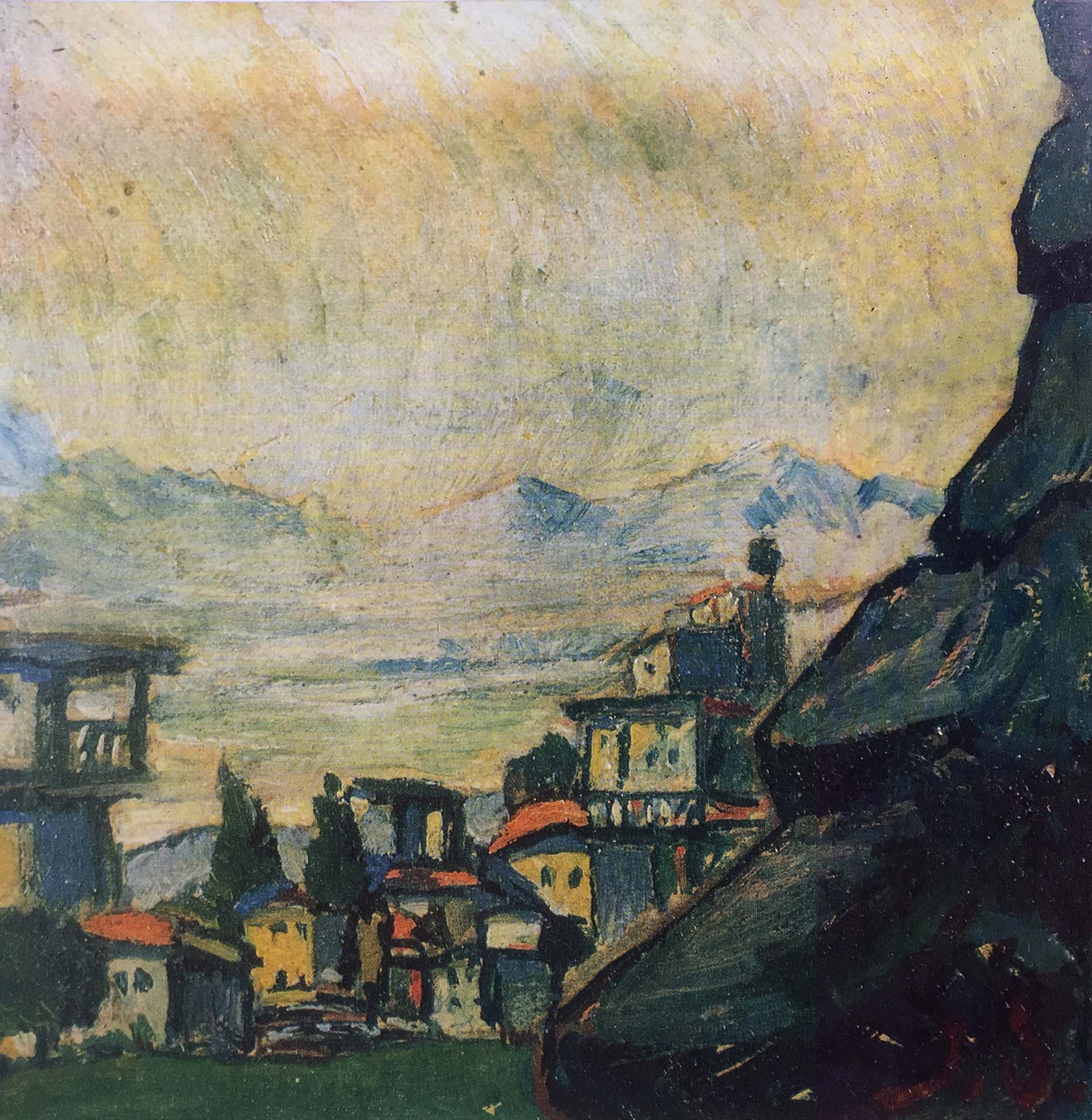
Telavi. Oil on canvas, 9.5X9.5, 1914
Akhvlediani embarked on her career as an artist when modernism was finding a foothold in
Georgia. Georgian modernism was not rich in movements, but it was interesting and diverse for
the specific art of individual artists affiliated with it. Elene’s distinctive painting was enweaved in
the rich fabric of Georgian modernism.
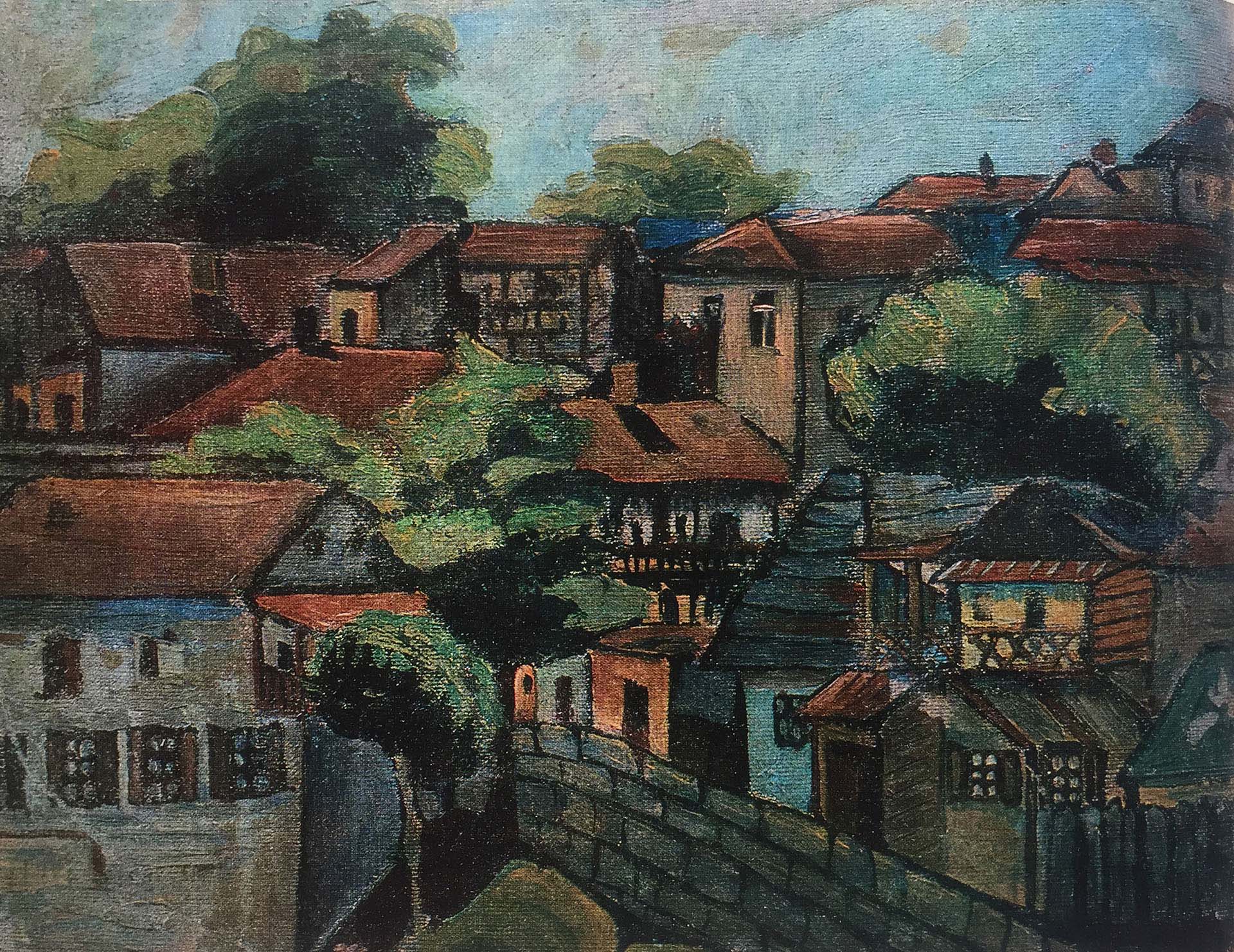
Telavi Landscape. Oil on canvas, 26X42.5, 1918
The artist is regarded as a pioneer of urban landscape in Georgian modernism. The views of towns
she was exposed to and enchanted with since her childhood years, ran as the leitmotif throughout
her art at all times. From her versatile artistic output, in which painting, book illustration, stage
and production design are of equal value, it is her landscape paintings that will be addressed here.
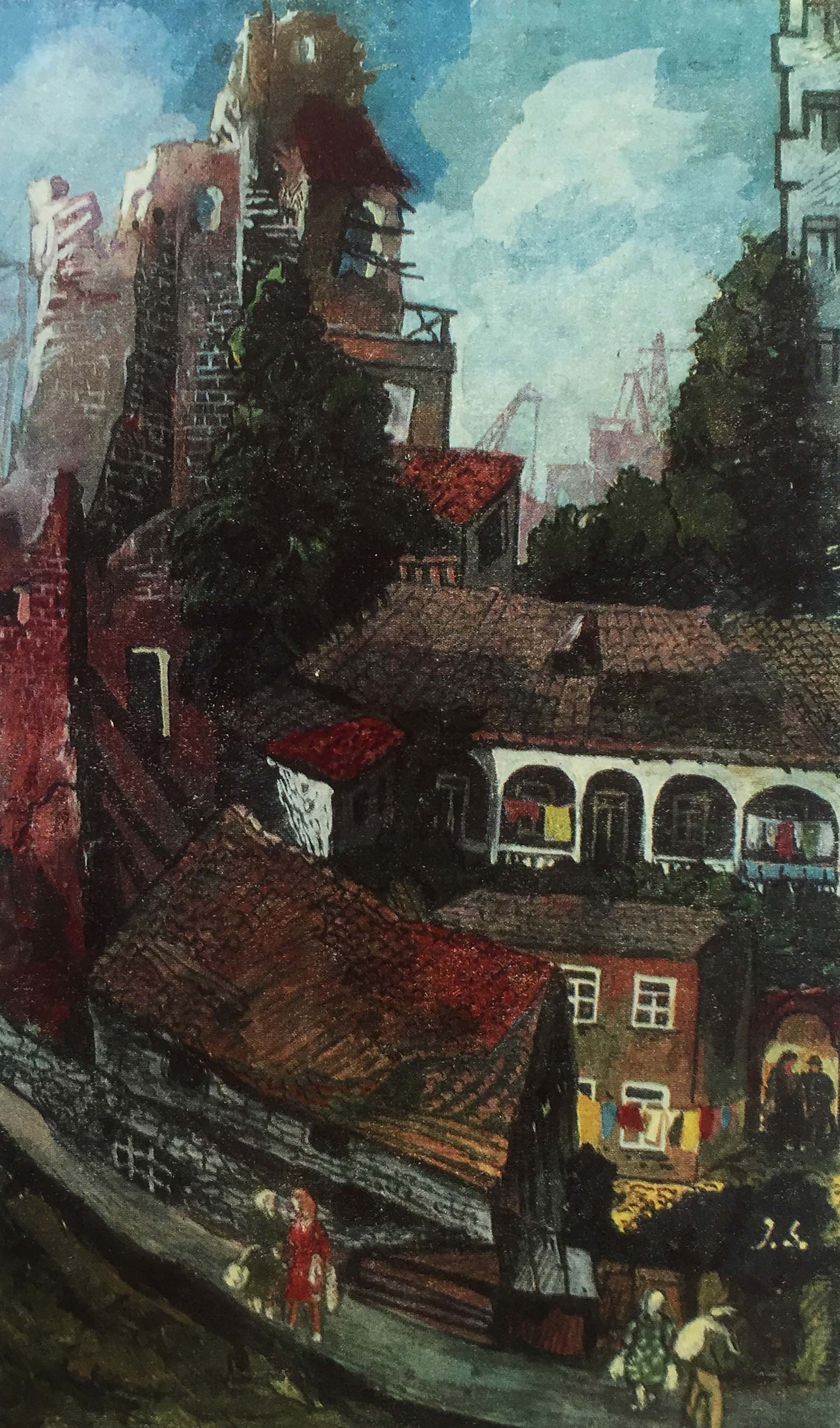
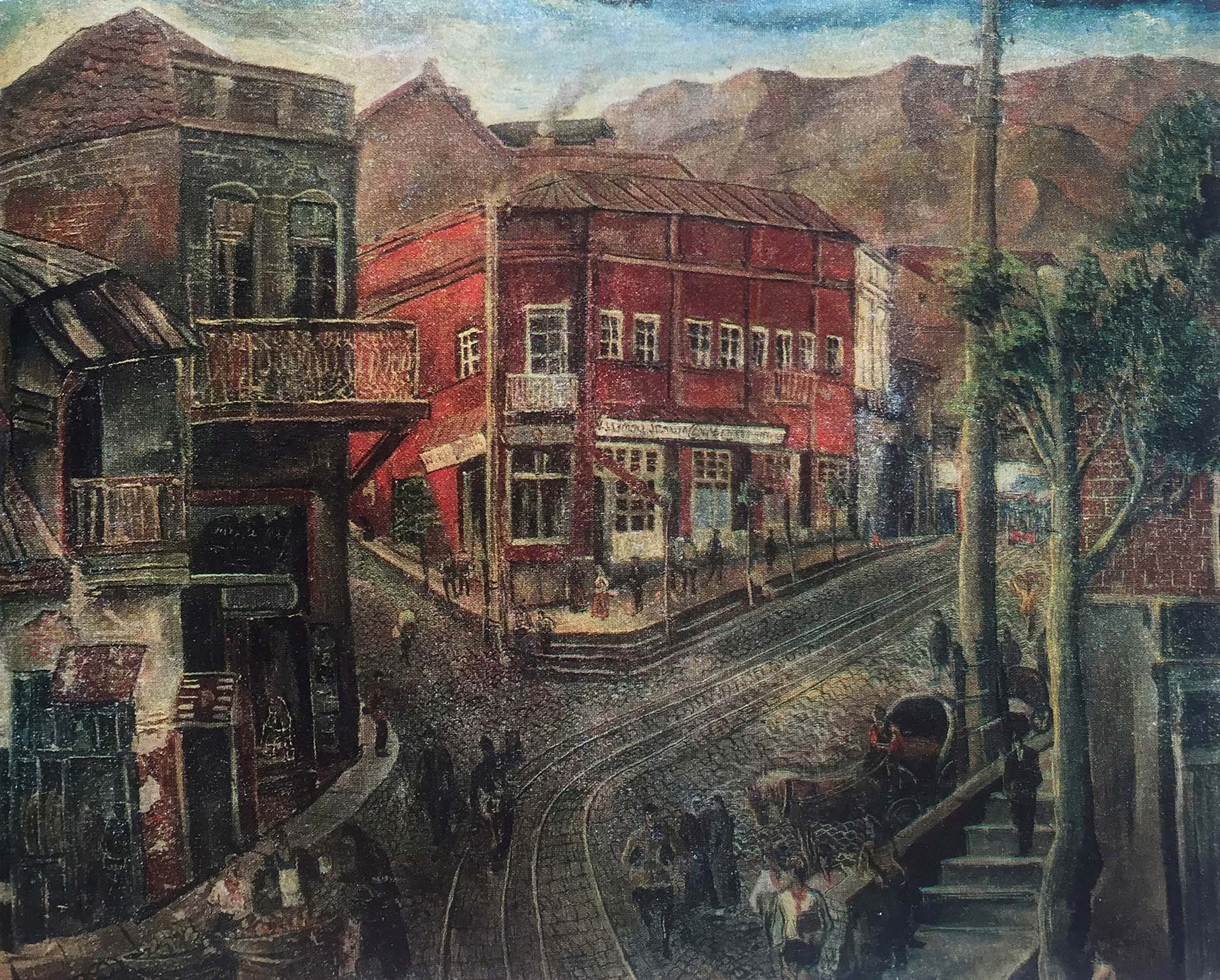
A Street Corner in Old Tbilisi. Oil on canvas, Gouache on paper, 43X26,5, 1969 Elene Akhvlediani House Museum
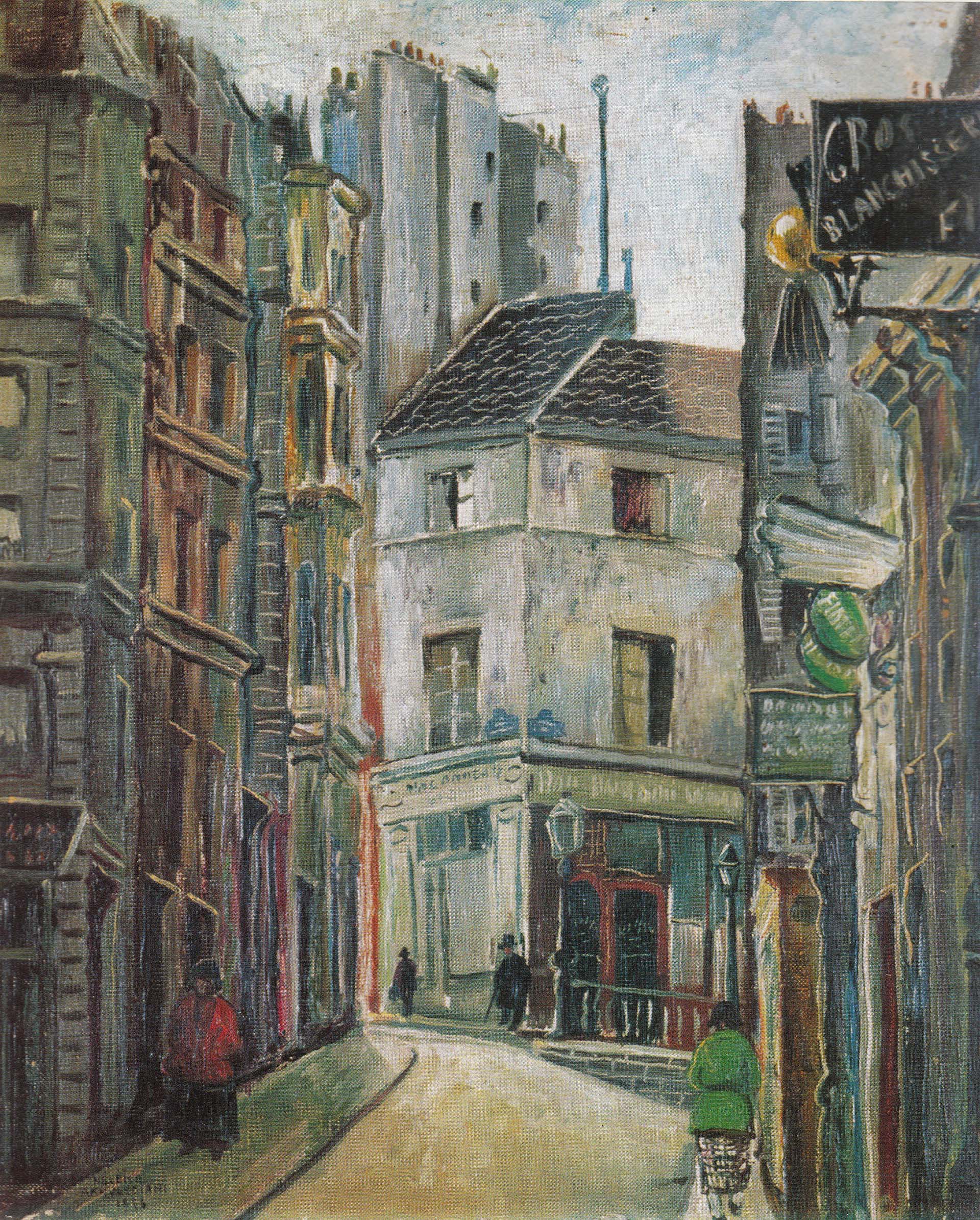
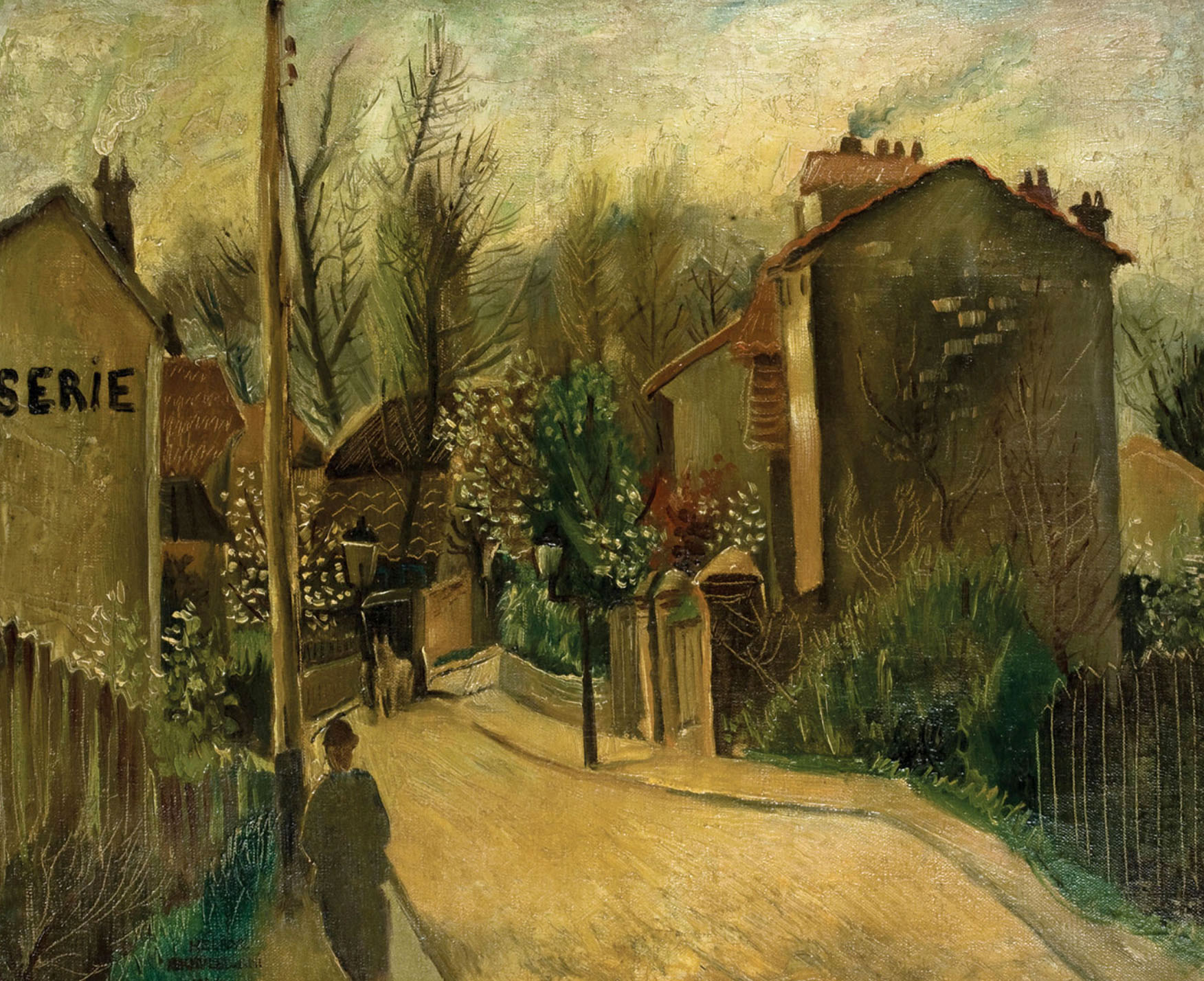
A Street Corner in Paris. Oil on canvas, Georgian National Museum
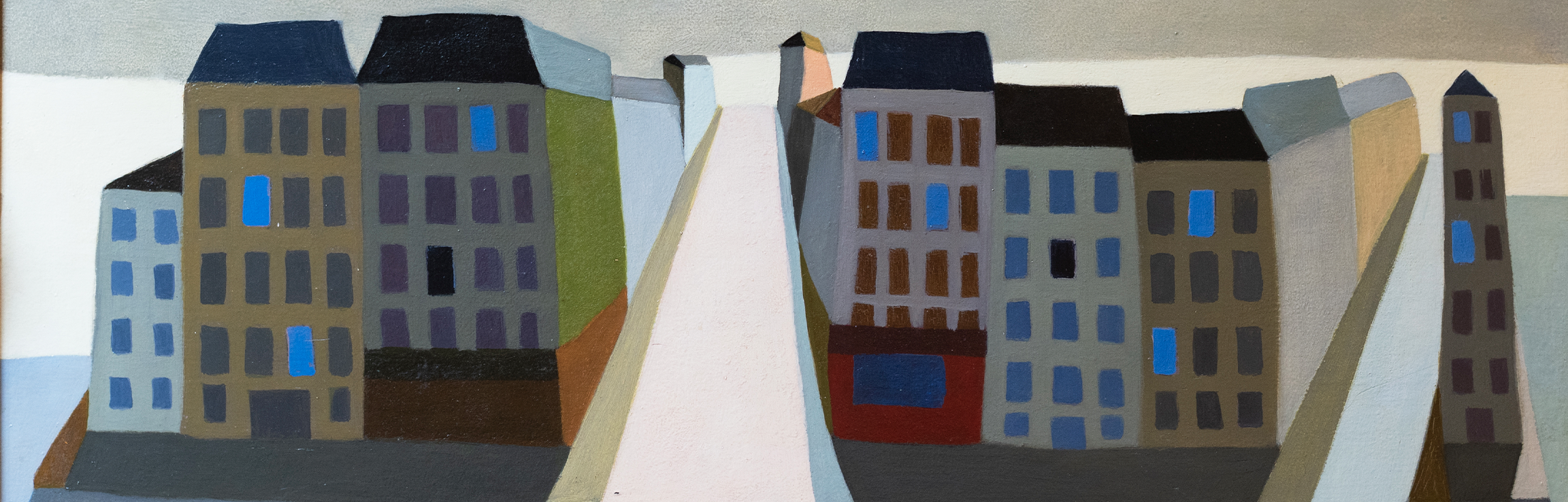
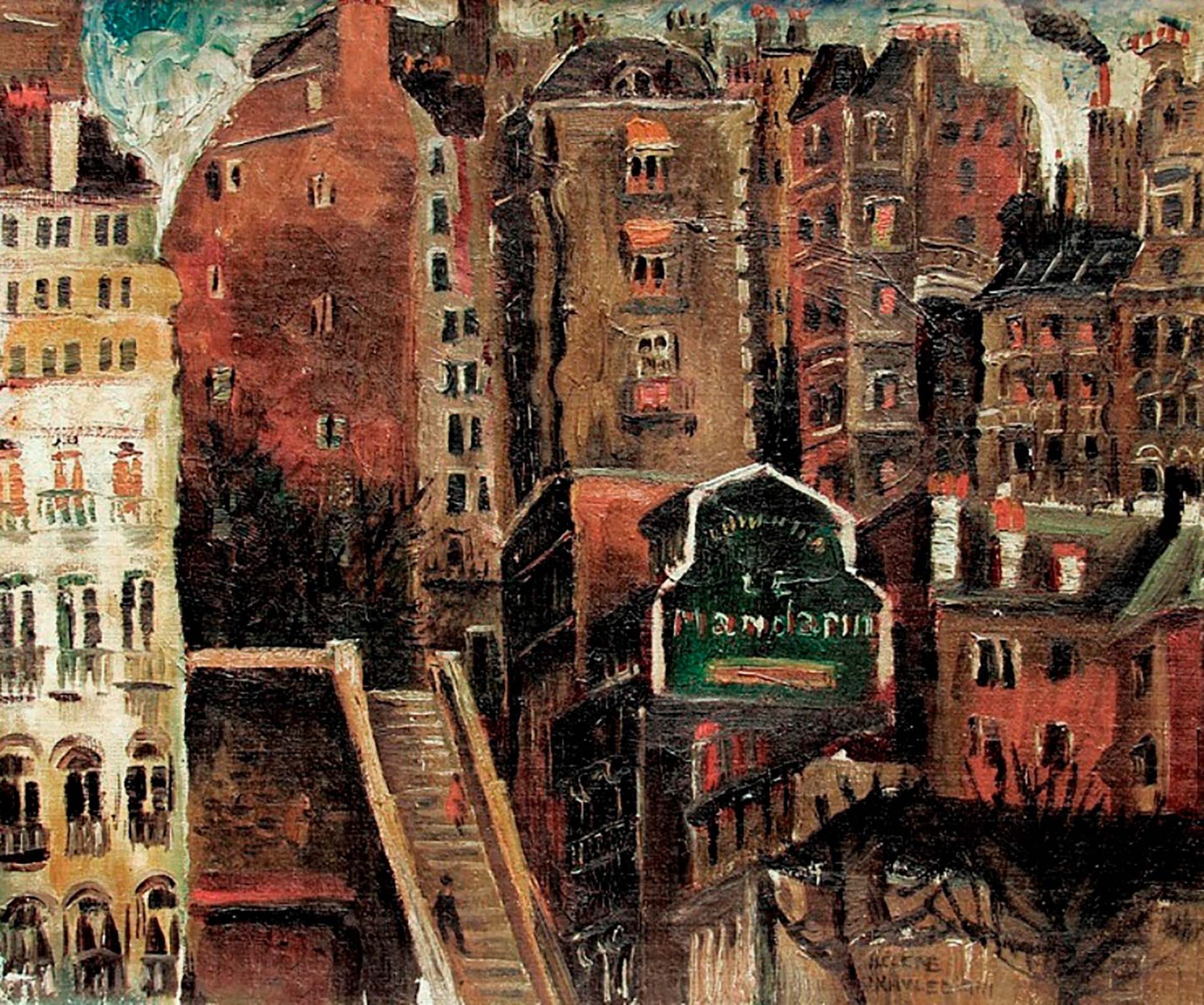
The compositions of Akhvlediani’s cityscapes, whether featuring the views of Tbilisi, Telavi,
Batumi, Sanremo, Venice or Paris, are viewed as shots, yet each detail, colour, outline or any other
pictorial element has its fixed place, so that even a slight dislocation of any of them can disrupt the
entire composition. Her paintings are noted for the combination of decorative and painterly
treatment, the use of multitude of concrete details and generalized, almost abstract elements, the
impression of depth and two-dimensionality, careful attention to detail and application of broad,
flat brushstrokes. Some of her works offer a synthesis of several of these techniques, which allows
the painter to create the right mood. Akhvlediani is more concerned with showing the genius loci
rather than presenting landmarks. That is why her cityscapes are so alive, colourful and expressive.
The pictures tell stories of the people living in these places. Even if people are not represented, the
viewer can get a sense of their everyday existence. Elichkha’s landscapes are filled with an implied
presence of the people residing in the neighbourhoods featured in her paintings.
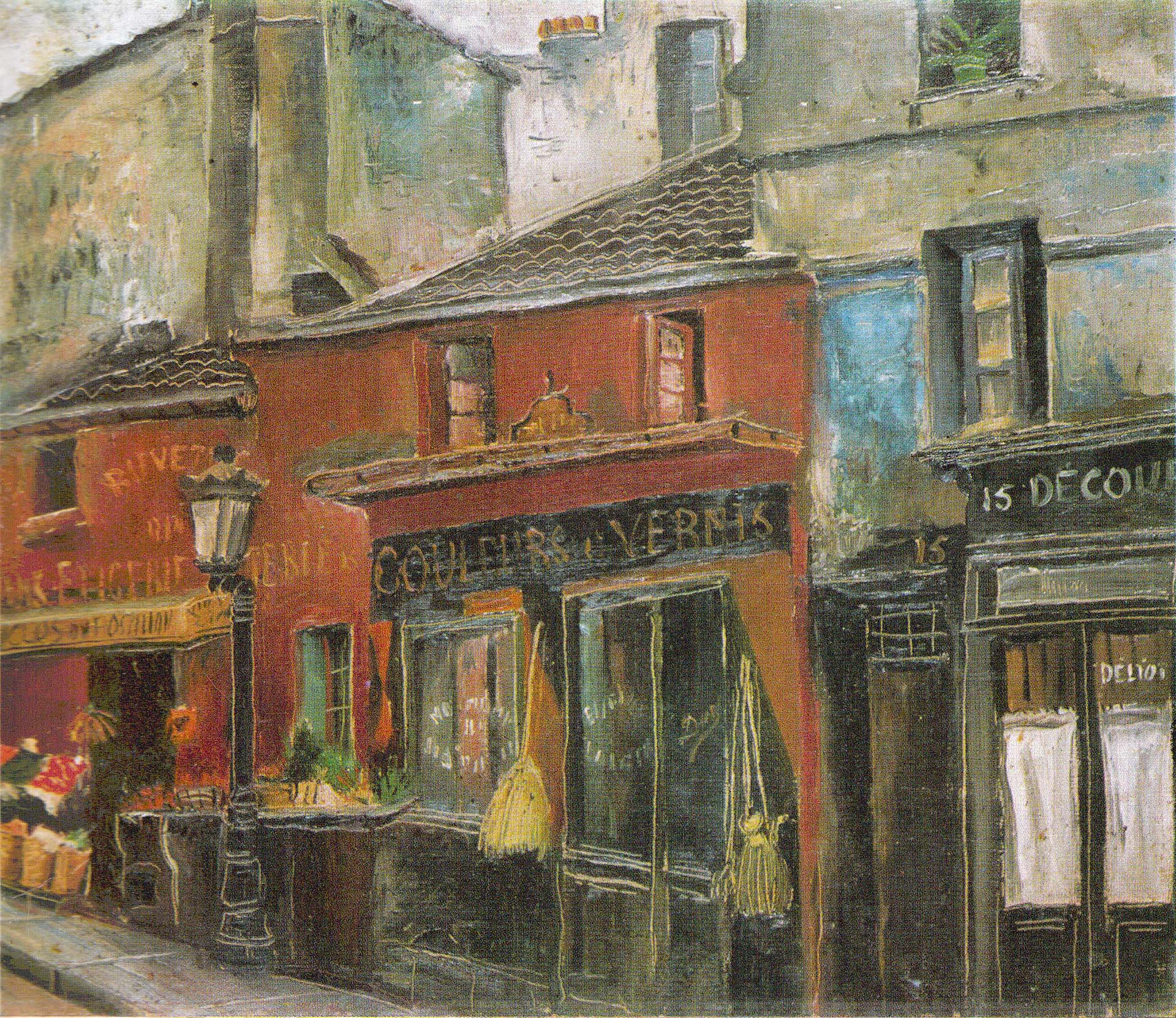
A Street Corner in Paris. Oil on canvas, 38X46, 1926, Georgian National Museum
Old Tbilisi. Maidan. Oil on canvas, 38X46, Tbilisi 1927, Georgian National Museum
The integration of Georgian modernist art with European was based on a thorough interpretation of European modernist movements and the mastering of contemporary artistic vocabulary by Georgian Modernists. Akhvlediani’s art recalls the style characteristic of the French painter Maurice Utrillo, whose works are noted for their unique blend of post-Impressionism and Cubism. It is her Paris landscapes that have the closest affinity with Utrillo’s works. Broad brushstrokes, architectural, almost geometric shapes associated with Cubism, views of cities filled with lyricism, ‘slowed-down’ rhythm and vivid colours characteristic of post-Impressionism are features that the artwork of the two painters have in common. Apart from these characteristics, Akhvlediani’s paintings demonstrate one more feature that strongly appealed to the French critic, Maurice Raynal, who commented on the Georgian artist in the following way: ‘Elene Akvhlediani is a distinctively national painter, and this is her main advantage”. As Lado Gudiashvili, prominent Georgian artist mentioned in his memoirs, Raynal was ‘fascinated by the presence of national flavour’ in the young painter’s art’. 2
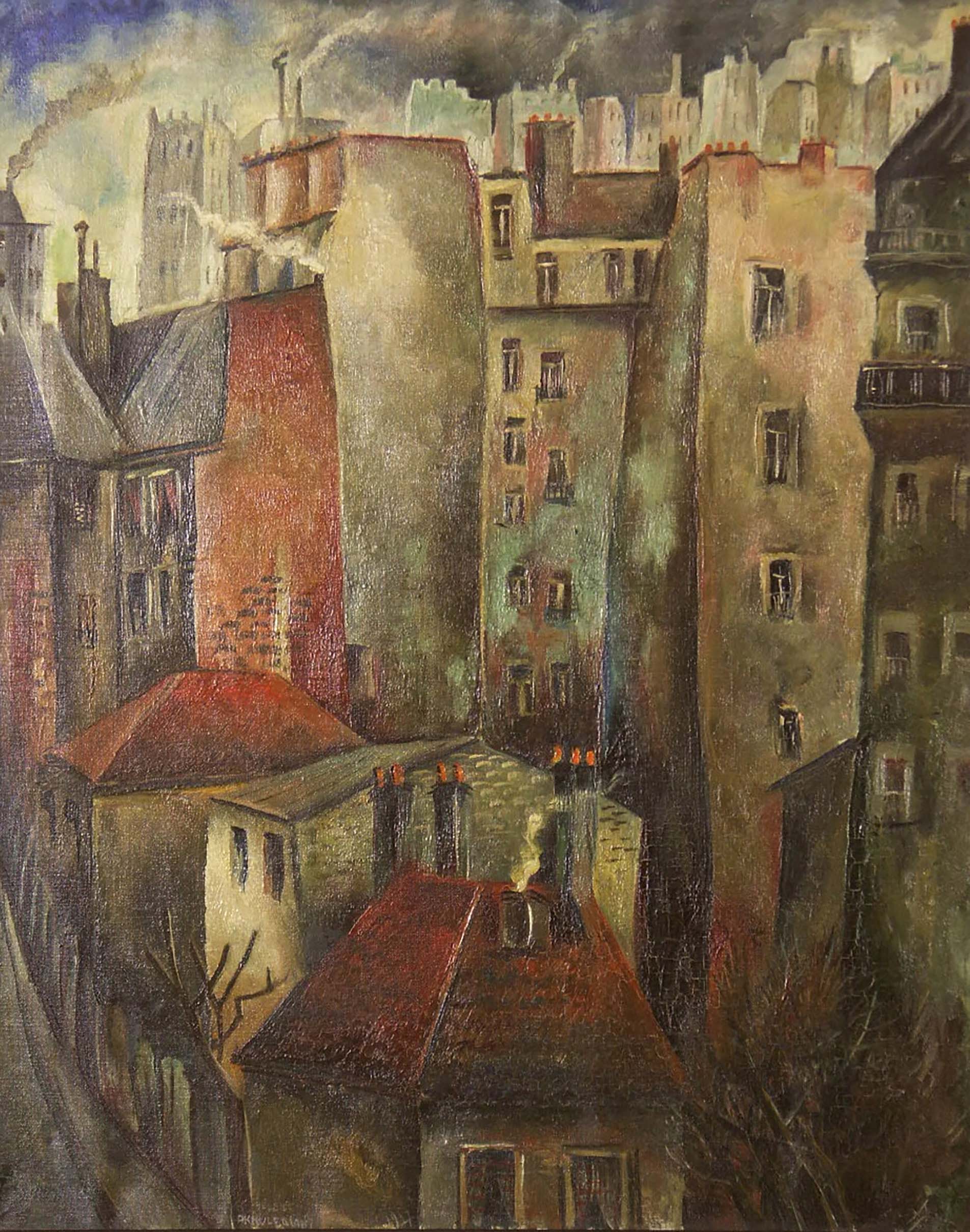
A Neighbourhood in Paris, oil on canvas, 81X65.5
Paris 1927, Georgian National Museum
_copy.jpg)
Paris. Oil on canvas, 38X46, Paris 1926, Georgian National Museum
A Street Corner in Paris. Oil on canvas, 42X48, Paris 1926, Georgian National Museum
Akhvlediani’s exposure to various movements in European art was further facilitated by her close
contacts with Parisian artists’ circles. She was thus familiar with the art of the prominent painters
of the time. Yet, as she herself noted, it was the Old Masters who left the most lasting impression
on her. She was fascinated by Bruegel’s mastery of complex compositions and the way he portrayed
humans in the natural landscapes, and was enchanted by El Greco’s use of light effects and his
power to animate the inanimate material. Her landscapes of the Parisian period vividly reveal her
penchant for the art of these great European artists and familiarity with their language of
expression.
_copycover.jpg)
Winter-Kakheti. Oil on canvas, 60X60, Paris 1924, Georgian National Museum
Paris. Oil on canvas, 40X46, Paris 1926, Elene Akhvlediani House Museum
Akhvlediani’s art offers a peculiar mixture of national and European traditions of art, which is
coupled with her artistic intuition and taste, flawless coloring, the mastery of setting composition
in a deep space or on a flat surfice, as well as skillful use of artistic repertoire with the perfectly
accurate line, plane, brushstroke and colour lending a highly individual character to her language
of artistic expression.
________________________________________________
NOTES:
1. It was not only that Elichka’s art was associated with avant-garde movement in Georgia, but also that her
ideology was ahead of her time. She was one of the pioneer painters to create a group of female artists who
worked side by side, learning from their tutor and from each other. Of particular note are the plein aire
painting sessions organized by her, during which she painted together with her younger colleagues. This was
the best way of transferring knowledge to and sharing experience with young artists. The group had several
joint exhibitions, which was yet another opportunity to promote female art and at the same time, to let the
emerging artists to test their possibilities.
2. V. Gudiashvili, Silamazis saidumlo, mogonebebis tsigni (The Mystery of Beauty, A Book of Memories), Tbilisi 1988, p.
43 (in Georgian)










_copycover.jpg)
.jpg)
.jpg)