




 Share this article
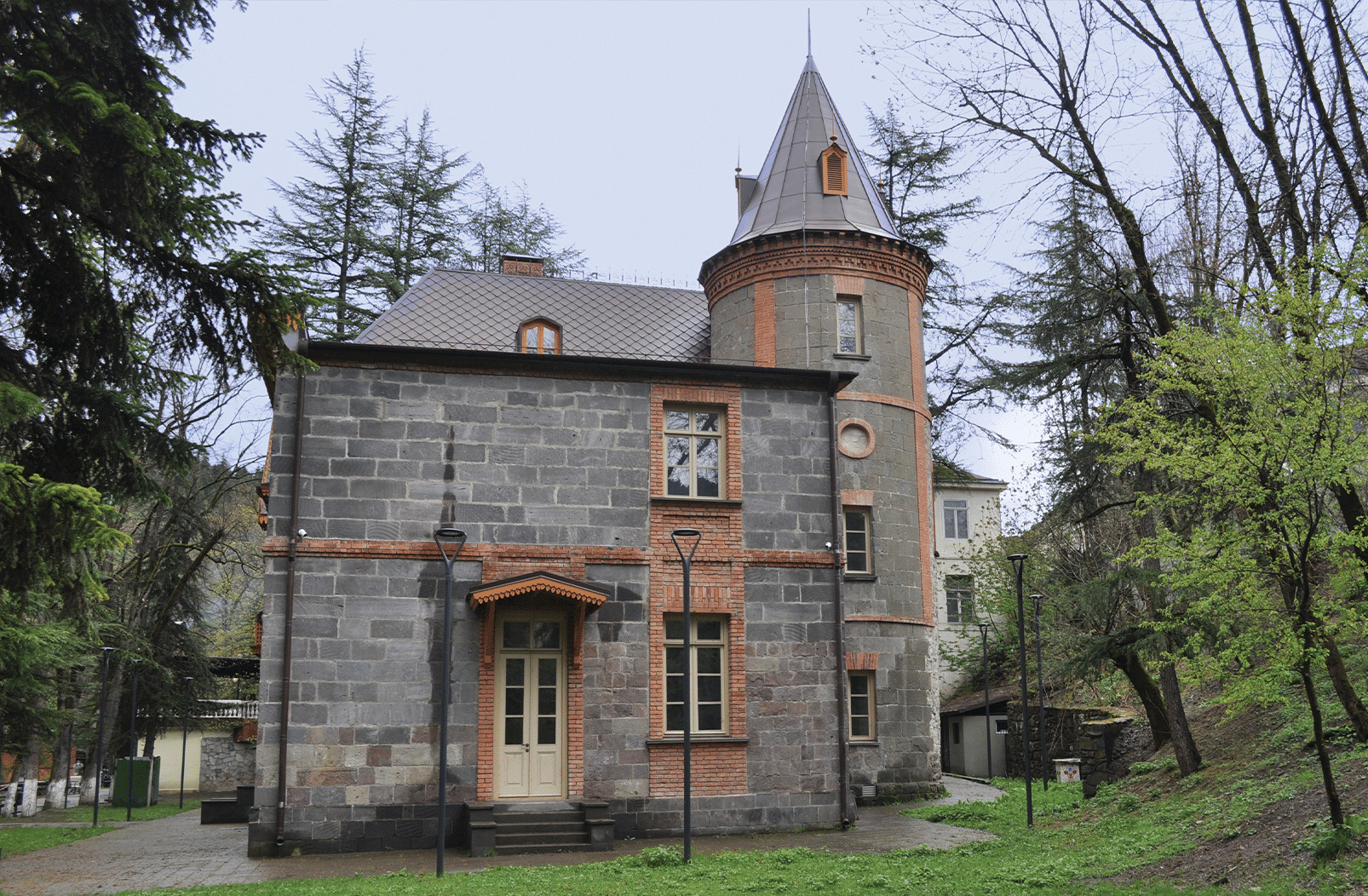
Borjomi, well known for its mineral waters, developed into a popular spa town in the second half of the nineteenth century. Among the buildings from that period, one of the most remarkable is the New Cavalry House. It is located in the historic Remmert Park, now named after Merab Kostava. The park was established in the 1870s on the initiative of Adolf Remmert, head of the Caucasus Mineral Waters Office, who played a significant role in the development and promotion of Borjomi.
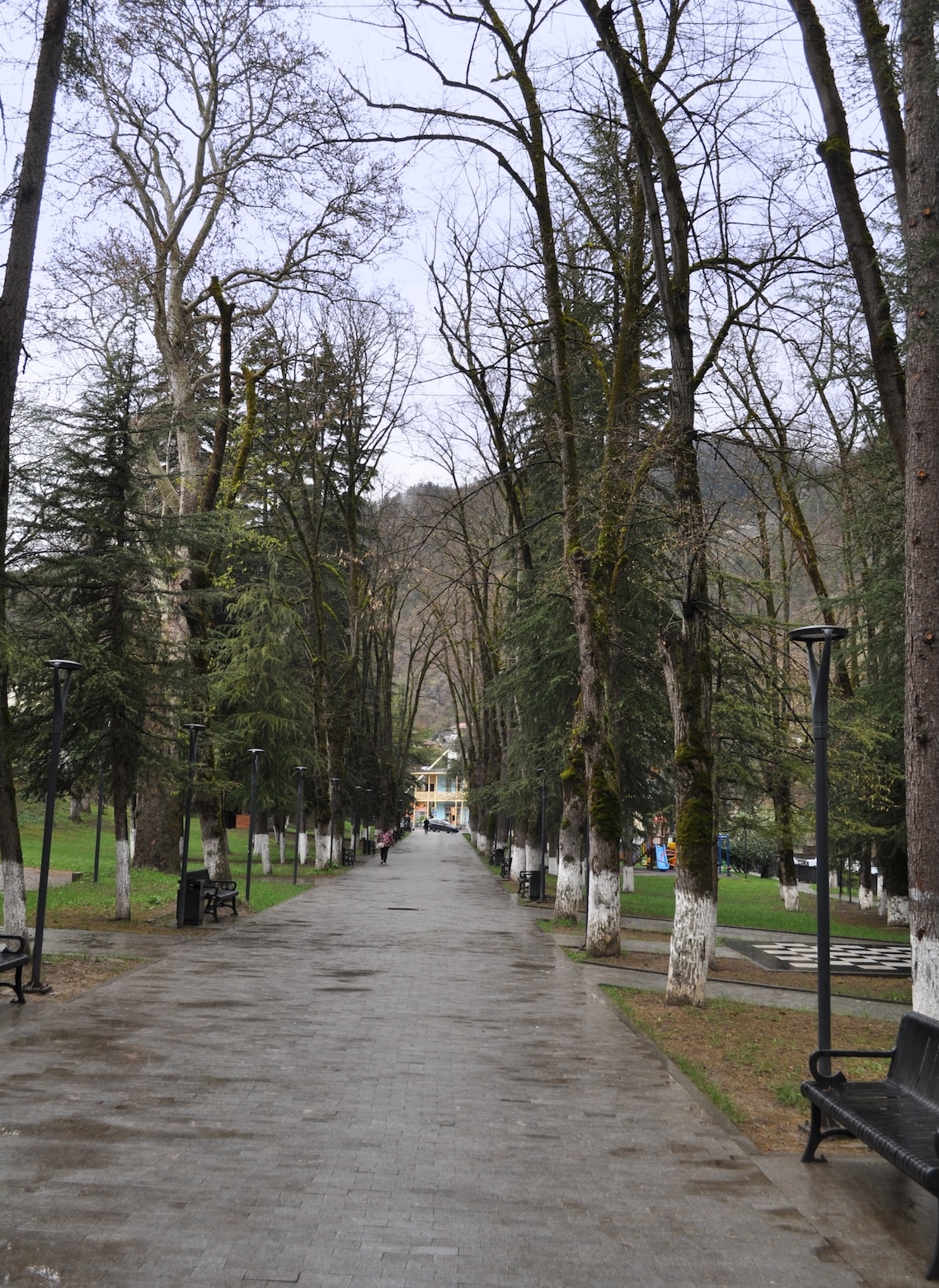
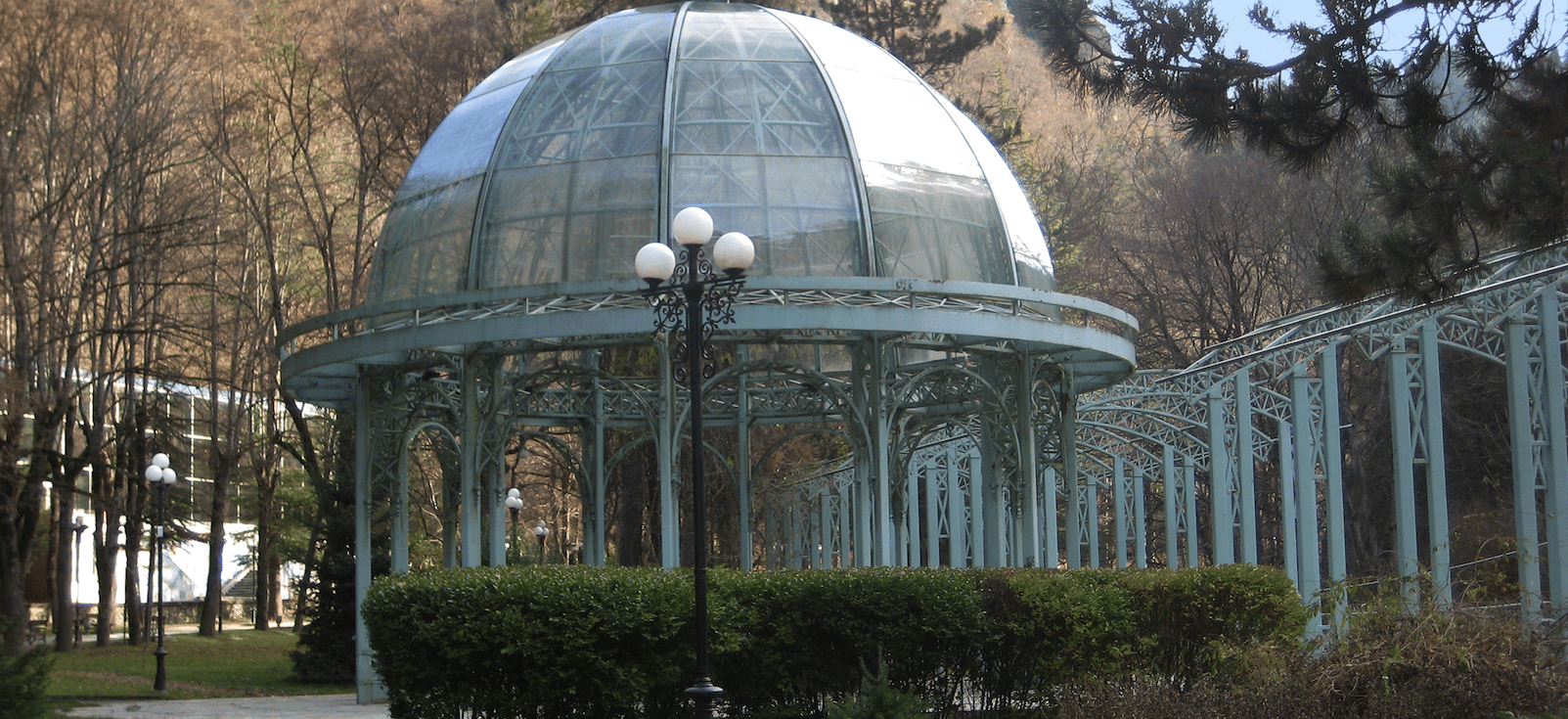
Main alley of Remmert Park
Originally, the park extended from the Kura River (Mtkvari) to the residential quarters of the town. However, during the Soviet period, it lost its riverside section due to the construction of a new railway station and a road leading to it.
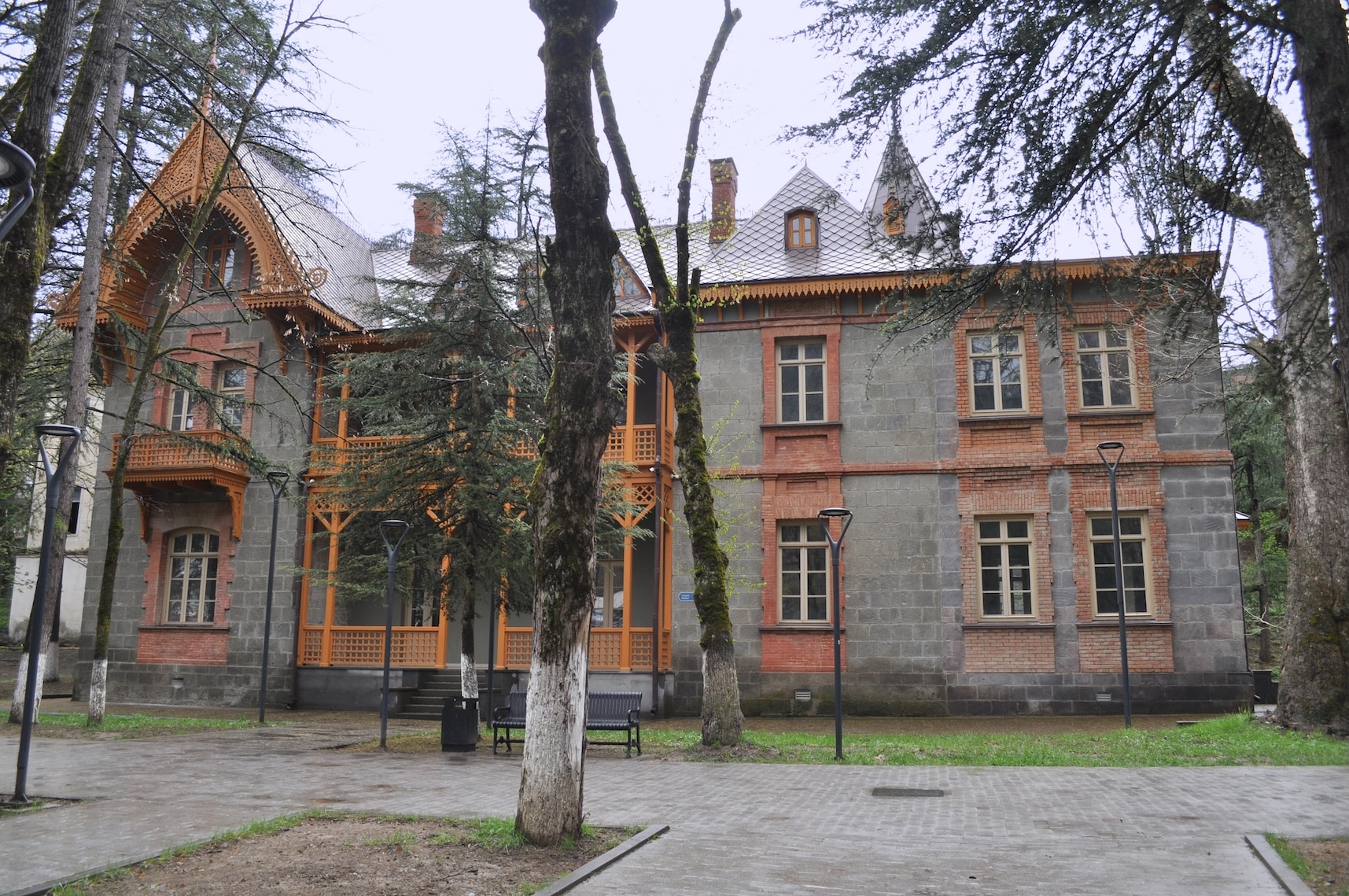
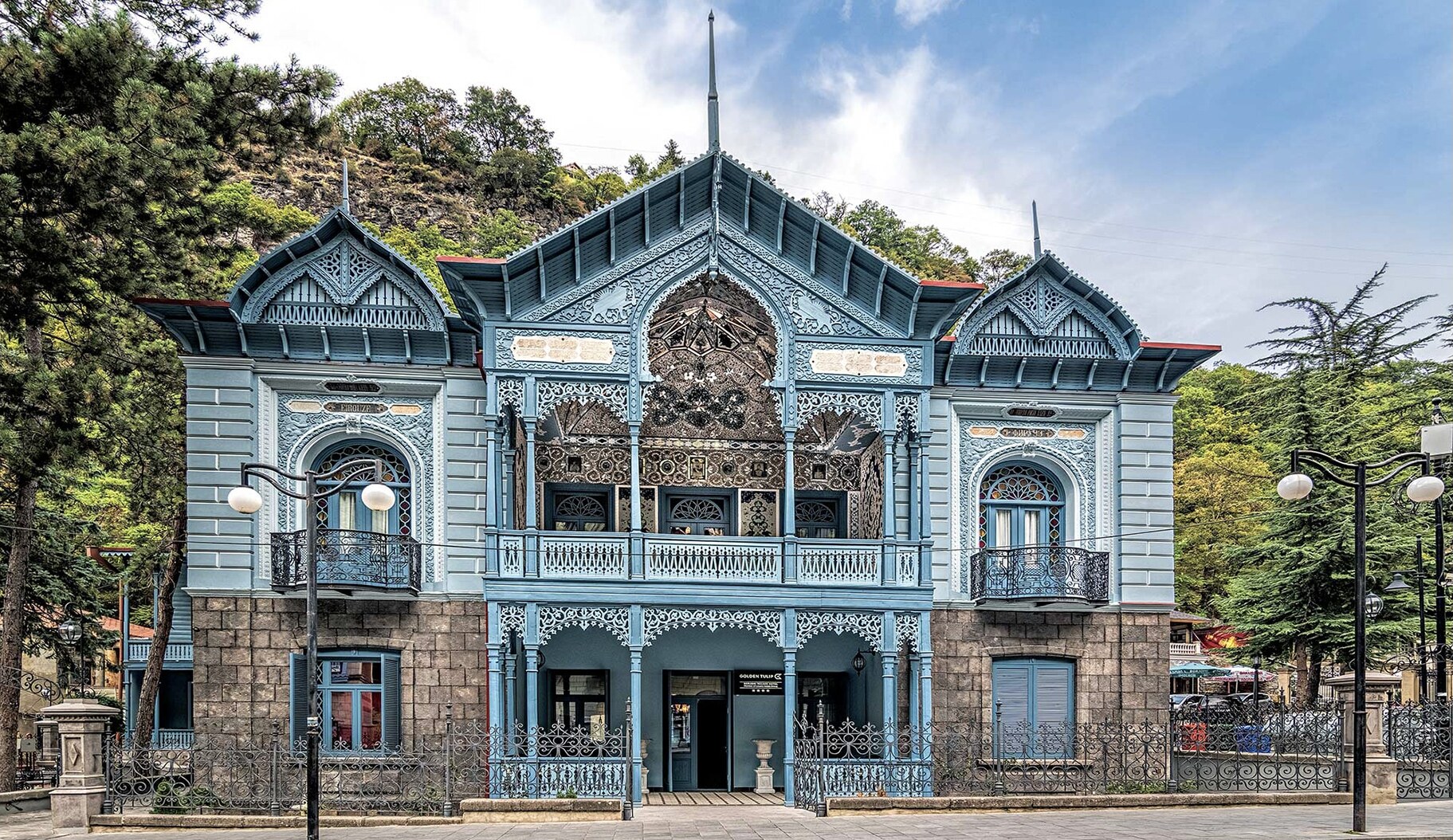
Front façade of the New Cavalry House
The New Cavalry House, a prominent landmark of the park, was built in 1880 based on a design by the renowned Tbilisi-born architect Albert Salzmann. It was intended to accommodate the retinue of the Viceroy of the Caucasus, Grand Duke Mikhail Nikolaevich, during his visits to Borjomi. The house stands in the upper part of the park, with its rear close to a steep slope, above which a street runs.
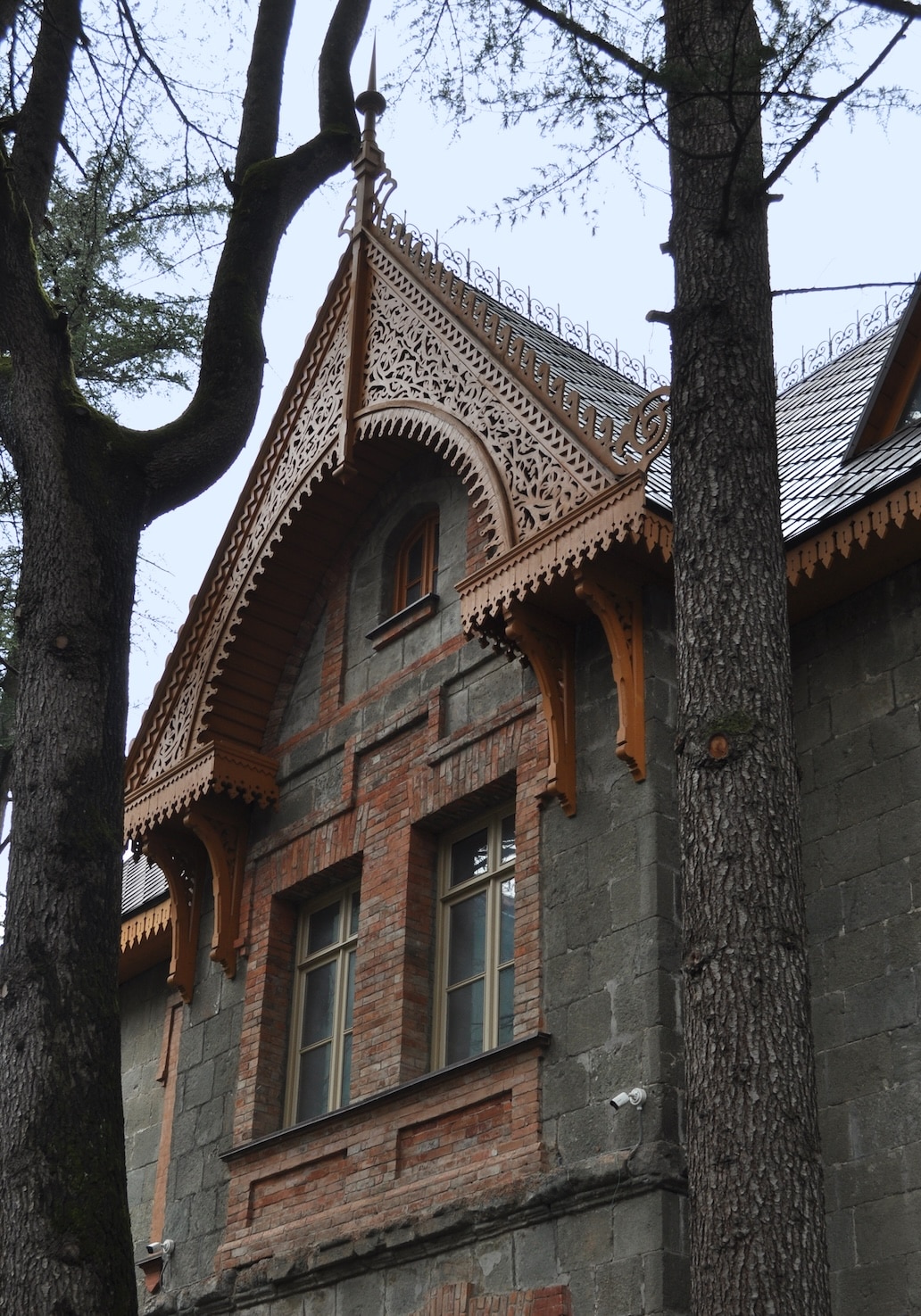
Pitched roof and double window of the left part of the house
The building is a two-store structure with a high-pitched roof. It is constructed of andesite blocks and brick, with extensive use of wood. The design clearly reflects the inspiration from the Swiss chalet style - an architectural trend rooted in Romanticism that spread across Northern and Western Europe in the nineteenth century. This influence is evident in the steeply pitched roof with a sharp ridge and wide eaves, the decorative wooden balconies, and the ornamental cornice.
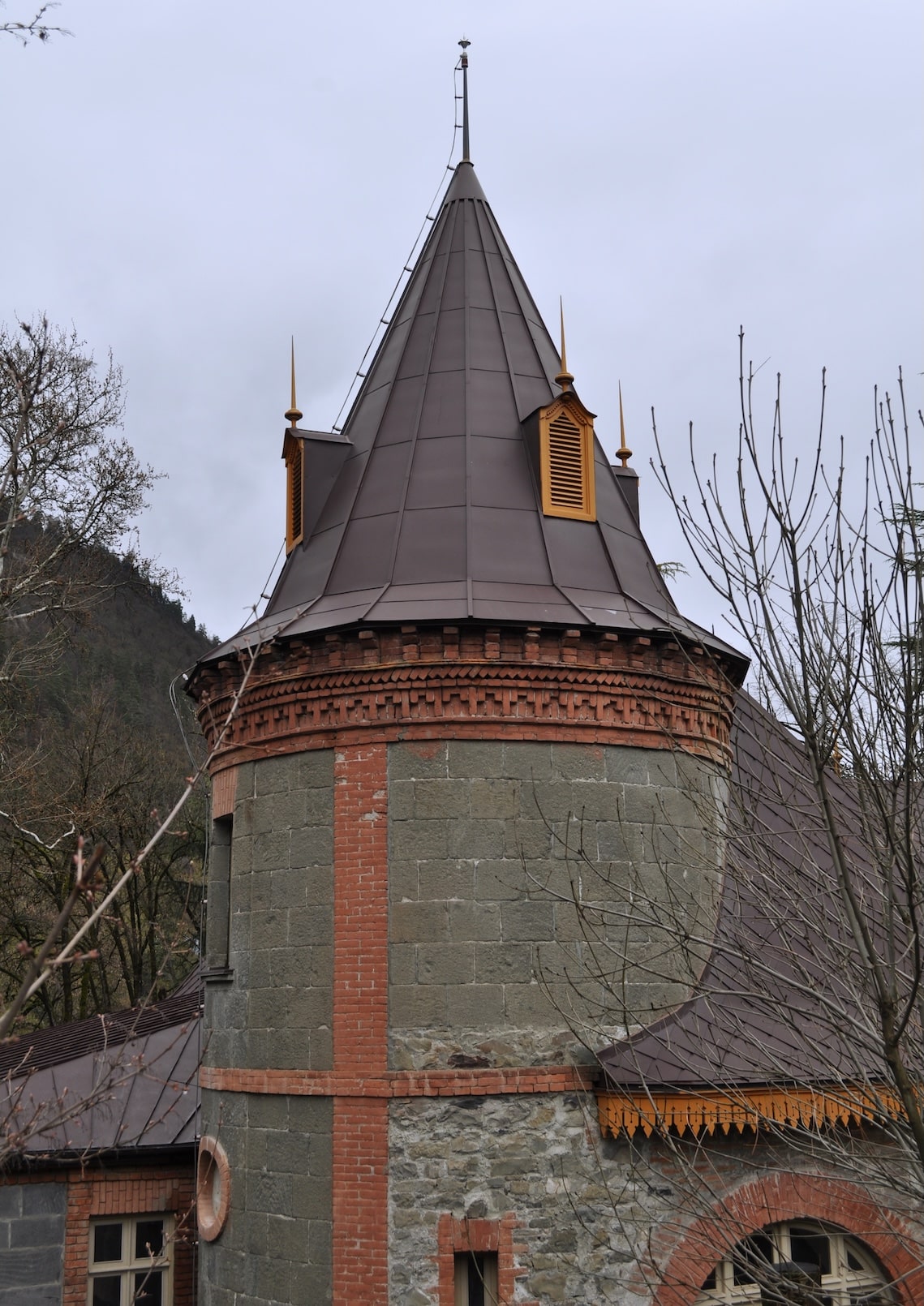
Round tower of the house
The house has an asymmetrical plan. On the left side of the main façade, there is an avant-corps topped with a gabled roof. On the right side, at the rear, a round tower rises, capped with a conical roof. During the Soviet period, an annex was added to the right side of the building.
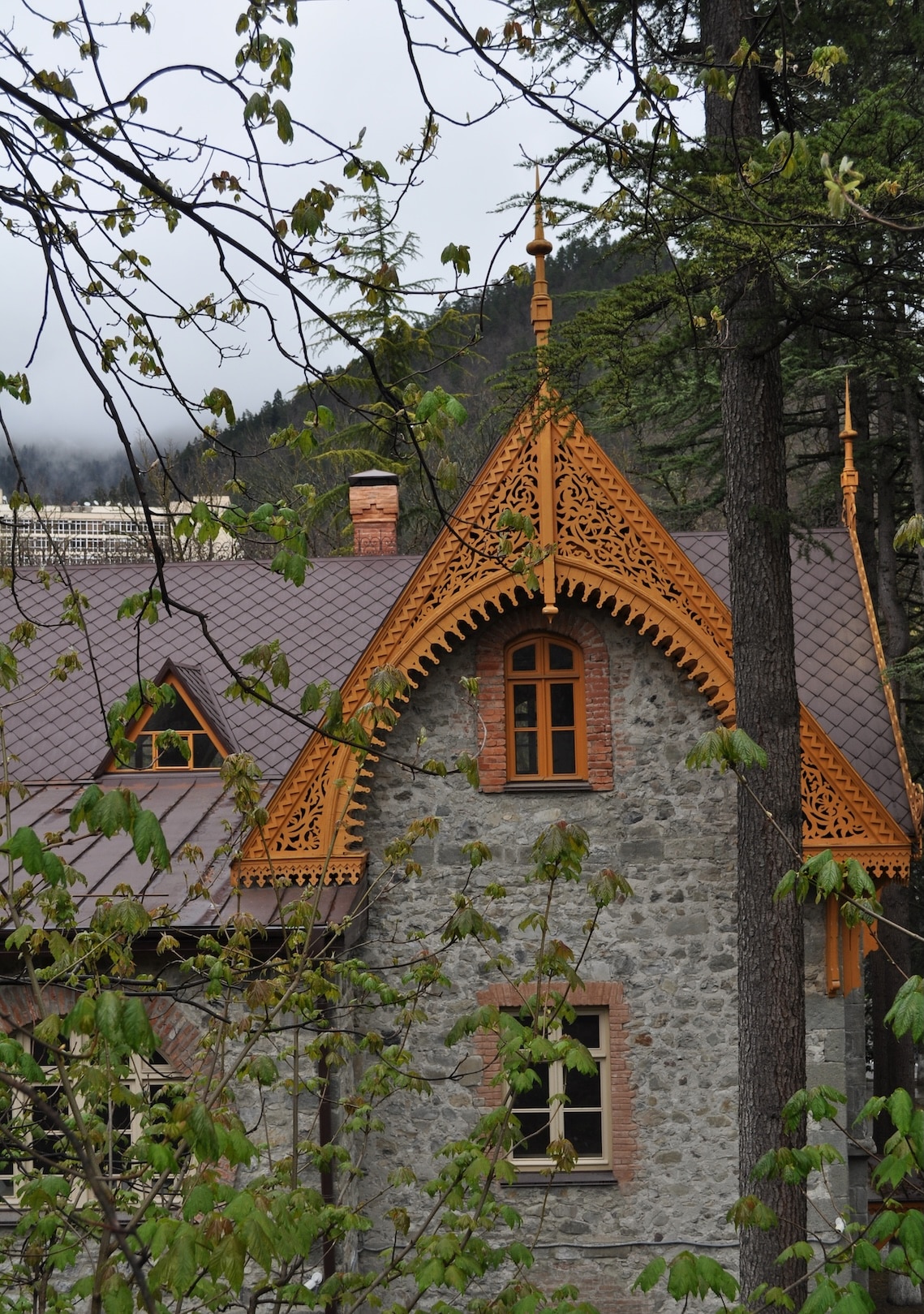
View on the rear of the house from the street
Throughout the Soviet era, the New Cavalry House was used by various medical institutions. It was later damaged by fire and abandoned, although much of the structure survived. Restoration and rehabilitation works were carried out between 2020 and 2022, with the goal of transforming the house into a branch of the local museum.