In the late 1950s, few knew who young Alexander (Shura) Bandzeladze (1927-1992) was. Indeed, they failed to realize that the painting that headed the renowned Galaktioni’s burial
procession to the Mtatsminda Pantheon in 1959 was his: he had painted it a few
years prior, in 1952. At that time, the artist was working on a series of
academic portraits, featuring Tamar Abakelia (1952), Dodo Chichinadze (1952),
Grigol Abashidze (1953), Spartak Bagashvili (1955), and others. Galaktioni is
said to have greatly impressed the artist when he posed, and the impact of his
stormy, creative energy was so strong and long-lasting that, in 1973, Bandzeladze
decided to return to the poet's portrait, this time attempting to achieve the
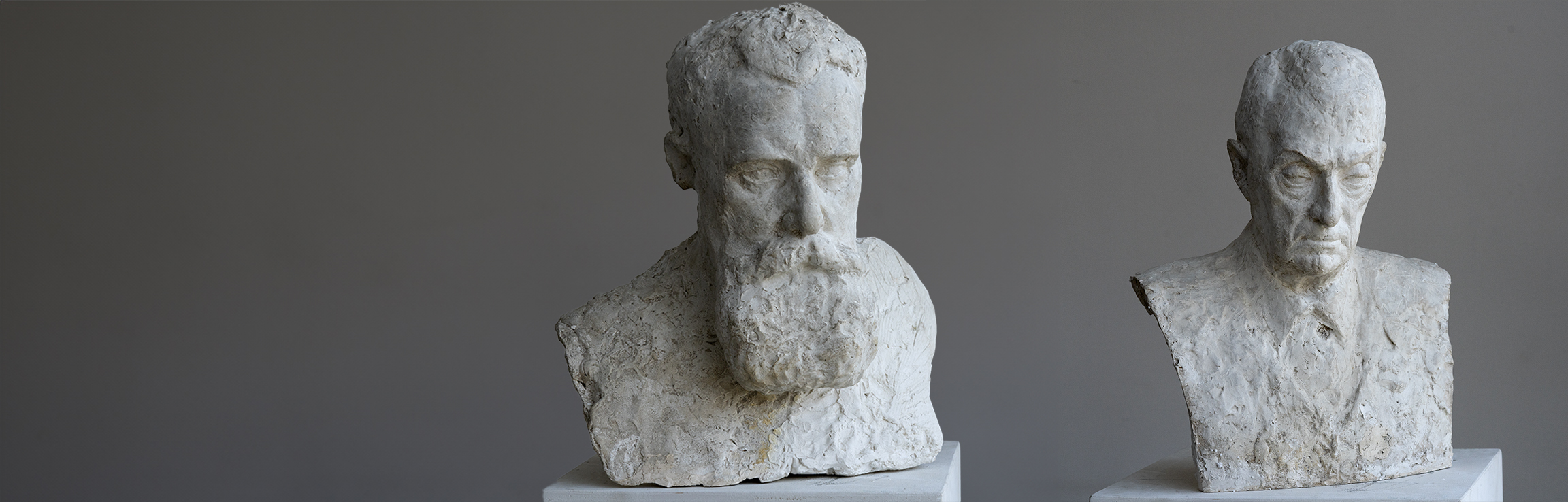
desired artistic effect by sculpting him. The only sculpture by Bandzeladze
that we are aware of to this day is the image of a giant striding against the
wind—monumental not in scale, but in spirit—which has associations with
Michelangelo's Moses.
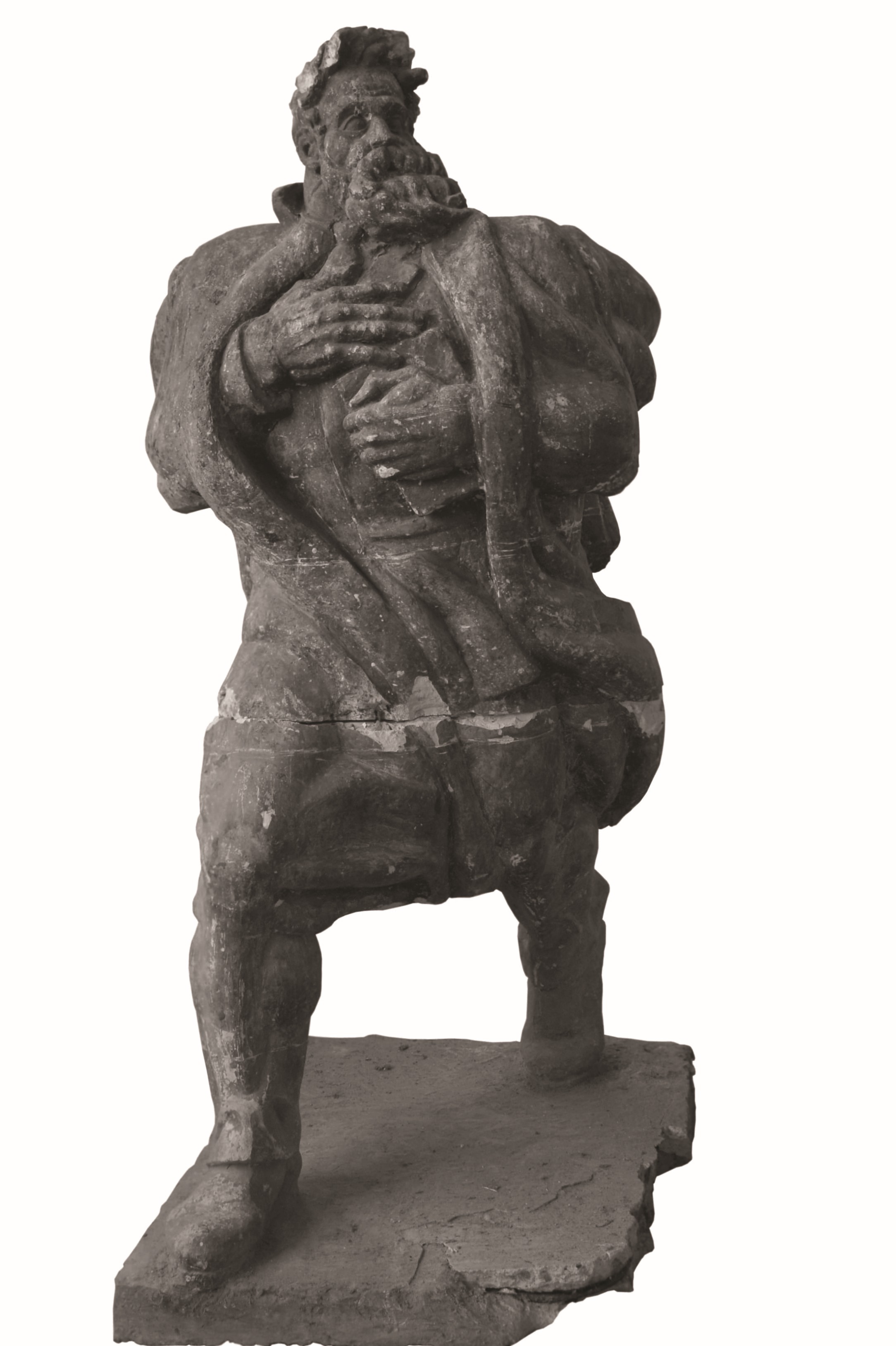
Alexander Bandzeladze, Statue of Galaktioni, 1974, Gypsum, Family Property
.jpg)
Alexander Bandzeladze, Sketch for Statue of Galaktioni, Pencil on Paper, 43X30,7cm
Shura Bandzeladze was
expelled from the Academy of Arts, where he had been studying in the Faculty of
Painting, for criticizing the Soviet regime. Thereafter, he began collaborating with
publishing houses to illustrate books and journals, among which we
can count Daniel Defoe, Robinson Crusoe, 1956;
Ernest Hemingway, The Old Man and the Sea, 1956;
and the magazine Pioneer, 1956. Working on literary texts and
book illustrations became one of Bandzeladze's primary goals. He would return
to the works he had illustrated multiple times, at considerable intervals.
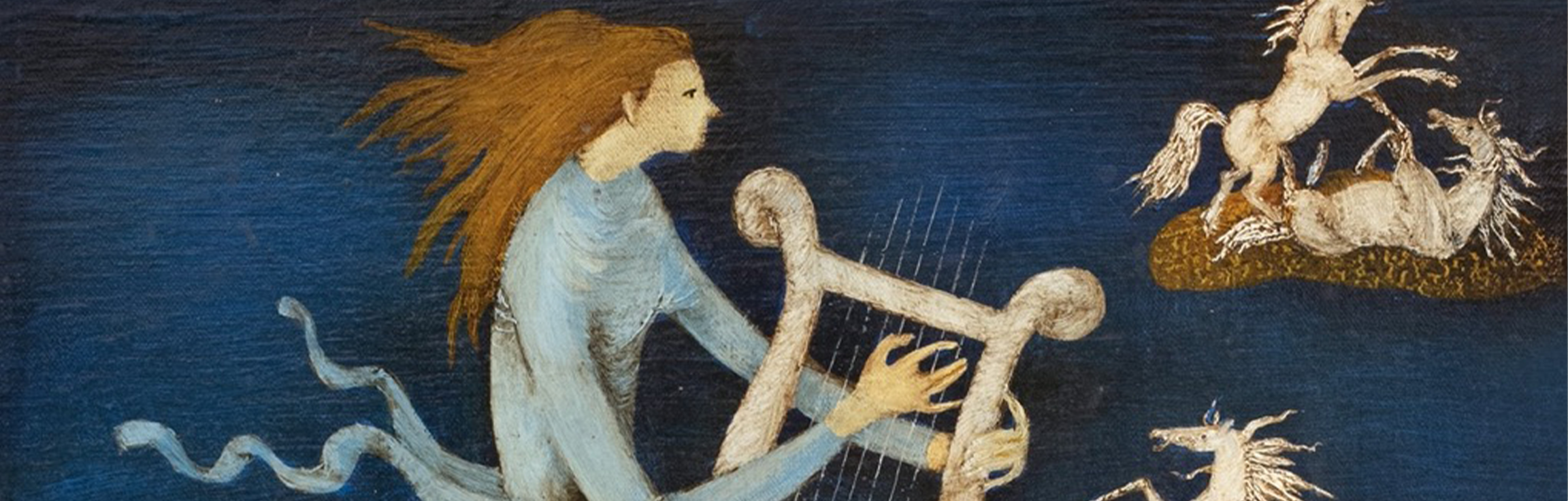
For example, he illustrated Song About
Arsena in 1957/58 and again in 1965/66, as well as Rudyard Kipling's Mowgli in the 1960s, 70s, and 80s, while
Grigol Abashidze's Lasharela was
illustrated in 1958 and again in 1963.
._Pencil,_paper._24x18cm._1960._ATINATI_Private_Collection__1.jpg)
Alexander Bandzeladze, Illustration for Mowgli (The Jungle Book), Pencil on Paper, 24x18cm,1960, ATINATI Private Collection
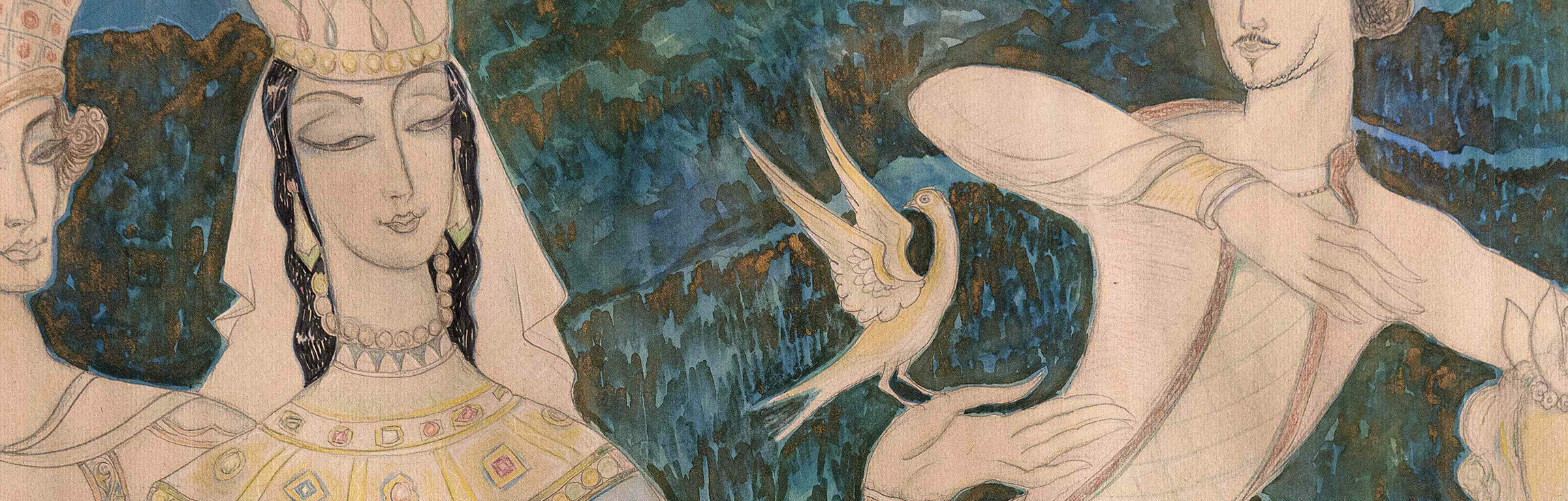
From 1986 until his
death in 1992, Bandzeladze worked on The Knight in the Panther's Skin. Despite the time taken to illustrate the epic
Georgian poem, and although he did succeed in creating a visually and
artistically unique interpretation of the masterpiece, regrettably, he was
unable to complete the work before his death. The breadth and diversity of discoveries that
distinguish Shura Bandzeladze’s
illustrations are striking. For him, blurring the boundaries
between different directions of fine art was paramount. His work clearly
demonstrates an attempt to return to the historical experience of perceiving
the book as an independent work of art (this includes both illustrations and a
new authorial form of text; changing the format, introducing handwriting into a
printed book, etc.). This approach, which by the 1980s had already acquired
broad expressiveness among Georgian artists, established a national foundation that
worked in absolute harmony with contemporary, European, and postmodern tendencies.
Although Bandzeladze’s work in book illustration shows remarkable artistic and
intellectual breadth, it is just one of many directions he worked in. Together,
these diverse works form a vivid and complex portrait of the artist’s creative
legacy.
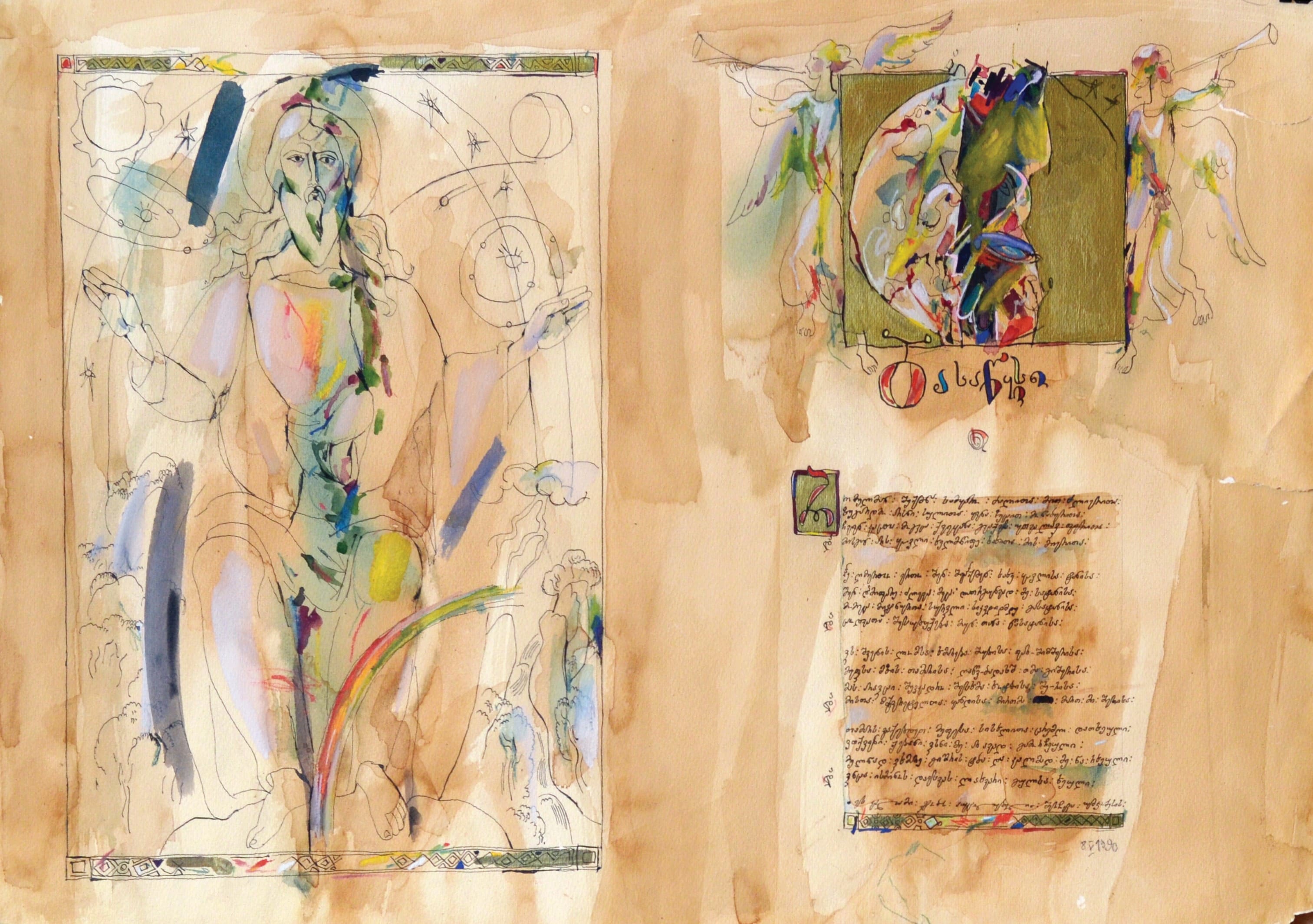
Alexander Bandzeladze, The Knight in the Panther's Skin, Mixed Technique on Paper, 1990s, Family Property
During the “Thaw” of the 1950s and 1960s in the Soviet
totalitarian state, access to information was extremely limited and heavily
censored. As improbable as it may sound today, the generation of artists born
in the Soviet system had only the vaguest notion of the cultural processes then
unfolding in Europe and the United States, as knowledge of any artistic trend of the twentieth
century was suppressed or tightly controlled. Impressionism was regarded as the point of reference. These movements were considered
“bourgeois art.” The
Soviet authorities, who saw art only as a weapon of propaganda, were especially
hostile to creative and expressive approaches, and would frequently issue
explicit requests and instructions to artists, most of whom were obliged to
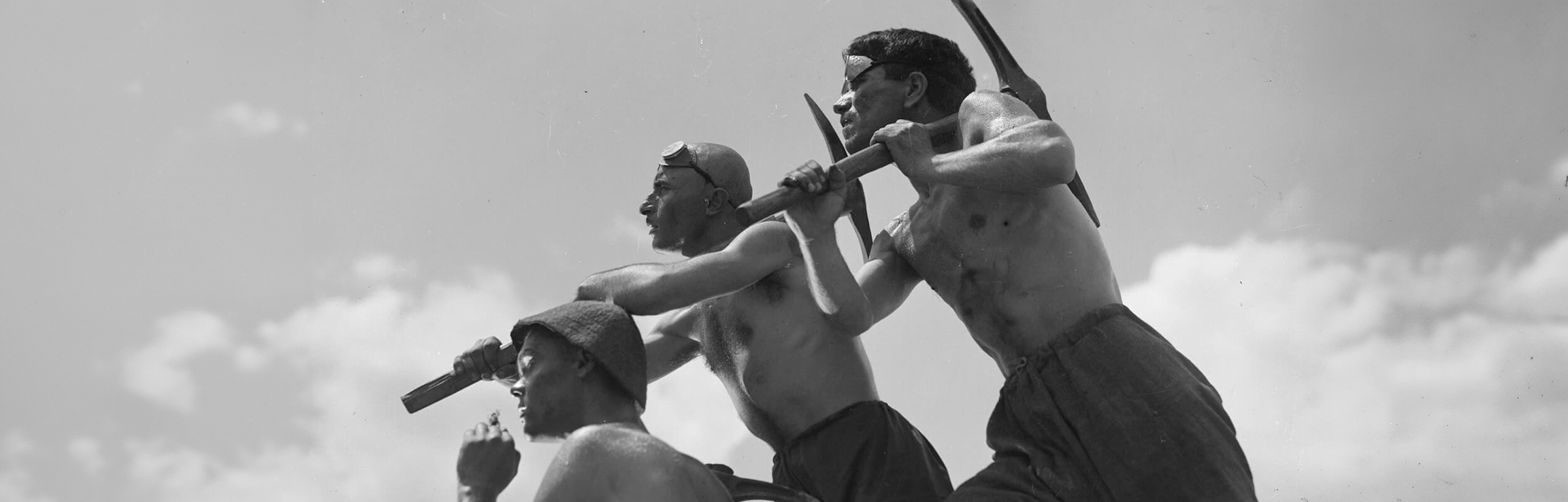
accept these constraints. Shura Bandzeladze himself made a number of monumental
panels that coincided with the ideas of the Soviet paradigm; among them, his
enormous quadriptych Continuation of the Legend (1971) is particularly noteworthy.
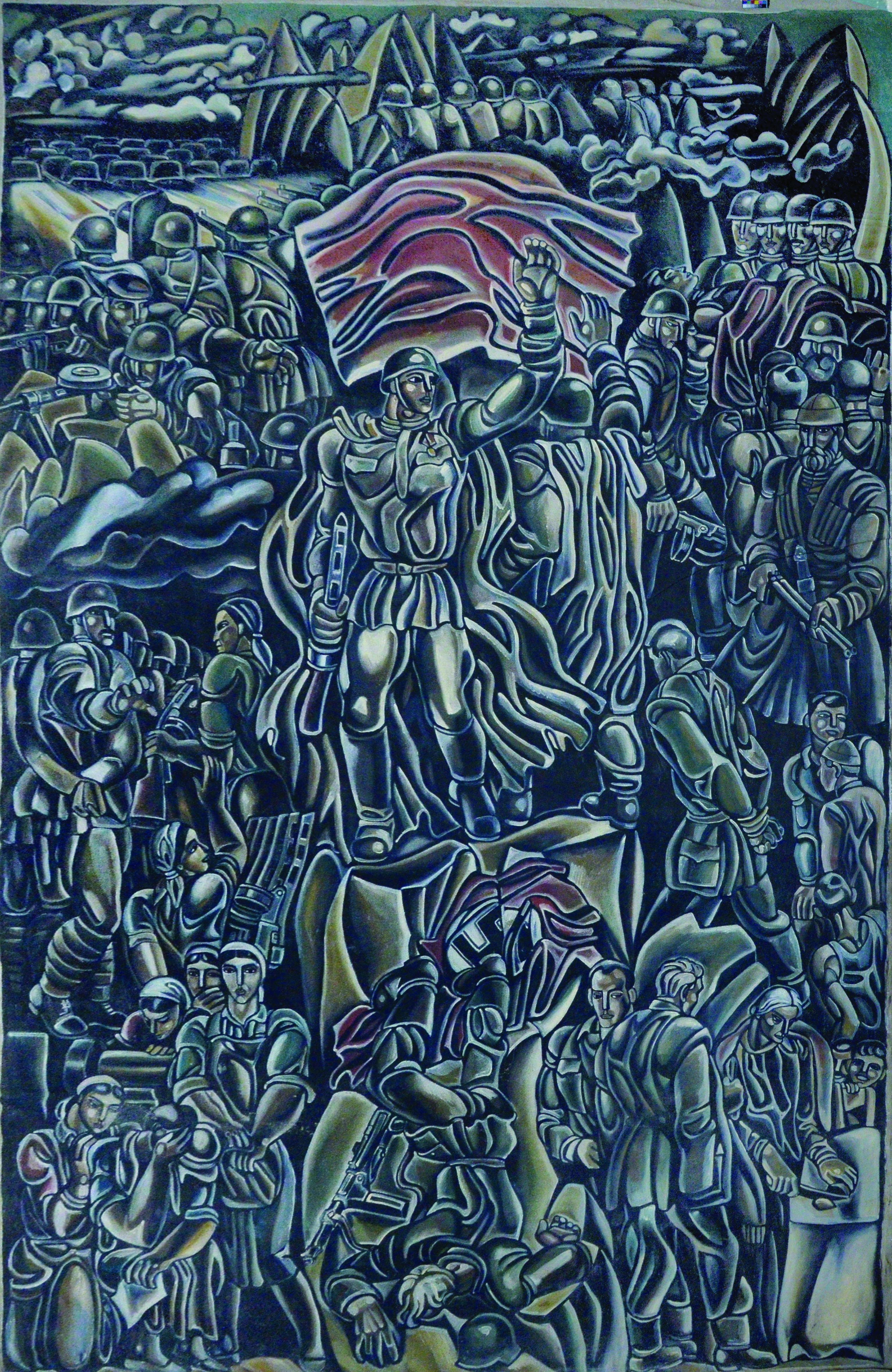
Alexander Bandzeladze, The Continuation of the Legend, part 2, 1971, National Gallery
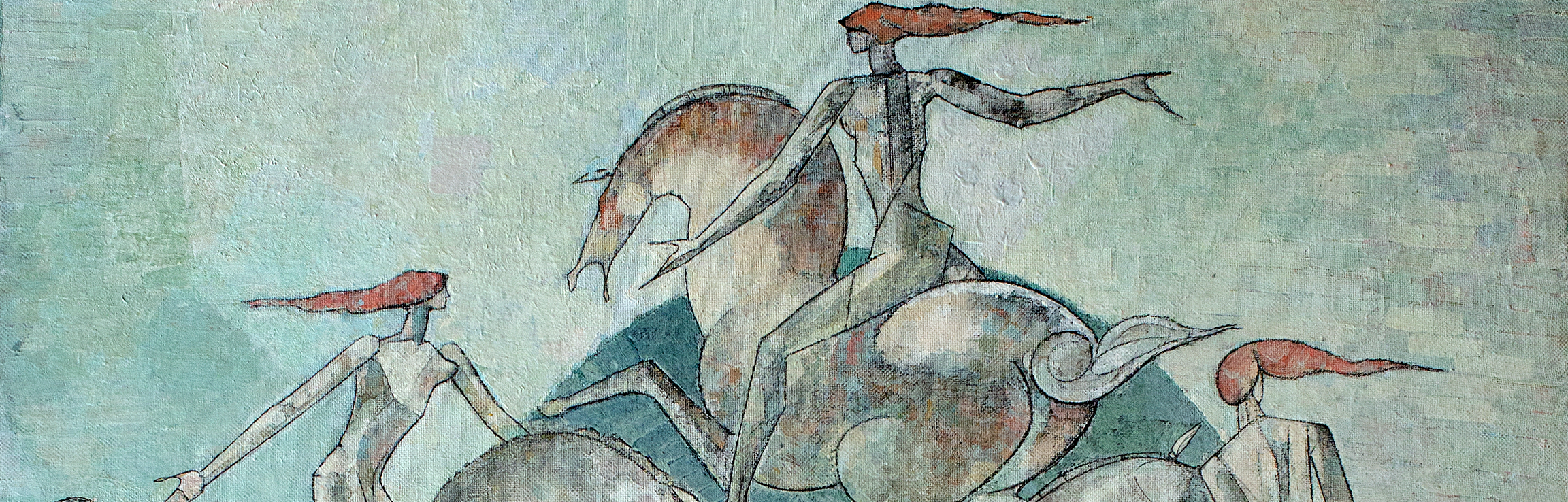
In parallel, something very
different was happening behind the closed doors of his studio. Working quietly
and in secret, Bandzeladze was exploring the expressive styles of various
movements, beginning with Impressionism, all of which were strictly banned
under the totalitarian regime. Among these are his works executed in
Impressionist, Post-Impressionist, and Pointillist manners. By the 1960s, he had
already engaged with the problem of transforming Fauvism and Cubism, and had
become deeply attracted to Surrealism and, ultimately, Abstractionism. For a long time, he succeeded in shielding
his creative space from the outside world.
Shura Bandzeladze believed that
contemporary artistic trends could not be fully grasped or absorbed just by
looking at black-and-white magazine illustrations or, at best, visiting a
single exhibition of a European artist in Moscow or Leningrad (now St.
Petersburg). For him, it was essential to undergo the entire process internally;
approaching non-figurative art in the same way it had unfolded
historically—through a logic of sequential and parallel developments. In other
words, one had to go through a personal micro-version of this model first, and Bandzeladze
did so. It was through this method that his most notable works came to be: Georgian Village (1950s), Portrait
of Madonna (1957), Still
Life (1959), Corn
Field (1960s), In the
Village (1961), Sportsman
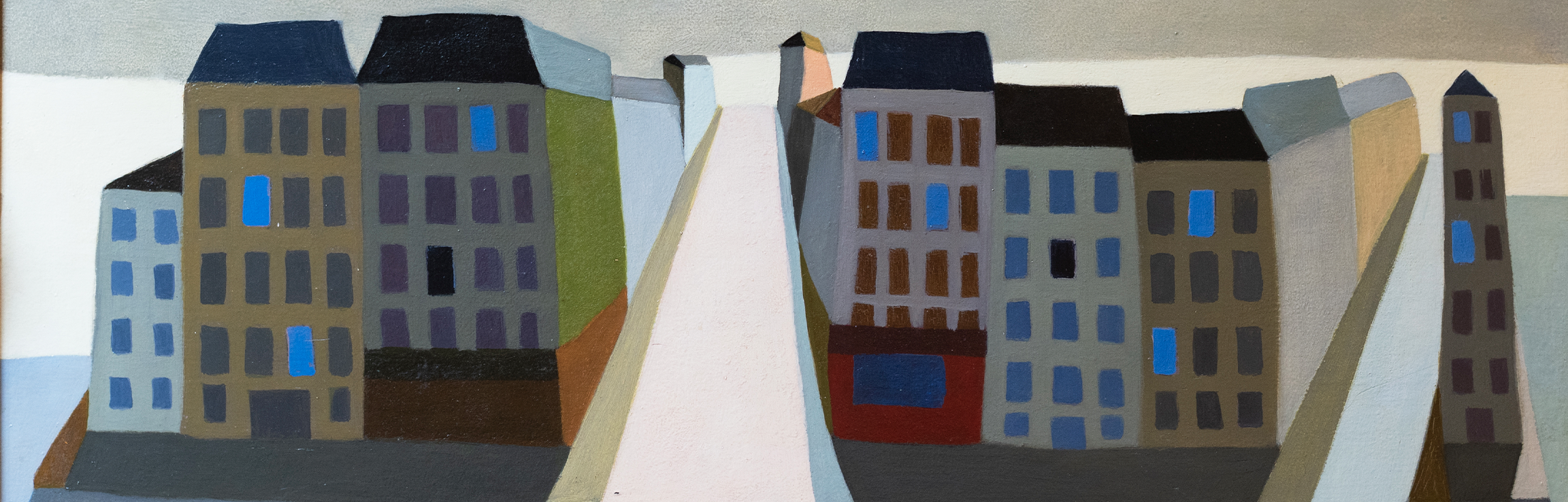
(1962), Spring (1962), White Horse (1965), Kvishkheti (1966), Houses (1965), and others.
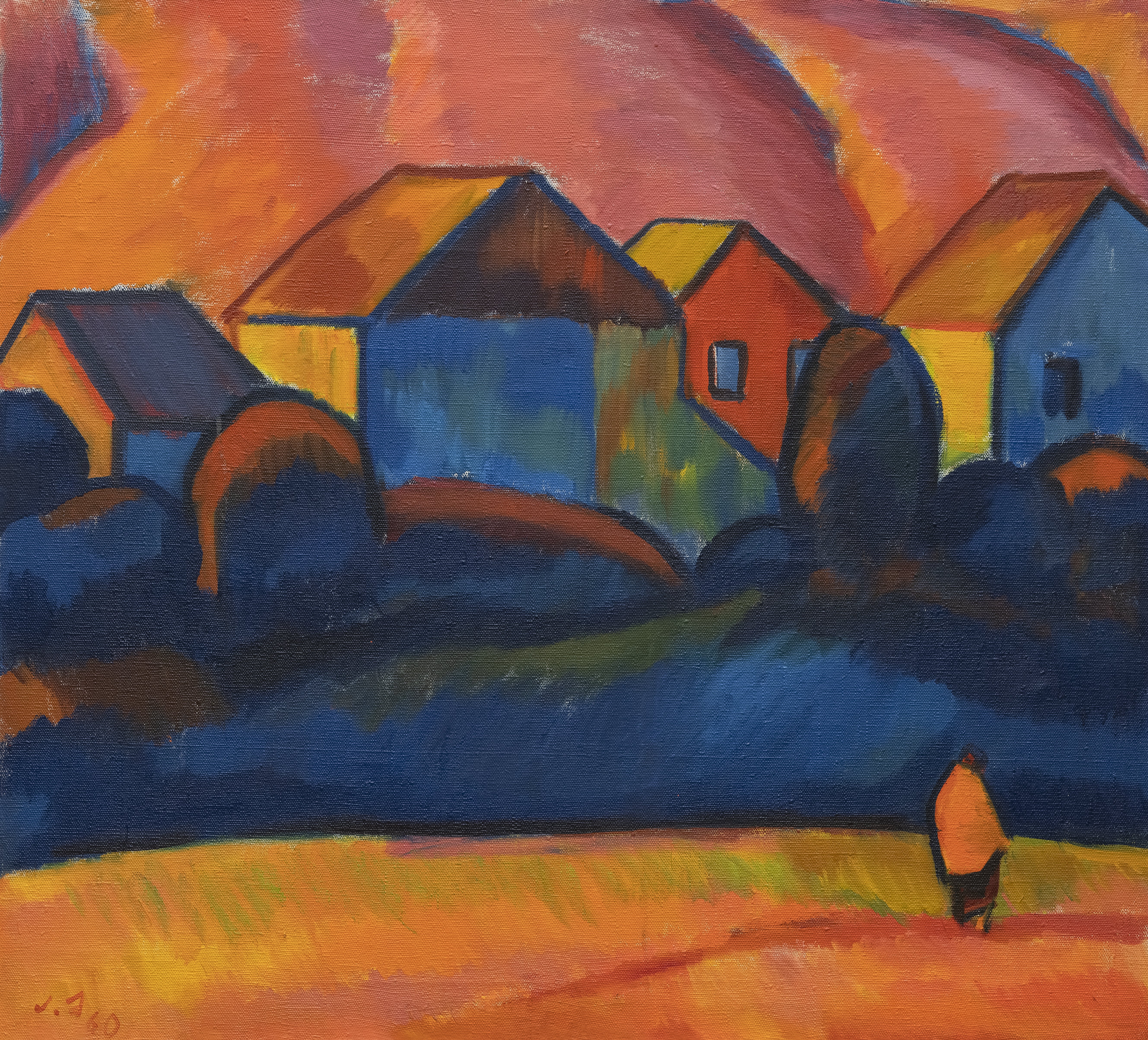
Alexander Bandzeladze, Lisi Village, Oil on Canvas, 90x100cm, 1960, ATINATI Private Collection
.jpg)
Kvishkheti, Oil on Canvas, 1966, Art Museum of Georgia
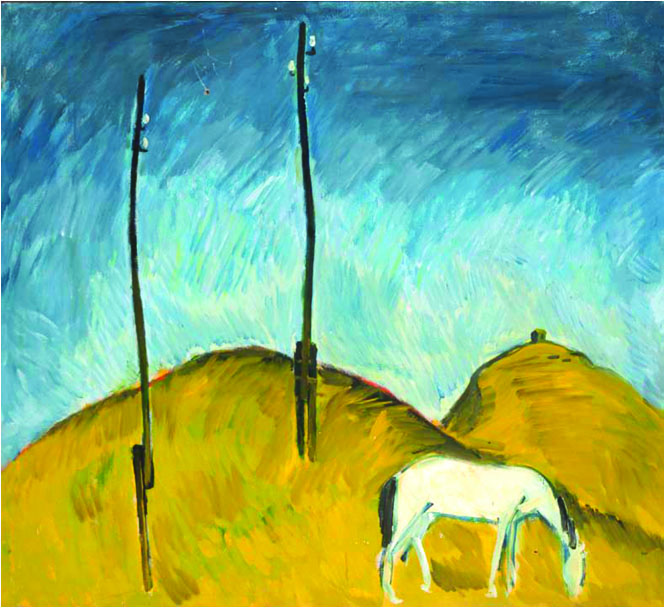
Spring, Oil on Canvas, 1962, Ambrolauri Museum
Bandzeladze was the first
Georgian painter since David Kakabadze to introduce non-figurativeness into the
national creative field of thinking. During the 1960s and 1970s, abstract
art often favored the repetition of geometrically arranged visual elements and
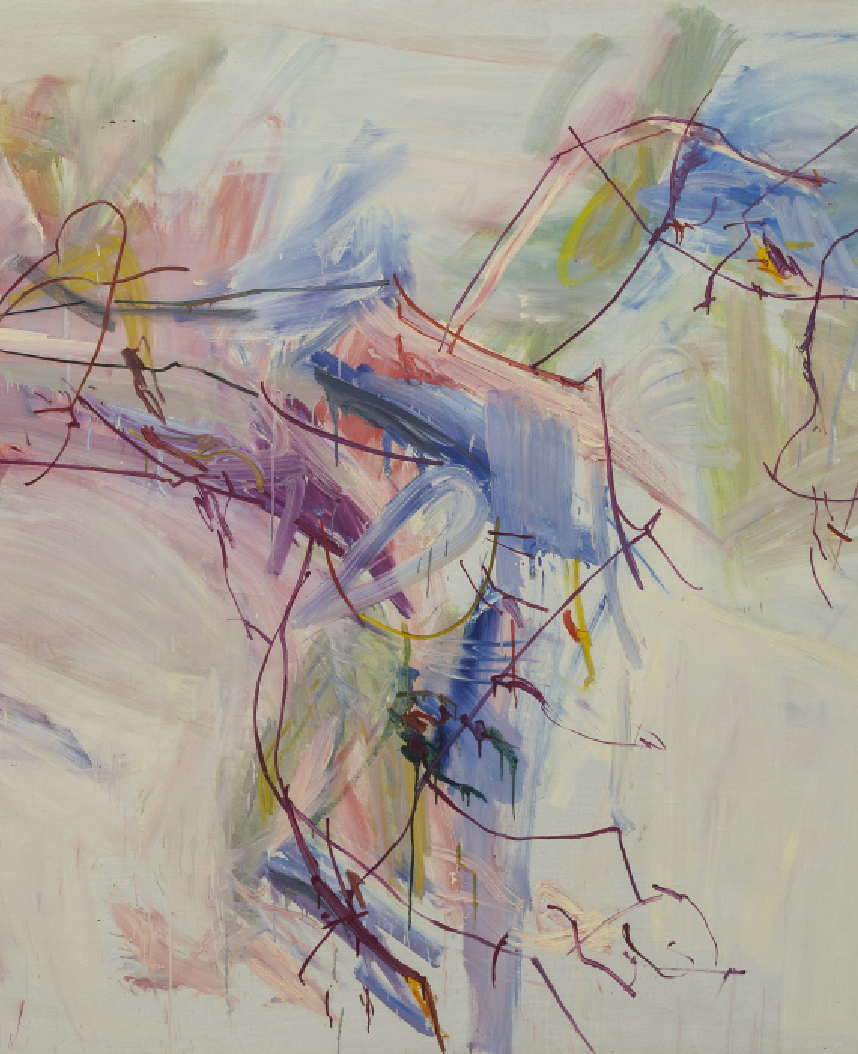
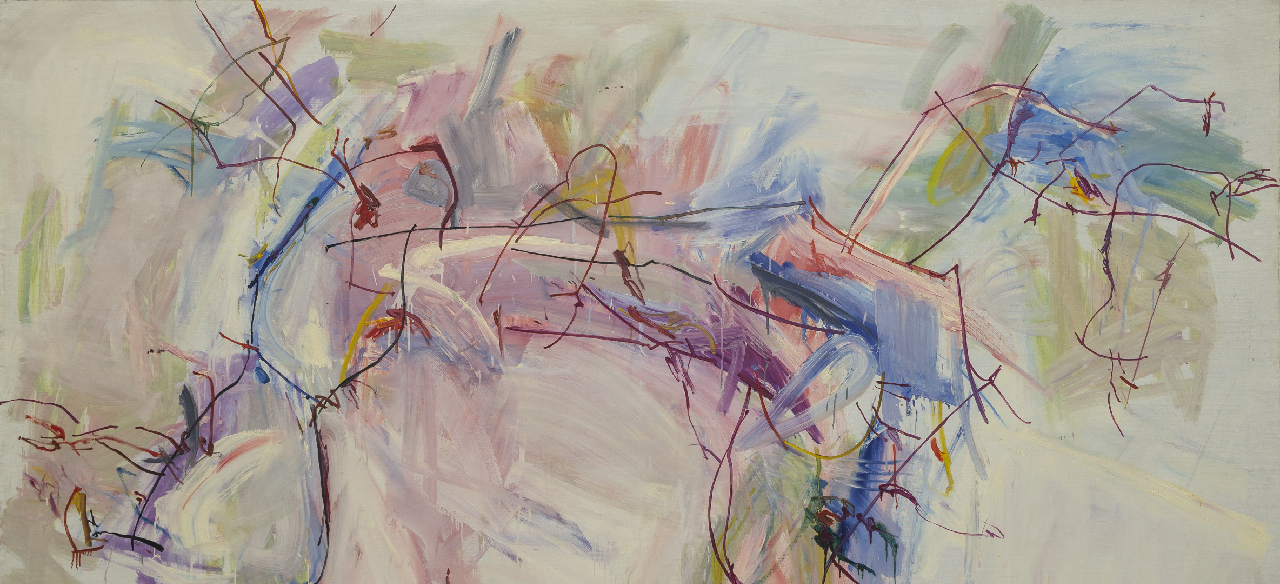
commonly used monochromatic color schemes. In contrast, Bandzeladze chose a
more expressive approach, creating fully abstract works that still retained
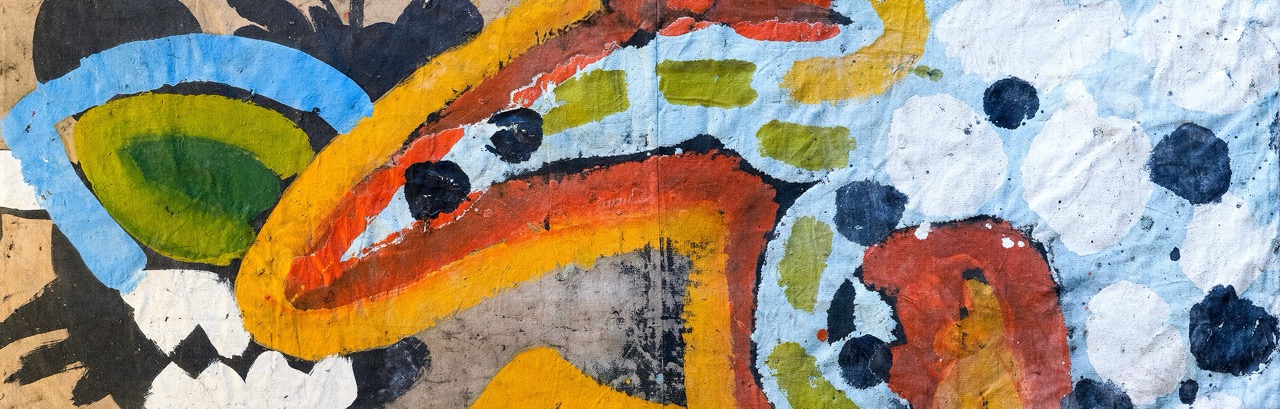
clear contour lines. From the early 1980s onward, the rich texture of his
abstract compositions was built with thick, resonant layers of lacquer.
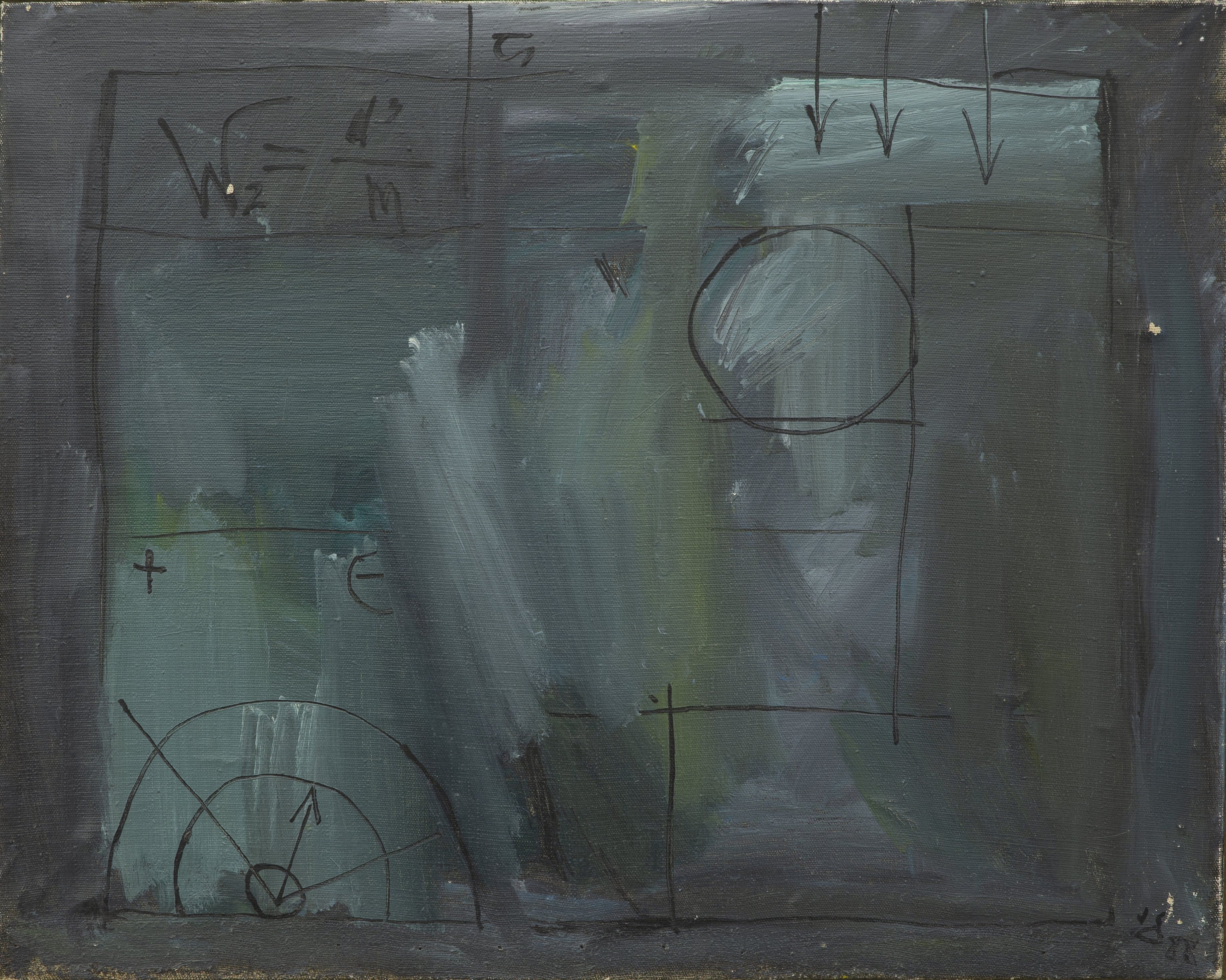
Alexander Bandzeladze, Abstract composition, Oil on Canvas, 60x75.5cm, 1988, ATINATI Private Collection
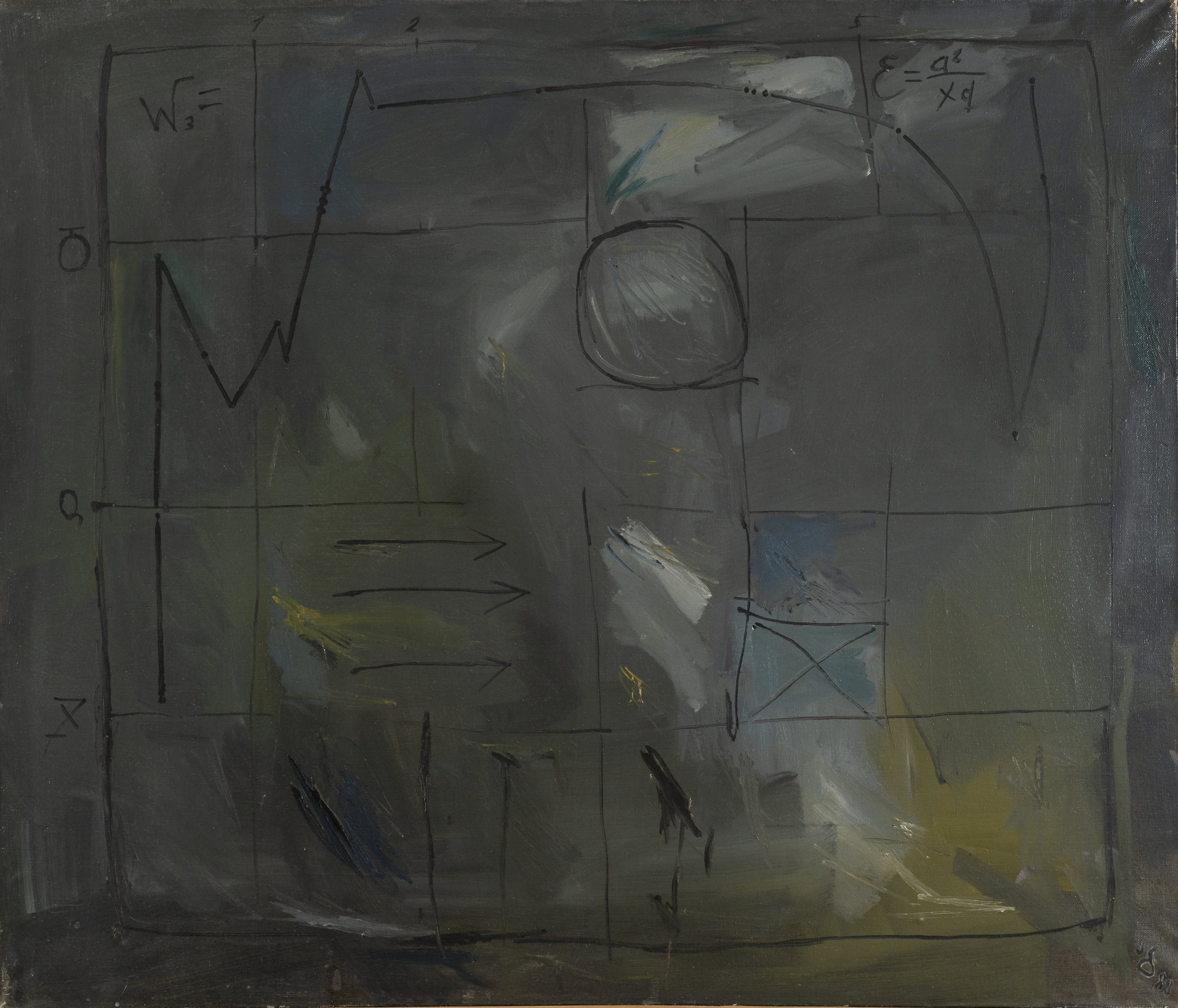
Alexander Bandzeladze, Abstract composition, Oil on Canvas, 141x119cm, 1988, ATINATI Private Collection
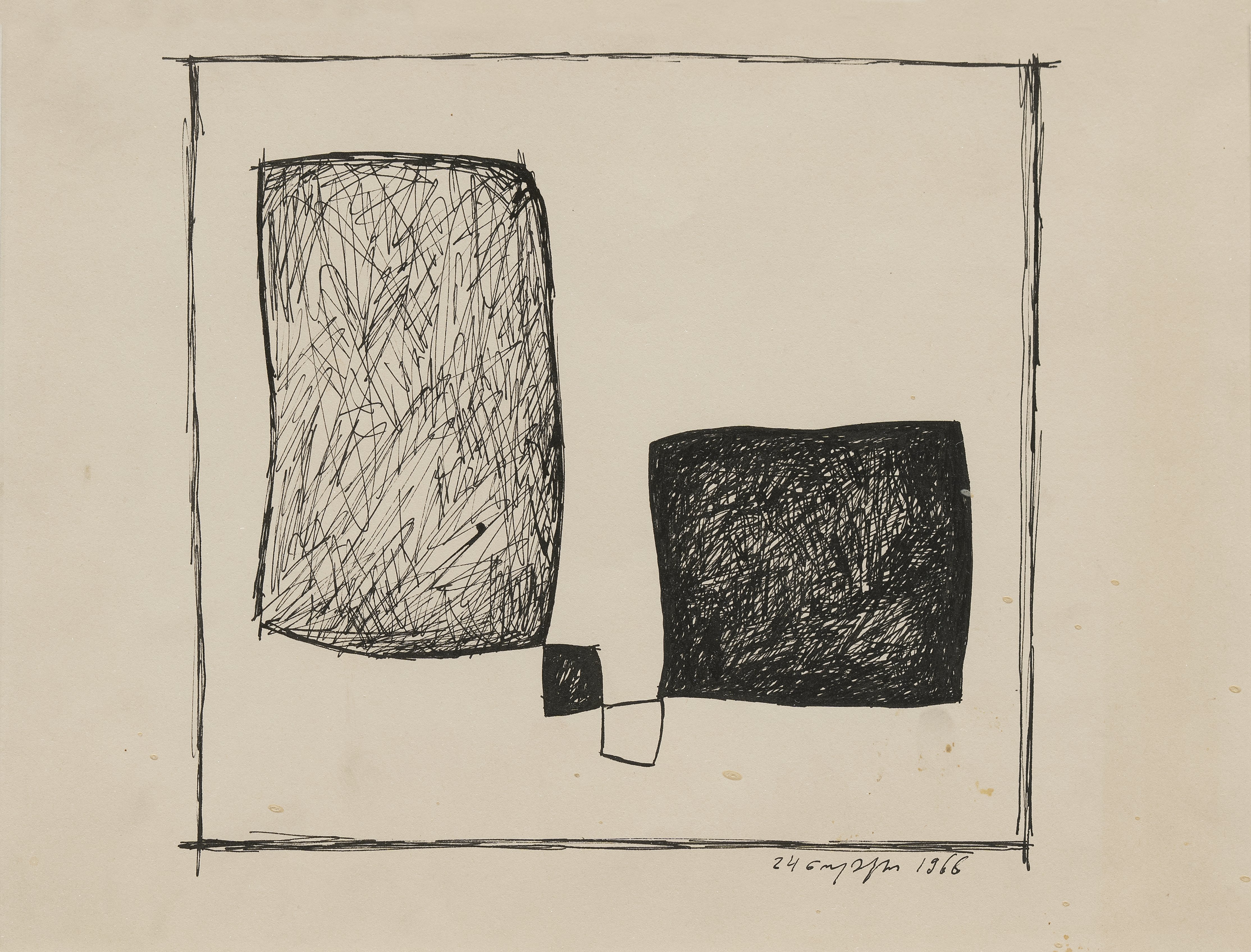
Alexander Bandzeladze, Four Squares, Black ink on Paper, 25x32cm, 1966, ATINATI Private Collection
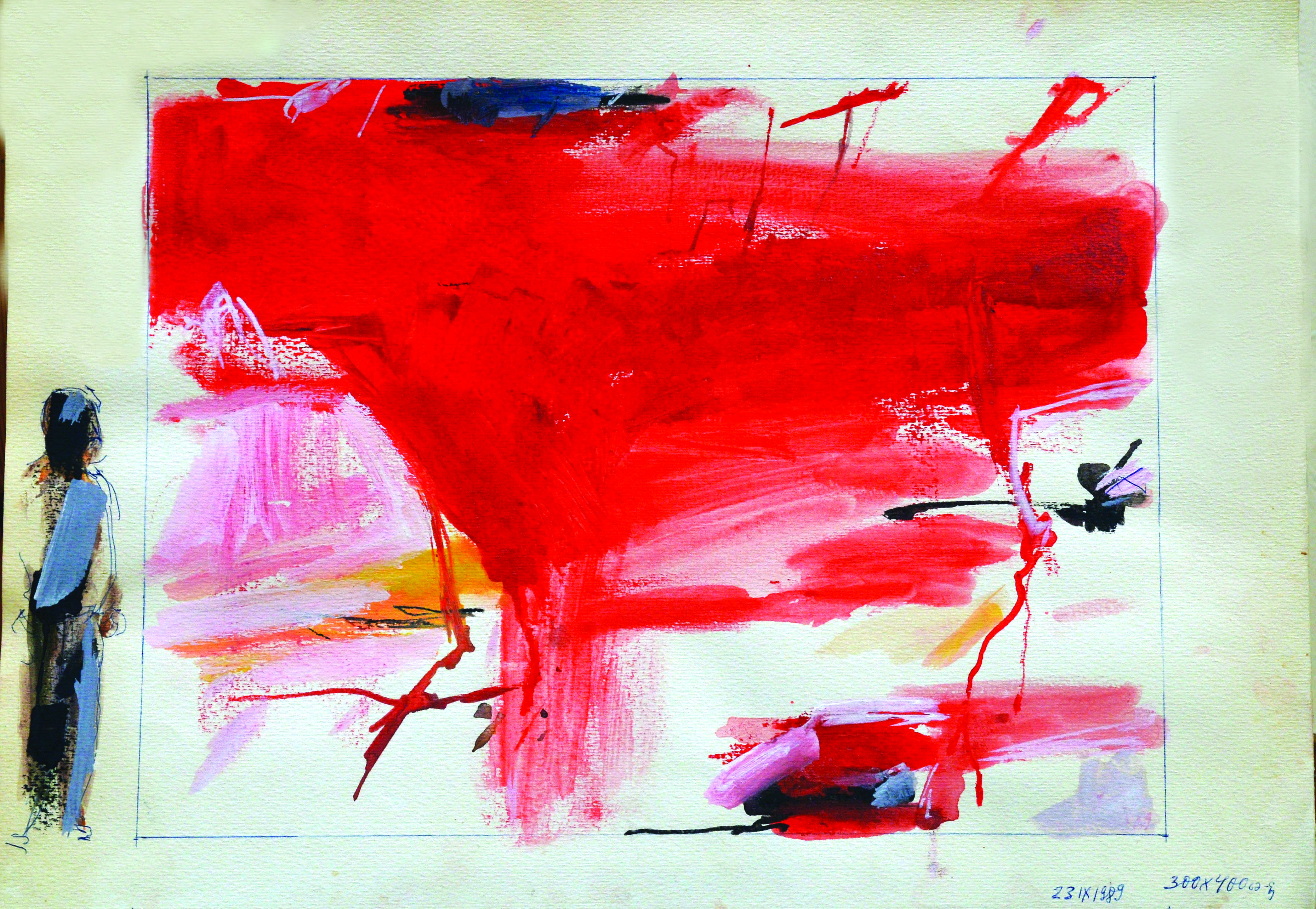
Alexander Bandzeladze, Untitled, Gouache on Paper, 1989-23 September, Family Property
The
concept of the connection between
plane and volume was formed using color changes, so that the impression of the dynamics
was increased. In addition to coloristic contrast, those dynamics were dictated
by the rhythm and trajectory of powerful, expressive monotony. Shura Bandzeladze's
abstractions from the 1980s and 1990s demonstrate a different aesthetic concept:
Abstractionism, which included elements of Abstract Expressionism, became the
artist's main artistic and expressive language, and remained so until the end
of his life.
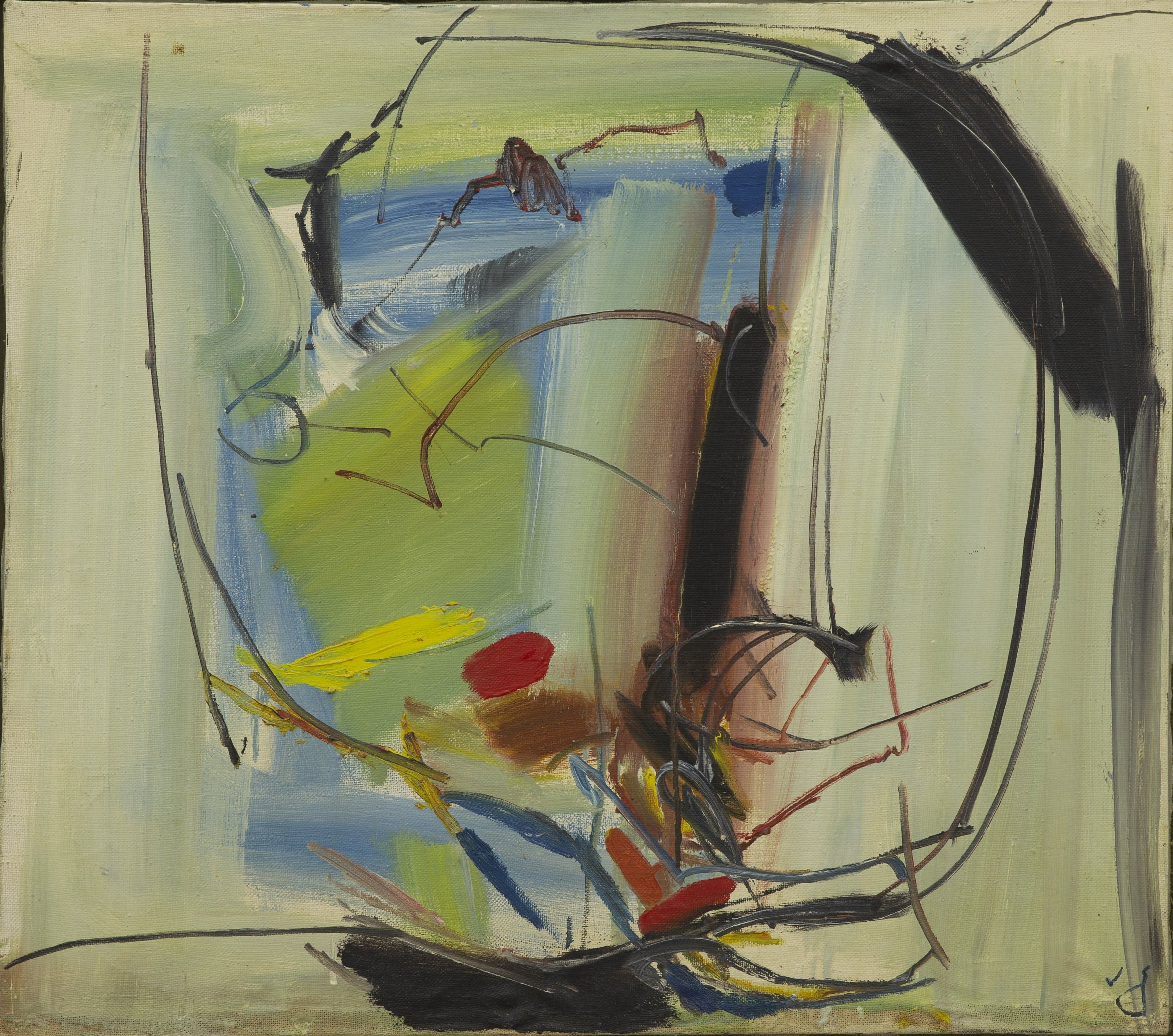
Alexander Bandzeladze, Abstract composition, Oil on Canvas, 75x85cm, 1980s, ATINATI Private Collection
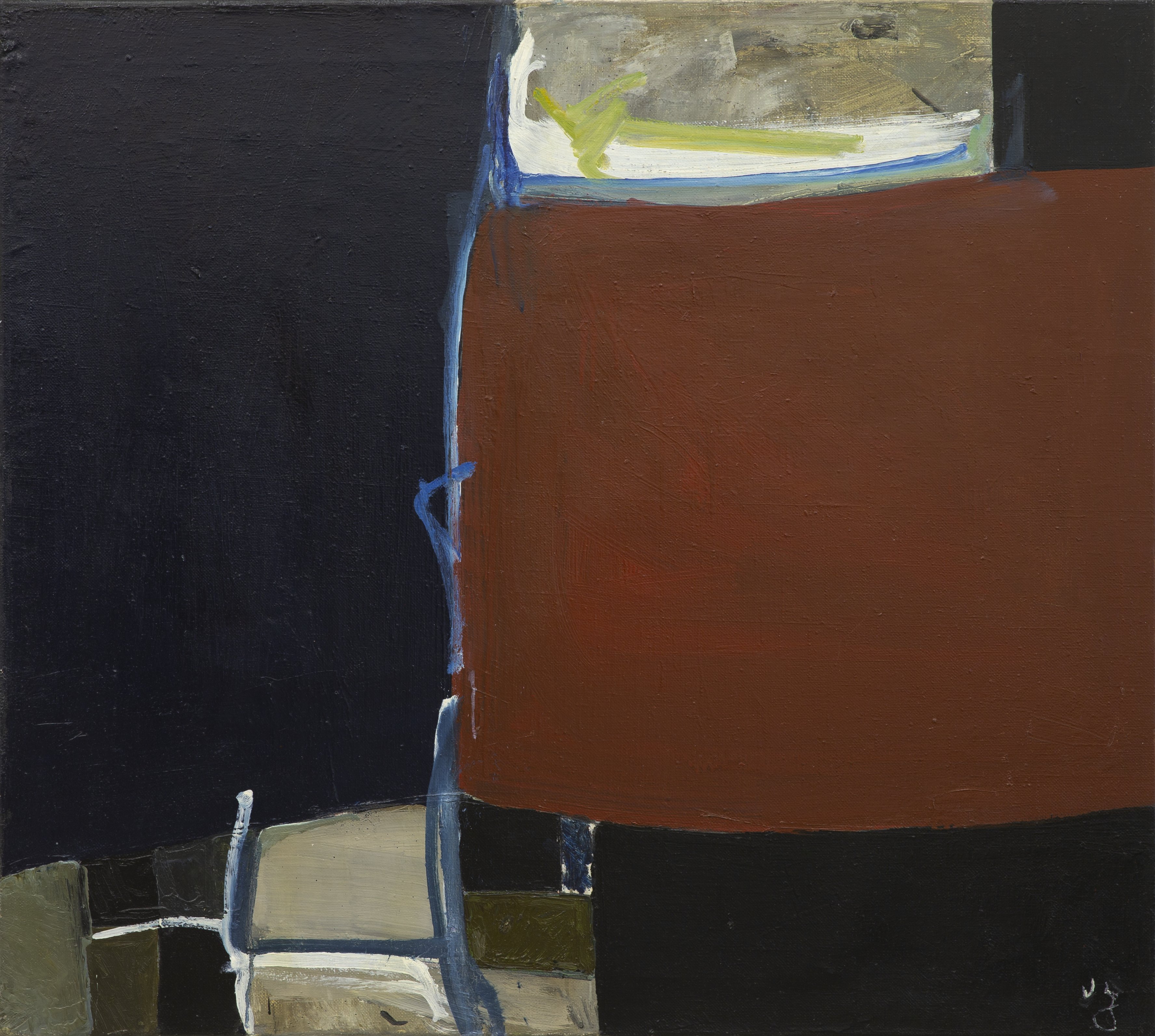
Alexander Bandzeladze, Red and black, Oil on Canvas, 89x100cm, 1989, ATINATI Private Collection
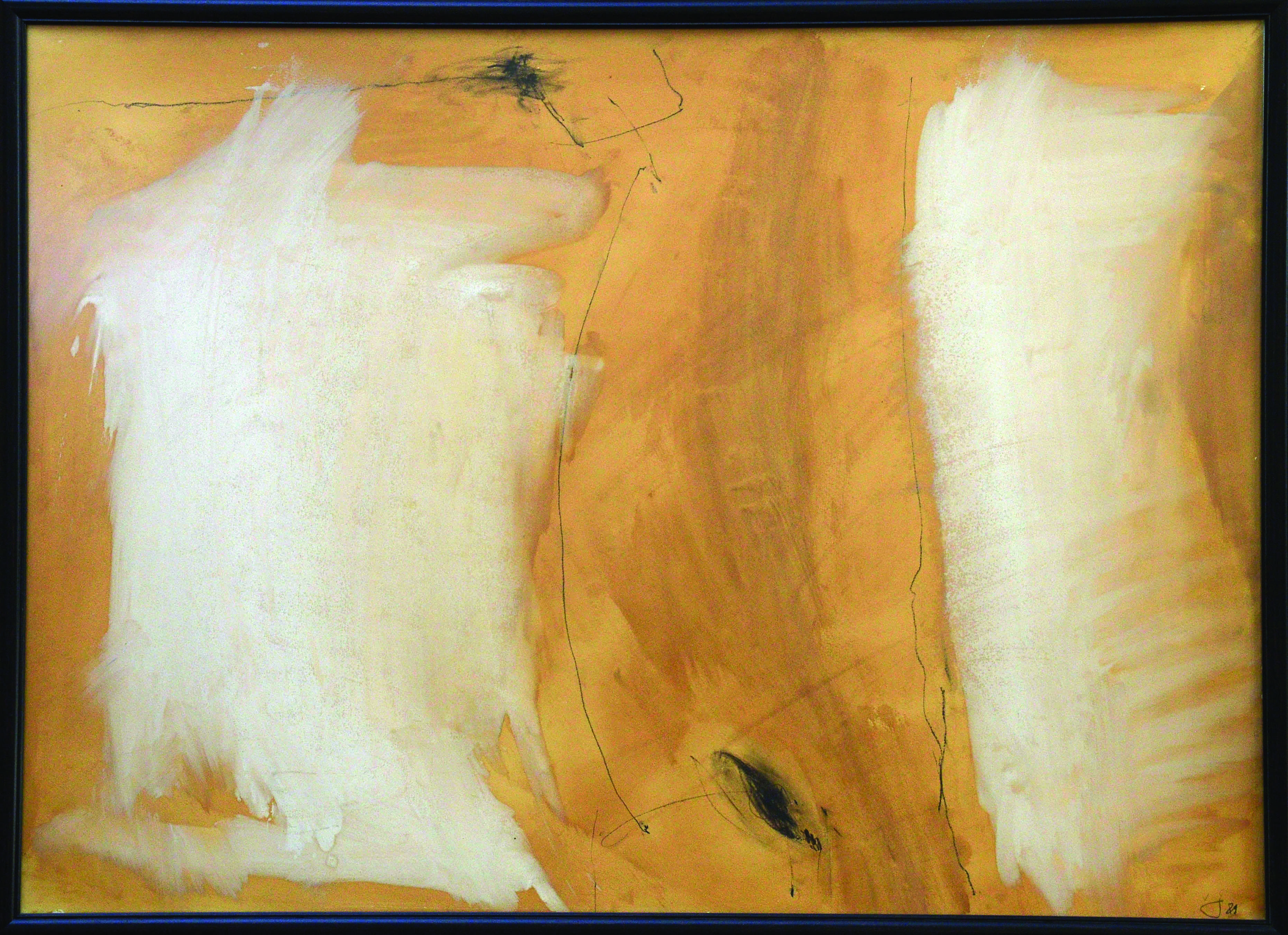
Abstract Composition, Tempera, 1989, Belila, Family Property
_1.jpg)
Alexander Bandzeladze, Untitled 113x82cm, Watercolor on Paper, 1989
The graphic technique
he employed to produce his relatively modest abstractions are just as
significant as his pictorial creations. As is typical of abstract art,
most of them were either nameless or were merely referred to as
"compositions." A continuous investigation of the
artist's creative process reveals the deep impact of Abstractionism on both his
artistic practice and intellectual outlook. His non-figurative works of the 1980s-90s
are distinct, and merit additional analysis.
In these pieces, a new kind of figuration emerges, born from the very pursuit
of complete non-figurativeness. It is a visual language that appears completely
independent of the prevailing trends, yet paradoxically remains entirely shaped
by them. Alexander Bandzeladze, a representative of the national artistic
school of Abstractionism, is thus one of the most prominent figures in
Georgian art history.
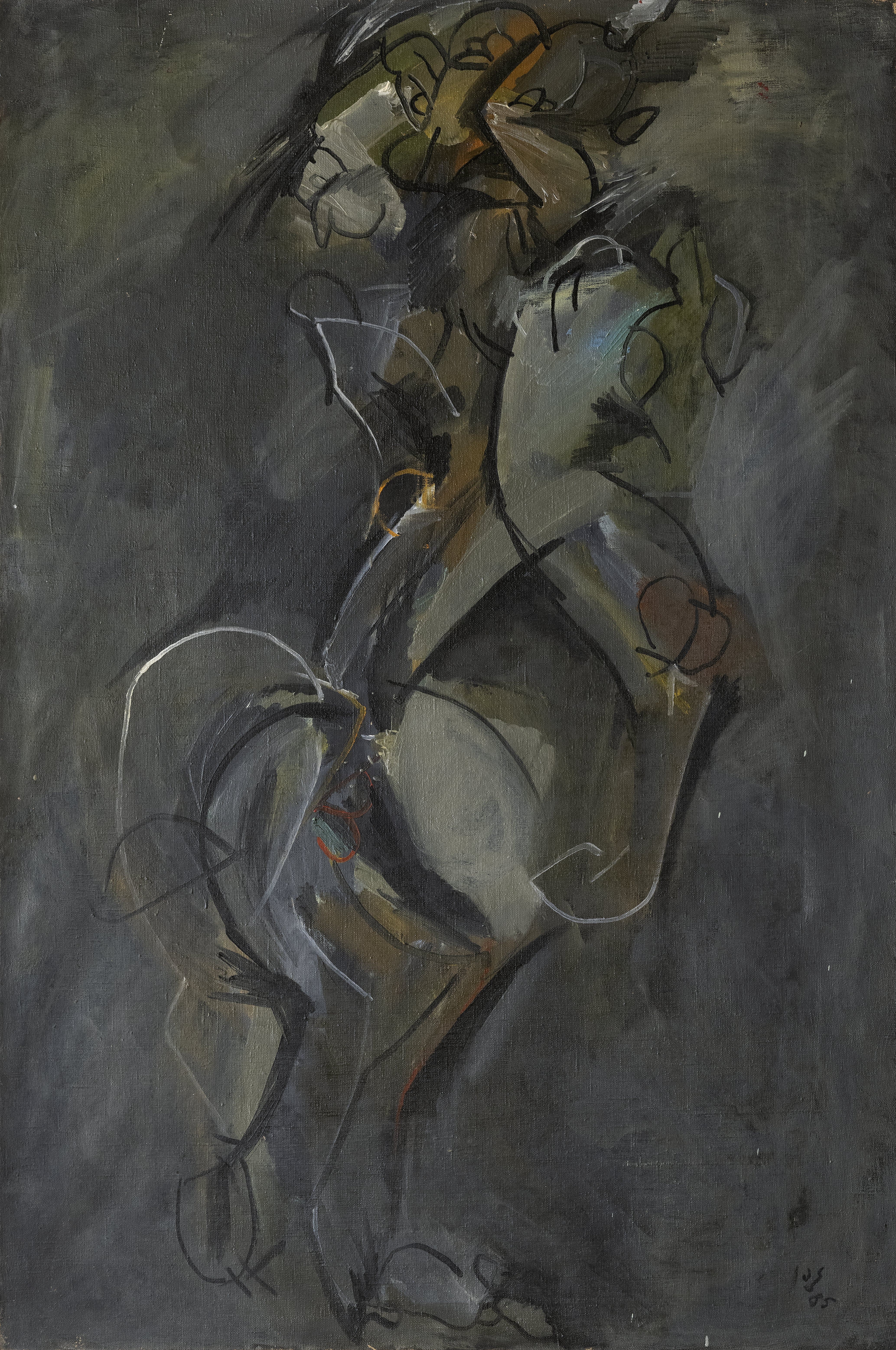
Alexander Bandzeladze, Black Composition, Oil on Canvas, 151x100cm, 1985, ATINATI Private Collection
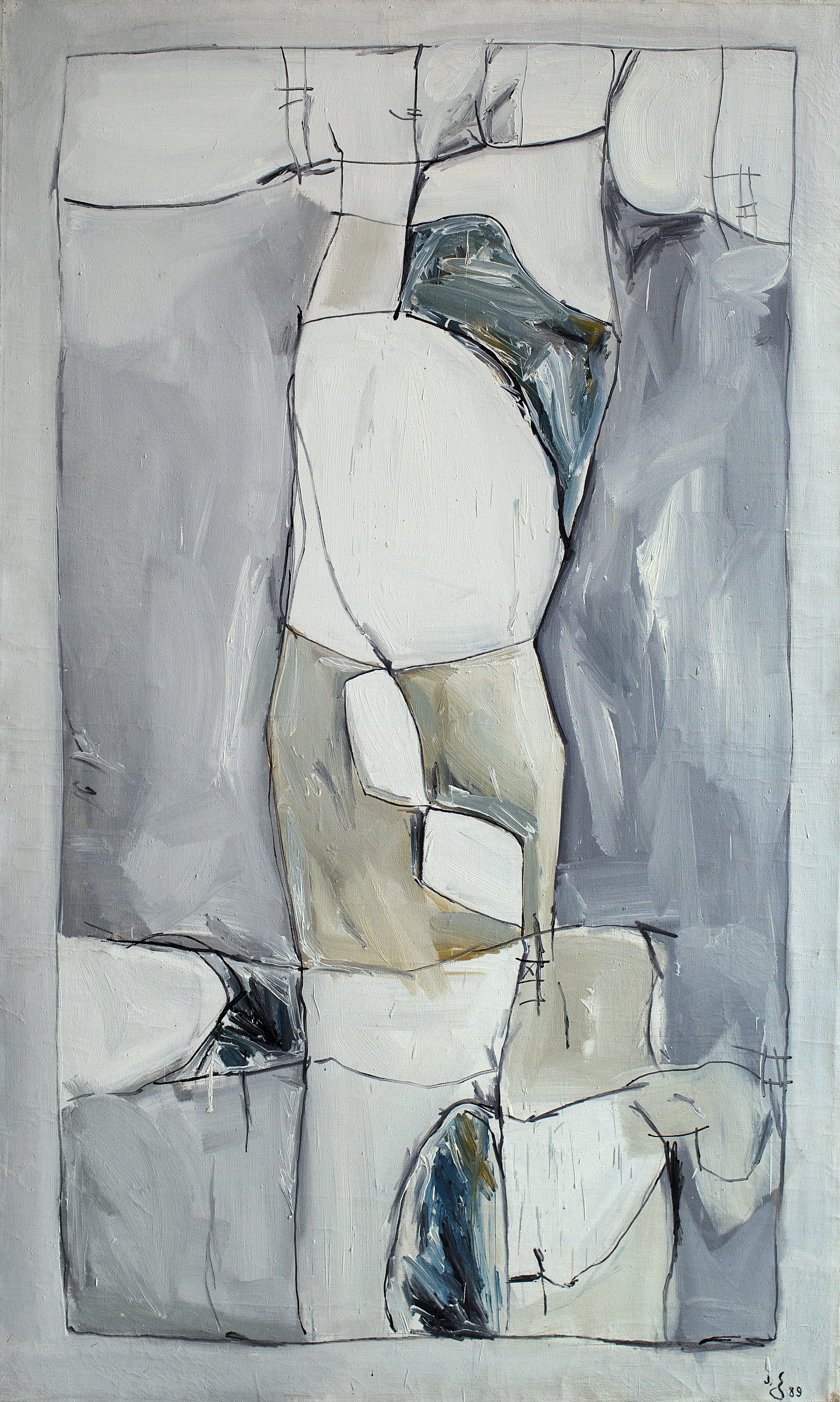
Alexander Bandzeladze, Verticals, Oil on Canvas, 198,5X118,5cm, 1989, ATINATI Private Collection
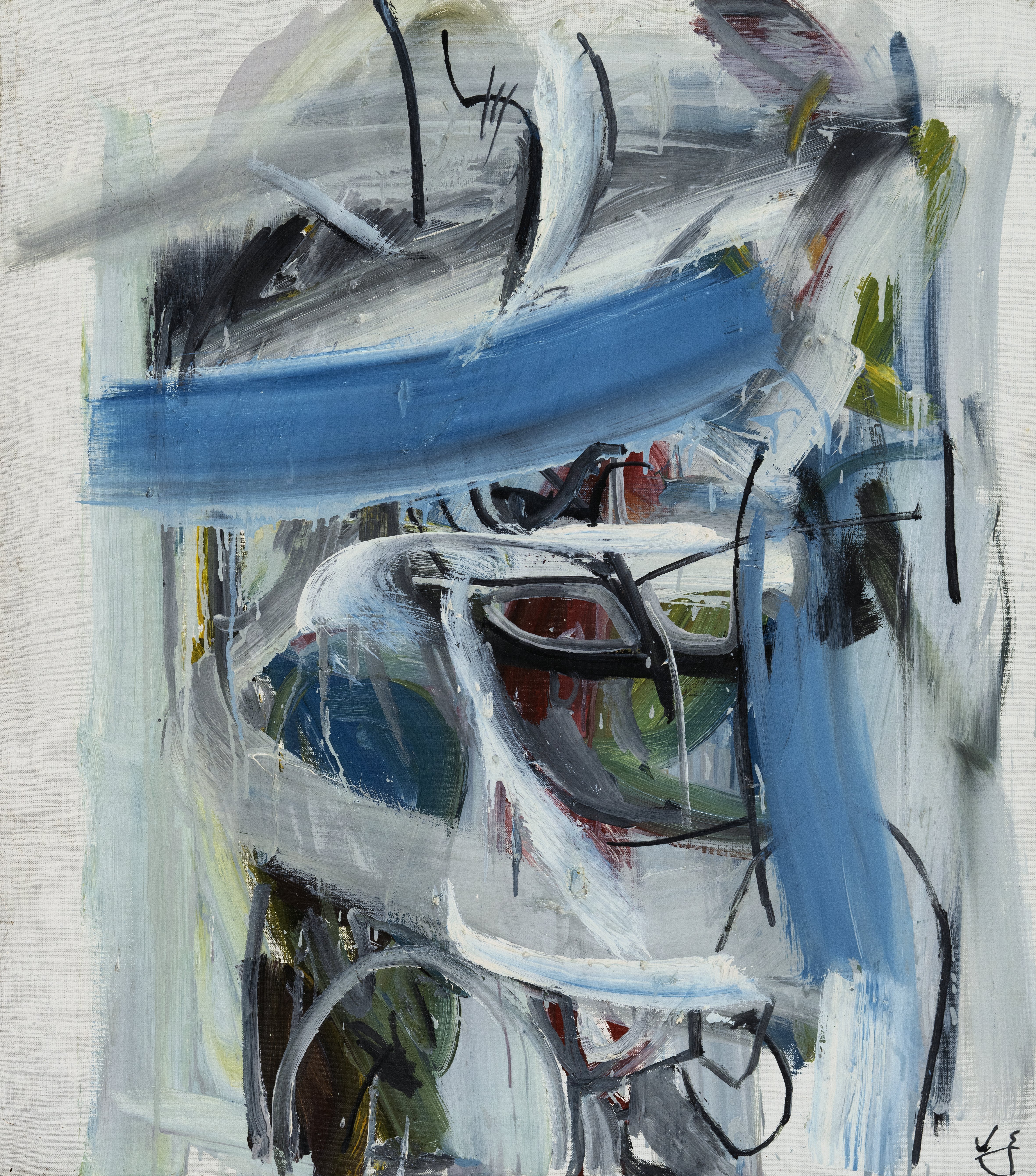
Alexander Bandzeladze, Untitled, Oil on Canvas, 86x76cm, 1980s, ATINATI Private Collection
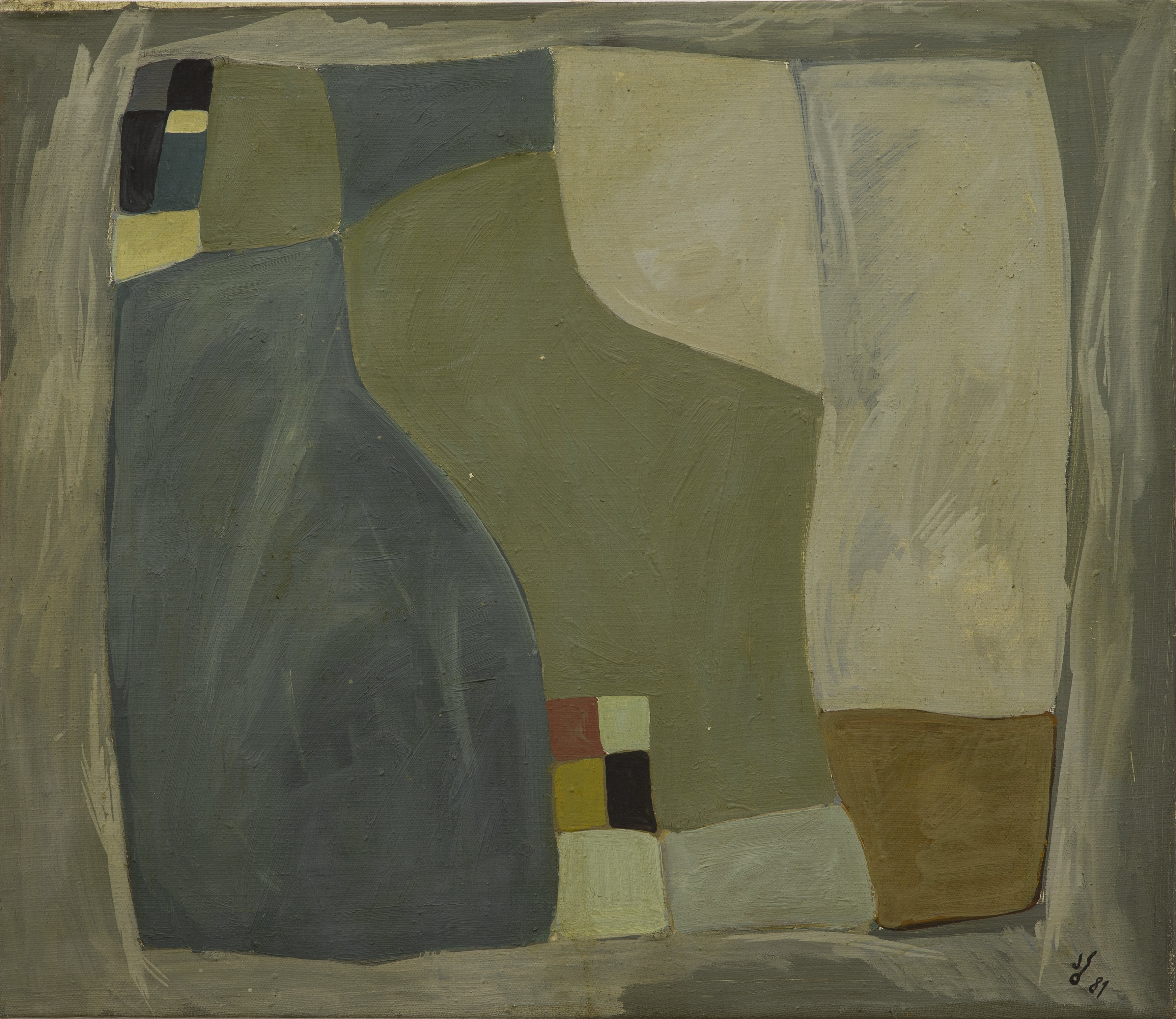
Alexander Bandzeladze, Untitled, Oil on Canvas, 65x75cm, 1981, ATINATI Private Collection
Numerous monumental panels can be
counted among Bandzeladze's
artistic legacy. Nonetheless,
his works included
both secular and religious content. The Assumption Cathedral of Didube in Tbilisi (1979–1989)
and the Icon
of St. Shushanik in
Tbilisi's Metekhi Cathedral were both painted by him. Among his biblically
inspired works are The Last Supper
(1990–1991), Descent from the Cross
(1979), Entry into Jerusalem (1987), and Ascension
(1987).
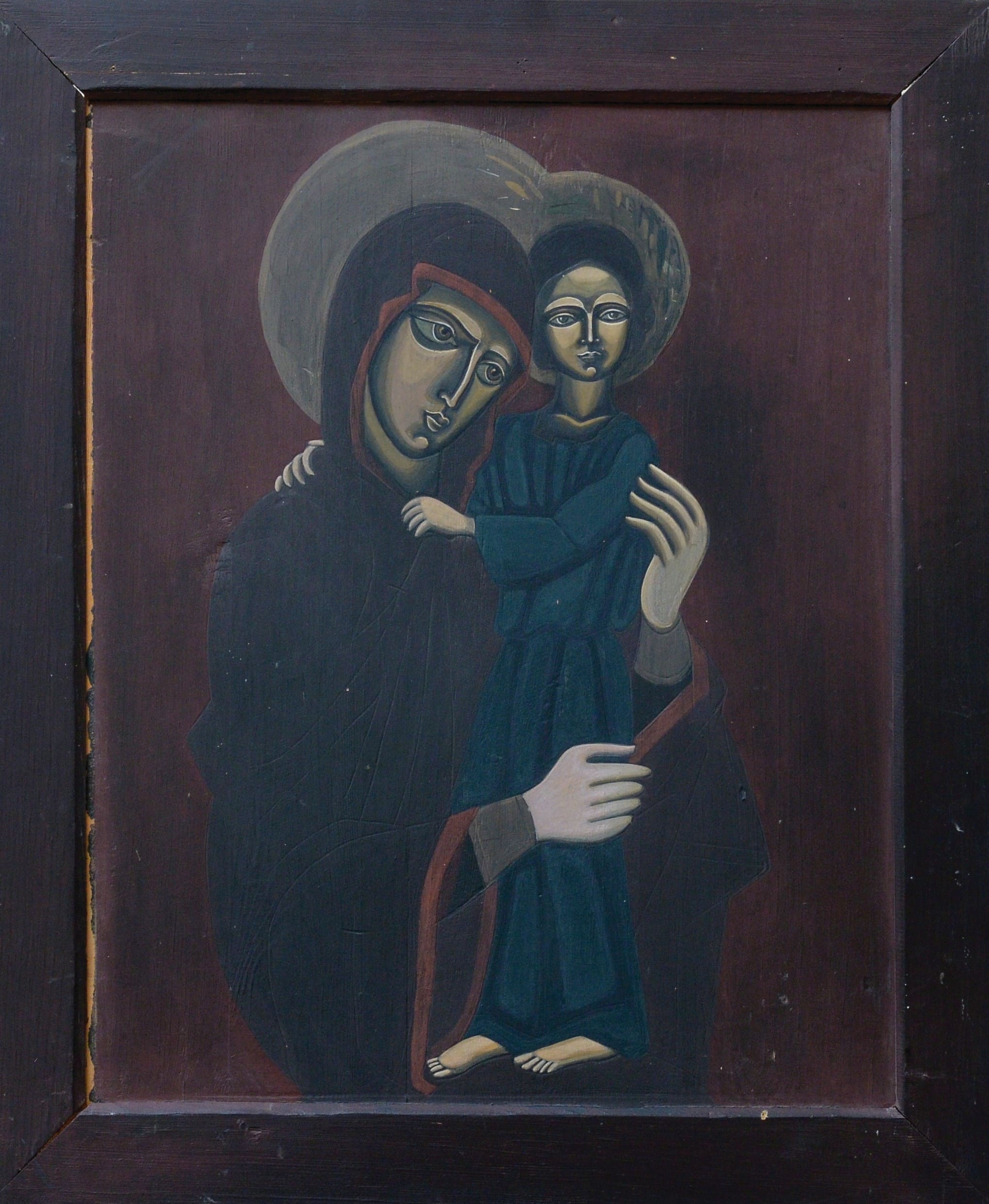
The Virgin and Child, Tempera on Wood, 1970s, Family Property
The artist, though lacking specific knowledge, sought to overcome the challenge of artistically
decorating the interior of the domed Didube Church. This painting is
historically significant because it depicts a church where efforts were made to
revive the local tradition of wall painting, an art form that had been systematically
suppressed for decades,
first by the Russian Empire and later by the Soviet regime.
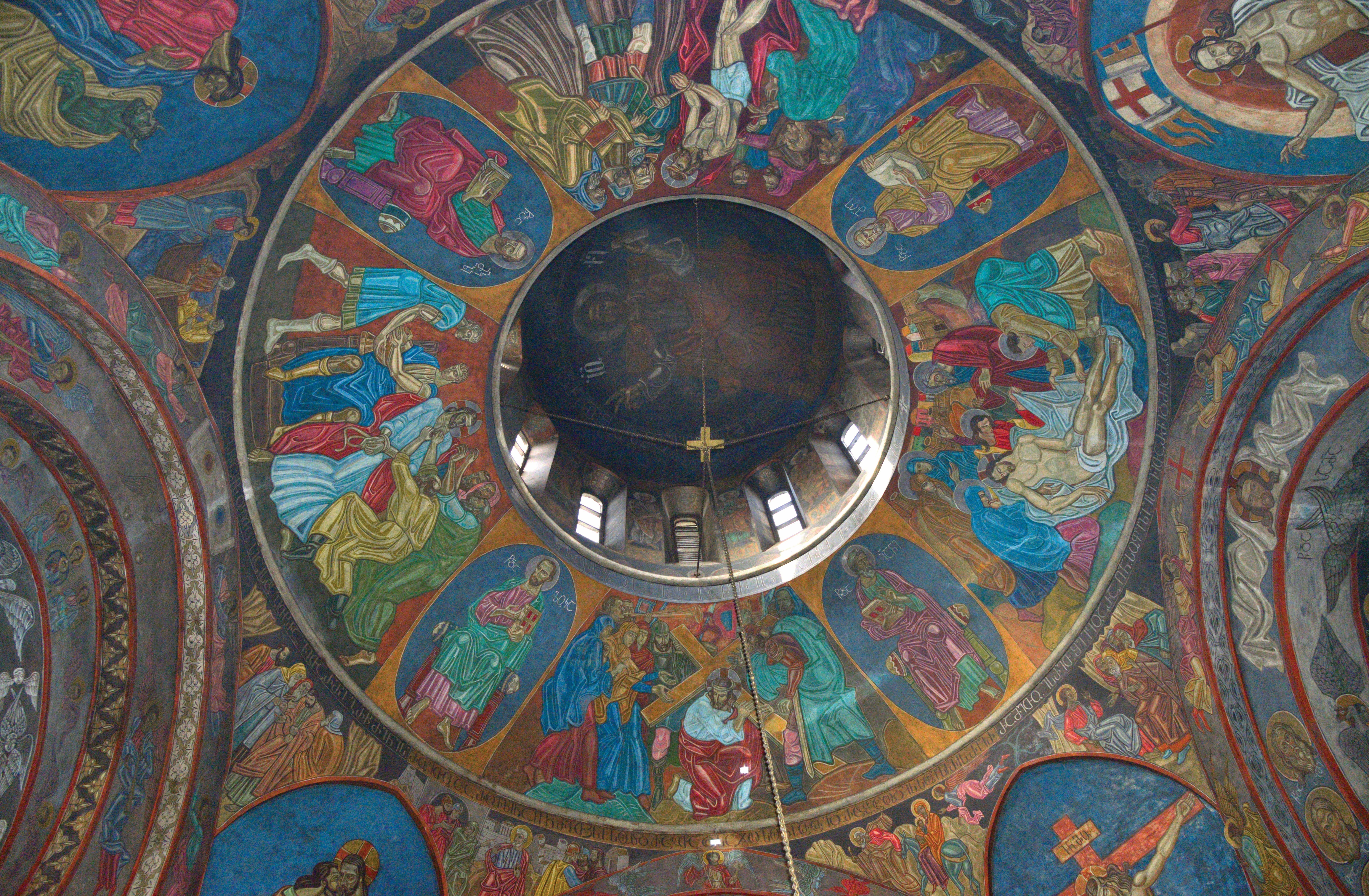
The Assumption Cathedral of Didube,1978-1988
At the end of his creative career, the artist
left two notable unfinished projects. The first was a large-scale composition
intended to be constructed from twelve independent abstract works of various
sizes. This combined composition gave the possibility for constant transformation, as the shifting of the
constituent elements
allowed a new dramaturgy to be unfolded each time.
.png) Alexander Bandzeladze, Three Piece Composition, Untitled - Triptych. Oil on Canvas, Wings - 200x150cm, Center piece - 200x300cm, 1989, ATINATI Private Collection
Alexander Bandzeladze, Three Piece Composition, Untitled - Triptych. Oil on Canvas, Wings - 200x150cm, Center piece - 200x300cm, 1989, ATINATI Private Collection
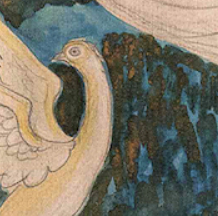
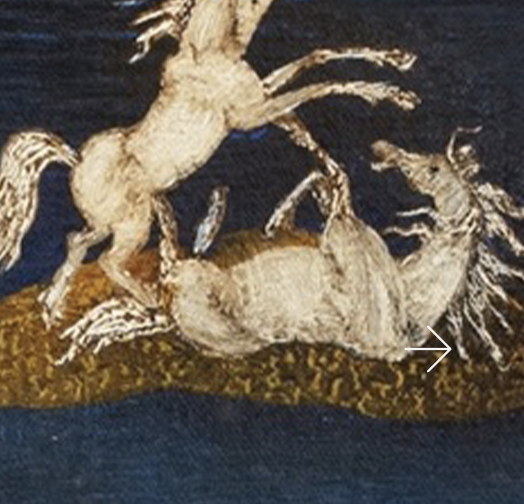
The second project sought to create a
visual interpretation of The Knight in
the Panther’s Skin. On large pictorial surfaces, handwritten texts were
combined with decorative motifs and illustrations. Within these works, rooted in the European artistic tradition and
reflecting Bandzeladze’s distinctive abstract style, the national motifs of medieval manuscript
ornamentation and inscriptions coexist in an unusual harmony, further enriched
by marginal notes executed in the Georgian-Oriental style. This interplay
effectively transforms the artist into a character within his own creation,
where the work itself acquires the qualities of a temporal-spatial montage.
When working on The Knight in the Panther’s Skin, Bandzeladze ignored all previous
illustrations of the poem created by other artists, followed no established
artistic trend, and gave no thought as to whether his works would ever be published in a book. Instead, he created
a completely new and unique mode of expression, where the boundary between
easel painting and book illustration dissolved entirely.