




 Share this article
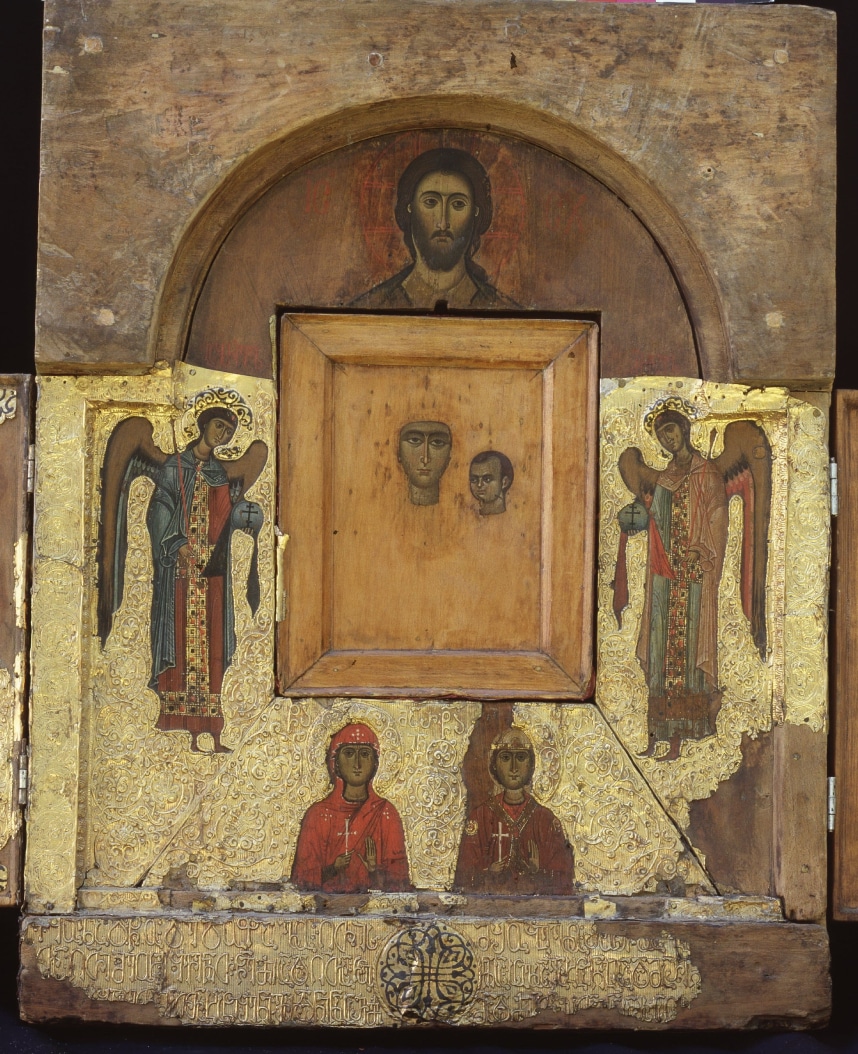
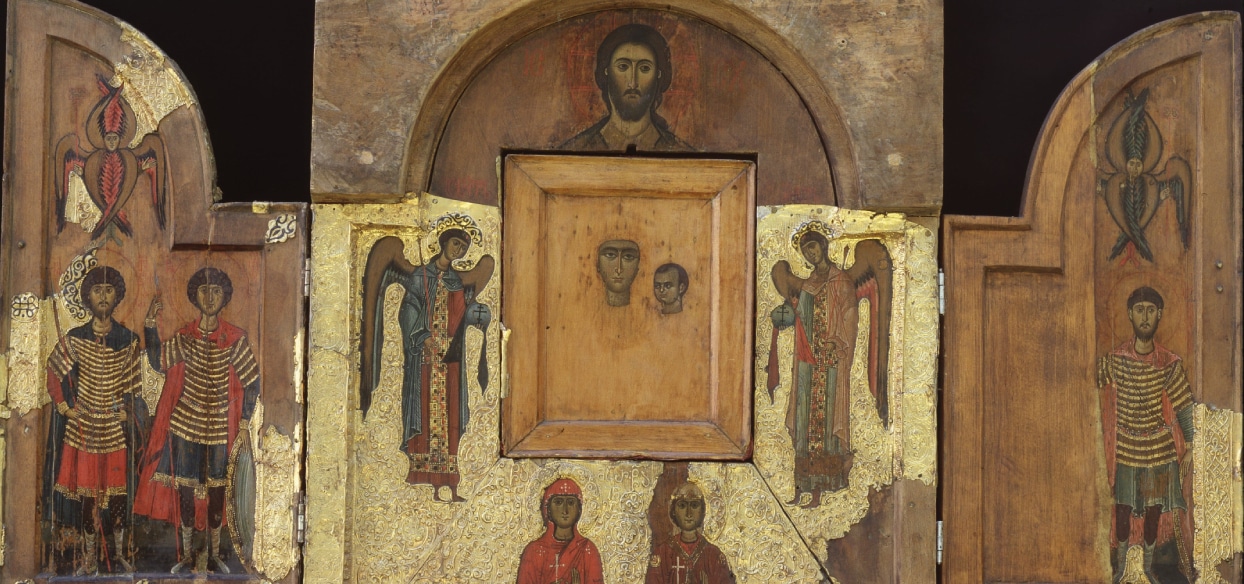
Triptychs, three-panel icons, constitute a distinct category of Christian devotional images. This type of icon allows the depiction of multiple figures and compositions, conveying complex theological concepts. The Seti triptych, named after the St. George Church in Seti, Mestia, Upper Svaneti, where it was housed, is a striking example of this type of icon.
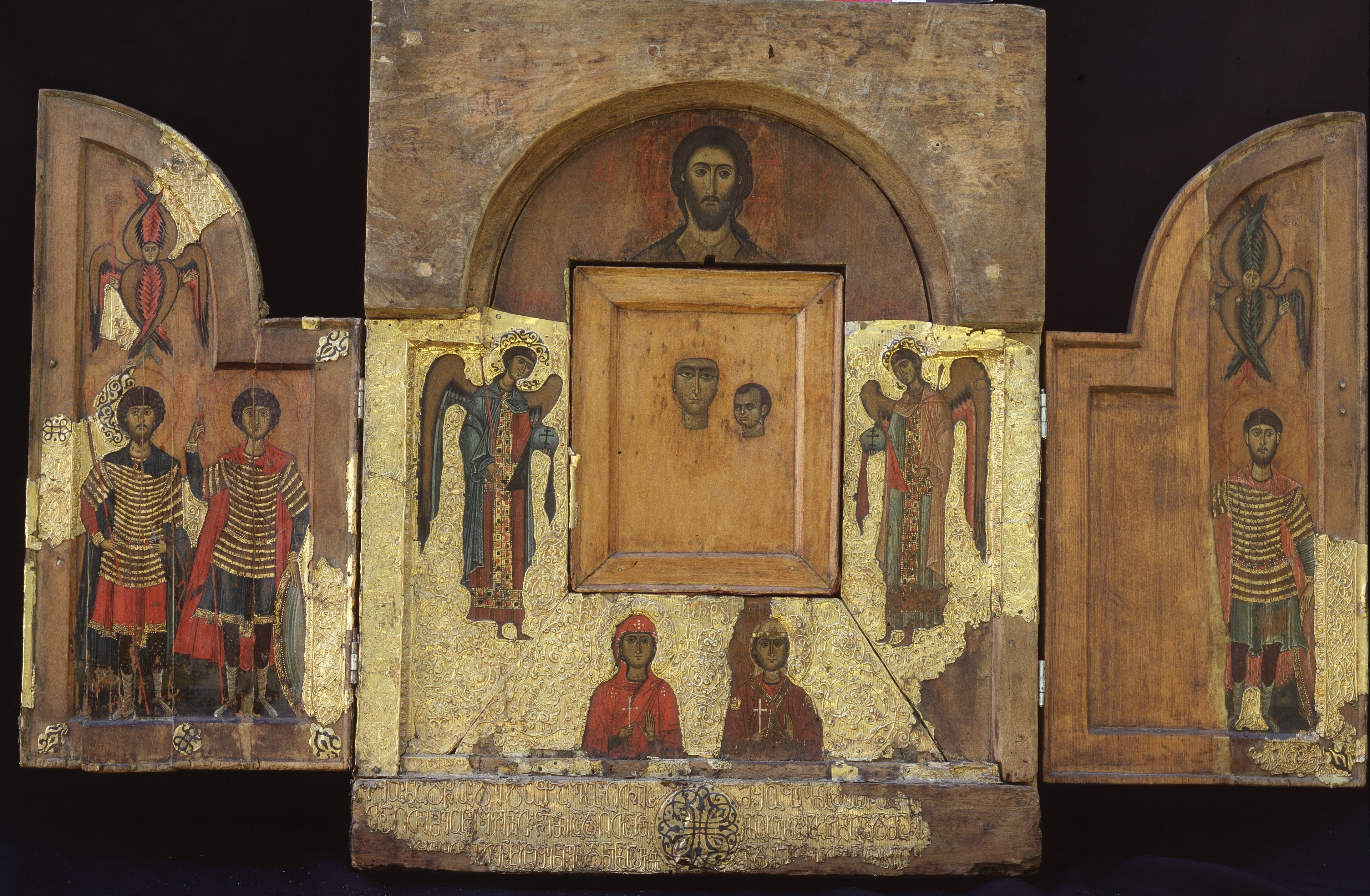
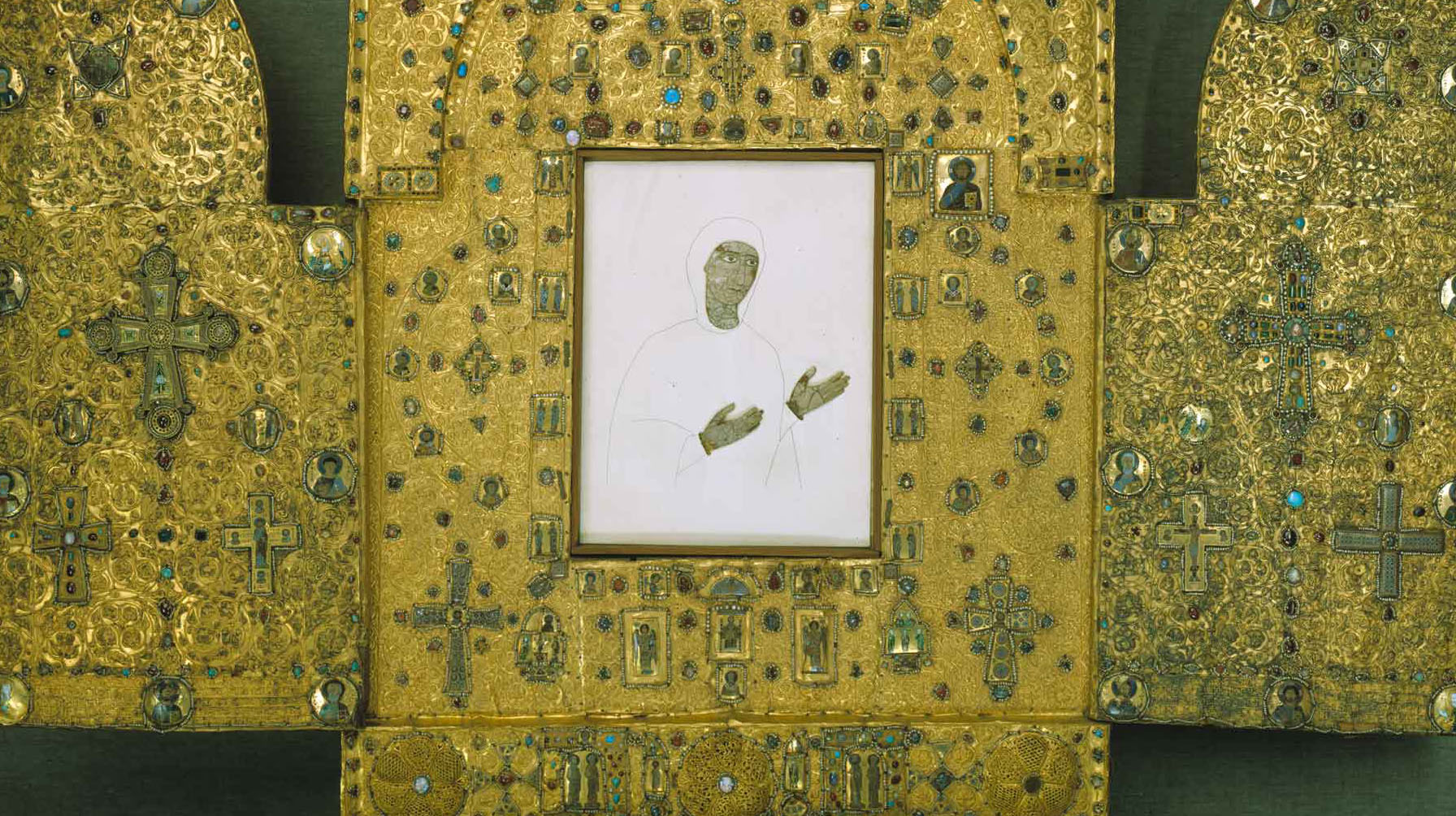
The icon, with open wings, measures 58 cm in height and 91cm in width. It is dated to the first quarter of the 13th century. The triptych is composed of wooden panels, painted in tempera and revetted with gilded silver. Niello ornament adorns haloes and the border of the icon. The icon is housed in the Svaneti Museum of History and Ethnography.
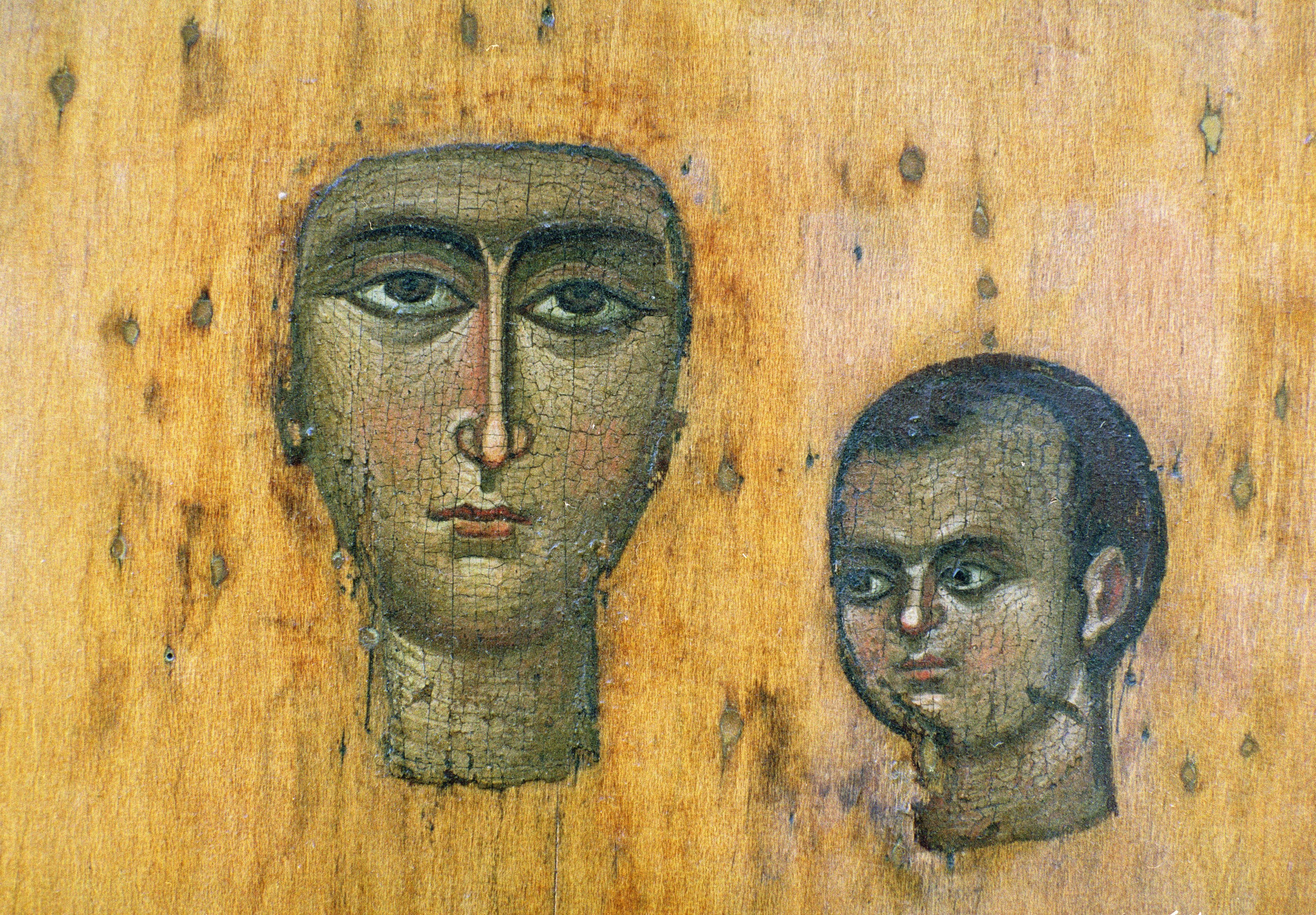
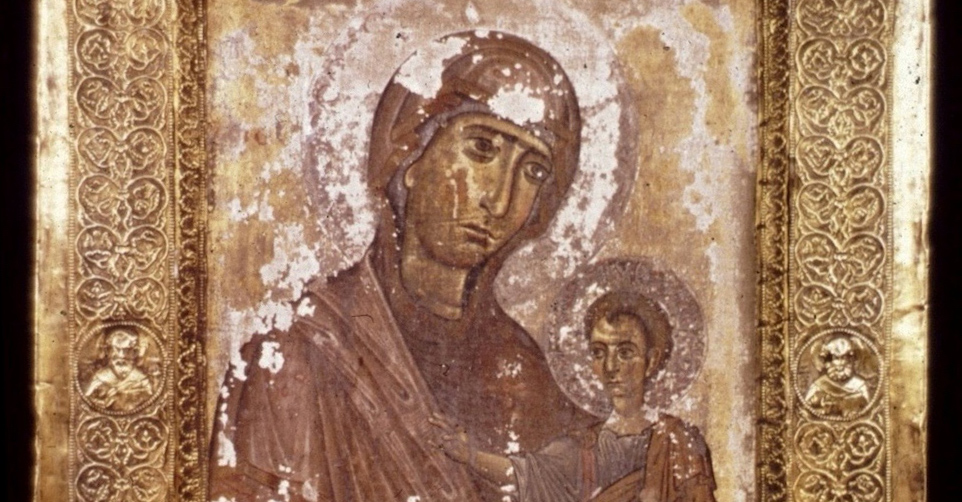
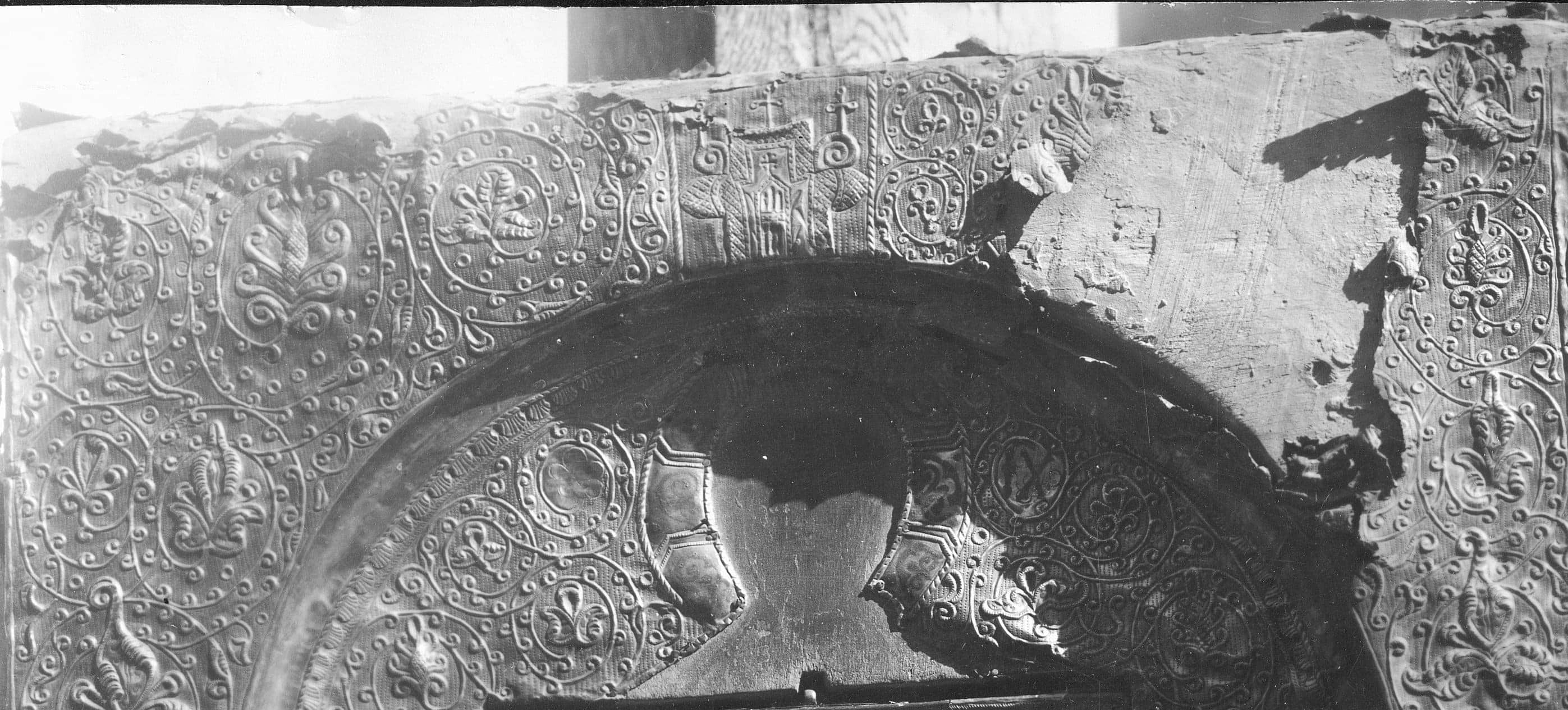
The focus of the composition is an icon of the Virgin and Child inserted into the central panel. Today, only the painted faces of Mary and Jesus remain. An old photograph taken by D. Ermakov in 1910, during the expedition of prominent Georgian scholar E. Takaishvili , shows the original repousse figures of the Virgin and Child.
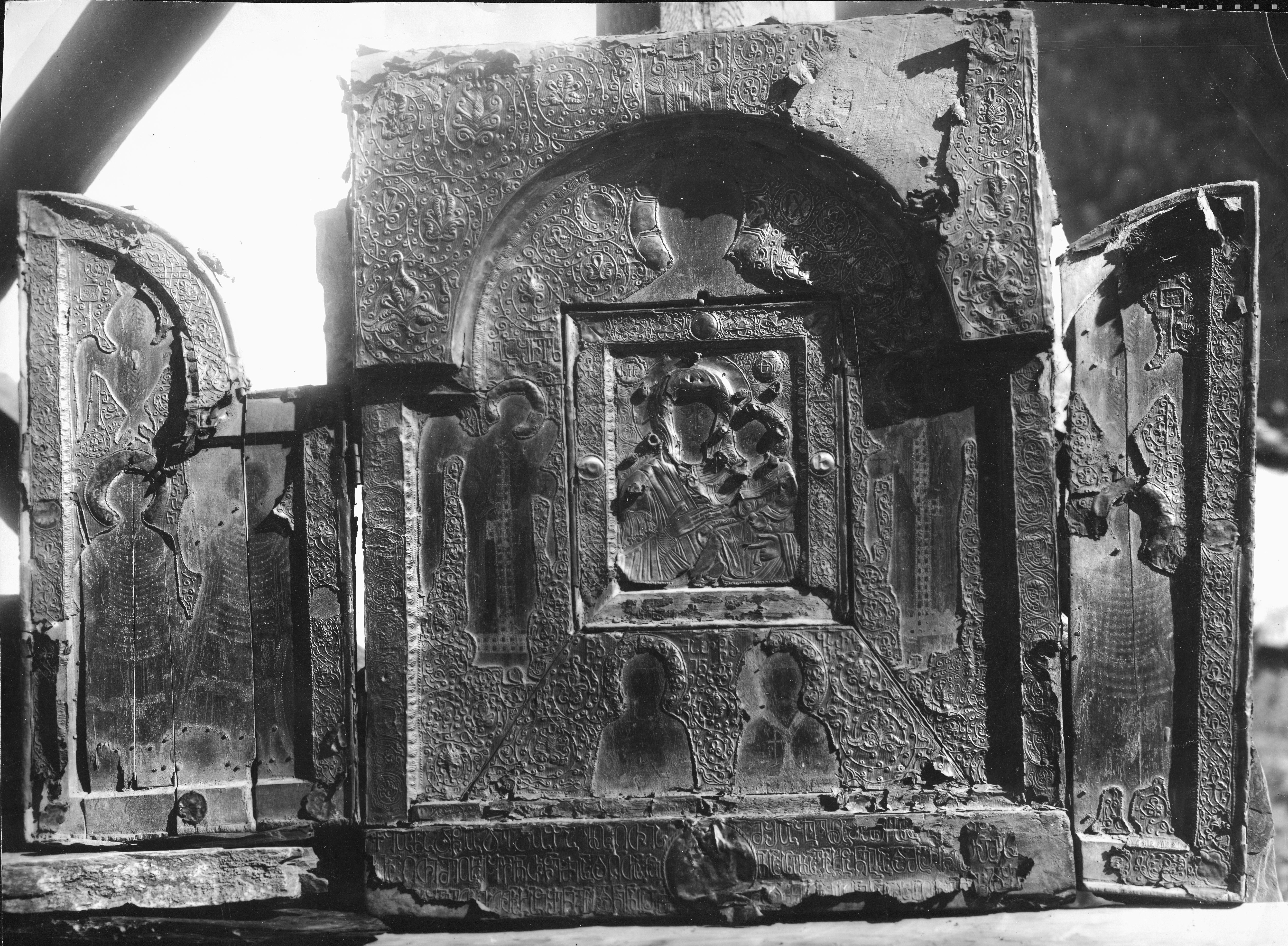
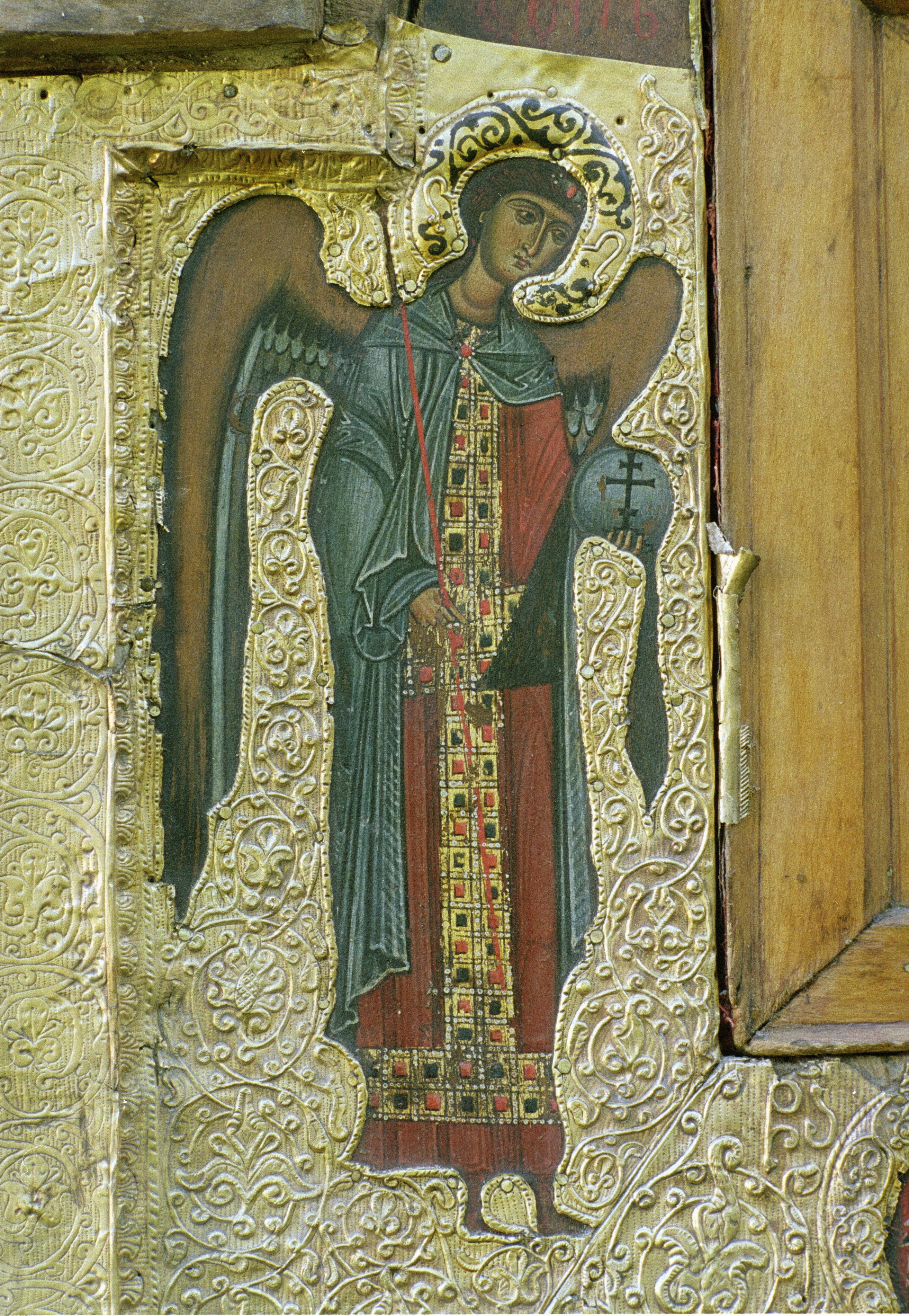
The central icon of the Mother of God is flanked by the figures of Archangels clad in Byzantine imperial costume: Gabriel in a red tunic and blue himation, and Michael in a blue tunic and reddish himation. They both wear a loros, a narrow cloth studded with precious stones and pearls, an element of Byzantine imperial dress. The Archangels are turned towards the central icon, inclining their heads in veneration. Their halos are adorned with niello rinceaux ornament.
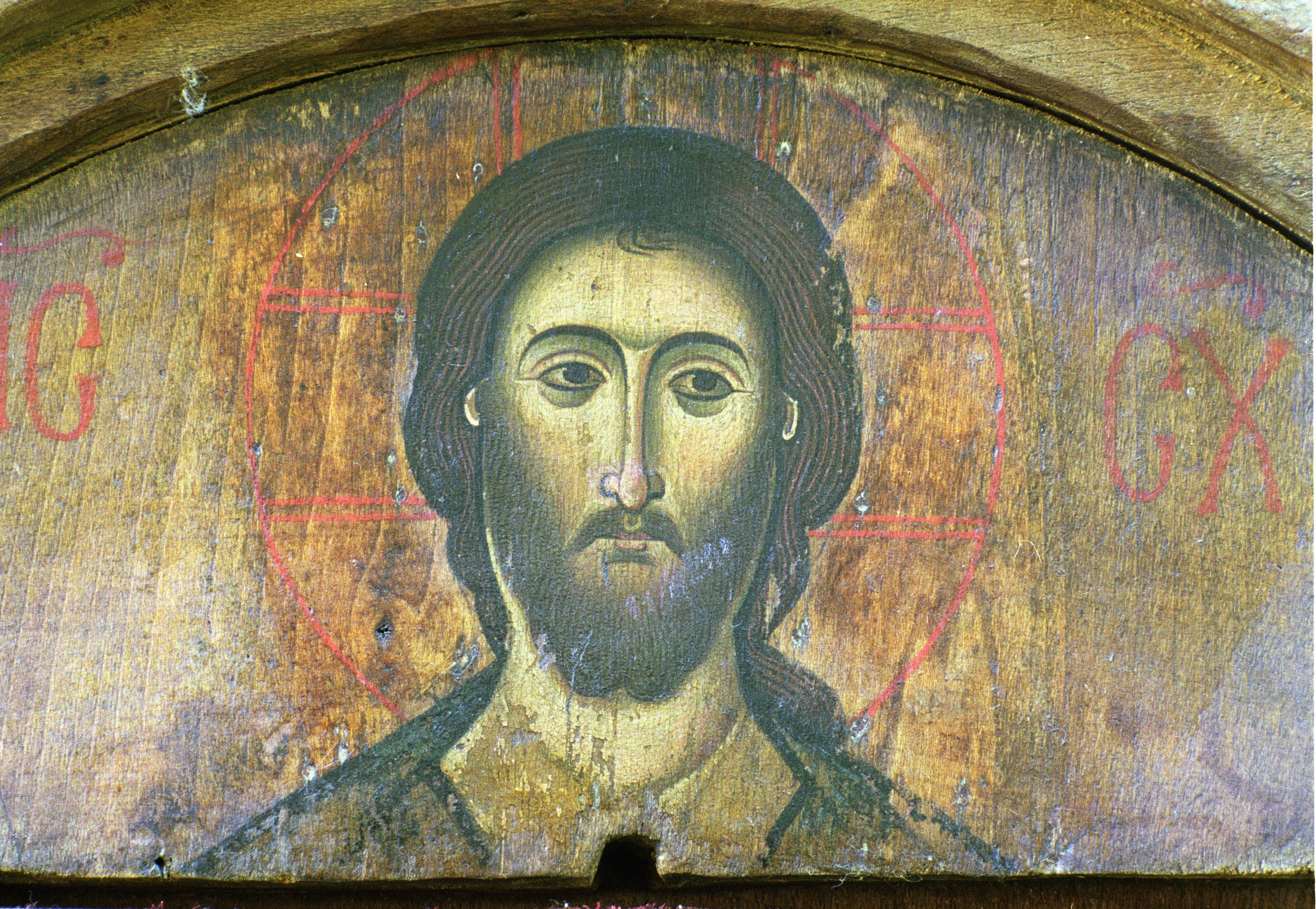
Above the icon of the Virgin is a bust of Christ clad in a brown chiton and blue himation. From his metal cruciger halo and Greek sigla (IC XC), only the red preparatory drawing is preserved
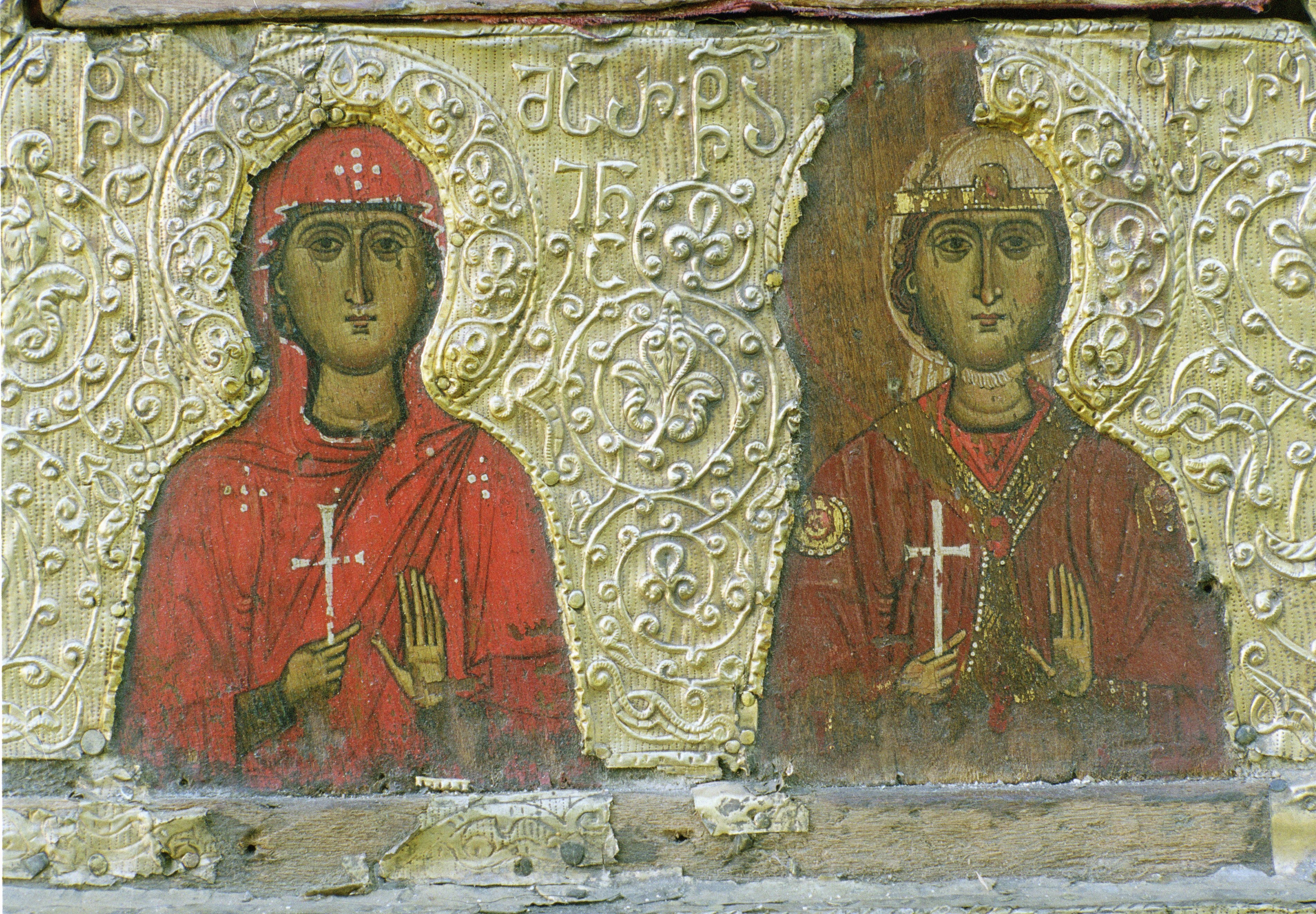
On the lower part of the central panel are frontal half-figures of two female saints, Saint Marina and Saint Barbara, holding the traditional martyr's crosses in their right hands against their chests.
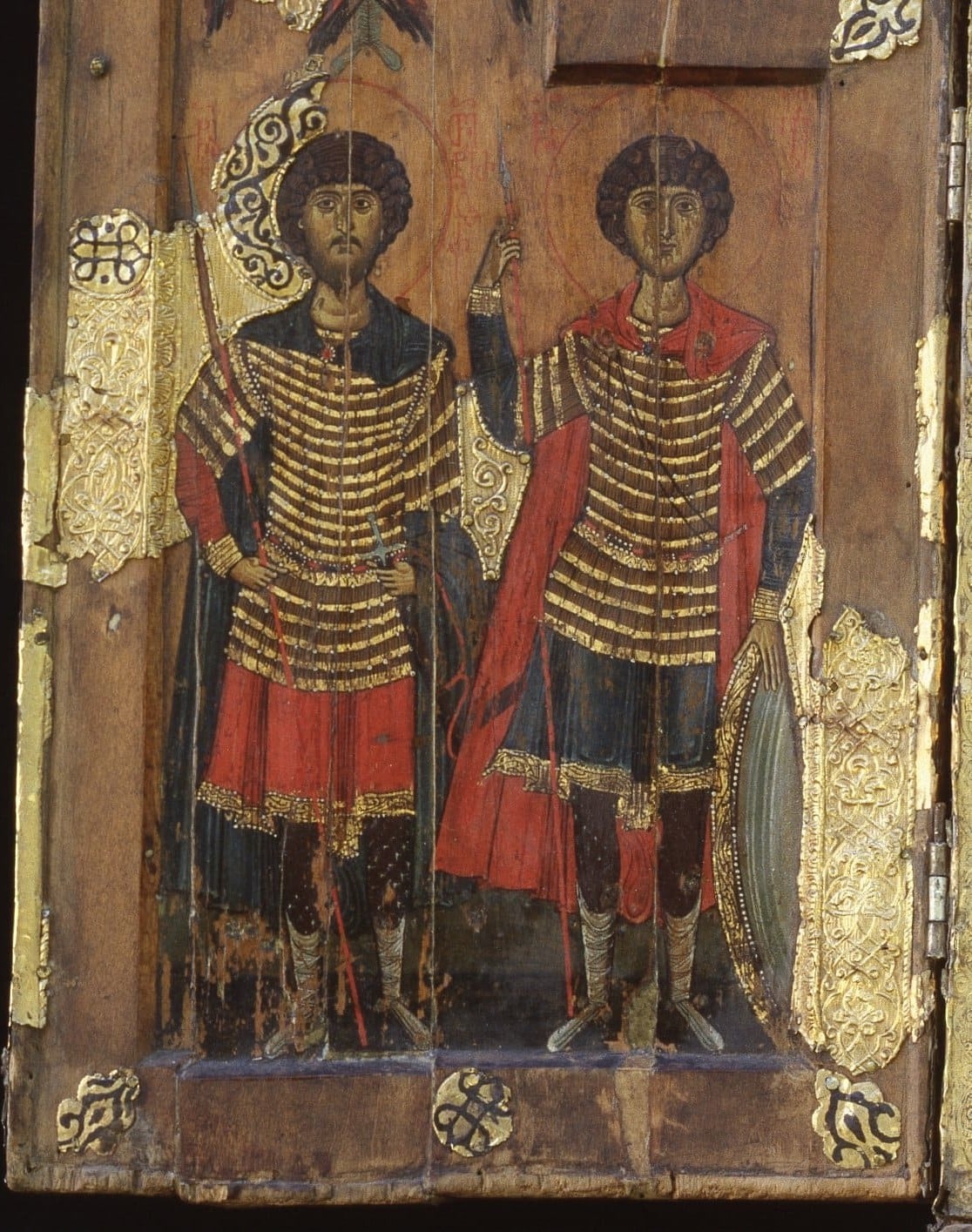
The standing figures of warrior saints occupy the wings of the triptych. On the right wing are Sts. George and Theodore Tyro (Recruit), while on the left wing, only St. Theodore Stratelates (General) is preserved. Presumably, he was accompanied by St. Demetrius. The saints are depicted in golden armor, tunics, mantles, chestnut-brown leggings, and Byzantine military boots (tzangia). They are shown in similar postures: in their raised right hands, they hold lances. Left hands of Sts. George and Theodore Stratelates rest on their shields, while Theodore Tyron holds the sword.
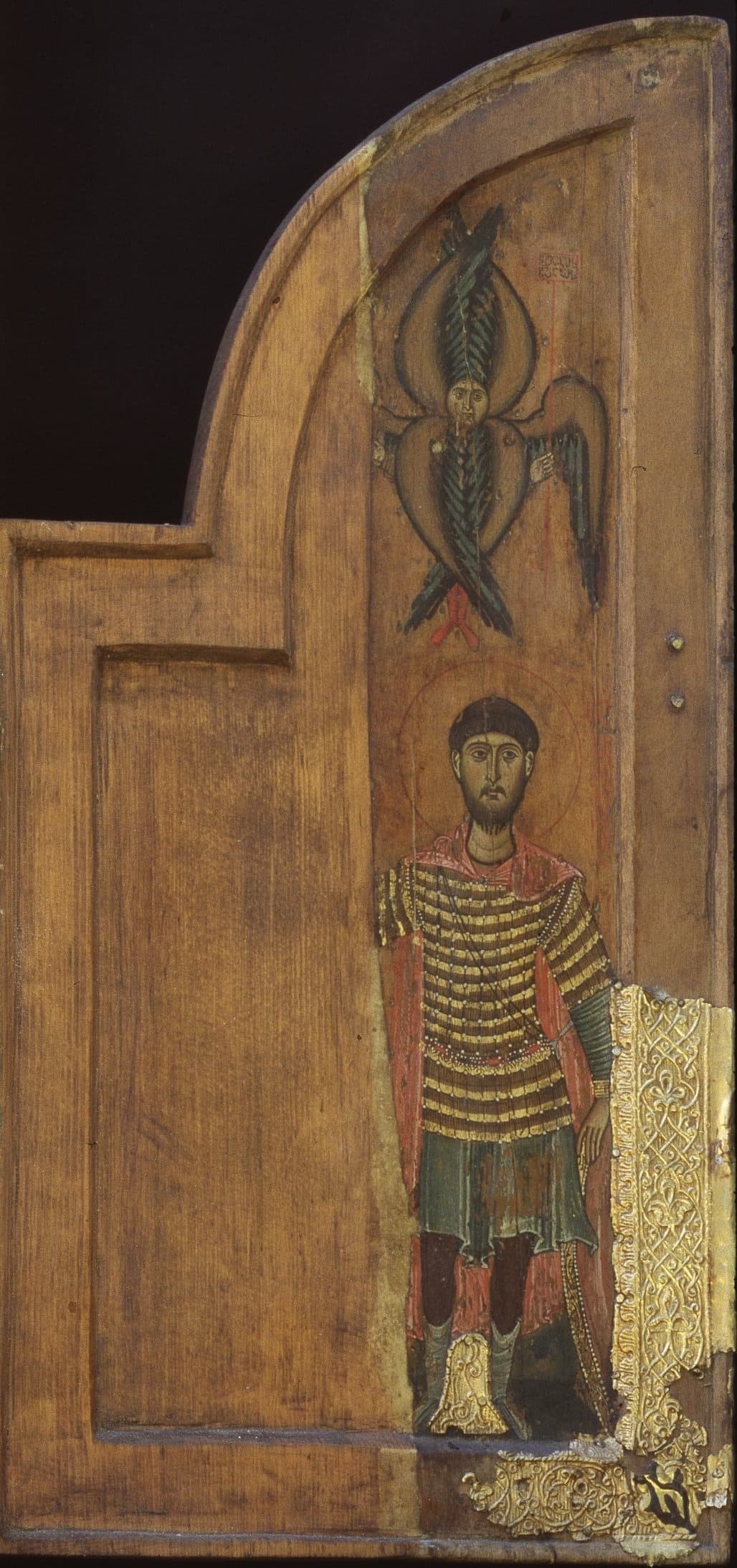
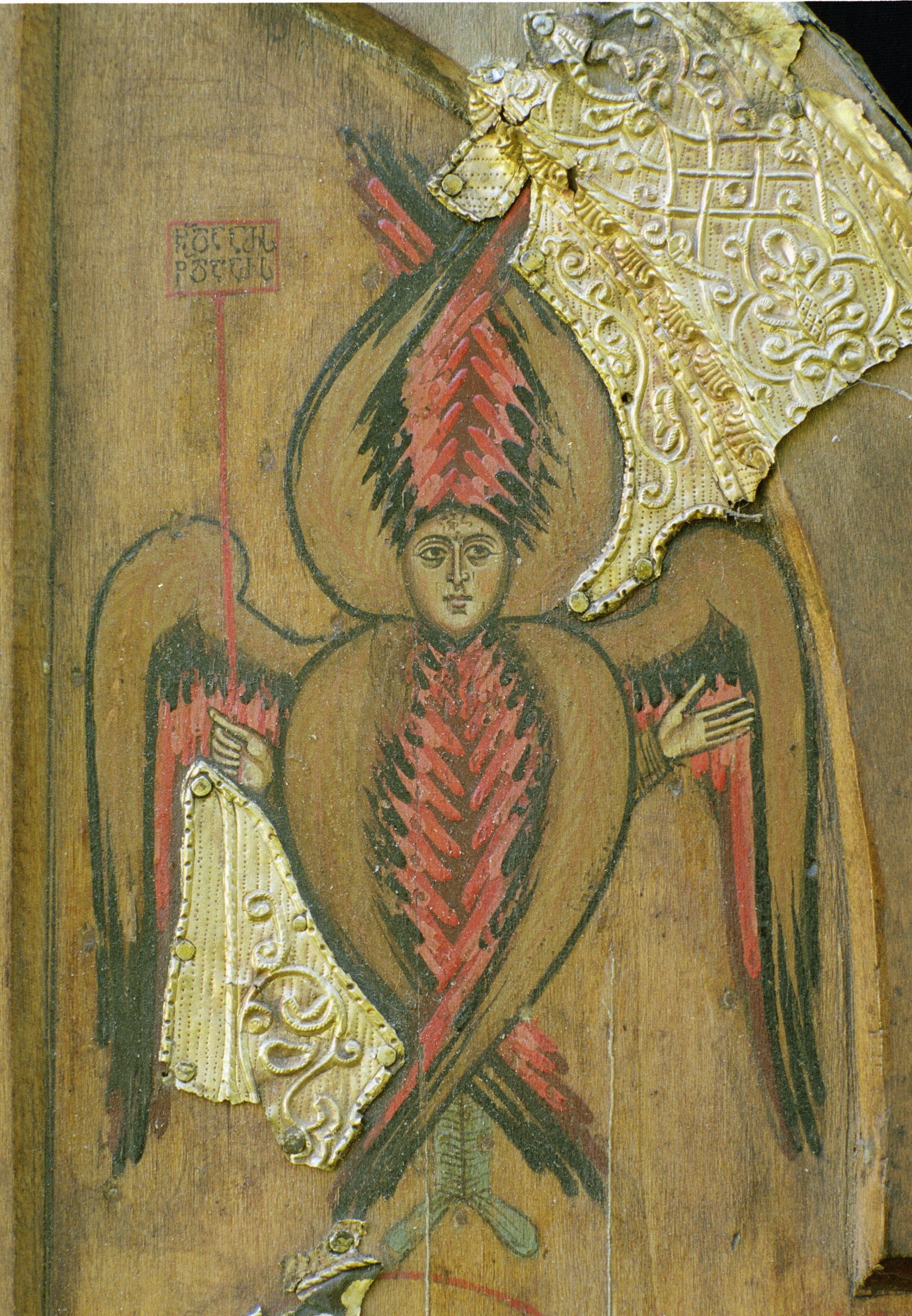
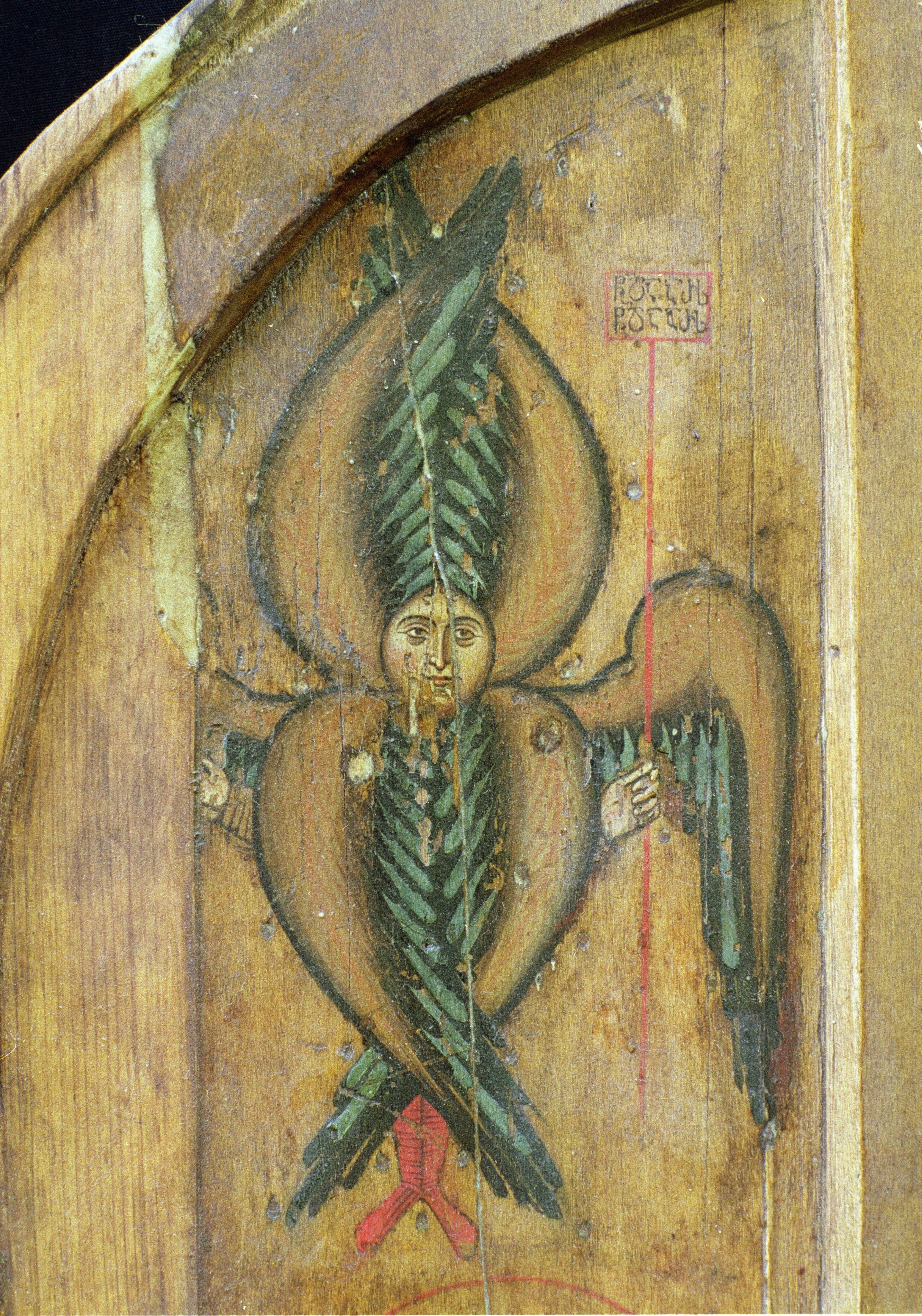
On the upper parts of the wings, we see images of the representatives of the Heavenly Host: Seraphim and Cherubim. They hold standards, labarums, with an inscription (in ancient Georgian asomtavruli script): "Holy, Holy is." The inscription derives from the angelic hymn praising the Lord (Isaiah 6:3).
On the
outer surface of the wings are images of the standing Apostles Peter and Paul -
St. Paul is on the right wing, and St. Peter on the left (now preserved only in
fragments). Both are slightly turned towards the center. The Apostles are clad
in tunics and mantels. St. Paul holds the codex.
In the archival photograph, in the center of the semicircular area, the “triumphal arch,” we can see a repousse Hetoimasia, or “Preparation of the Throne,” an inseparable element of the Last Judgment, symbolizing the mystical presence of God. The repousse vine scroll pattern around the Throne symbolizes Paradise, which could be reached after the Last Judgment. At the same time, this pattern alludes to the Eucharistic Sacrament.
On the lower border of the central panel is a commissioners’ repousse inscription in asomtavruli, with the niello rosette in the center. It reads: "Holy Queen, Mother of God, Who Carried the Lord, intercede before your Son and Our Lord for the souls of Wakhtang and Marina [for whom] their [sons adorned] your image. Vardan Inasaridze and his brothers Inasar, Sagir, Nicholaos, Beshken. [Have mercy. Amen].

The Inasaridzes, a feudal family of Lechkhumi (North-West
Georgia), are mentioned in numerous historical documents and literary sources
from the 12th through the 17th century. According to this evidence, they were
important and powerful persons, closely associated with the rulers.
The icon’s complex composition incorporates Christian imagery, resulting in a meaningful theological program that embodies significant Christian dogmas. The central icon of the Virgin and Child, flanked by adoring Archangels, constitutes the composition known as the Glorification of the Virgin. The Savior, the Hetoimasia, and elements of the prophetic visions (Seraphim and Cherubim with labara) belong to the traditional composition of Maestas Domini (Christ in Majesty).
The
stylistic features of the painting reveal two different painters: the first,
the author of the central icon, was a gifted master. The delicate modeling of
the faces and their individual character recalls the refined art of
Constantinople. Although the master of the other images was also a skillful
painter, he belonged to the local artistic trend. This triptych was created specifically
for the central icon of the Virgin and Child, an important sacred image of its
time. This is proved by the inscription saying that the Inasaridzes had “adorned
the image of the Virgin.”
The
central icon of the Virgin and Child, the Savior, the angels, and the saints,
provide protection for the commissioners and their deceased parents. The
introduction of iconographic elements alluding to the Second Coming adds a conceptual
layer to the icon created for the “salvation of souls.” The Seti triptych is an
icon with complex functional and symbolic meaning, playing a performative role
in the scenario of salvation.