




 Share this article
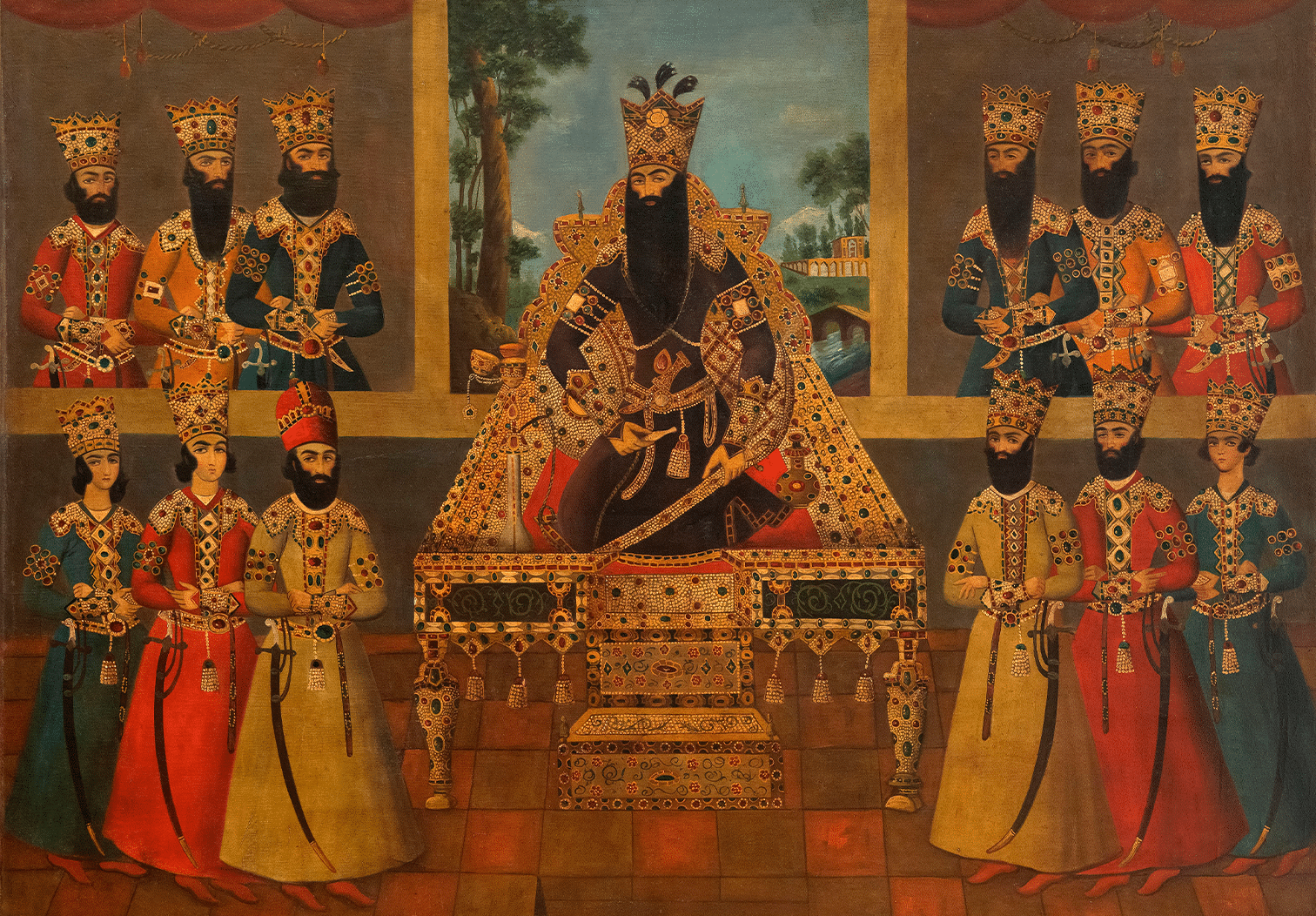
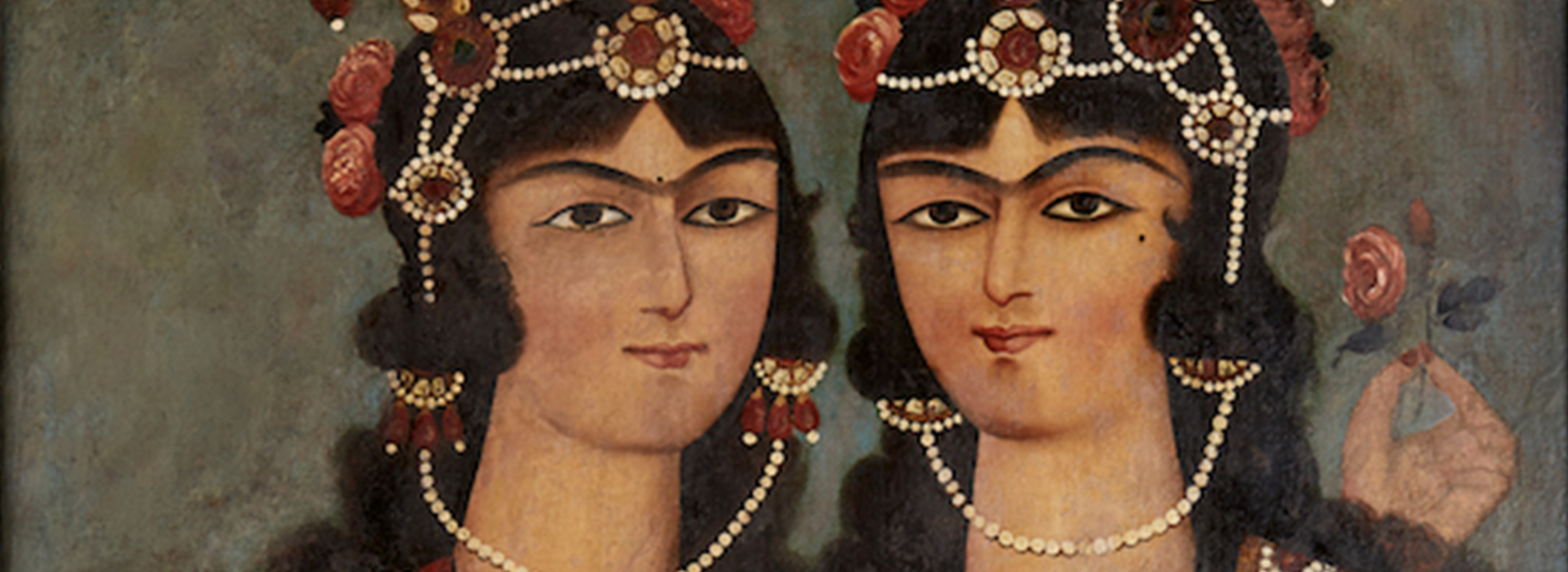
Iranian easel paintings of the 18th and 19th centuries occupy an important place in both Iranian and global art history. Commonly referred to as Qajar or Iranian Royal painting, this genre emerged and flourished during the reign of the Qajar dynasty. The Shalva Amiranashvili State Museum of Art of the Georgian National Museum is home to one of the world's most significant collections of Qajar-era easel paintings.
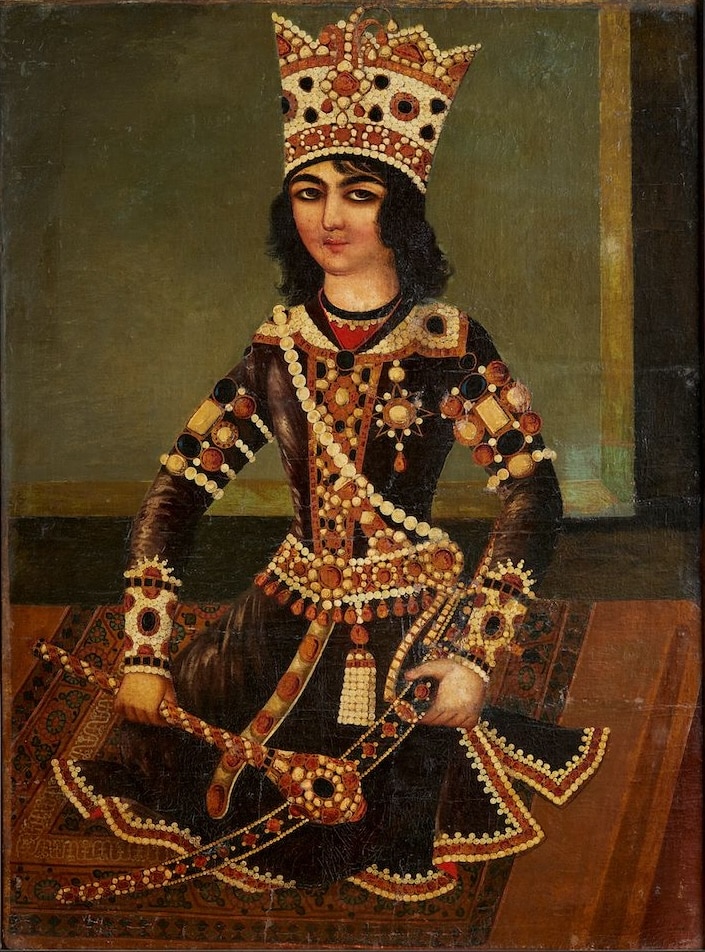
Portrait of Abbas-Mirza, Unknown artist. Iran. First part of 19th cent. Oil on canvas, 81x60 cm. Shalva Amiranashvili State Museum of Fine Arts, Georgian National Museum. Inv.N. 857
Toward the close of the 18th century, the Qajar dynasty rose to power in Iran. Its founder, Agha Mohammad Khan (1789–1797), united and fortified Iran after ruthlessly defeating the Zendi dynasty, the country's rulers at the time. His successor, Fath-Ali Shah (1797-1834), inherited a country in turmoil, embroiled in constant diplomatic and physical warfare with the Russian, British, and French empires. These power struggles became known as the Great Game in 19th century history.
Despite this challenging political environment, which included military defeats and territorial losses, Fath-Ali Shah’s name became synonymous with the country's cultural revival. Fath-Ali Shah created a distinct artistic style, through which he conveyed ideological messages to opponents and supporters both within and beyond the country. One of his key narratives emphasized dynastic continuity. The Qajars are regarded as the heirs of the traditions of Iran's mythological and actual monarchs (Kayanians, Safavids). That is why Fath-Ali Shah renovated the palaces they erected, placing images of his ancestors on contemporary structures. During his rule, Iranian art became monumental, representative and majestic. New secular structures were lavishly embellished with colorful and poetic pictorial canvases and wall paintings. This feature when the Eastern vision and stylistics are merged with the European painting technique created radically new, vibrant works that were full of life and elegance. This new form was later referred to in scholarly literature as Qajar art.
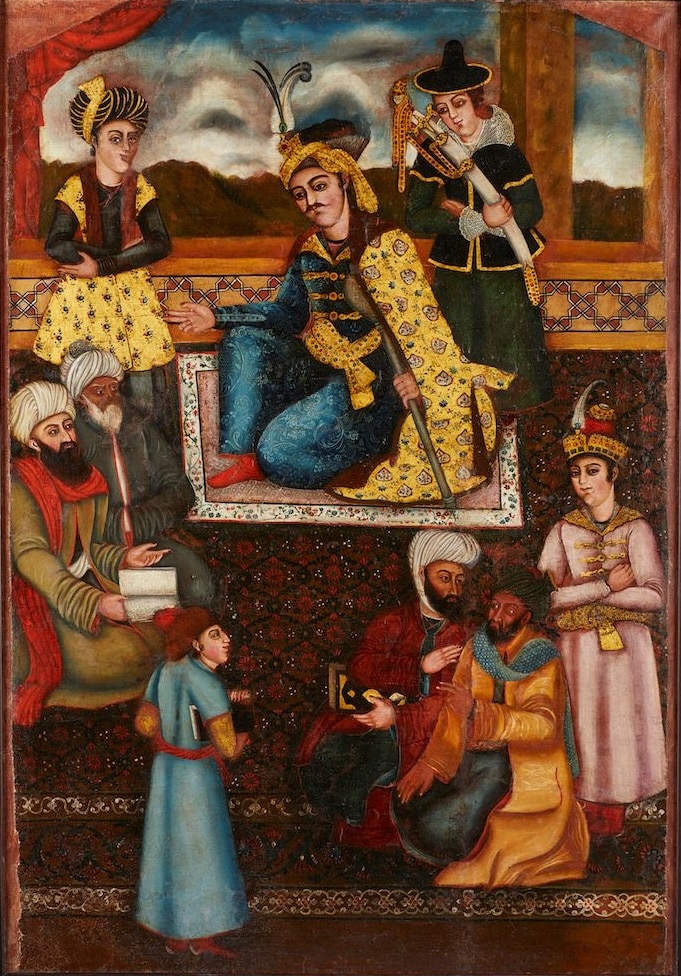
Audience at the Court of Shah. Unknown artist. Iran. First part of 19th cent. Oil on canvas, 105x70 cm. Shalva Amiranashvili State Museum of Fine Arts, Georgian National Museum. Inv.N.110
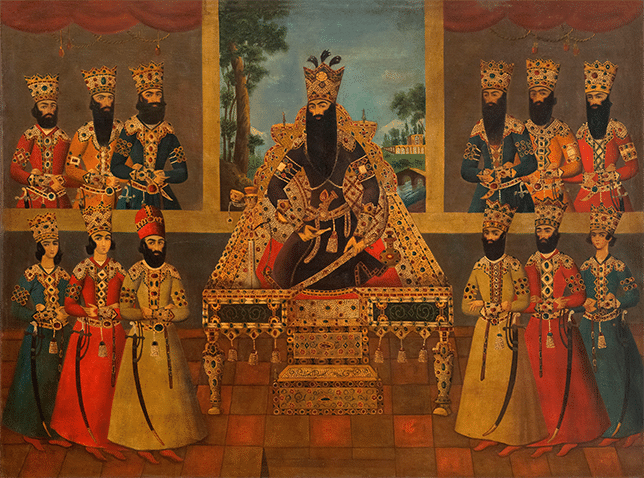
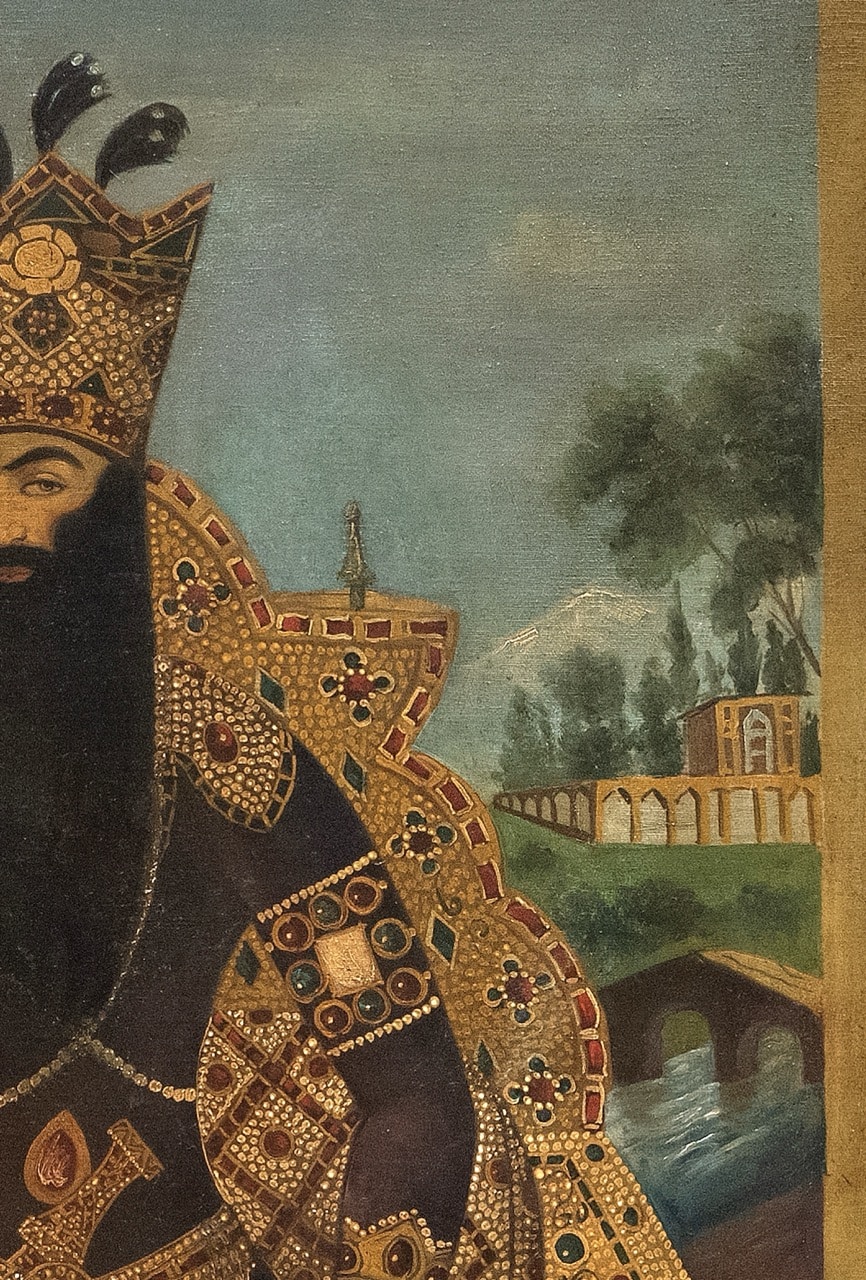
The ATINATI Foundation recently acquired an outstanding Persian painting representing the ceremonial reception of Fath-Ali Shah, the second ruler of the Qajar dynasty (1797-1834). Fath-Ali Shah is represented in the middle of the composition, clad in ceremonial robes and seated on the Peacock Throne with a gorgeous crown on his head. On either side of him, there are two rows of three noblemen and princes, also wearing crowns, or dressed in turbans and other expensive items.
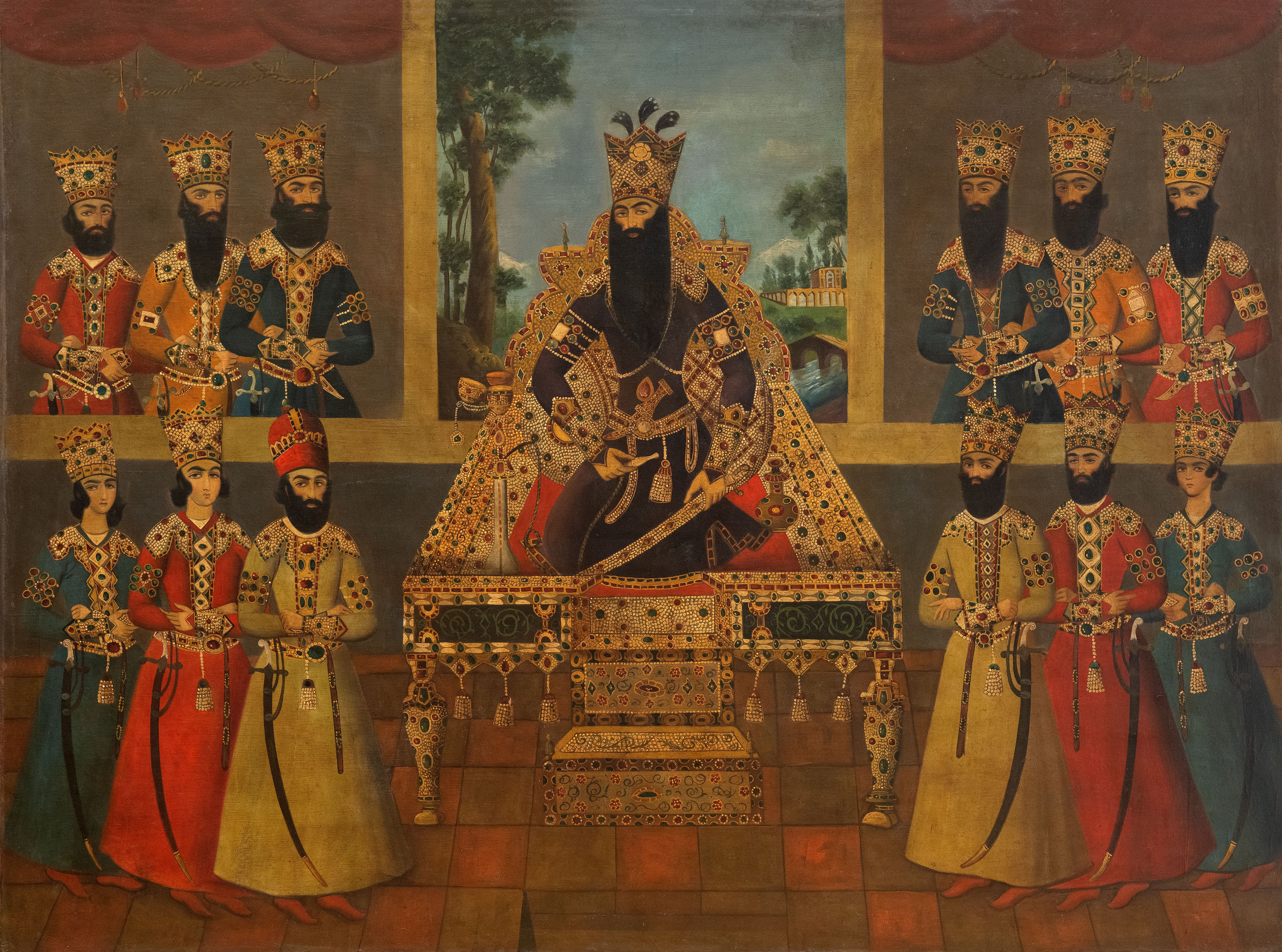
Fath-Ali Shah and his Immediate Courtiers. Oil, canvas. 109,5 x 147,5cm. ATINATI Private Collection
The vivid spectrum of bright gold, red, blue, and yellow colours dominate in the work. The composition is a small copy of a large painted canvas that decorated the main reception hall of the Negarestan Palace, one of the Qajar residences situated outside Tehran. It depicts an event of a ceremonial celebration honoring the Iranian New Year - Nowruz. The palace painting, the main source of the ATINATI collection, was much larger, and featured many more characters, among them high-ranking military officials, members of the diplomatic corps of different countries, and other significant figures, in addition to the princes and viziers of the royal court. It was possible to identify the characters in the original painting, since each one had a Persian inscription. A group of painters, led by the artist Abdallah, created the scene of the Shah's ceremonial reception at the Negarestan Palace in 1812–1813. During the same years, numerous artist groups painted comparable ceremonial monumental scenes on the walls of the palaces of Qom, Karaj, and Isfahan.
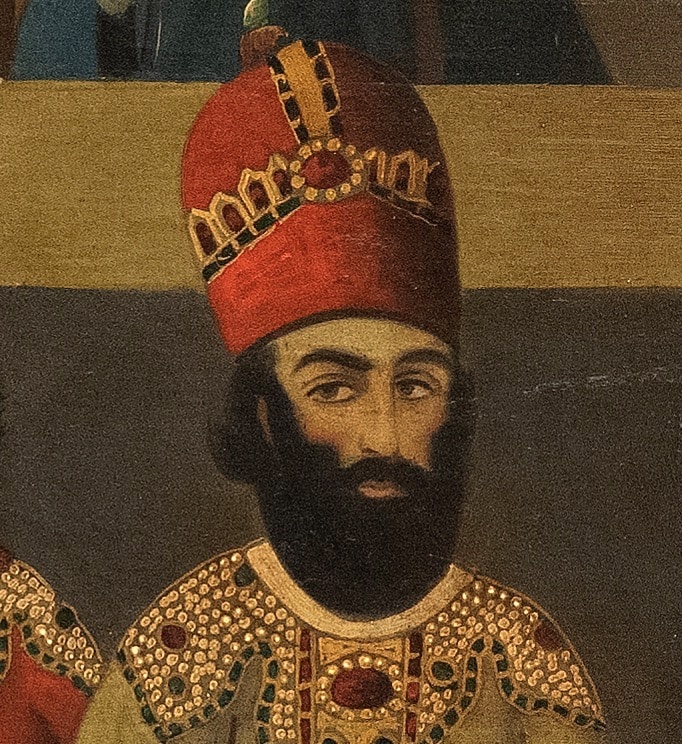
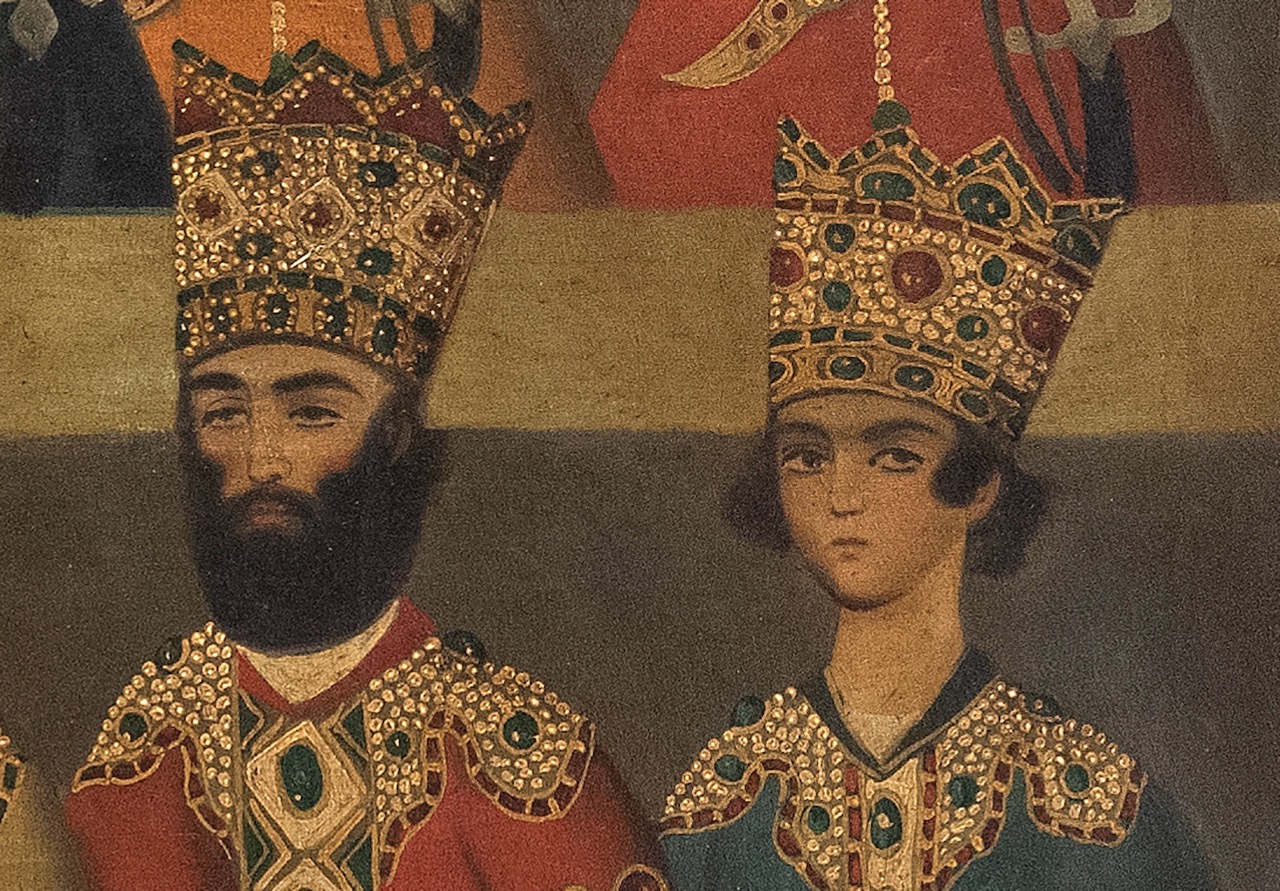
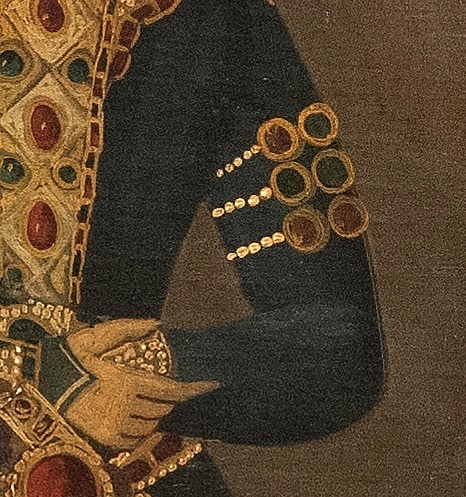
From 1812 until 1834, miniature versions of these monumental paintings were also created and presented to different Iranian and foreign representatives as presents or tokens of appreciation. Today, some of these artworks are housed in private collections, while others are kept in museums around the world. Several the paintings feature Persian inscriptions that help identify the individuals portrayed. Although the piece preserved in Georgia lacks such an inscription, the painting’s stylistic elements, its compositional structure, the characters it depicts, and its sophisticated, refined rendering of form and color, all suggest that it was created during the 1810s and 1820s (confirmed by the date listed in the auction lot: 1815). It is believed it was sent to Europe as a diplomatic gift. The official auction paperwork, which states that the picture was bought by the Iranian ambassador residing in London, further supports this.
International visitors were always greatly impressed by the beauty of the Iranian royal court. Premier sources and the accounts from Fath-Ali Shah's contemporaries - French, English, Russians, and others – offer vivid descriptions, and, at times, detailed commentary on royal hunts, festivities, court ceremonies, the attire of the Shah and his princes, and the ornate interiors of the palaces.
Fath-Ali Shah was a versatile educated person and poet by nature, a celebrated aesthete, and an ardent lover of the arts. He took an active role in commissioning the decoration of the palaces, personally selecting themes for their paintings. Modern Europeans have expressed genuine admiration for the works created by the Shah's court artists, among them Mirza Baba, Mihr Ali, and Abdullah. Their finest pieces were given as presents to foreign ambassadors and sent to royal courts across Europe and Asia. Qajar art, particularly its leading branches, easel and monumental painting, only gained international recognition in the late 1990s, when the Brooklyn Museum (USA) and the Brunei Gallery (Great Britain) held large exhibitions titled Qajar Royal Painting and Qajar Portraits: Figure Paintings from Nineteenth Century Persia. Layla Diba, Maryam Ekhtiar, and Julian Raby, three well-known Islamic art researchers, curated these two shows, which came to revolutionize scientific circles and elevated Qajar-era Iranian art to its proper position in the millennial history of Iranian visual culture.
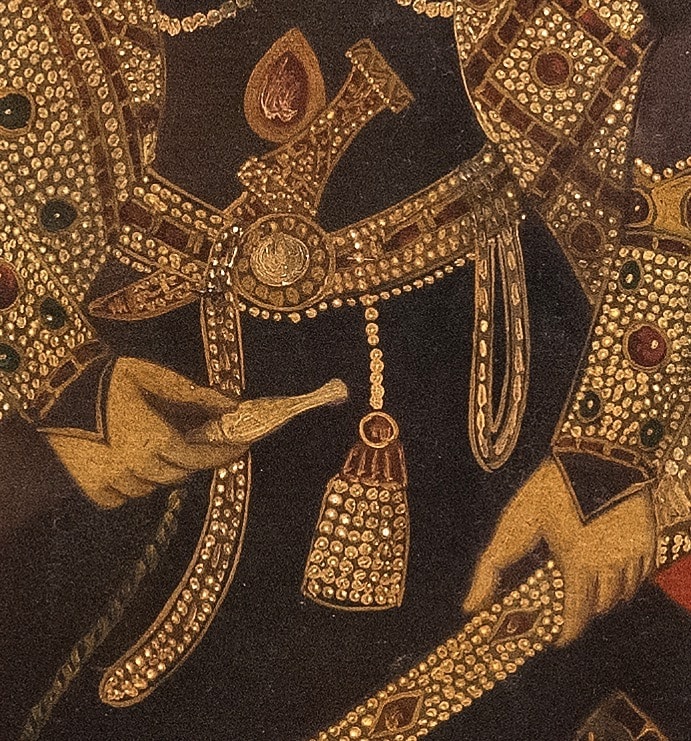
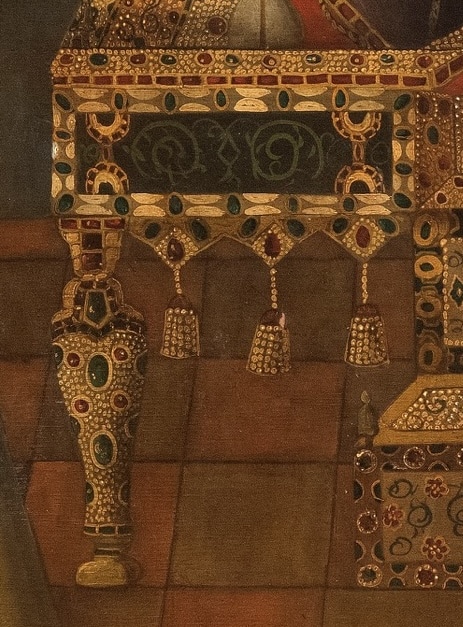
We have to point out, though, that even at the turn of the 20th century, when there were no indications that this art was valued or recognized, in Georgia, thanks to the efforts of renowned Georgian artist and public figure Dimitri Shevardnadze in 1920 was established the Georgian National Gallery - museum of visual art . In this Gallery in the permanent exhibition first time were presented the Qajar-era paintings alongside with the Georgian and Western European artworks. These collections of Iranian Paintings later became the core for the current large collection of the Shalva Amiranashvili Museum.
It is noteworthy that the first sсientific researches about the Qajar painting were conducted by Georgian scientist Academician Shalva Amiranashvili, who, in the 1930s, prepared and published illustrations of Iranian easel and miniature painting in postcard format. Subsequently, in 1940 and 1941, he published two monographs dedicated to the late Iranian easel and miniature painting, wherein he examined the phenomenon of Qajar painting, identified various sources of origin, and emphasized that this art form constitutes an essential component of Iranian cultural heritage. Amiranashvili argued that this art form represent a synthesis of local and foreign influences, interwoven with the original Iranian artistic traditions, culminating in a complex, multifaceted, and entirely unique manifestation of artistic development, that encapsulates the Iranian national identity shaped over centuries.