




 Share this article
Beno Gordeziani (1894-1975) was a Georgian graphic designer and painter, one of the leading figures of Georgia’s avant-garde artistic-literary direction in the 1920s.
Beno Gordeziani is regarded as one of the most prominent figures in Georgian avant-garde art. His name is most closely identified with the Dadaist-Futurist group known as 'H2SO4.' This literary-artistic association was established in 1924. In a similar way to the effect of sulfuric acid (the chemical formula of which is reflected in the group’s name), its members aspired to destroy everything old and outmoded in the creative world.
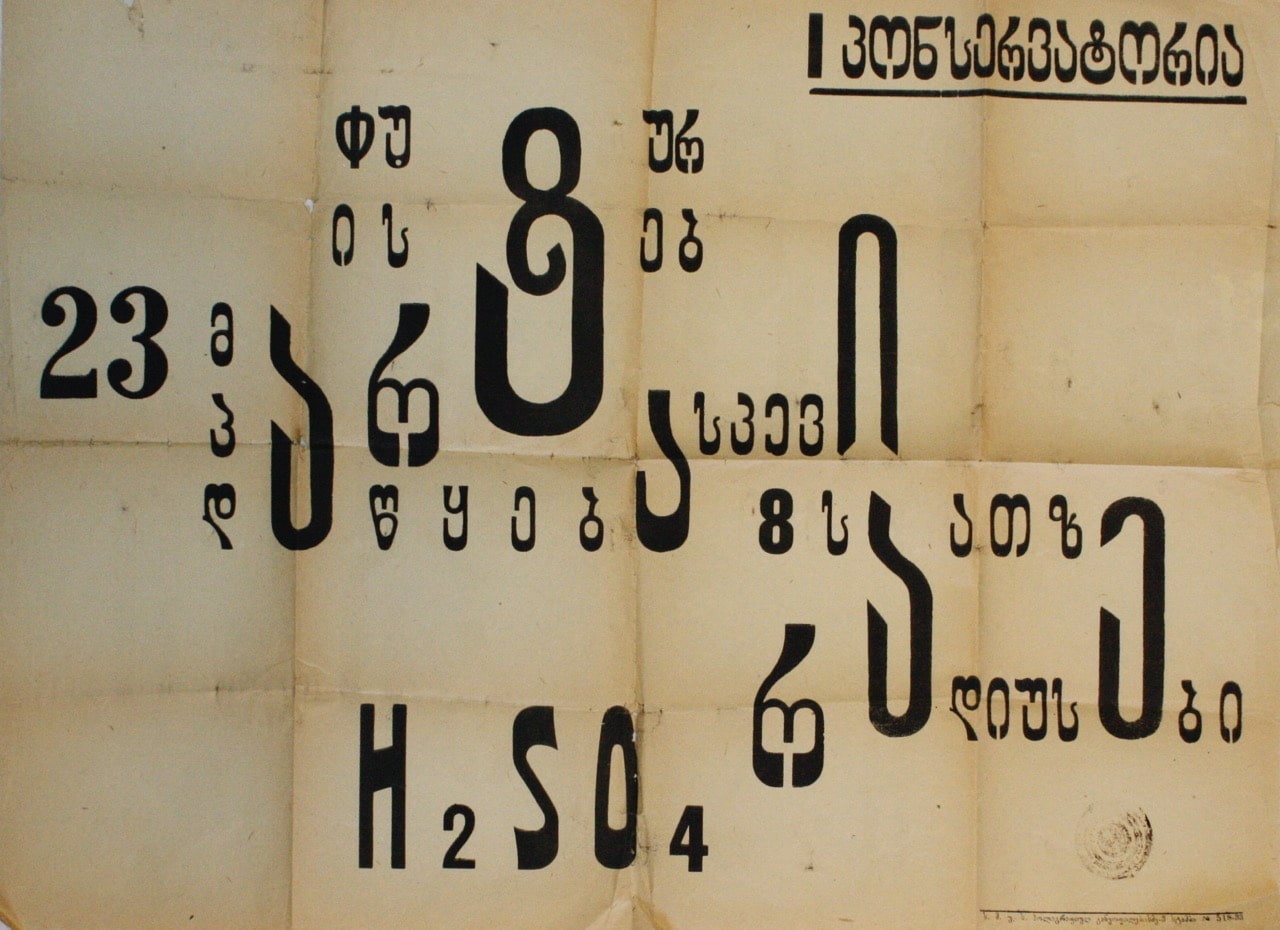
H2SO4, the poster designed by Beno Gordeziani. 1924
The members of the group gathered at the Tbilisi Conservatoire and declared their goals publicly. Beno Gordeziani designed the poster for this event, in which the Georgian alphabet was employed in a Dadaistic manner. Each letter plays an autonomous creative role in the space of the composition, and when combined, they form a dynamic whole. The youthful artist infused the Georgian alphabet with a fresh avant-garde cast. Soon afterwards, the group published a magazine entitled 'H2SO4', which was essentially a collection of their manifestos. This magazine is now considered as one of the most remarkable avant-garde publications from the 1910s to the 1930s. This is a one-of-a-kind printed material that is noteworthy in terms of its typography. In the history of Georgian avant-garde publications, H2SO4 stands out for the unity and sophistication of every detail. Each letter's "appearance" (the outline, line thickness, size, and positioning), each line graphic insert or sketch placed on the magazine pages produces a complete unity. Every page is a work of art, and the letters, together with all the other attributes, function much like the performers and scenery on a stage. Everything, including the punctuation marks, bears an artistic weight and is beautifully blended with and related to the subject matter of the texts. Beno Gordeziani and Irakli Gamrekeli, who worked closely together, perfectly fulfilled the Dadaist-Futurist goal by matching the "appearance" of the letters not only to the content, but also to the sounds of the words and texts as a whole. In this case, the designers' competence in terms of realization of the concept is incomparable.
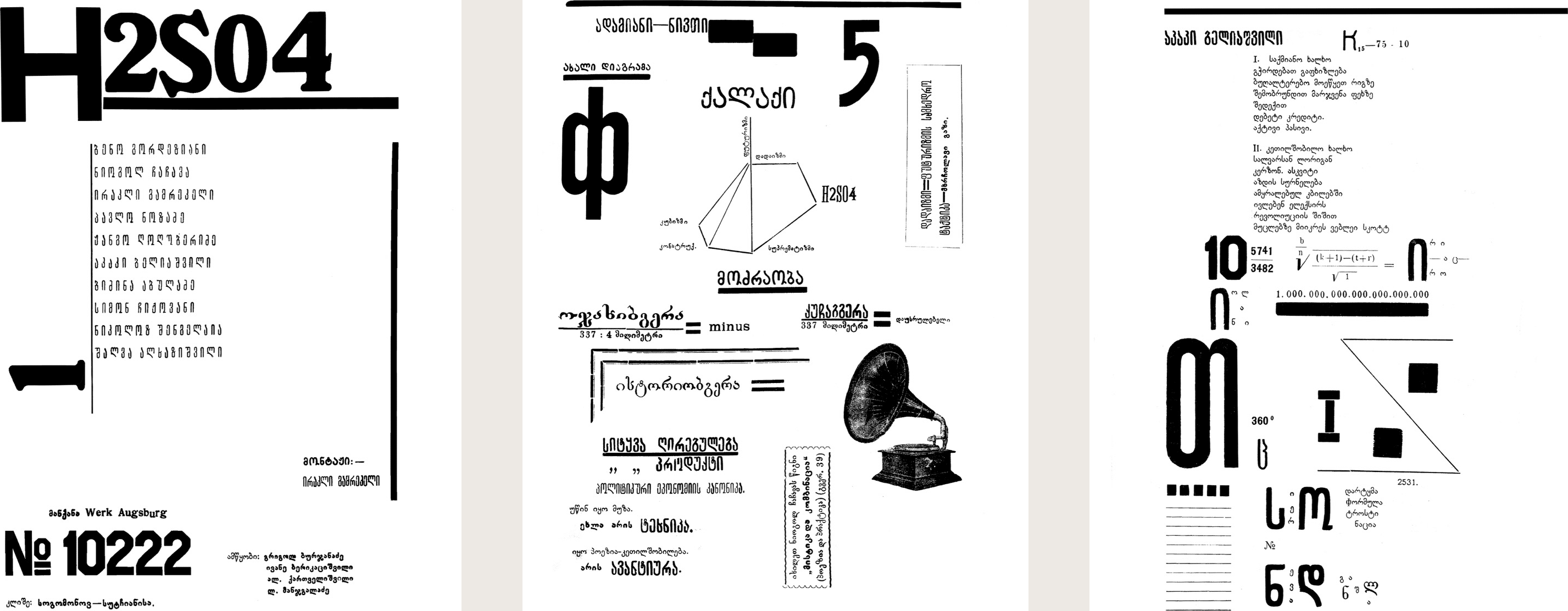
Pages from the magazine H2SO4. 1924. Designers: Beno Gordeziani and Irakli Gamrekeli
The H2SO4 magazine also includes paintings made by its designers, including two Cubist-Expressionist works by Beno Gordeziani: "The Day of Lenin's Burial" and "The Poet's Wife." These pieces demonstrate Gordeziani's familiarity with modernist trends such as Cubism, Futurism, and Expressionism, Dadaism and his skillful use of the avant-garde artistic techniques.
The subsequent publication by the same group was the first issue of the magazine "Literature and Other" (1924–25). Both were intended to be periodical publications, however, only one issue of both H2SO4 and this second magazine were published. The same visual techniques were applied here, but in a simpler and more restrained style. The H2SO4 group ceased existence in 1926. Such avant-garde concepts were gradually forgotten over the following years.
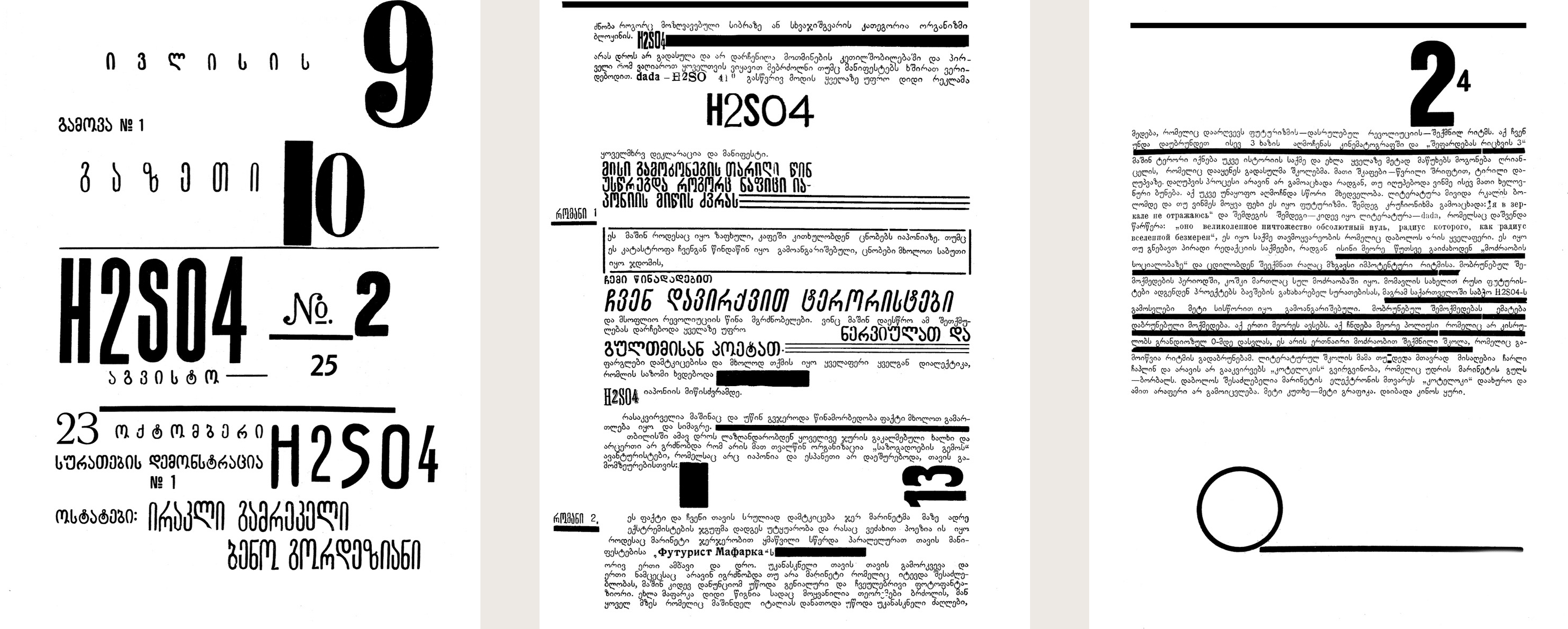
Pages from the magazine H2SO4. 1924. Designers: Beno Gordeziani and Irakli Gamrekeli
Beno Gordeziani not only left a significant imprint on avant-garde art as a graphic designer, but also as a painter. In the history of artistic avant-garde of the 1910s and 20s, there is rarely a work that so impressively and poetically depicts a specific view of the landscape as Beno Gordeziani’s Tskhratskaro (1924). The impressive view of Tskhratskaro Pass and Lake Tabatskuri is fragmented in a cubist-expressionist manner: the composition is an arrangement of prismal geometric shapes with intersecting ray-like patterns to construct an organized image that depicts the physical properties of the location, its hues, and the magnificent sunlight-filled environment.
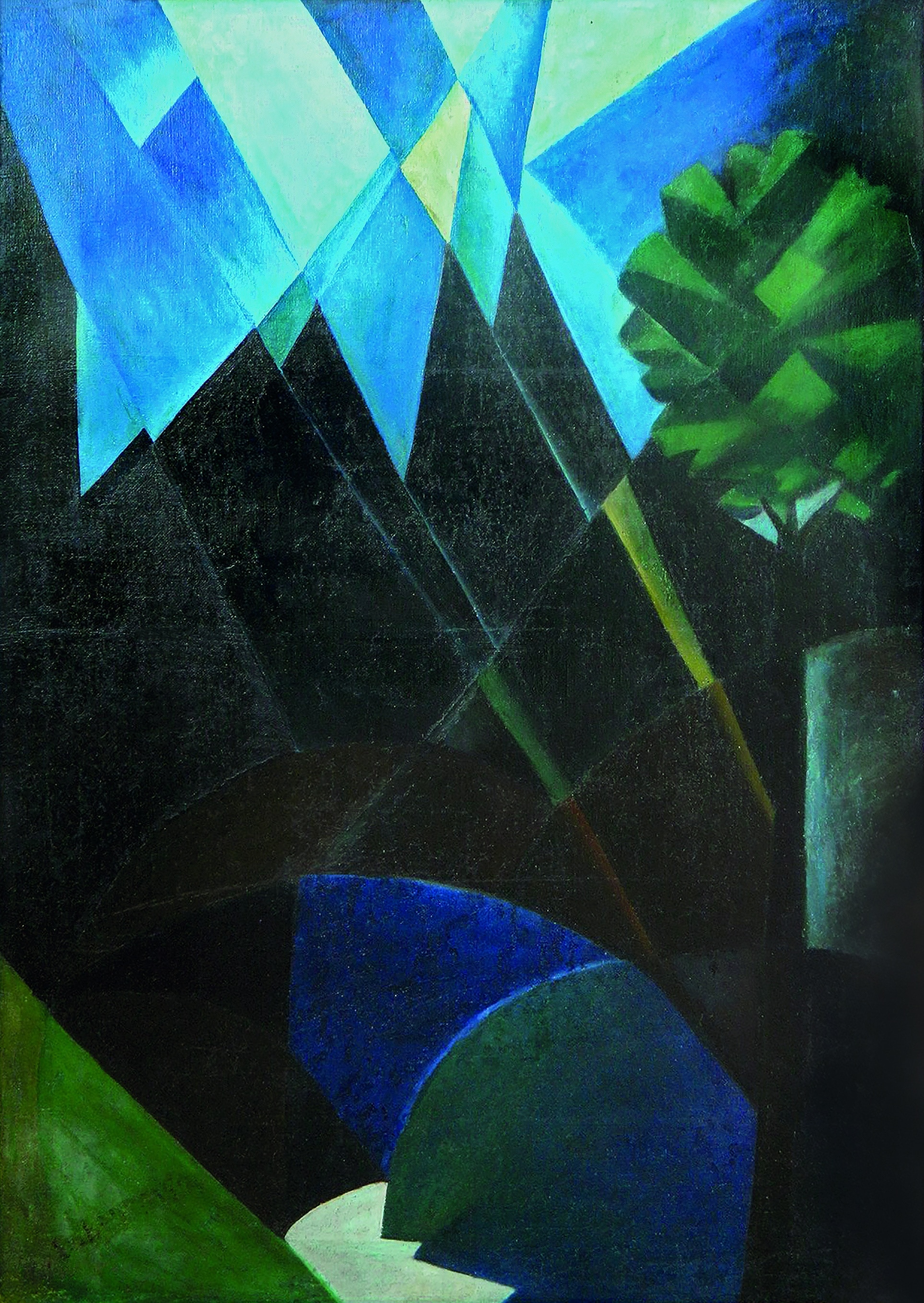
Beno Gordeziani. Tskhratskharo. Oil on canvas, 88cm x 62cm. 1924
The large-scale portrait of the poet Vazha Pshavela produced by Gordeziani is equally impressive. The poet is depicted in a head and shoulders portrait against the background of a tower typical of Georgia's highland regions. Part of the Georgian national costume that features cartridge pockets is also included. Expressionist ray-like forms predominate here as well, and the poet's piercing eye shines through them.
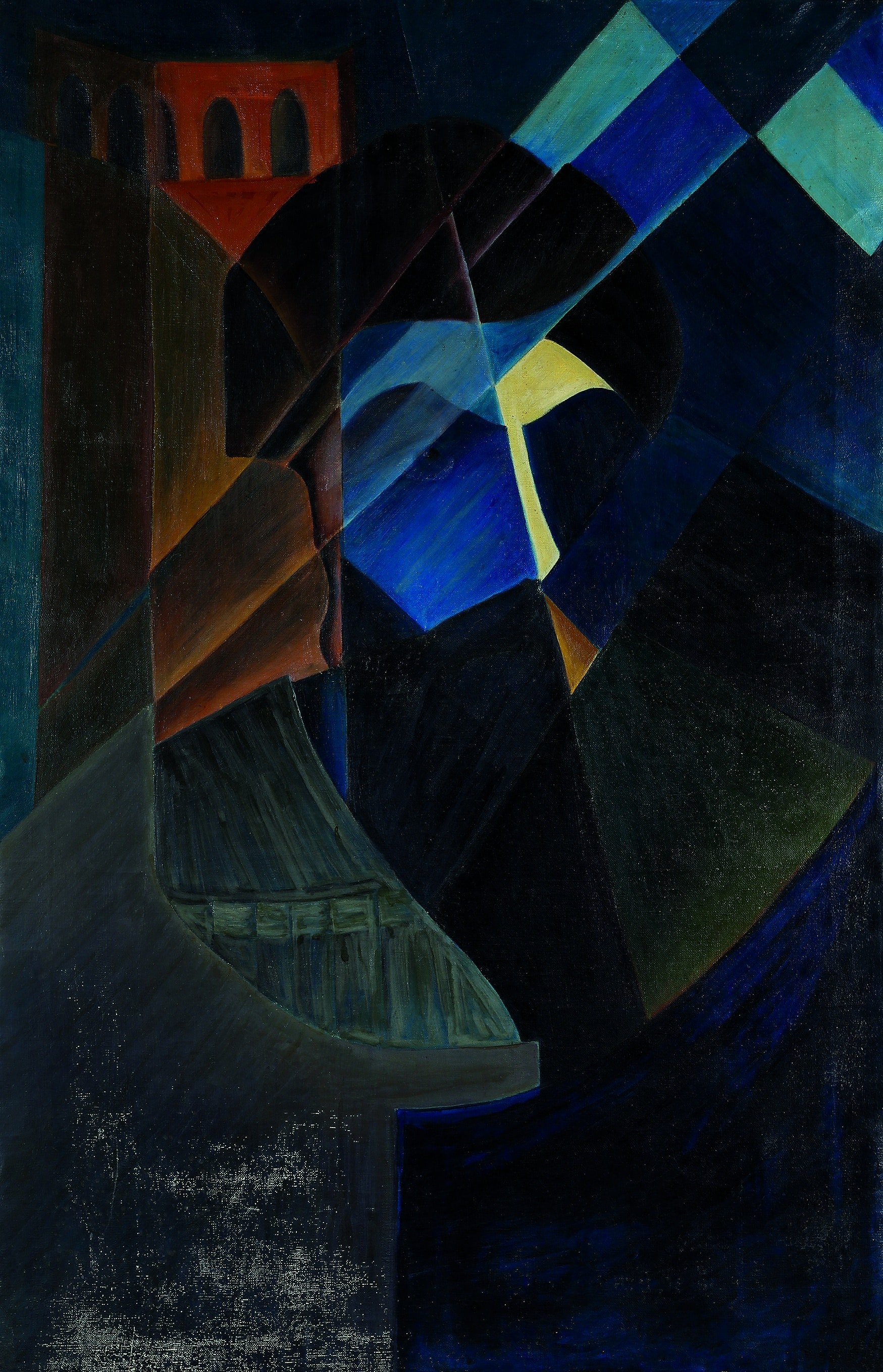
Beno Gordeziani.Vazha-Pshavela. Oil on canvas, 130cm x 83cm. 1924
Beno Gordeziani continued his scholarly and practical work on the Georgian typeface throughout the peak years of Soviet socialist realism. He designed two new Georgian font sets (the "clear set" in 1949 and the "narrow set" in 1957). In addition, he also worked as a publisher. He dedicated books to the founder of Georgian graphics, Grigol Tatishvili, as well as to the artists Niko Pirosmani, Joseph Charlemagne, Davit Kutateladze, and others. Furthermore, Gordeziani authored a monograph dedicated to Georgian graphics (1963).
In the 1960s, a fire in his workshop destroyed most of Beno Gordeziani's artworks. As such, his creative legacy is very scarce in terms of quantity. Nevertheless, considering their artistic quality and value, these works speak volumes about the modern, innovative vision and creative virtuosity of their author.