Georgian primitivism is often associated with
Niko Pirosmani, although
his work cannot be confined to that
single category.
His art engages with much broader pictorial traditions, and its uniqueness extends far beyond what is usually meant by naive or primitivist painting.
Pirosmani developed a distinctive visual language of his own; one that does not
fit neatly into established categories. Even so, the tradition of Georgian
primitivist painting effectively began
with him, and
continues in the works of
later artists. In this sense, it can be said that Niko
Pirosmani, Karapet Grigoryants, and Vano Meliashvili may be seen as forming a
triptych of Georgian primitivism.
Pirosmani’s work represents a major artistic
phenomenon, which is precisely why it resists being defined solely in terms of
primitivism, even though it remains rooted in that tradition. The work and identity of Karapet Grigoryants
embody a symbiotic relationship between Armenian and Georgian cultures that
gradually evolved into a broader Caucasian legend. By contrast, Vano
Meliashvili's artistic
language reveals how Georgian culture endured the pathos and exoticization of the
Soviet era. His work demonstrates the sustainability of Georgian cultural forms; their ability to
engage with Western artistic influences, and their capacity to withstand the
pressures of Soviet ideology.
._Oil,_cardboard._67,5x41cm._ATINATI_Private_Collection._1.jpg)
Vano Meliashvili. Man with Georgian National Clothes (Chokha).
Oil on Cardboard. 67,5x41cm. ATINATI Private Collection
Information about Vano Meliashvili remains scarce. He lived to an advanced age, and his work preserves
a deeply rooted reflection of
the Georgian cultural ethos. Like many self-taught and outsider
artists, he remained outside the Soviet artistic
mainstream, gained recognition only late in life, and became more widely
appreciated after his death. In this sense, he belongs
to that category of
artists whose work anticipates later understanding.
Tengiz Mirzashvili (known as Chubchika) and Davit
Kiknavelidze played a significant role in bringing Meliashvili’s work to public
attention. On their recommendation, the Georgian Museum of Folk and Applied
Arts acquired 45 of
his works. During the 1970s and 1980s, interest in naive, primitivist, and
self-taught artists increased. In particular, the 1970s saw a renewed focus on
Niko Pirosmani: numerous exhibitions were organized, and scholarly studies were
published, culminating in the establishment of a permanent display of his works. This development may be understood as part of a
broader cultural shift,
in which society began to turn once again towards its traditions and forms of
expression after a long period dominated by the ideology of socialist realism.
Naive and primitivist art was banished, along with other modernist, national,
and formalist tendencies. Within the Soviet system, self-taught artists were
gradually brought under ideological control, and their work was redirected
towards the themes and narratives of socialist realism. The earlier worldview
associated with naive and primitivist art - marked by a direct, unmediated perception of the
world, a sense of immediacy in spiritual experience, and a close relationship
with nature - was
increasingly replaced by officially sanctioned subjects, such as the proletariat, collectivism,
industrialization, and political leadership. In this way, the original
character of naive and primitivist expression was progressively reshaped under
ideological pressure. From 1929 onward, the terms “primitivism” and “naive art” fell out of official use, and self-taught
artists were reorganized within institutional structures, including the
Association of Self-Taught Artists (ОХС).
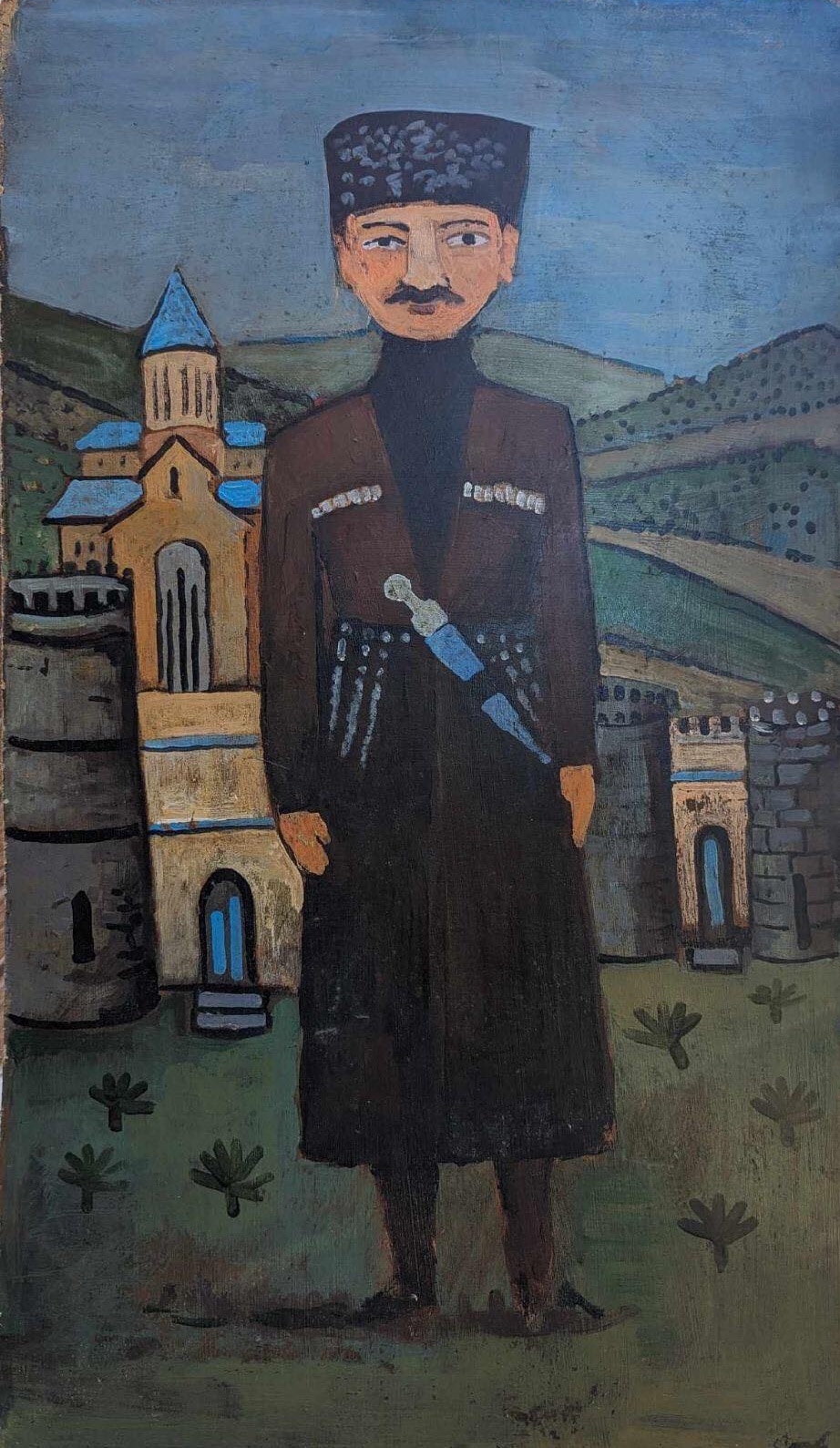
Vano Meliashvili. Man in Chokha. Oil on Cardboard. 80×47cm. 1970s
An interview with Tengiz Mirzashvili provides
important biographical information about Vano Meliashvili. As the artist
recounts, he first encountered Meliashvili’s works at his relatives’ home in Sartichala, which
prompted him to look into the artist’s life and work more thoroughly.
Vano Meliashvili was born in 1896 in Tianeti, into a poor family. Orphaned at an early age, he
was raised by relatives and neighbors. He served in the First World War and
lived through three major political upheavals: the Russian Revolution, the
brief period of Georgian independence, and the subsequent Soviet occupation. He
married at the age of 69.
For the last 25
years of his life, he worked as a security guard at a kindergarten.
Meliashvili’s
first solo exhibition was held in 1982 at the Children’s
Picture Gallery in Tbilisi. Following this exhibition, Edmond Kalandadze, Zurab
Nizharadze, and Tengiz Mirzashvili presented his works in Vienna.
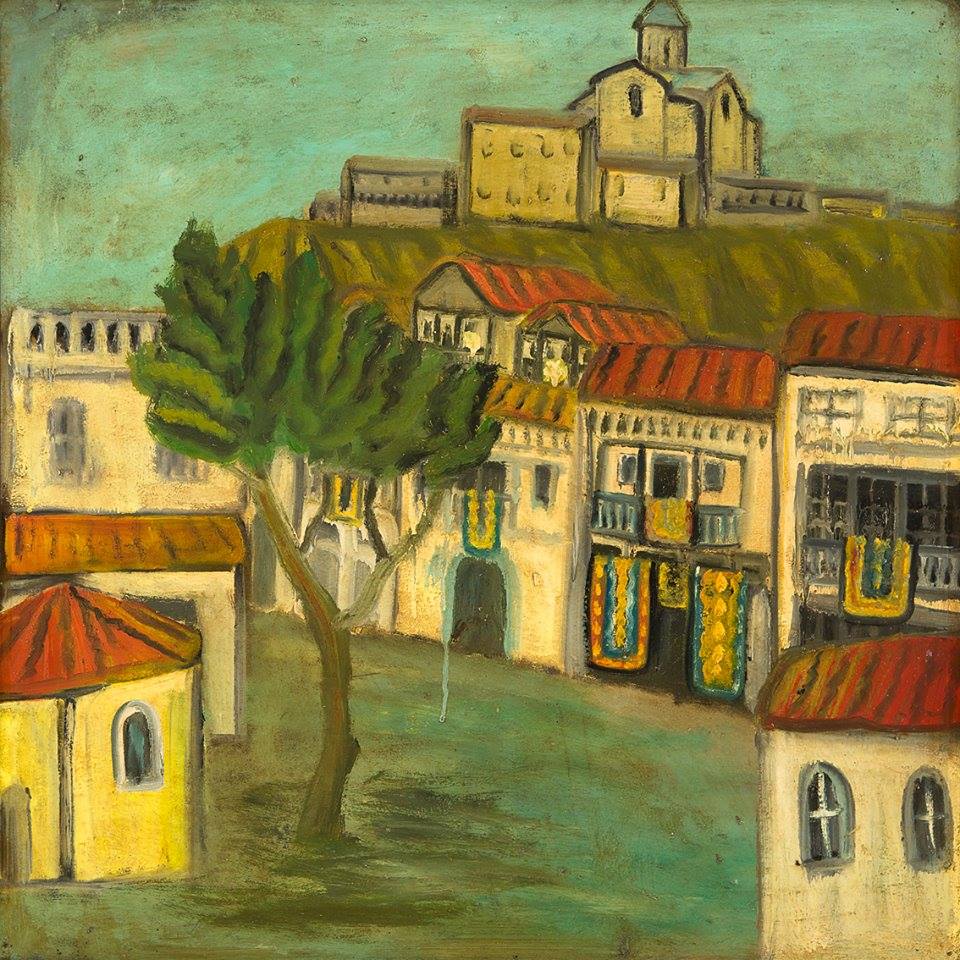
Vano Meliashvili. Telavi. Oil on Cardboard. 50x50cm. 1970s
In 1984, a new edition of the World Encyclopedia
of Naive Art, compiled by Oto Binalji-Merin and Bato Tomasevic, was published,
featuring artists from 50 countries, including the Soviet Union. The
edition included several
artists living in Georgia: Aleksandre Aladashvili, Irina Gagua,
Karapet Grigoryants, Hasan Helimishi, Gayane Khachaturian, Shalva Maradishvili,
Niko Pirosmani, Ema Zarapishvili, and Vano Meliashvili.
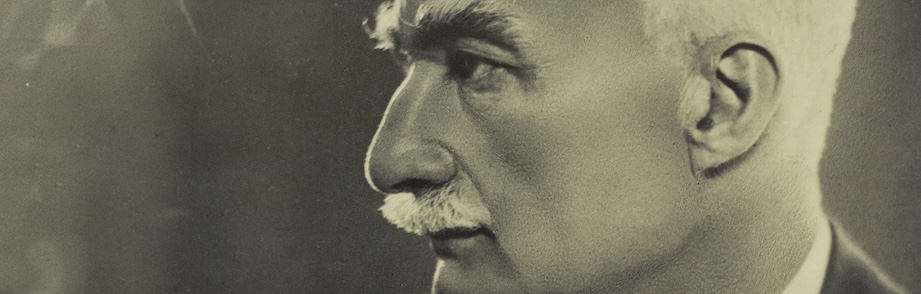
Only a small number of photographs of Meliashvili
have survived, as he disliked being photographed and generally refused to allow
it.
He died in 1988 at the age of 92. The
location of his grave remains
unknown. After his death, his work continued to receive attention: exhibitions
were held in 2000 at the National Library of Georgia, and also in 2015, when his works were included
in the exhibition Faces at the State
Museum of Folk and Applied Arts.
It is worth considering Vano Meliashvili’s work
and artistic language within both local and global art contexts. He worked
primarily with pencil, pen, oil paint, and Indian ink, using a wide range of
surfaces:
cardboard, plywood,
paper, even matchboxes and cigarette packs. His visual world brings together
everyday experience and imagined scenes; the real and the fictional, the urban and the rural. His compositions reflect a synthesis of
influences, including Georgian miniatures, tombstone carving, printed
reproductions, images of Ktetors on frescoes, and Georgian mosaic.
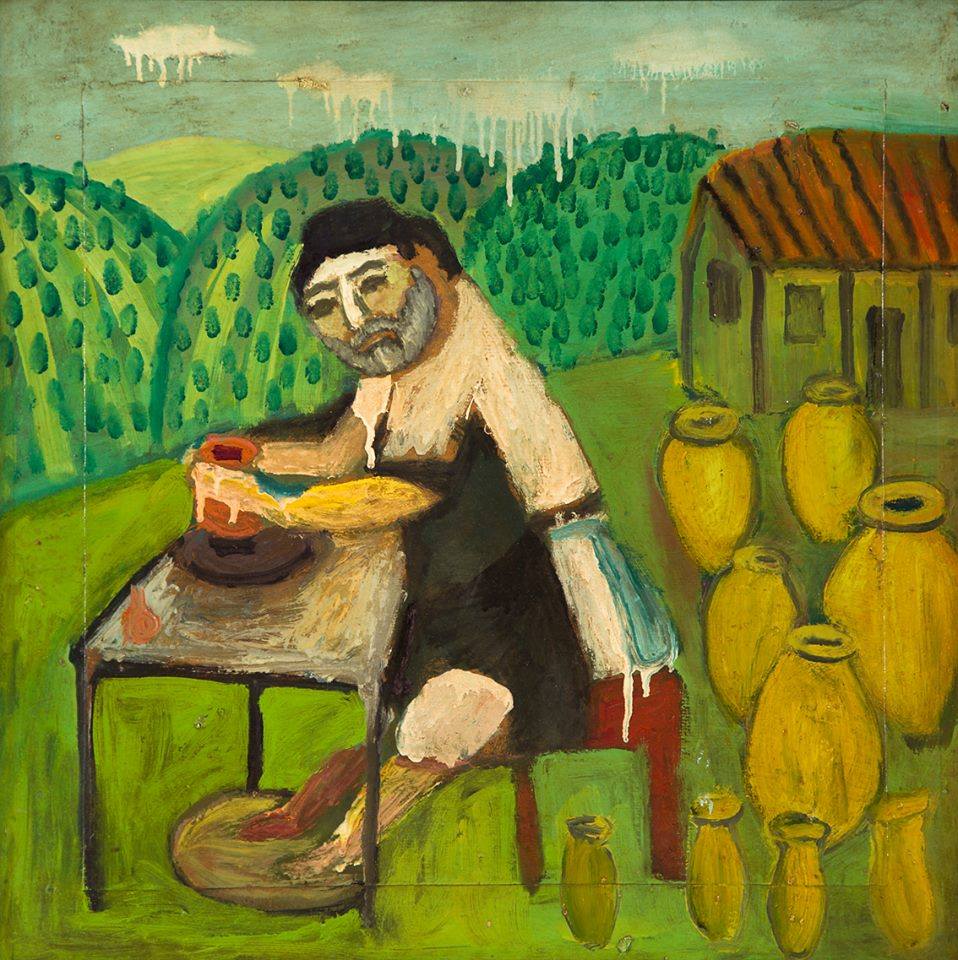
Vano Meliashvili. Potter. Oil on Canvas. 48x48cm. 1970s
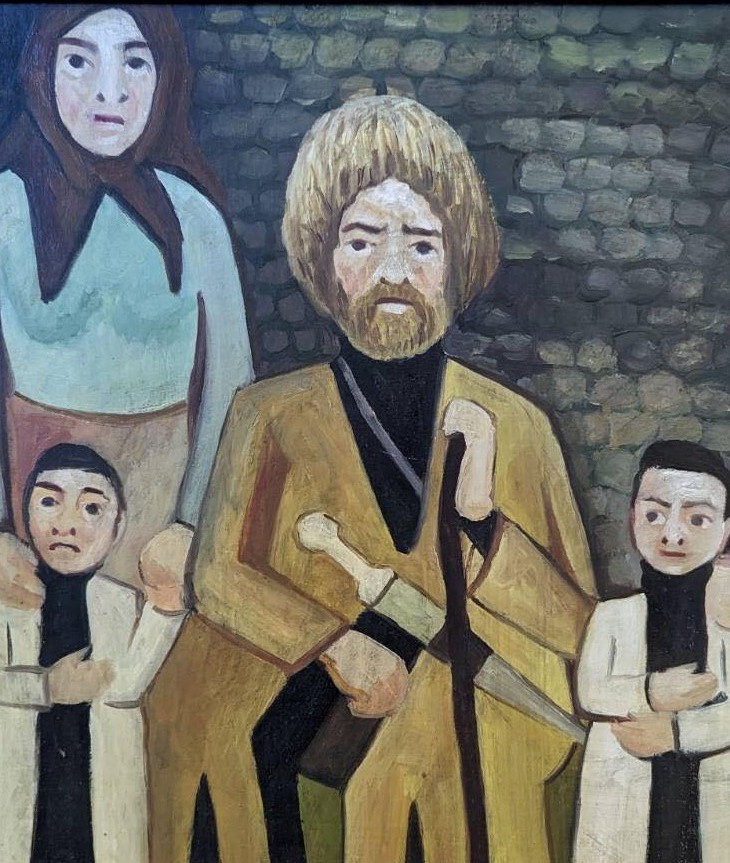
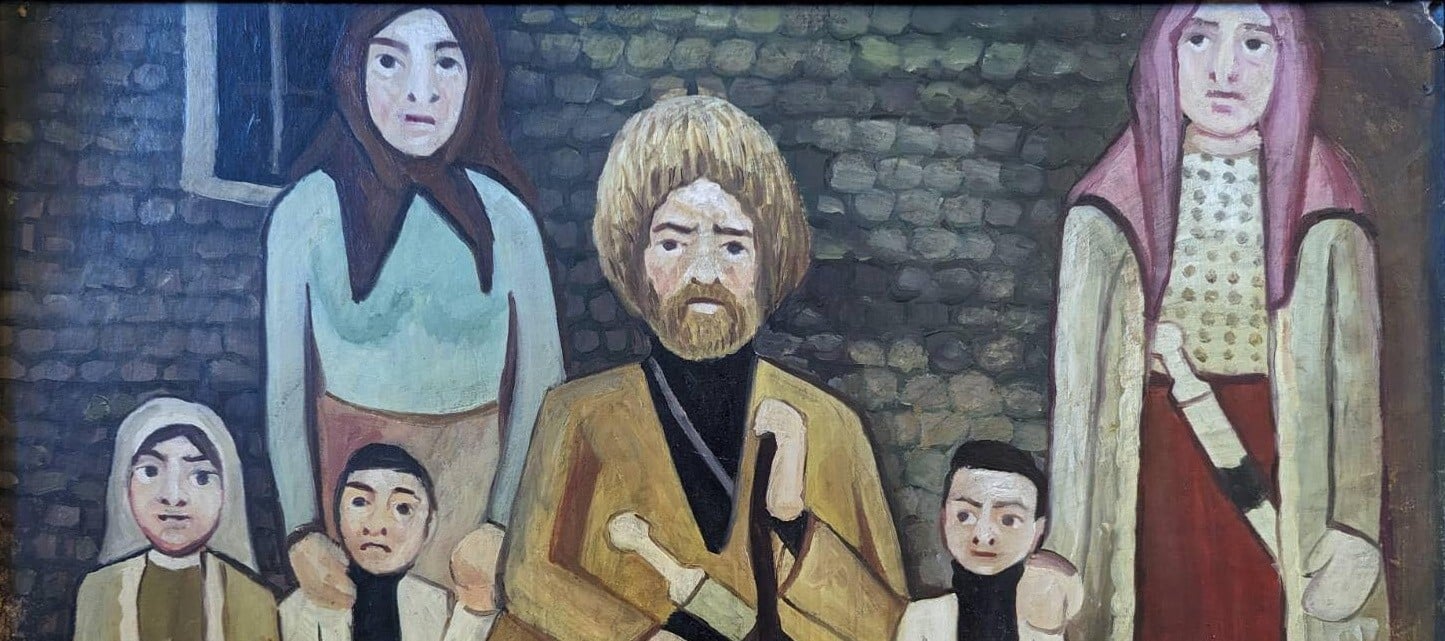
Meliashvili depicted a wide range of subjects
with equal clarity and confidence: Vazha-Pshavela and his family, King Tamar,
King Erekle, Ananuri, Mtskheta, Samtavro, as well as self-portraits, portraits,
everyday scenes, children, landscapes, and family members. Text often appears
within his works, functioning as artistic commentary: sometimes as fragments of memory, sometimes as a
form of documentary narration.
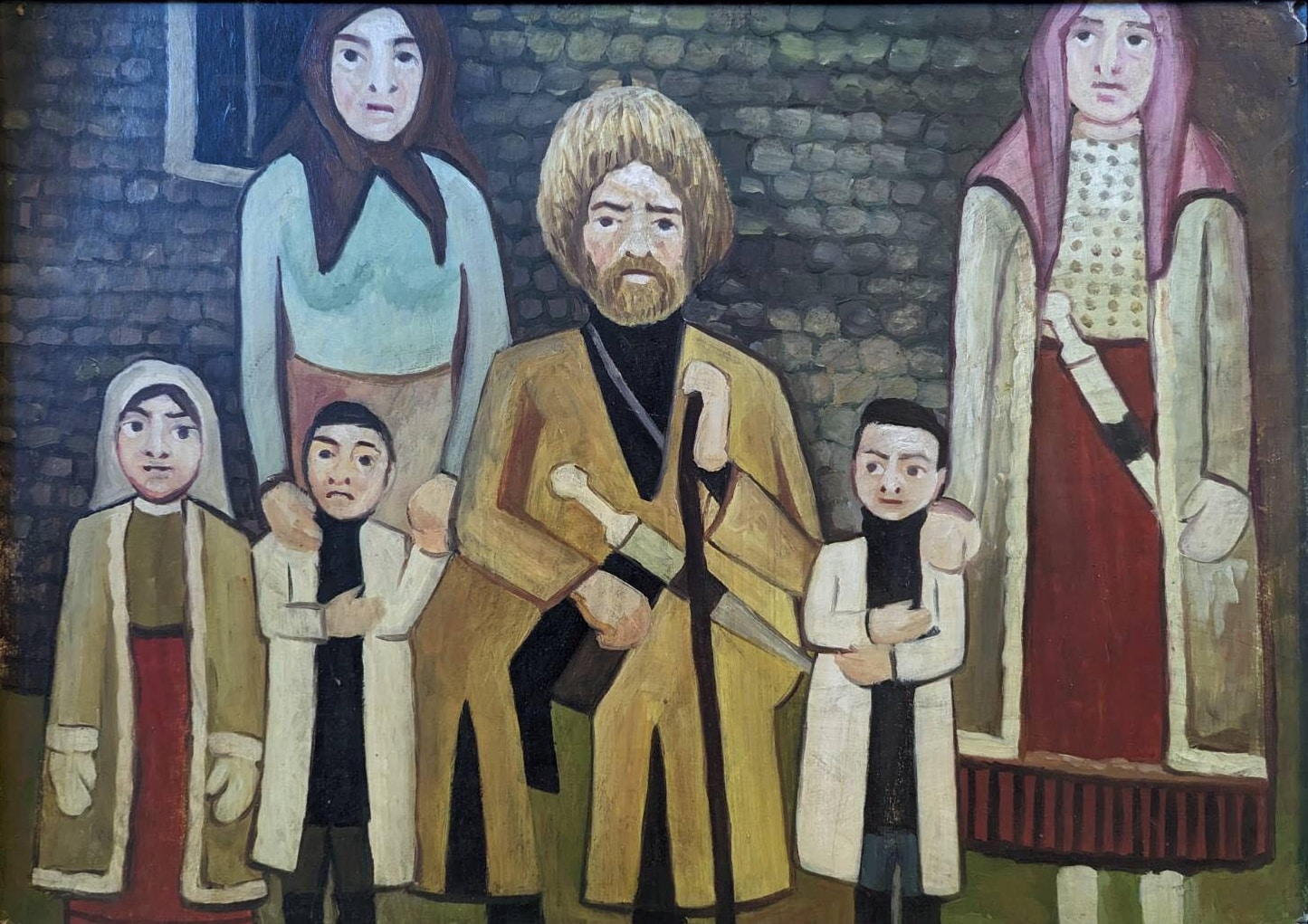
Vano Meliashvili. Vazha-Pshavela With Family. Oil on Cardboard. 70×50cm. 1970s
In global art discourse, the concept naive
painting extends across several related categories, including primitivism
(self-taught art), art brut, outsider art, intuitive art, and raw art. The list
of artists associated with these tendencies is extensive, but key figures
include Anna Mary Robertson, Ivan Generalić, Henri Rousseau, Henry Darger, and
Maria Prymachenko.
While Meliashvili’s work does not directly align
with any one of these traditions, his expressive language, use of color and
form, and iconography place him in meaningful dialogue with this broader
artistic constellation.
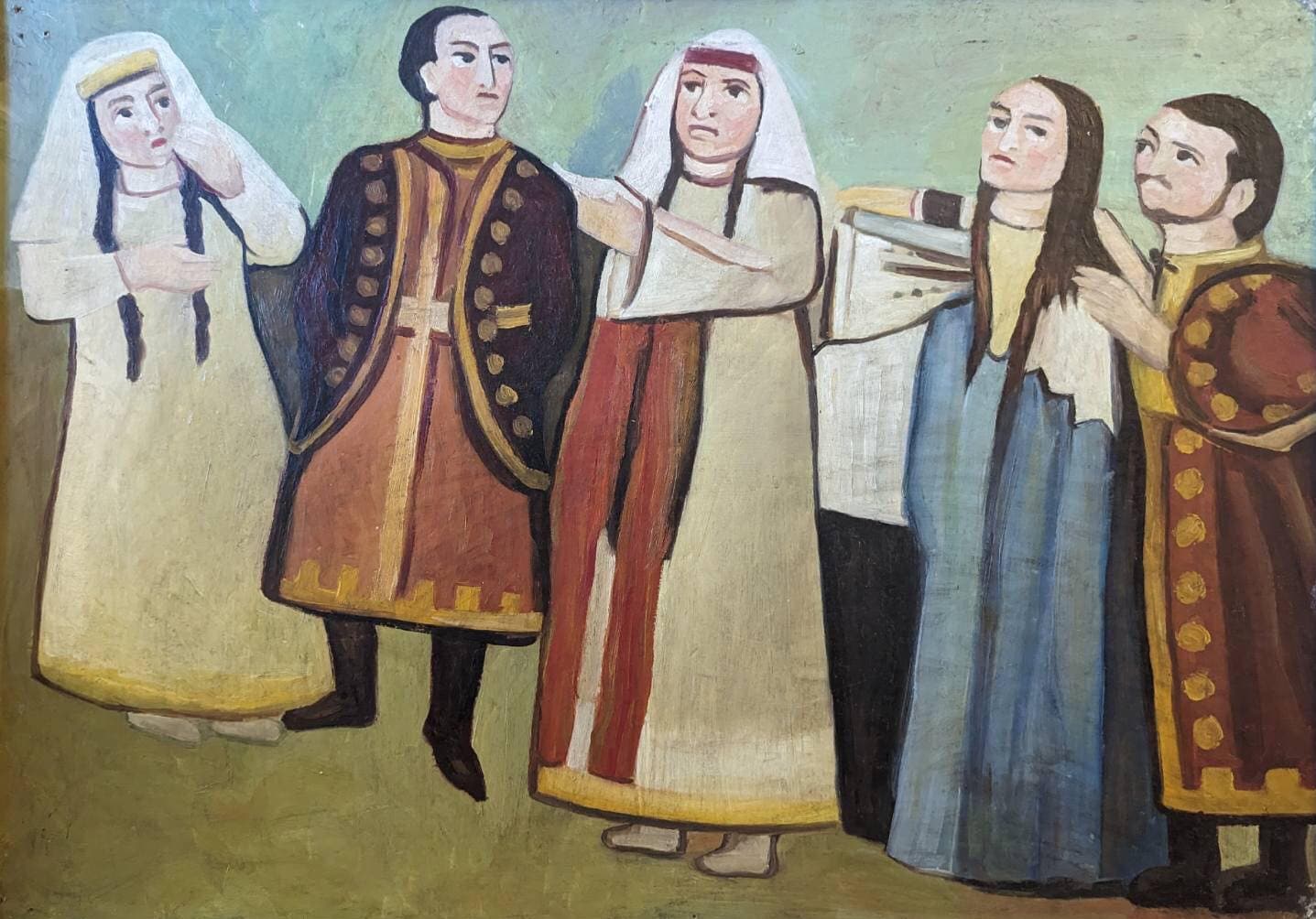
Vano Meliashvili. Untitled. Oil on Cardboard. 70×50cm. 1970s
Vano Meliashvili’s artistic language stands out
within both local and global contexts. He is a highly individual artist who
does not fully fit within global primitivism. His vision is characterized by stillness, concision, and a
blocky
nature: forms are simplified
and schematic, often deliberately flattened against the background, with a
tendency toward asymmetry and irregular rhythm.
In everyday and historical scenes, human figures
are depicted in descriptive, icon-like, and relief styles. The background, often rendered as sky or an abstract space, tends to be unified and continuous, while
figures, objects, and animals are treated in a more varied, polychromatic
manner. These elements may be contrasting or harmonized, depending on the
composition. Color areas are clearly localized; forming simple, often naive shapes. Meliashvili
frequently develops surface patterns through different techniques: dotted, linear, fluid, or ornamental, especially in his depiction of clothing,
jewelry, architecture, and plants.
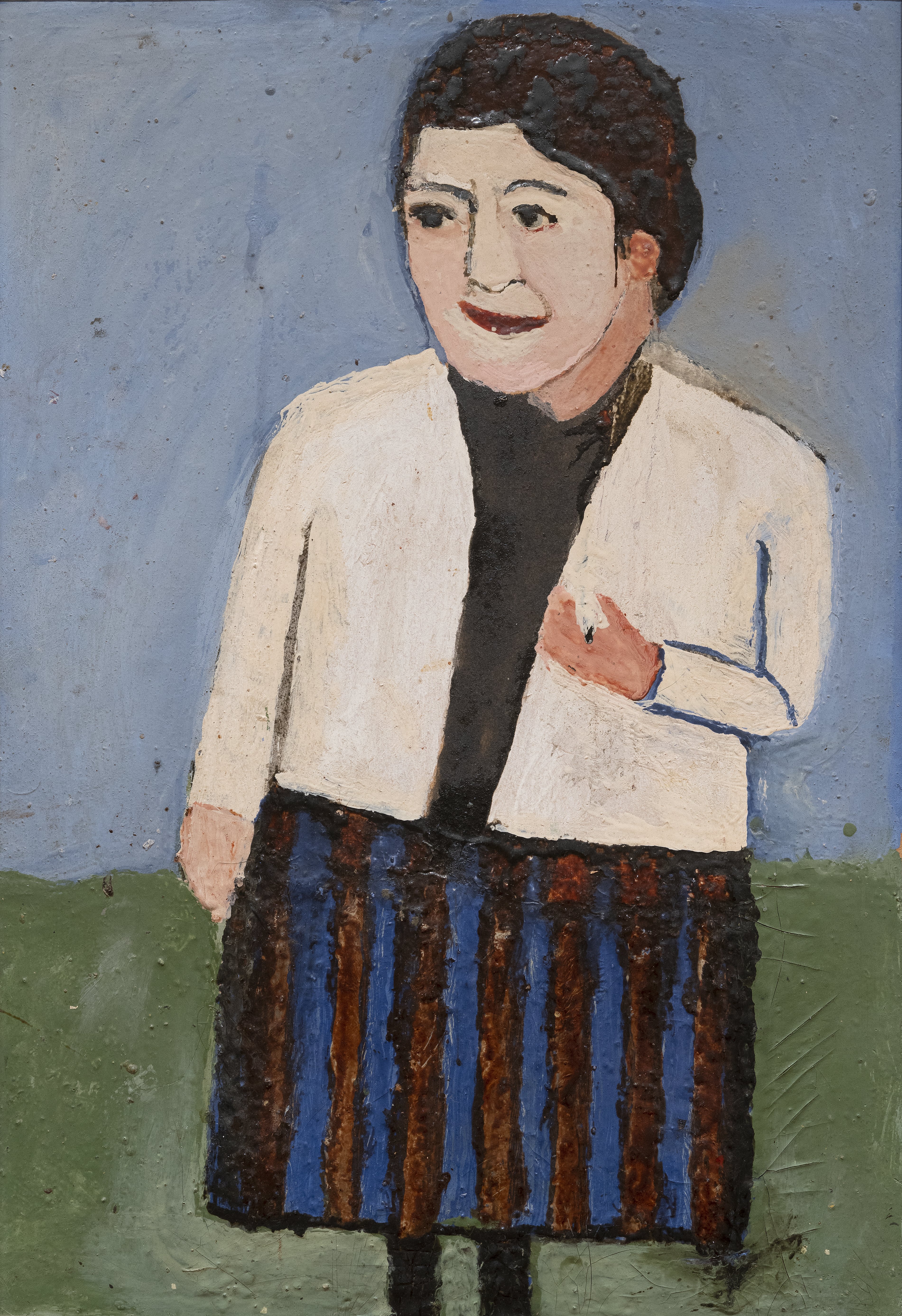
Vano Meliashvili. Aunt. Oil on Cardboard. 50x35cm. 1978. ATINATI Private Collection
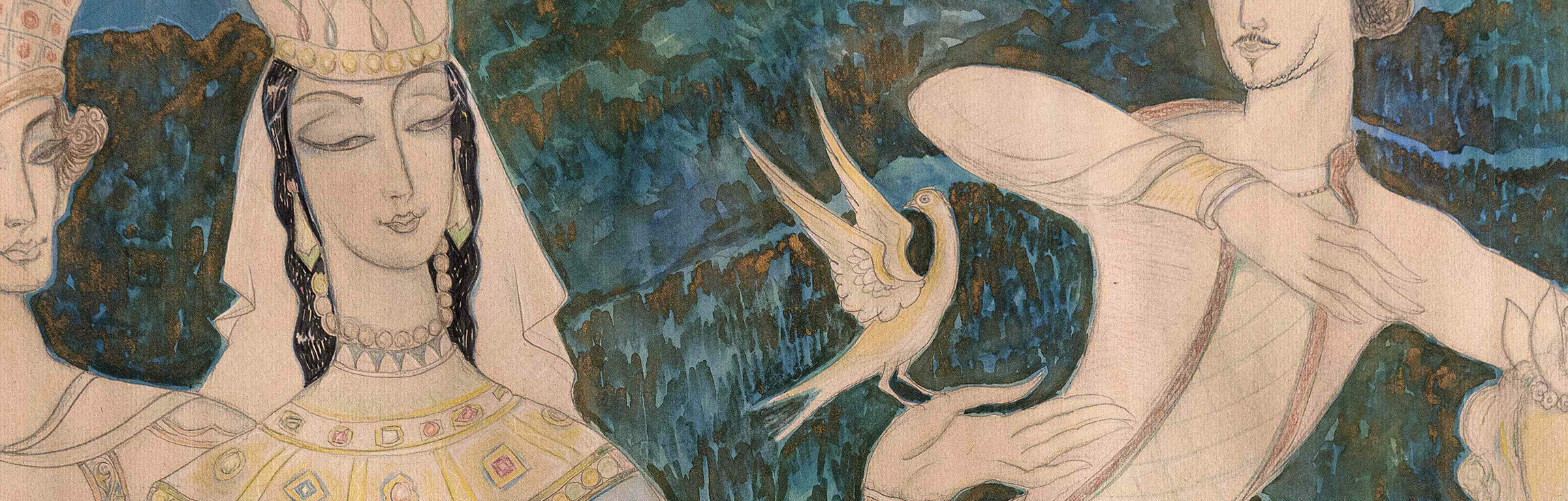
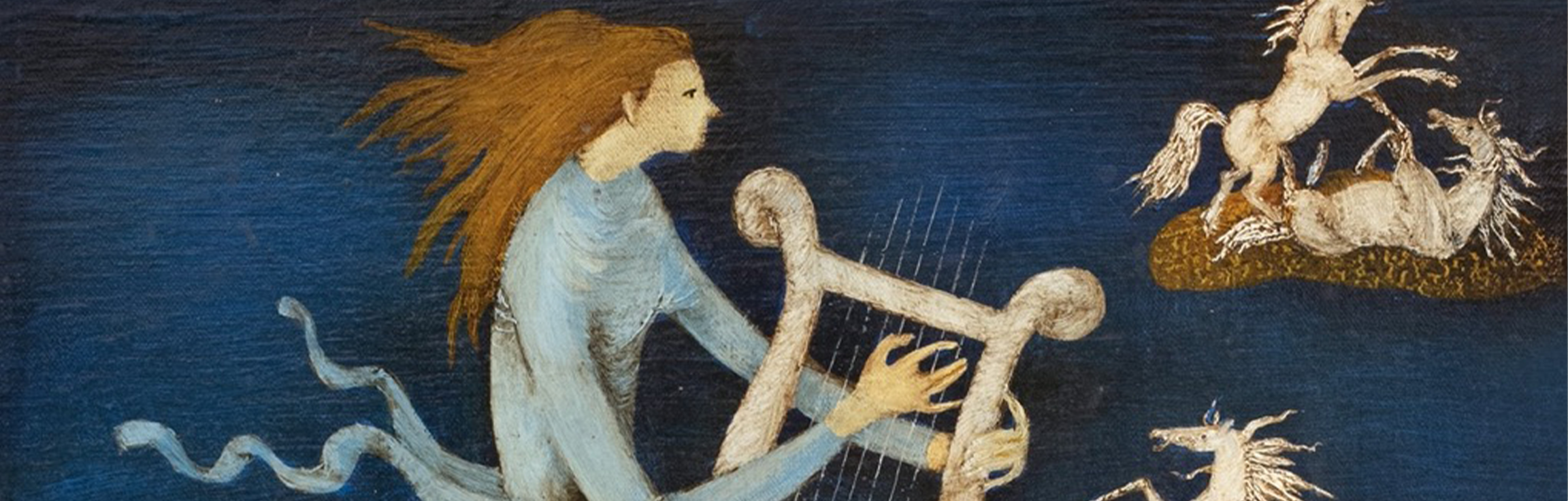
The palette is richly or moderately saturated,
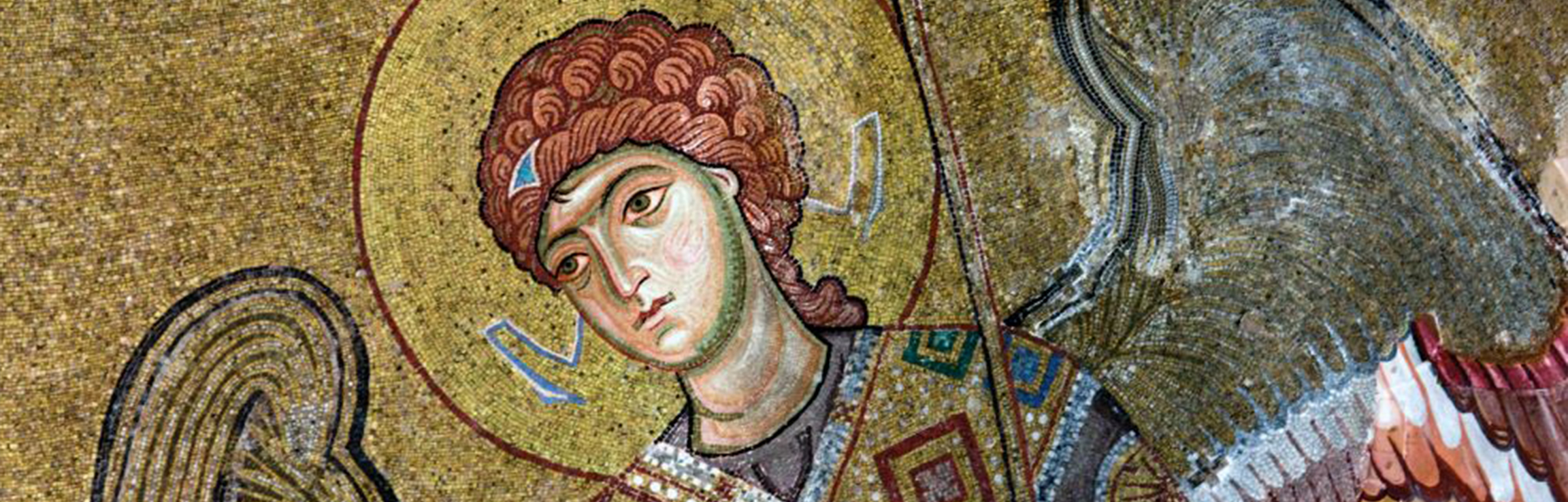
evoking a sense of unified spiritual illumination. Turquoise blue and green,
sometimes deep ultramarine tones, often dominate the background, evoking the
shimmering surfaces of Byzantine frescoes and mosaics.
This color and atmosphere are the results of Vano
Meliashvili's spiritual experience and philosophical insight. His vision of
utopian Georgia existed beneath a turquoise sky. The spirit of primitivism is
evident in every nuance throughout his work, seeing his artistic vision consistently preserved in its raw, unrefined state.
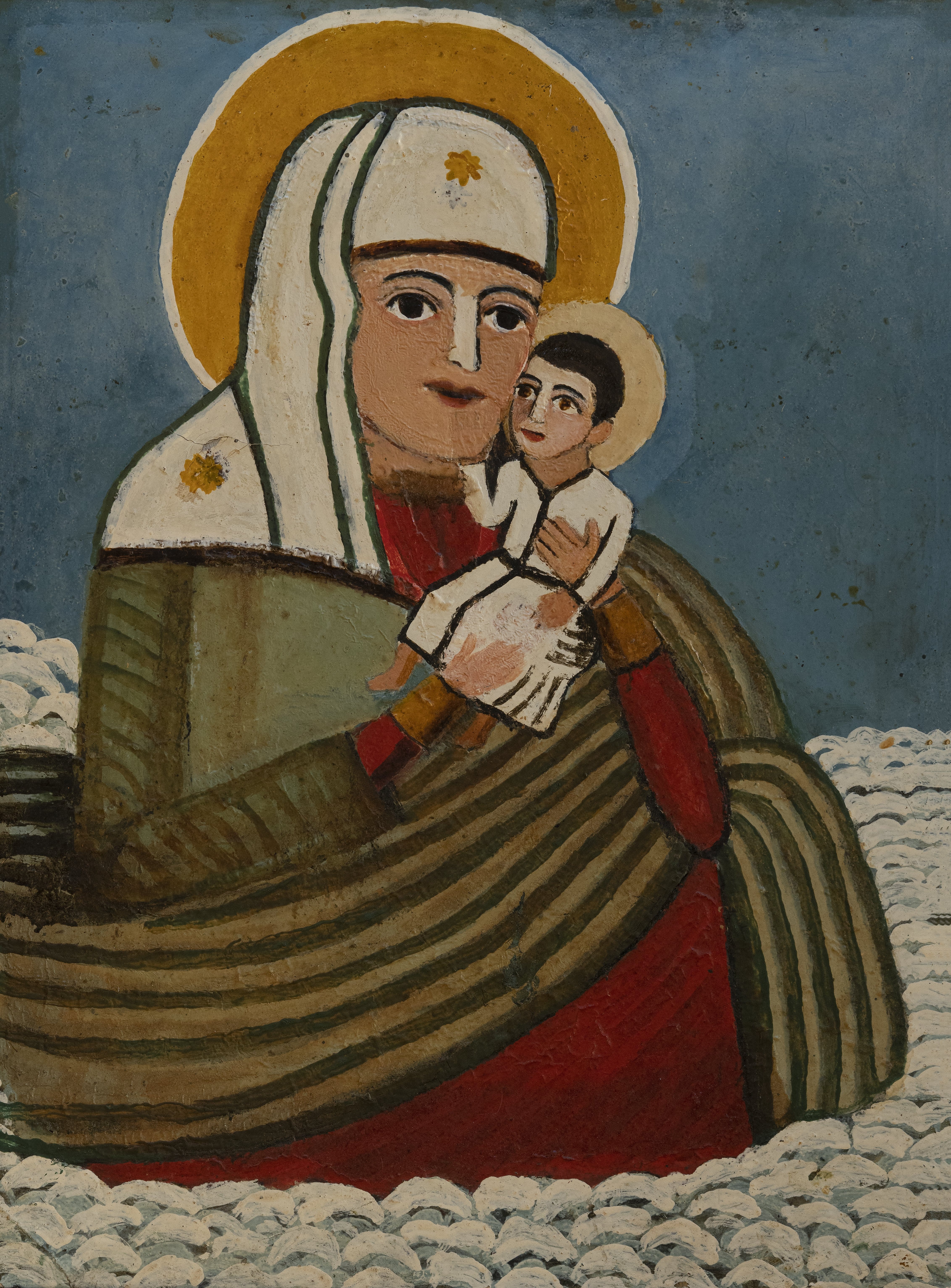
Vano Meliashvili. Virgin With Child. Oil on Cardboard. 79x59cm. ATINATI Private Collection
P.S.
This is how people remember Vano Meliashvili: “He
loved being around children; he was kind, and a little eccentric. He would not
come close, would not look into your eyes:
he spoke as if he were talking to himself…”
As Chubchika recalled in an interview: “The artist’s wife would often gather
Vano’s paintings behind the sideboard and send them off with the garbage truck - sometimes she even sold them…”
On Atarbekov Street, in a cramped basement with windows covered with
curtains, lived a handsome old man who painted in darkness.
One might imagine that, as he worked in that dim,
enclosed space, Vano Meliashvili inhabited a different world: one beneath a turquoise sky that he did not wish to share. Perhaps this is why he
kept the room in darkness: within his
camera obscura, a stream of turquoise light seemed to pour into
his inner vision.
Vano Meliashvili’s utopian Georgia existed under
that turquoise sky.