A single -nave church near the village of Nabakhtevi used
to be the main church of a big monastery built in the 14th c. in
Kartli, the central region of east Georgia. It was a family church of the
Amirejibi feudal house built and decorated upon their commission.
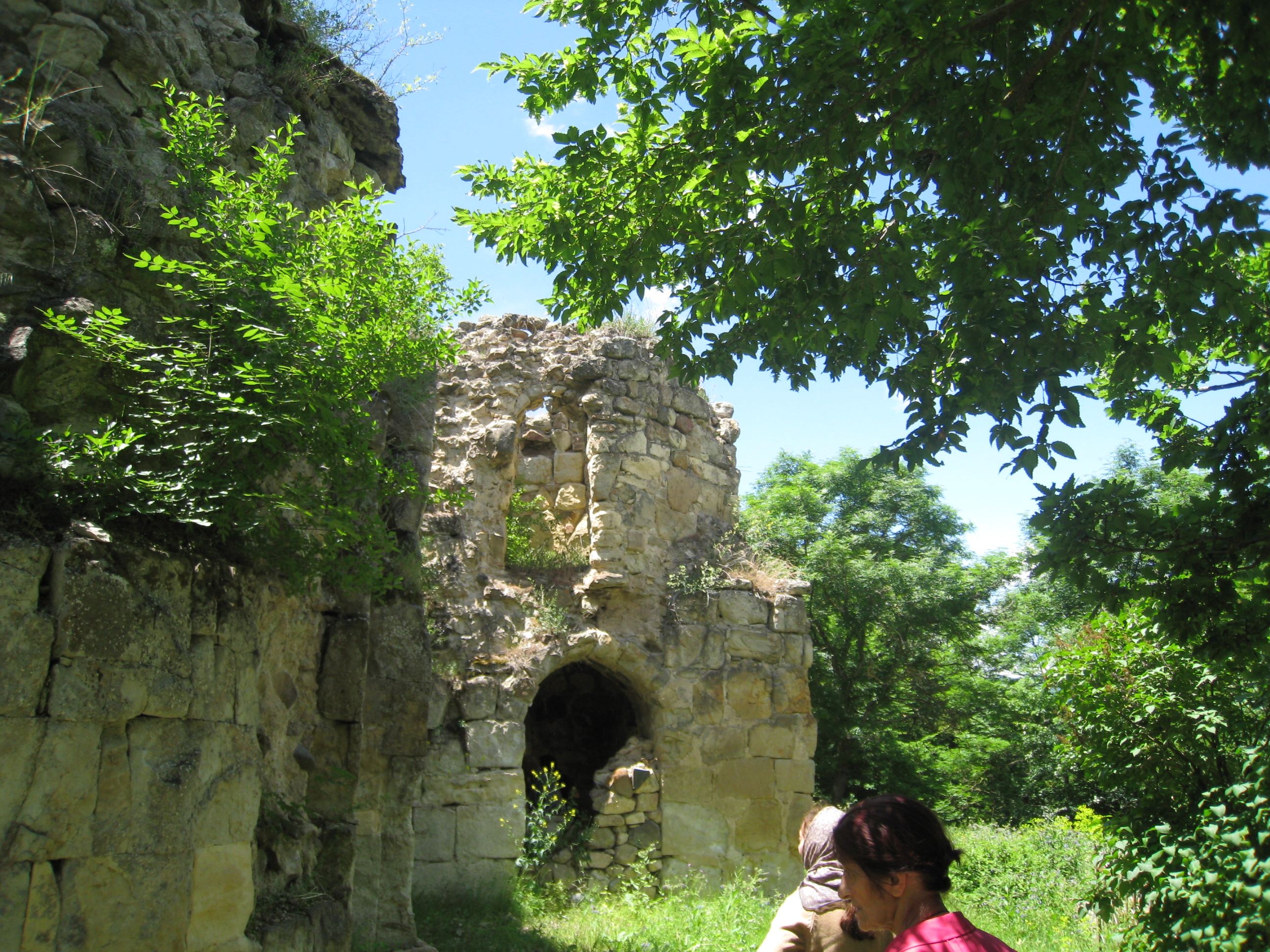
Nabakhtevi, Church of the Virgin, view from north, 15th c.
A single -nave church near the village of Nabakhtevi used
to be the main church of a big monastery built in the 14th c. in
Kartli, the central region of east Georgia. It was a family church of the
Amirejibi feudal house built and decorated upon their commission.
The church is built of well cut gray stones with very
scant ornamentation, with one projecting apse and two annexes from the south
and north. A specific trait of the interior of the church is a stone wall separating
the north part of the apse from the main space. From the north there is a large
gate with a belfry on the top.
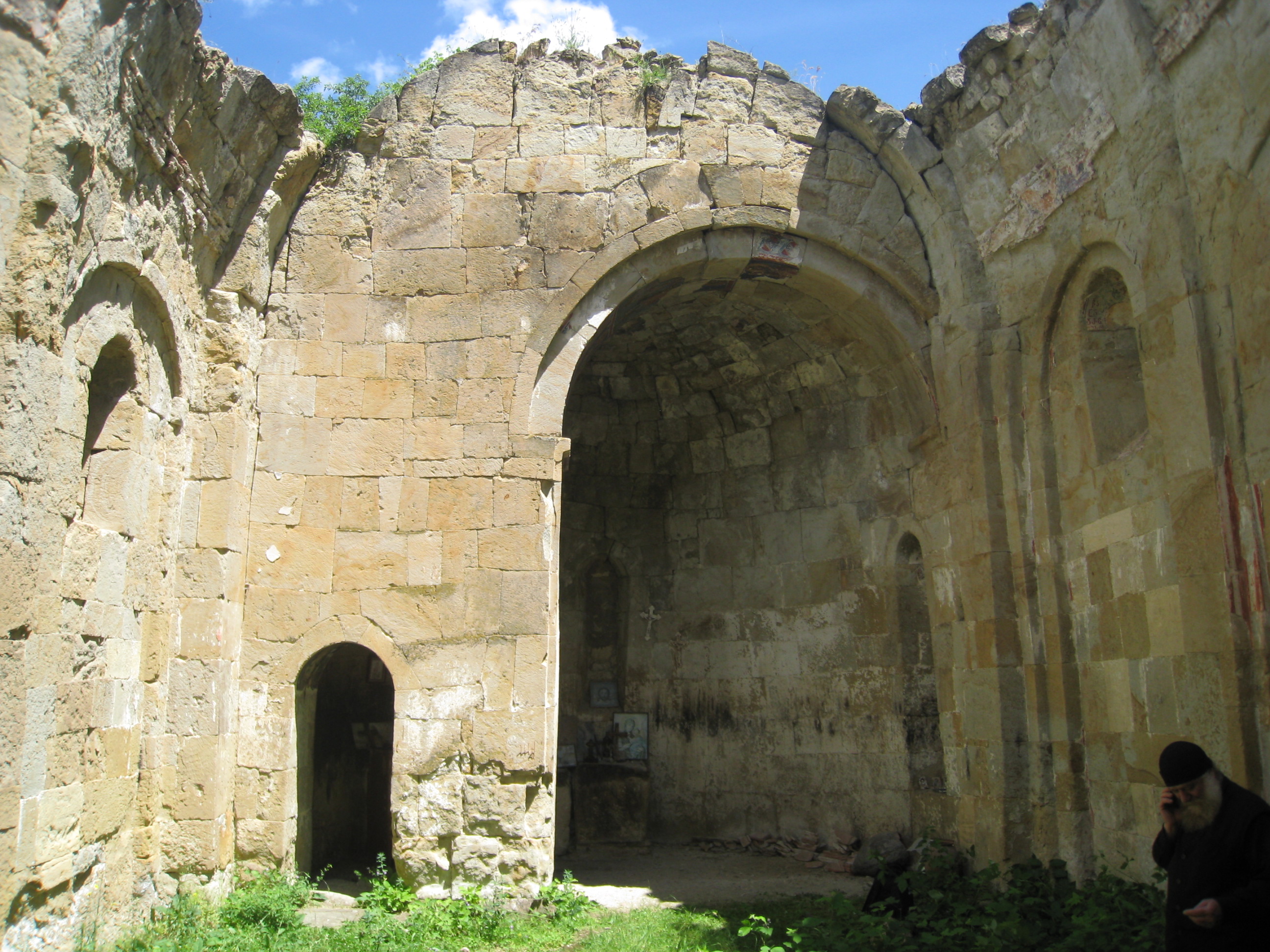
Nabakhtevi, church of the Virgin, interior, sanctuary.
The church suffered severely in the course of time and
large fragments of the building were ruined, the wall painting was damaged as
well. In 1935 some fragments that were under threat of demolition were removed
from the damaged walls and at present they are exhibited in the Sh.
Amiranashvili State Museum of Arts in Tbilisi. Old photos taken in the 1930s
provide important information about the iconography and style of the demolished
frescoes. The church was reconstructed in the 2010-s.
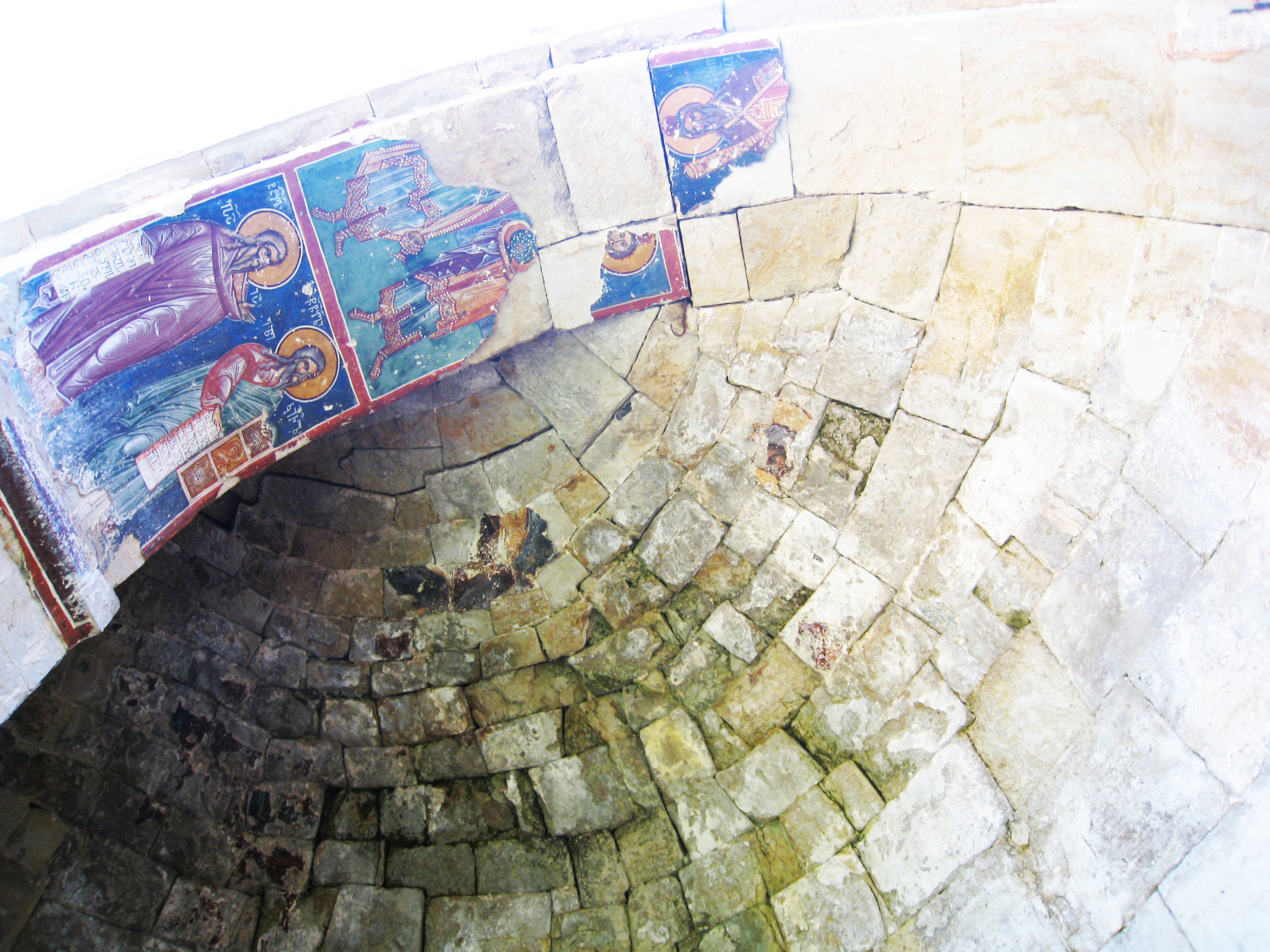
Nabakhtevi, church of the Virgin, conch of the sanctuary apse with the figures of the Prophets on the arch, 15th c.
The wall painting was executed in 1412-1431 and is one
of the best examples of the Palaeologan style in Georgia. The portraits of the
members of a powerful Amerijibi feudal family
are painted on the walls of the
church. The main figure is represented in the center of the south wall under
the blind arch, namely prince Kutsna Amirajibi with his spouse and children. He
is represented holding a model of the church, thus highlighting his role and
function as a commissioner. Next to this portrait there is a representation of Alexander
the Great, the last king of the united Georgia with his spouse. Alexander was a
close relative of Prince Kutsna Amerijibi, actually his grandson or nephew.
That’s why the feudal ruler was depicted as a more important person than the
king. There are 7 portraits of historic persons, including children. It is
noteworthy, that the figures of the ktetors are shown in the frontal
posture, looking straight at beholder in difference with three-quarter poses of
historic persons in the paintings of the earlier periods.
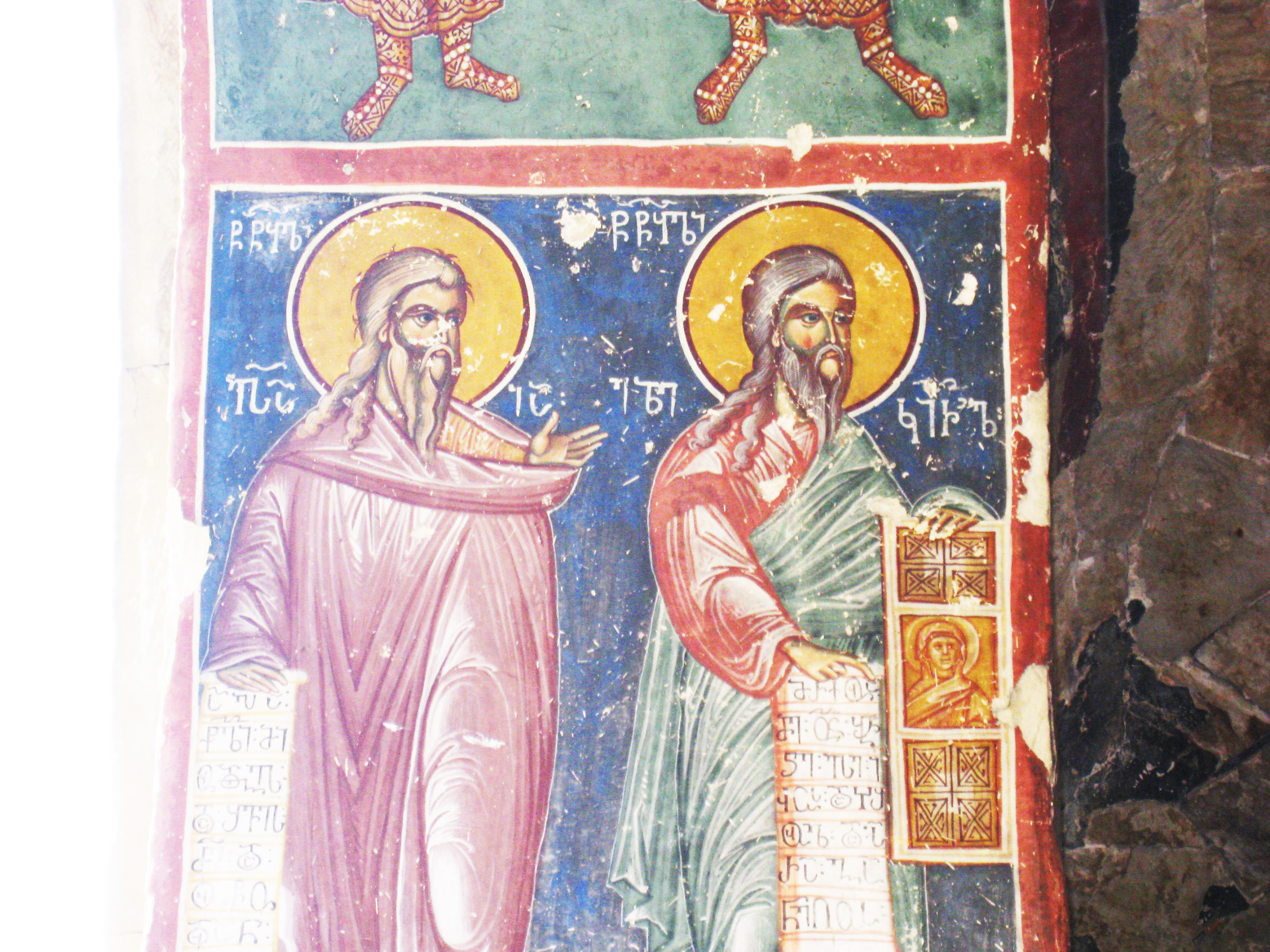
Nabakhtevi, church of the Virgin Biblical prophets Isaiah and Ezekiel on the absidal arch, 15th c.
In the same register there is an image of equestrian
St George, slaying Emperor Diocletian.. This iconography of St George is
widespread in Georgian art from the very early times and is a characteristic
feature of the medieval Georgian painting as well as metalwork and sculpture.
The most parts of the preserved painting in situ
are in the sanctuary and on the east wall separating the apse from the main
space. There is an image of the Virgin and the Child in the conch with
venerating angels hardly to be seen at present.
On both sides of the apse there are images of the
Prophets: Solomon and Aaron, Habakkuk
and Jacob, father of the Virgin. On the sanctuary arch there are the figures of
the Old Testament Prophets with the attributes referring to the Virgin, e.g. Ezekiel in front of the closed gate.
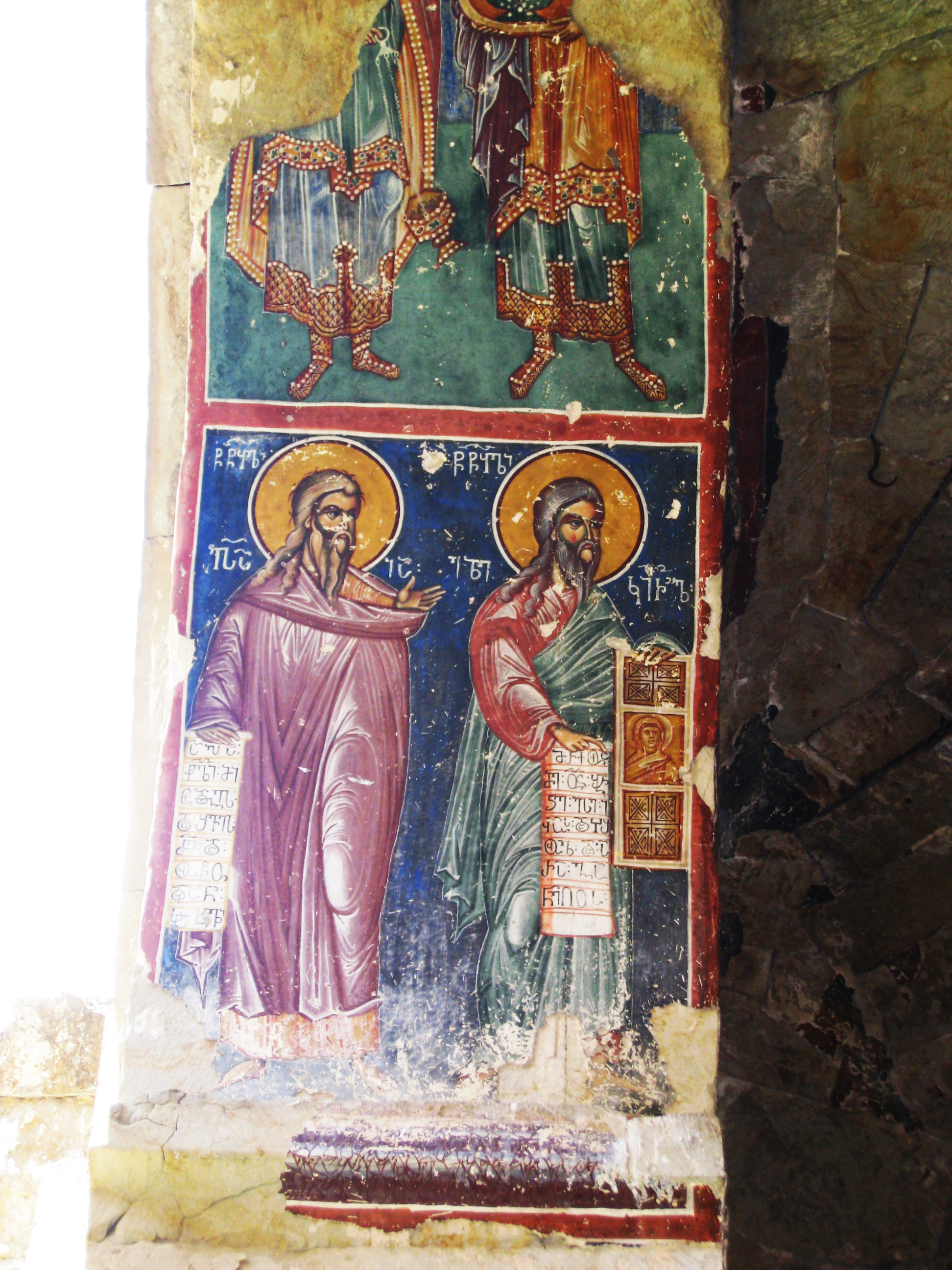
Nabakhtevi, church of the Virgin Biblical prophets on the apsidal arch, 15th c.
Besides other images from the Old Testament are
depicted in the inner side of the east wall, namely the Hospitality of Abraham,
the Anapeson ( reclining figure of Christ-Emanuel in short tunic sleeping in Paradise with
opened eyes; illustrating the Psalm 20,
20; the icon-type image of John the
Baptist etc.
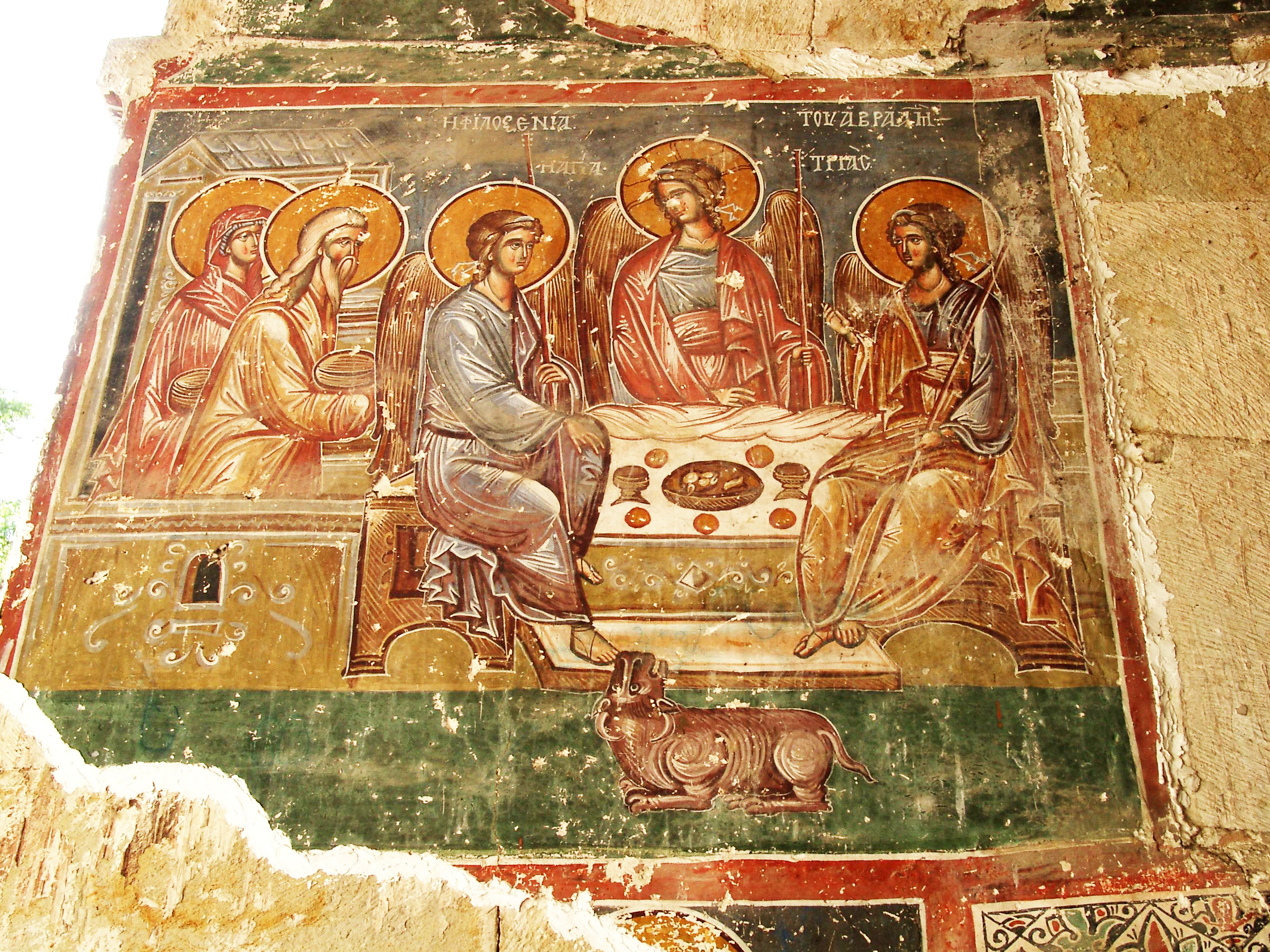
Nabakhtevi, church of the Virgin The Hospitality of Abraham, eastern wall of the sanctuary, 15th c.
On the west
face of the separating wall there were remnants of the Crucifixion and the Last
Supper. Unfortunately, other scenes from the Christological cycle that were
presented on the walls and the vault of the main space of the church are totally
demolished.
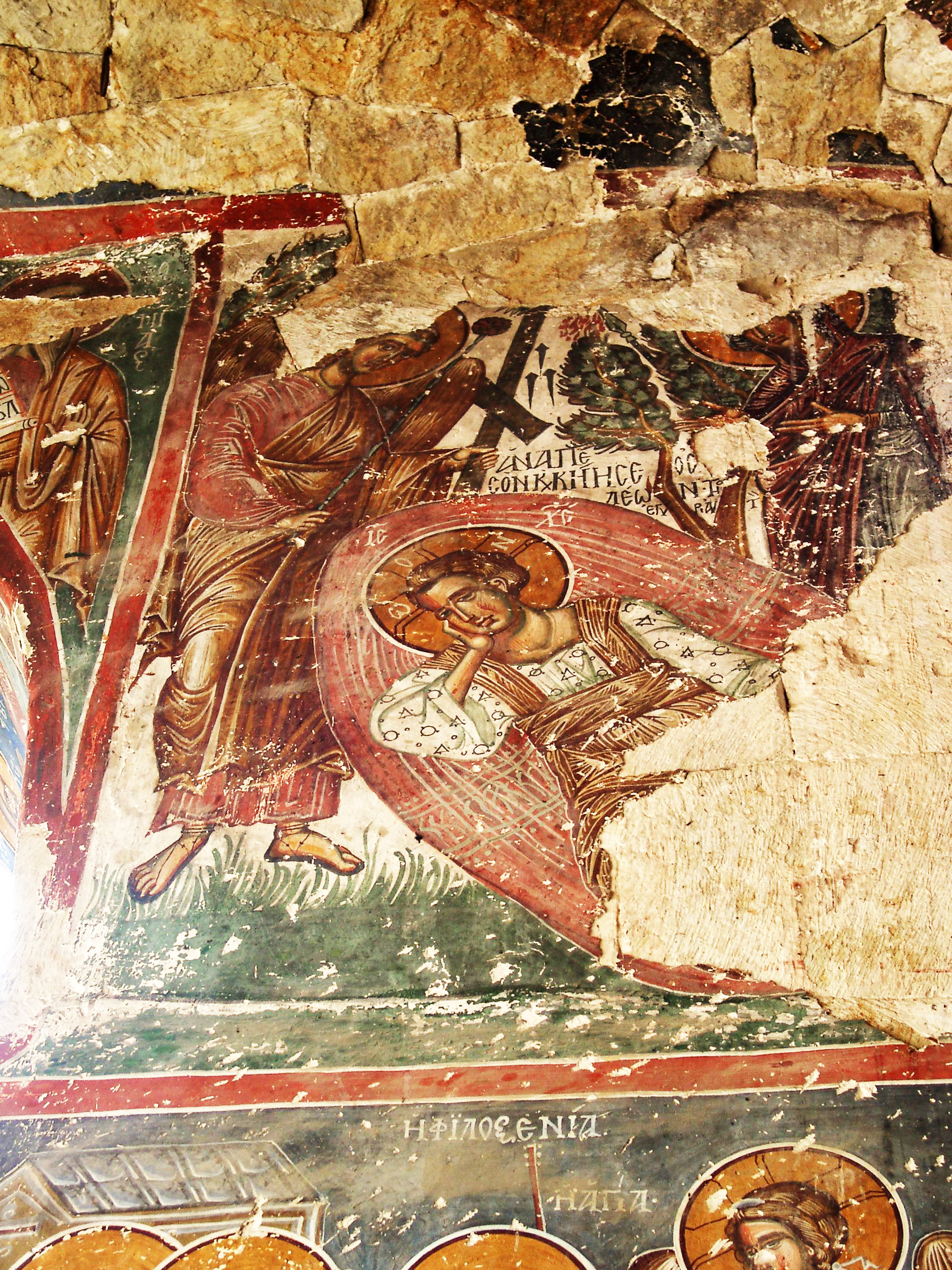
Nabakhtevi, church of the Virgin The Anapeson, eastern wall of the sanctuary, 15th c.
In the tympanum of the doors and in the south window
there are images of the Golgotha Crosses surrounded with refined drawing of winding
stems with rich foliage mostly in red colors.
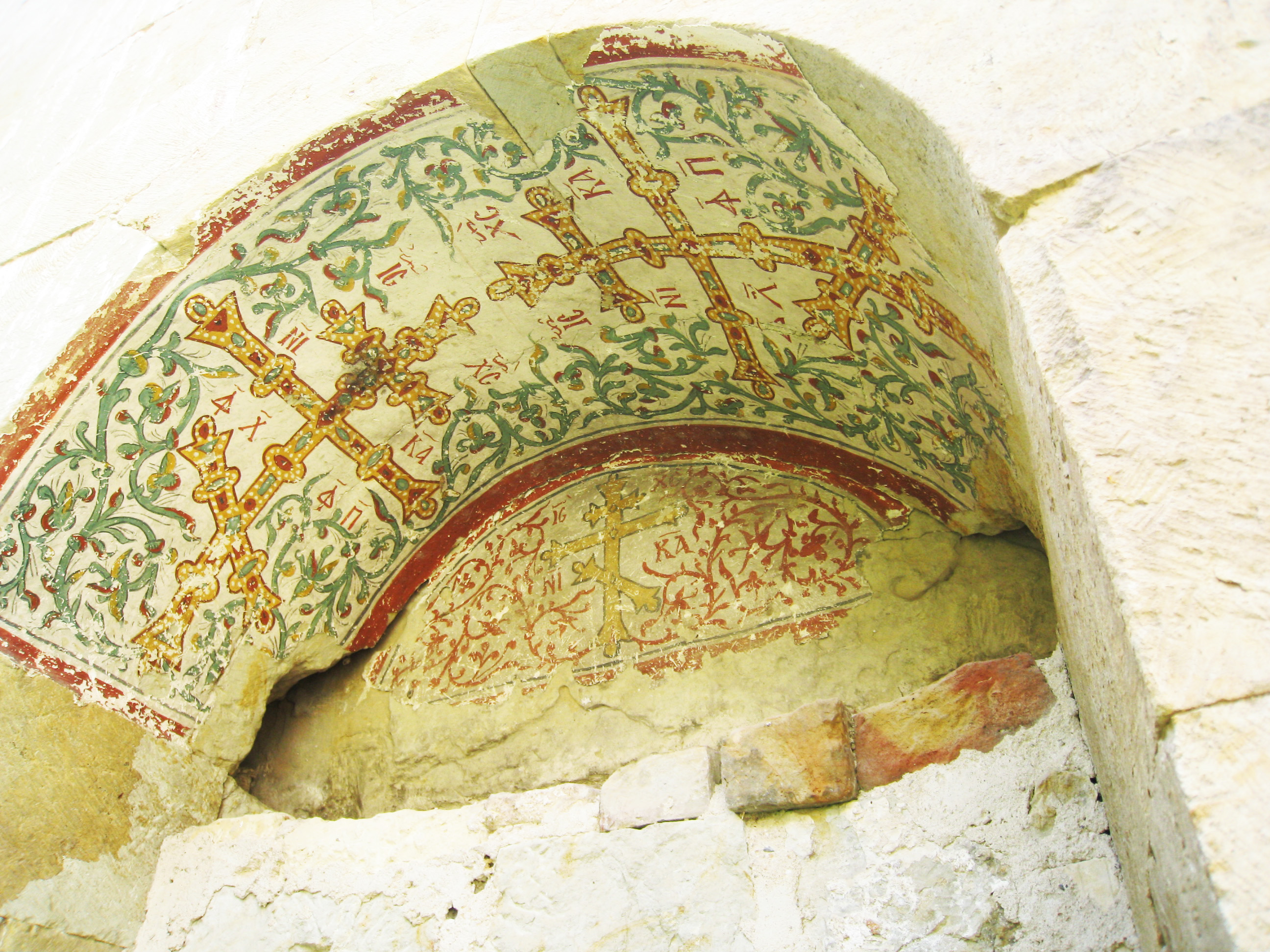
Nabakhtevi, church of the Virgin Tympanum of the door with images of the Cross, 15th c.
The most expressive part of the painting, a monumental
composition of the Last Judgment was
presented on the west wall. Unfortunately, it was severely damaged and
only separate fragments were replaced from the wall and stored in the Museum. This
grand composition comprises all details of the Last Judgment narrated
comprehensively: Paradise, Deisis and
the Apostles, host of angels, groups of the Just, the fiery river and the
abysms of hell featuring tortures of the
sinners.
According to the earlier photos the composition of the
Last Judgement was very detailed, with many narrative details especially
featuring the Paradise garden: trees with curve linear stems and bright red
plants, three figures of the forefathers Abraham, Isaak and Jacob; the Just
Robber, holding the big Cross; the fiery Cherub on the guard of the gate of
paradise as well as different tortures
of the sinners, the Whore of Babylon sitting on the Beast, etc.
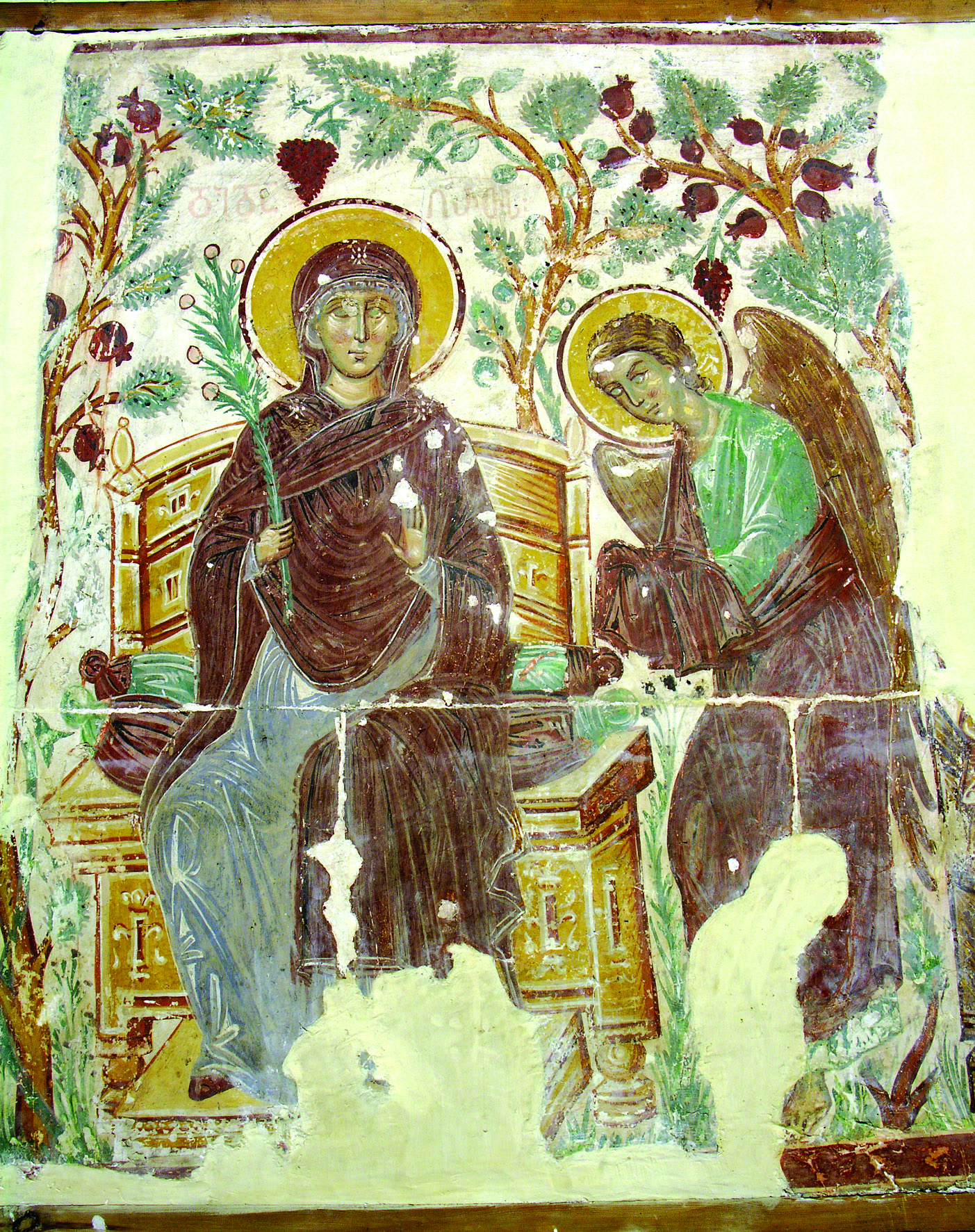
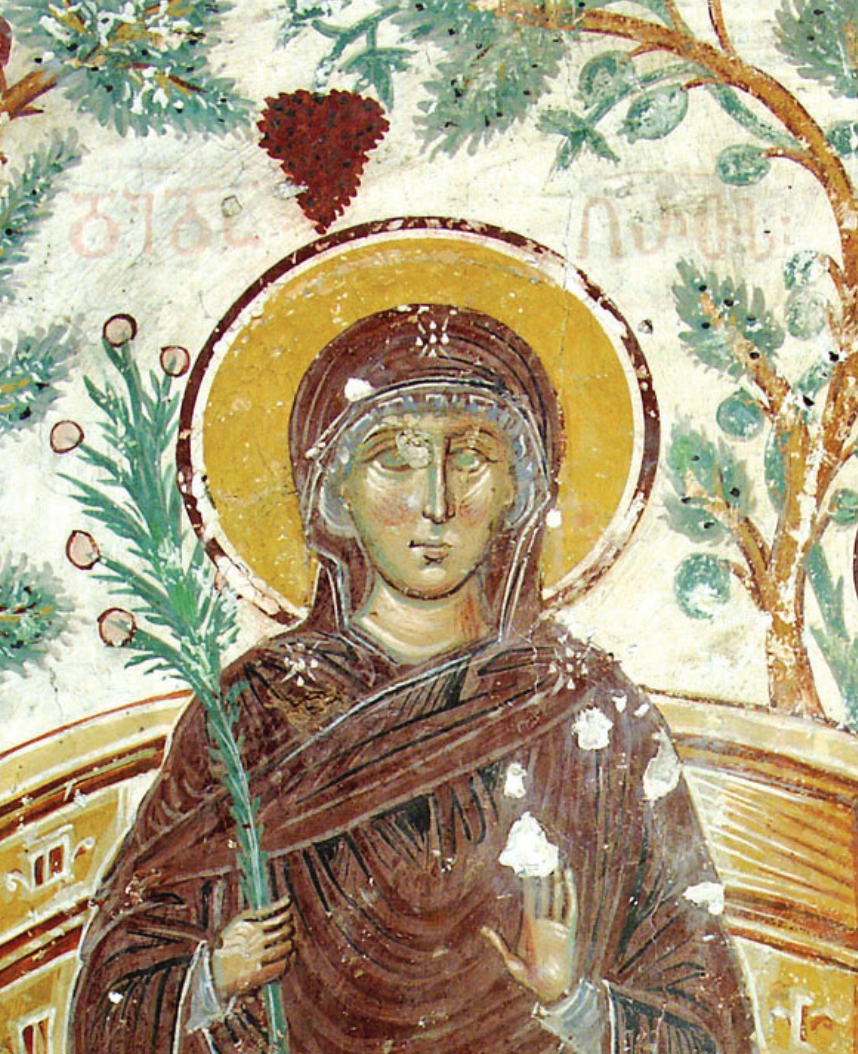
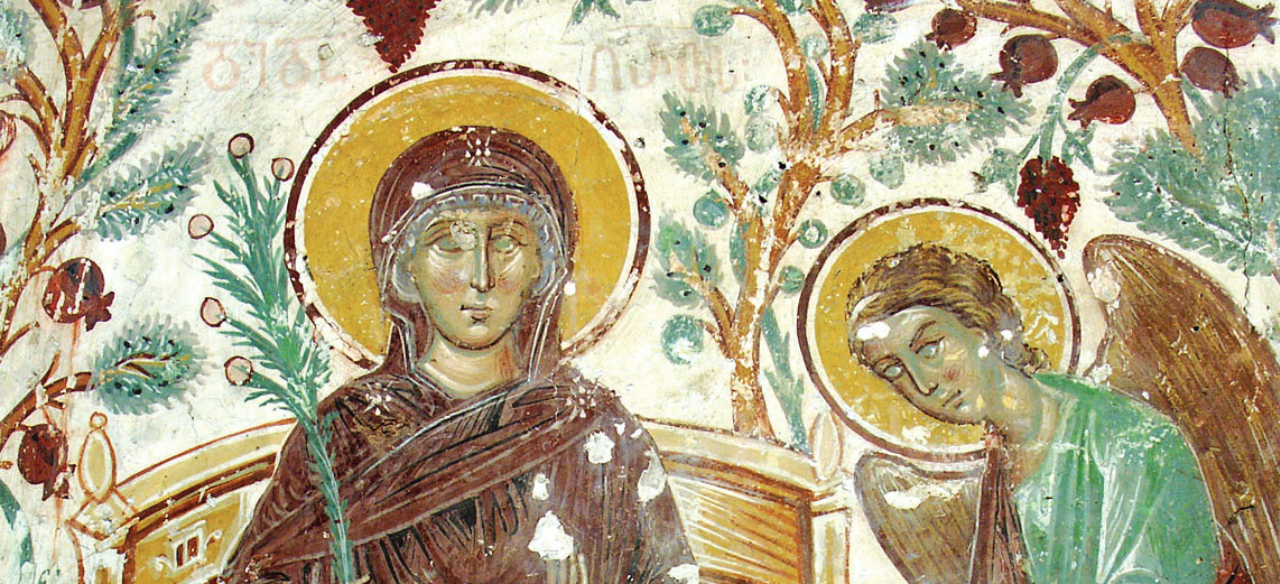
Nabakhtevi, church of the Virgin The Second Coming; The Virgin and the Angel in Paradise, 15th c.
The representation of the Paradise Garden is very
impressive with numerous trees of red pomegranates and grapes that surround the
figure of the enthroned Virgin. It is noteworthy, that although the whole
painting is on the dark blue background, the Paradise is represented on a clear
white background thus emphasizing the glittering red color of the plants on the
trees and on the Virgin’s garments.
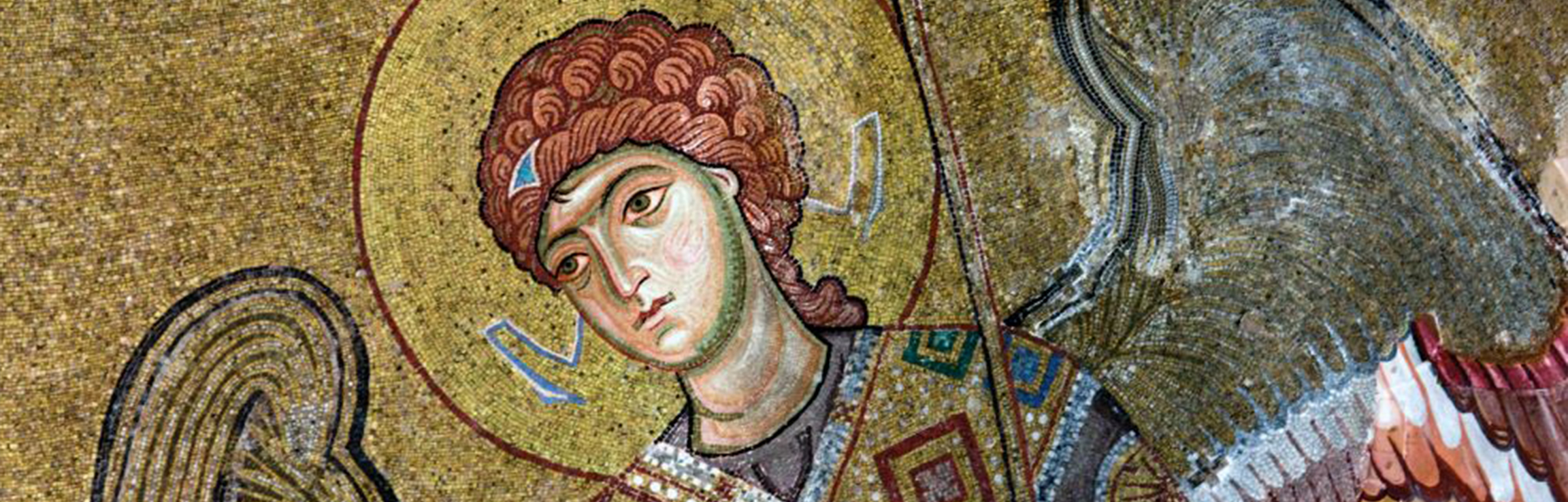
The figures of the angels with trumpets from the composition of the Last Judgement
are also very expressive and attractive: elegant figures, free movements, beautiful faces, picturesque
modeling with green shades and glittering white highlights, light and clear
colors (red, orange, pale blue, white,
light green ), dynamic refined outlines
and drawing of the garments.
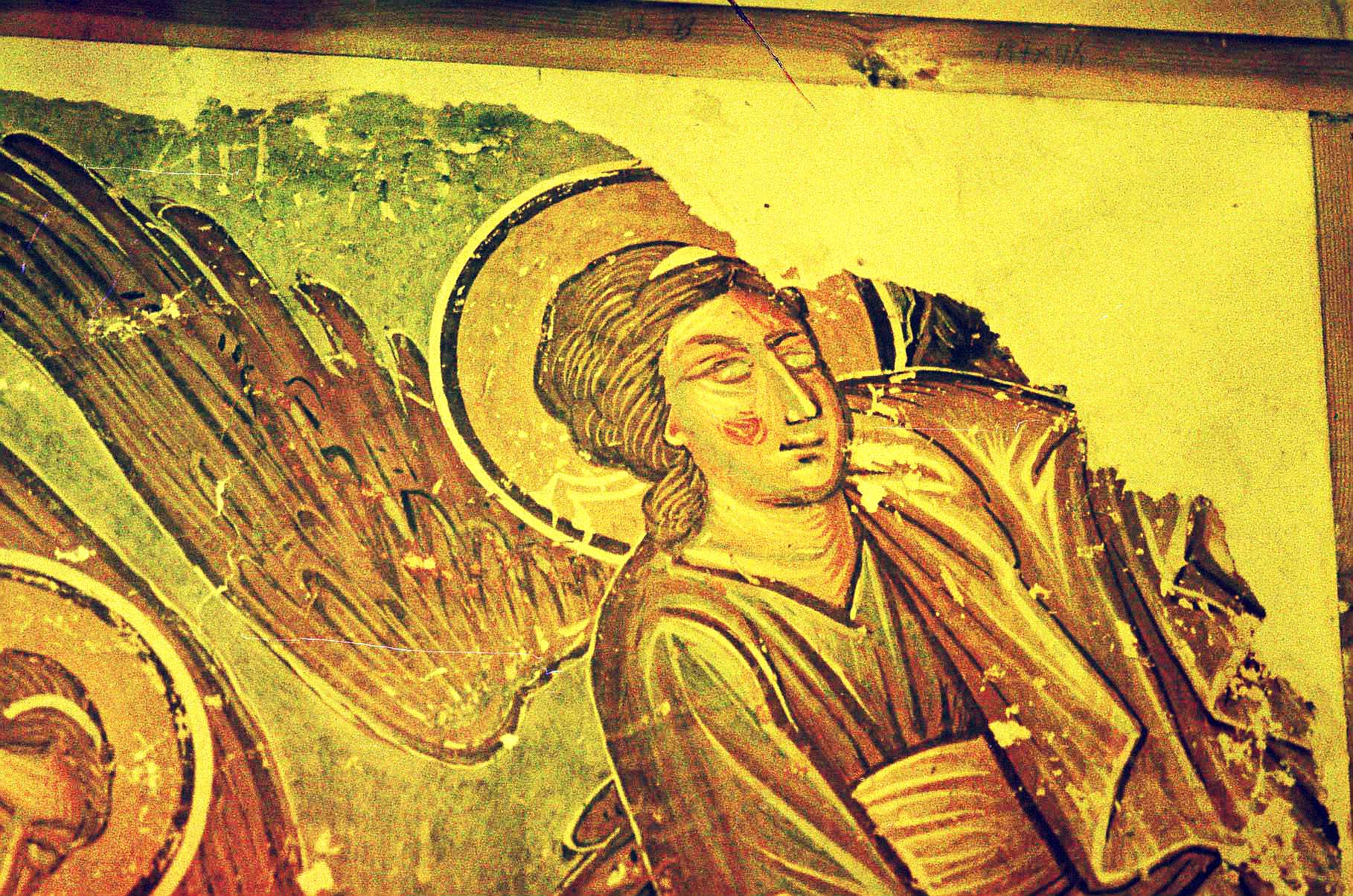
Nabakhtevi, church of the Virgin The Second Coming; the Angel with the trumpet detail, 15th c.
Nabakhtevi murals, although very damaged and with many
loses immediately attract interest due to their exceptionally high artistic
rendering, and especially due to elegant
and dynamic movements of the
figures, light and clear colors, very
beautiful and expressive green eyes, masterly made glittering white highlights and other stylistic
features.
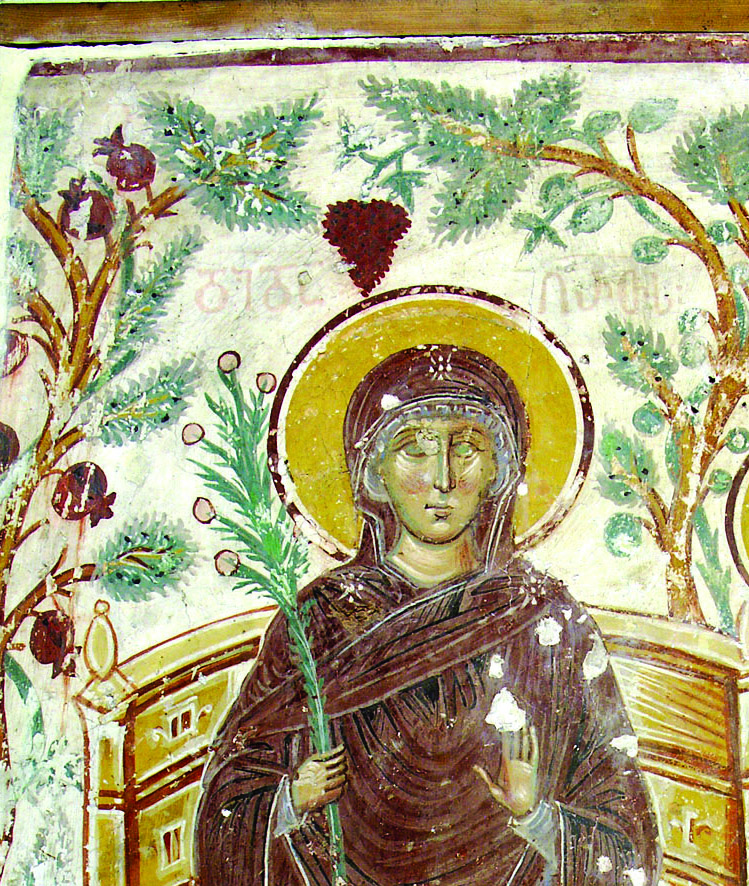
Nabakhtevi, church of the Virgin The Second Coming; The Virgin in Paradise, 15th c.
In many aspects, the murals of Nabakhtevi church
resemble the14th c. wall paintings in Tsalenjikha church, executed by the artist
Kyr Manuel Eugenikos invited from Constantinople especially in regard with coloring and
modeling of faces. However, Nabakhtevi murals have much more in common with the
age old traditions of Georgian wall painting.
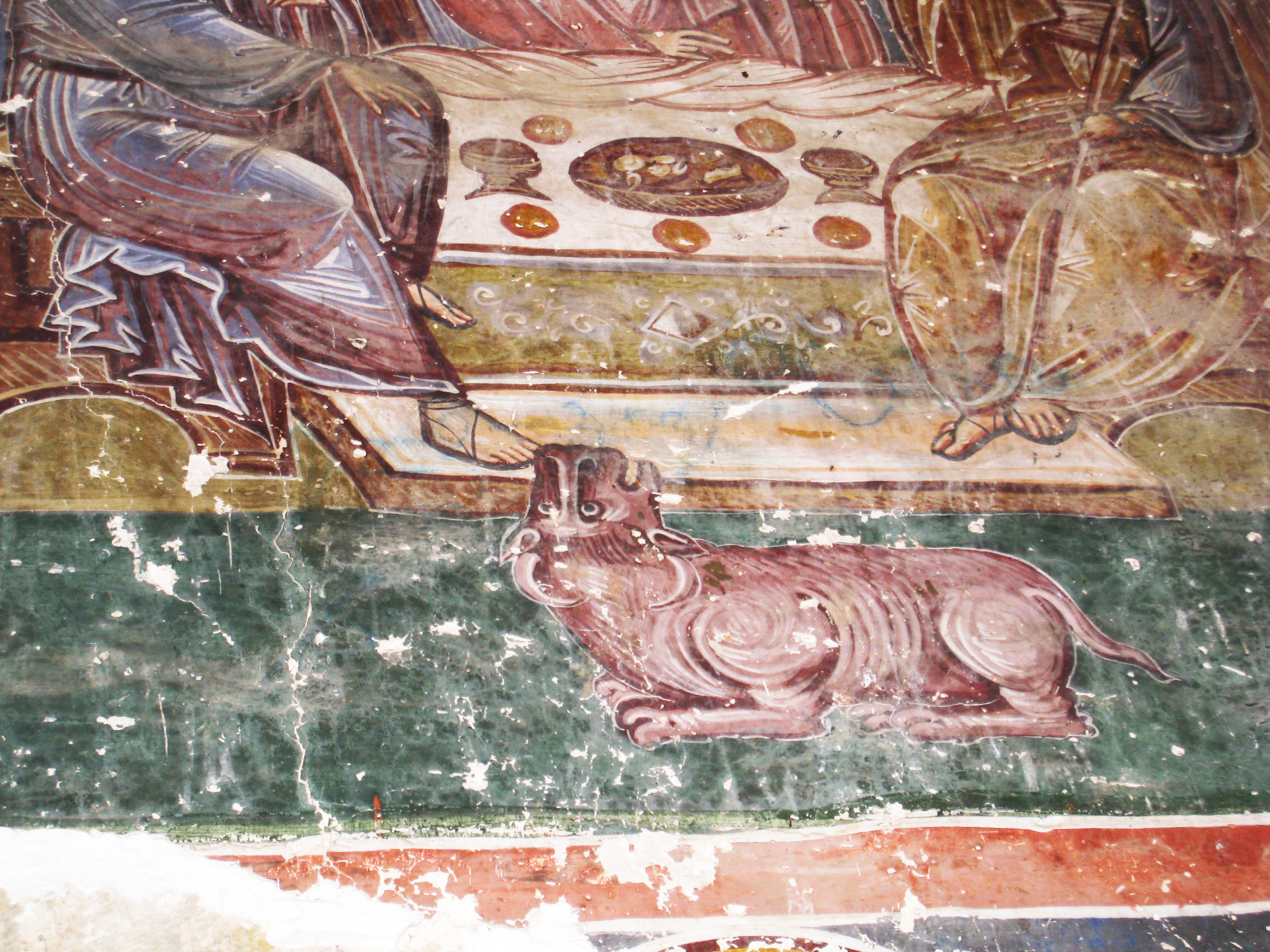
Nabakhtevi, church of the Virgin The Hospitality of Abraham, detail, 15th c.
Presumably at least two artists were working in the
church, and although there are no names
preserved it is clear that they were well trained and very talented painters
well aware of the new trend in the East Christian art, namely the Palaeologan
style. The inscriptions are mainly in Georgian asomtavruli script
and a few in Greek as well.
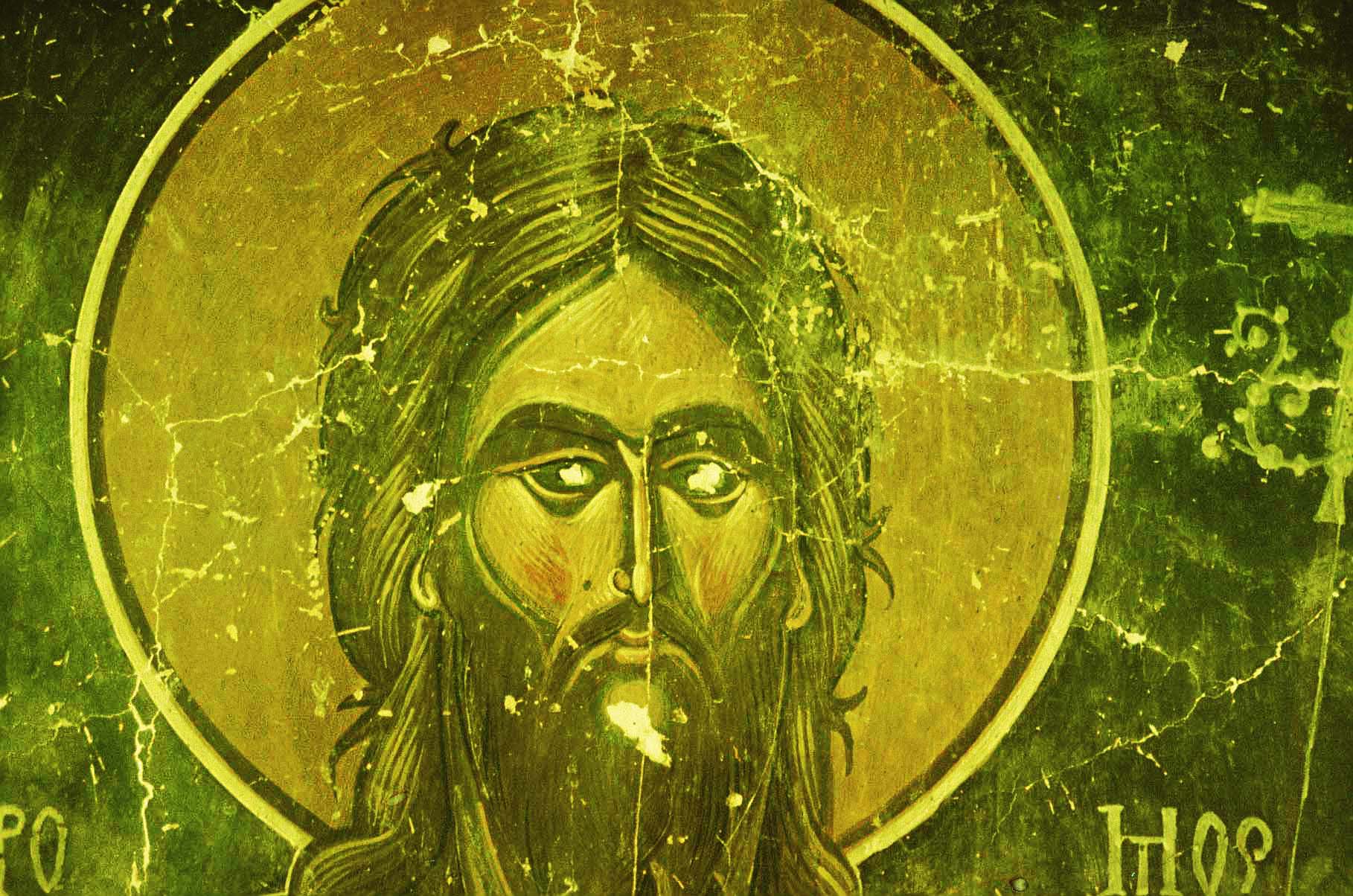
Nabakhtevi, church of the Virgin St. John the Baptist, detail, eastern wall of the sanctuary, 15th c.
Symbolism and
juxtaposition of the themes from the Old and the New Testaments are characteristic
feature of the Palaeologan style and Nabakhtevi wall painting is not an
exception. Especially this refers to the
scenes on the separating east wall.
Nabakhtevi murals give a comprehensive insight not
only into the character and main trends of Georgian painting of the 15th
c, but thanks to the representations of the ktetors and their titles into
the contemporary history of Georgian state as well.